
Ramaphosa hits back at ‘Third World’ label, says SA has a ‘big, loud voice’ globally
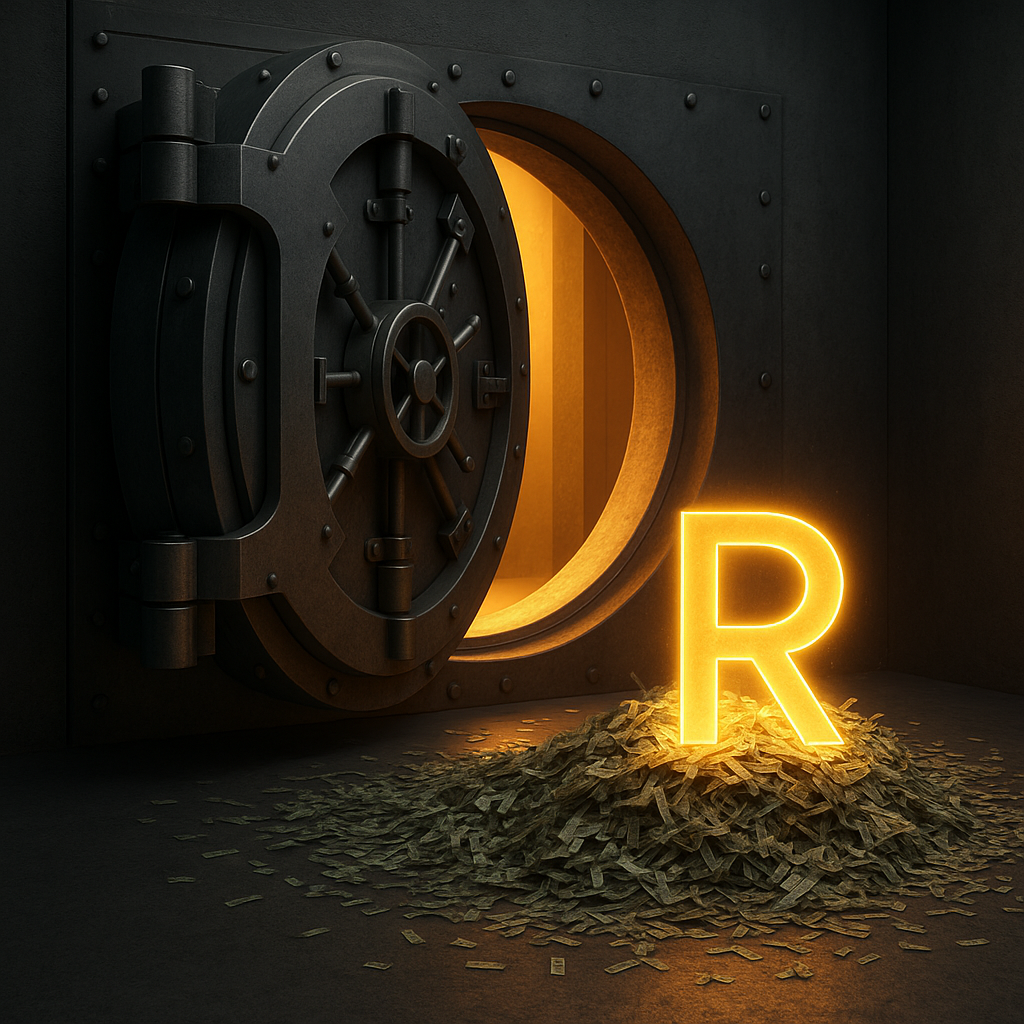
Explore South Africa's new SARB Museum, a R1.2-billion complex rewriting the nation's economic narrative with immersive history.
The SARB Story House in Pretoria is a super cool new museum that opened in 2026. It's built in an old building and uses awesome technology to show South Africa's money history. You can see old coins, shredded money, and even learn about digital currency. The museum also talks about how South Africa has faced challenges and is now making its own story, turning old insults into museum exhibits. It's a fun and interactive place where you can learn a lot about money and history!
What is the SARB Story House?
The SARB Story House is the South African Reserve Bank Museum in Pretoria, a R1.2-billion architectural fusion opened in June 2026. It transforms the former Barclays headquarters into an interactive experience, showcasing South Africa's economic history, currency evolution, and geopolitical narrative through immersive exhibits and modern technology.
Get Cape Town news in your inbox
Stay updated with the latest stories from the Mother City.
A Square Reimagined, an Insult Archived
Pretoria’s beating heart - Church Square - has long doubled as the republic’s living ledger. On 19 June 2026 another entry was logged. A crowd of ambassadors, labour veterans, crypto pundits and 120 teenagers from Tembisa watched President Cyril Ramaphosa swing open the doors of the South African Reserve Bank Museum. The building is a R1.2-billion fusion of 1930s sandstone, 1980s glass and contemporary corten steel that stitches the former Barclays headquarters to its younger tower. Ramaphosa did not just cut a ribbon; he performed verbal alchemy. Flanked by Governor Lesetja Kganyago and Finance Minister Enoch Godongwana, he proclaimed that “Third World,” once hurled as an insult, would now “rot in a display case” next to demonetised coins and shredded notes. The audience cheered, and Church Square - traditionally a theatre of bronze generals - gained a fresh actor.
The inauguration marked more than photo-ops. Church Square’s colonial statues still glare northward, yet the museum’s mirrored façade folds their silhouettes into selfies snapped by schoolchildren. In those reflections, Kruger’s uniform dissolves into hoodies and hijabs. The visual trick is deliberate: architecture as editorial cartoon, casting yesterday’s rulers as fleeting shadows on today’s screens. Security teams looked on while TikTok clips uploaded at 5G speed, each tagged #DustbinOfInsults. Somewhere between the national anthem and the final handshake, the space ceased to be merely heritage and became a broadcast studio for new national self-talk.
Ramaphosa’s sound-bite travelled worldwide within minutes. Reuters clipped the quote, Bloomberg ran a chyron, and Johannesburg coffee shops repeated it between cappuccinos. Yet the real impact happened in hushed tones among the diplomats who lingered after the cameras left. They felt the speech’s subtext: Pretoria had just reclaimed the narrative by turning an epithet into a museum label. That, more than any interest-rate tweak, altered the square’s gravitational pull.
Vault Doors, Pixel Gold and Paper Catacombs
Visitors begin below ground, stepping through the original 1932 vault door - 14 tonnes of rotating steel that once sealed bullion. Today a near-silent servo eases it open. Beneath the cobblestones, architects ActivateSpace kept the bullion lift shaft but lined it with LED drops. Every 90 seconds a golden pixel falls, dramatising the 3.7 tonnes of gold that fled the republic during the 1985 debt crisis. Slip on AR goggles and 1980s TV footage of Finance Minister Barend du Plessis announcing exchange controls flickers across the shaft walls. Tap your ID card to an NFC reader and a generative voice murmurs the annual inflation rate for the year of your birth. The whole shaft becomes an experiential balance sheet where personal and national debt entwine in shifting light.
Floor Two, branded “Mint to e-Mint,” narrates currency evolution from imperial pounds to the 2025 digital-rand pilot. A 4 x 4-metre tunnel - built from 1.3 billion shredded banknotes compressed into bricks - fills the air with a faint scent of cotton and ethanol. Each brick carries a serial number mapping to an import once paid for with that exact note: a 1974 Toyota, a 1998 batch of antiretrovirals, a 2010 World Cup seat cushion. At the far end a wall of glass reveals a live hash-rate feed from validator nodes 30 kilometres away. Paper graveyard meets live blockchain; the contrast makes visitors slow their breathing, as though witnessing resurrection.
Up another level, the “Voice Room” loops Ramaphosa’s inauguration address in eleven official languages. The moment that queues form for is his rebuttal to the 2022 sh*thole-country slur. Spatial audio engineers captured the actual acoustics of the 2025 Rio G20 meeting room; when the president says “they will find South Africa in their midst,” delegates’ papers shuffle and coffee spoons tinkle in Dolby Atmos. The republic never physically entered that summit chamber, yet the room’s soundscape imports it here, an acoustic apparition at the geopolitical table. Visitors exit grinning at the sleight-of-ear, while diplomats mutter about soft-power jiu-jitsu.
Trade Routes, Treasury Holds and the Bruma Gambit
Geopolitics hangs thick in the corridors. Washington’s current G20 presidency has skipped Pretoria twice, citing packed agendas. South Africa’s response is cheekily nicknamed the “Bruma option,” after the grey-phone bazaars of east Johannesburg. Deputy Governor Rashad Cassim flew economy to Mumbai, booked a side-room at the Taj Landside, and uploaded a joint communique before the official clerks hit save. The museum’s gift shop now stocks a “Bruma Pass” - a mock diplomatic passport with RFID. Tap it at the Voice Room console and your name parks in the same cloud folder where Cassim’s rogue minutes live. Gamified diplomacy at ten bucks a pop.
Exiting the gift shop, patrons enter the “Sanctions Corridor.” Here 1.2 million de-classified US Treasury pages line floor-to-ceiling racks. Pressure sensors underfoot trigger red LEDs that trace 1985 banking restrictions across a world map. Stomp on Buenos Aires and watch payments detour through a Cayman shell; step on Frankfurt and 147 accounts vanish in 48 hours. At the corridor’s terminus, a live Reuters printer spits today’s latest SWIFT choke-holds on Russia, reminding guests that the weaponisation of finance did not die with apartheid. A passport scanner by the guestbook flashes which sanctions regime now targets your nationality; the room fills with nervous laughter and audible gulps.
Back on the plaza, rooftop solar arrays rated at 2.1 MW pump surplus power into Tshwane’s grid. Blockchain tokens called “green crypto-rand” let citizens offset carbon footprints in real time. Moody's credited the scheme as one reason the sovereign rating stayed a notch above junk in May 2026. Critics dismiss it as marketing gloss, yet the panels gleam indifferently above arguments, harvesting sunlight and goodwill in equal measure.
Classrooms, Clubs and a Café Where Prices Oscillate
The learning zone, “Inflation Island,” is a 600-square-metre mixed-reality gym built with Geneva NGO Economgames. Students strap on smart-watches funded with 50,000 digital rand and must keep a virtual household solvent across 300 months of South African economic shocks: oil crises, Marikana, cyber-hijacks, pandemics. When a player panic-buys loo roll in March 2020, inflation spikes 14 % and the system summons a holographic Monetary Policy Committee chaired by avatars of Kganyago and Naidoo. Exit badges carry personalised “inflation DNA” QR codes that slot straight into the national curriculum. Pilot tests in Mdantsane lifted financial-literacy scores 37 % above the old textbook method, making teachers cheer louder than the gamers.
Night falls and the building shape-shifts again. Every last Friday the Governor’s balcony throws “Rate-Hike Rave,” an all-female DJ blend of gqom and MPC-vote audio samples. Laser sweeps project live JSE tickers across the skyline; if the All-Share index drops 1 %, the bass doubles. NFT wristbands change hue with the phone-app USD/ZAR rate. Proceeds fund bursaries for economics students from disadvantaged backgrounds; the inaugural cohort of 37 already codes smart-contract pilots on an Ethereum side-chain pegged to the rand. Party receipts thus loop back to policy prototypes.
Between events, “Repo Rate Café” serves mocha economics in edible form. Menus recalibrate every 45 minutes via an interbank-weighted algorithm. Your latte might shed nine rand if liquidity surges, and your phone pings with a video from SARB Chief Economist Chris Loewald explaining why. Baristas discuss yield curves while micro-foaming milk; suggested tips appear as basis points. Food reviewers label it “the world’s first drinkable macro lecture,” while unions debate whether volatility should ever flavour service wages. The debate simmers, yet patrons keep sipping, charts reflected in their cappuccino crema.
Outside, Church Square’s statues stand unchanged, bronze faces fixed on a vanished horizon. The SARB Museum’s glass skin, however, keeps refracting them into prismatic shards that dissolve and reform with every passer-by. No closing slogan scrolls; instead the building updates itself - exhibits, coffee prices, repo beats, solar watts - in a continuous loop. The square has learned a new dialect: memory spoken in real time.
[{"question": "What is the SARB Story House and when did it open?", "answer": "The SARB Story House is the South African Reserve Bank Museum located in Pretoria. It's a new, interactive museum that opened its doors on June 19, 2026. This R1.2-billion project transformed the former Barclays headquarters into a state-of-the-art facility dedicated to showcasing South Africa's economic history."}, {"question": "What can visitors expect to see and experience at the SARB Story House?", "answer": "Visitors can immerse themselves in South Africa's money history through various interactive exhibits. Highlights include seeing old coins, exploring a tunnel made from 1.3 billion shredded banknotes, and learning about digital currency. The museum uses advanced technology like AR goggles, LED displays, and generative voices to create an engaging and educational experience. You can also experience the \"Voice Room\" with speeches in eleven languages and even a \"Repo Rate Café\" where prices fluctuate based on real-time economic algorithms."}, {"question": "How does the SARB Story House address South Africa's past challenges and national identity?", "answer": "The museum deliberately reclaims South Africa's narrative. President Cyril Ramaphosa stated that terms once used as insults would now be displayed alongside demonetised coins, turning past negativity into museum exhibits. The architecture itself, with its mirrored façade, reflects colonial statues in new ways, symbolizing a shift in perspective. It aims to foster a 'new national self-talk' by presenting a bold and confident South African story."}, {"question": "What unique technological features does the museum offer?", "answer": "The SARB Story House is packed with innovative technology. Visitors can walk through a 14-tonne vault door, see LED drops dramatizing gold movement, and use AR goggles to view historical footage. NFC readers provide personalized inflation data, and a \"Mint to e-Mint\" exhibit showcases the evolution of currency to the digital rand pilot. The \"Inflation Island\" learning zone offers a mixed-reality gym with smartwatches for simulating economic scenarios, and the \"Repo Rate Café\" features menus that recalibrate every 45 minutes based on interbank algorithms."}, {"question": "What is the \"Bruma option\" and how is it represented in the museum?", "answer": "The \"Bruma option\" is a cheeky nickname for South Africa's approach to navigating global geopolitics, inspired by the informal markets of east Johannesburg. It refers to Deputy Governor Rashad Cassim's unconventional method of conducting diplomacy by securing side-meetings and publishing communiques independently. The museum's gift shop offers a \"Bruma Pass,\" a mock diplomatic passport allowing visitors to digitally place their names in a cloud folder alongside Cassim's 'rogue minutes,' gamifying diplomacy."}, {"question": "How does the SARB Story House engage with the concept of financial literacy and economic education?", "answer": "The museum places a strong emphasis on financial literacy and economic education, especially for younger generations. The \"Inflation Island\" is a 600-square-metre mixed-reality gym where students manage a virtual household through economic shocks, learning about inflation and monetary policy. This experiential learning has significantly boosted financial literacy scores in pilot tests. Additionally, events like the \"Rate-Hike Rave\" fund bursaries for economics students, and the \"Repo Rate Café\" subtly educates patrons on macroeconomic principles with its dynamic pricing and discussions of yield curves."}]

Chloe de Kock is a Cape Town-born journalist who chronicles the city’s evolving food culture, from township braai joints to Constantia vineyards, for the Mail & Guardian and Eat Out. When she’s not interviewing grandmothers about secret bobotie recipes or tracking the impact of drought on winemakers, you’ll find her surfing the mellow breaks at Muizenberg—wetsuit zipped, notebook tucked into her backpack in case the next story floats by.
View all articles →