
Runner stabbed in Table Mountain’s Deadman’s Tree area, raising safety concerns
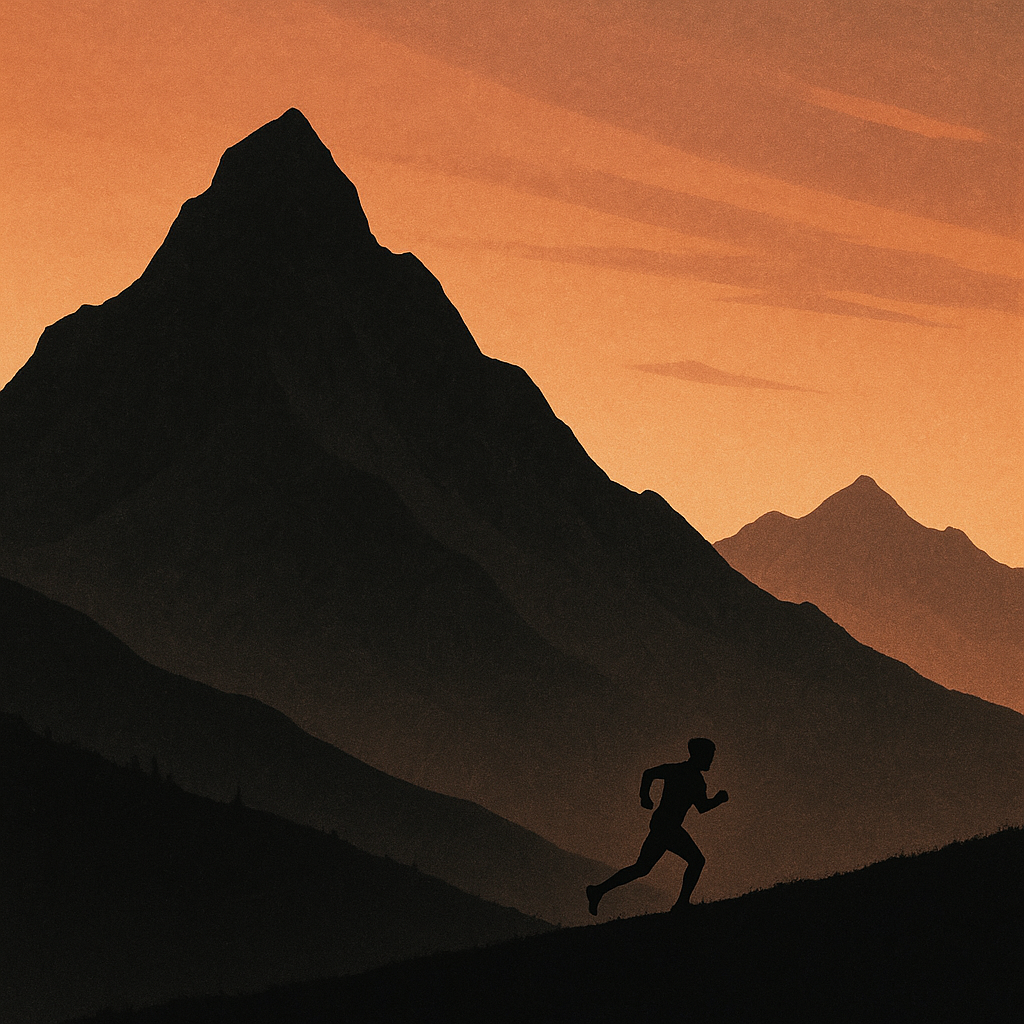
Violent crime surges on Table Mountain, endangering outdoor enthusiasts and threatening Cape Town's tourism. Security failures highlighted.
Danger is growing on Table Mountain! People exercising are getting attacked, even stabbed, especially early in the morning. This is scaring tourists and hurting Cape Town's money. We need more guards and cameras to make it safe again.
What is the main danger on Table Mountain?
Table Mountain faces a surge in violent crime, including stabbings and assaults, primarily targeting outdoor enthusiasts. This escalating danger, particularly during early morning hours and along accessible routes, threatens international tourism and necessitates improved security, including surveillance and increased ranger presence.
Get Cape Town news in your inbox
Stay updated with the latest stories from the Mother City.
Dawn Assault Signals Deteriorating Safety Conditions
The golden hours that once drew fitness enthusiasts to Cape Town's legendary Table Mountain have turned hazardous, as demonstrated by a bold daytime assault that unfolded Wednesday morning near Deadman's Tree along Tafelberg Road. Around 7:15am, during those precious moments when sunlight begins washing over the city's most photographed landmark, a runner suffered a brutal stabbing carried out by three male attackers. The violence concluded within fifteen minutes, yet stands as merely the most recent example in an alarming trend of criminal behavior that has converted one of South Africa's most treasured natural spaces into genuine territory of concern.
This specific incident carries particular weight due to when and where it happened. Early morning traditionally ranks among the most secure periods for outdoor exercise, attracting runners, cyclists, and walkers eager to finish before temperatures climb. Deadman's Tree sits along Tafelberg Road amid reasonably approachable terrain near established pathways, a combination that experienced mountain visitors would not normally associate with elevated danger. Paradoxically, this very accessibility may have created vulnerability, giving criminals both hiding spots and exit routes while singling out people who remain physically separated despite their nearness to city infrastructure.
International Visitor Confidence Shows Signs of Collapse
The repercussions of such violence stretch well past the immediate wounds and emotional shock suffered by those directly targeted. Cape Town's financial wellbeing depends heavily on overseas tourism, with Table Mountain functioning as perhaps the municipality's most iconic draw - attracting roughly 4.2 million annual visitors before COVID-19 disruptions, including substantial numbers from abroad. The landmark's extraordinary plant diversity, striking rock formations, and sweeping vistas earned recognition among the New Seven Wonders of Nature, producing considerable income for hotels, dining establishments, guiding services, and supporting businesses throughout the region.
Emre Uygun, who serves as Freedom Front Plus representative for Cape Town, has become an outspoken proponent of strengthened protective measures after witnessing firsthand how foreign guests express worry. His recent work escorting travelers from various continents across Table Mountain, Boulders Penguin Colony, and Cape of Good Hope has offered raw perspective on shifting worldwide attitudes toward South African security. The uniformity of apprehension across different cultural and geographic backgrounds indicates that reports of mountain violence have reached global travel awareness, potentially shaping destination choices before would-be tourists ever pack their luggage.
Anticipatory anxiety poses an especially damaging obstacle for tourism promotion. Unlike worries that surface during actual stays, pre-departure nervousness can steer vacationers toward alternative locations - perhaps New Zealand's adventure offerings, Patagonia's remote landscapes, or East Africa's wildlife safaris - without tourism officials ever gathering direct notification of these missed chances. Financial impacts accumulate slowly: diminished advance reservations, tightened pricing flexibility, and ultimately, job losses across hospitality's sprawling network of interconnected businesses.
Technological and Personnel Shortcomings Exposed
Councillor Uygun's concrete proposals - round-the-clock video surveillance and increased ranger staffing at heavily-used trail access points - acknowledge that protective systems have not evolved alongside either visitor numbers or criminal adaptability. Table Mountain National Park spans roughly 25,000 hectares of conserved territory, creating fundamental difficulties for complete oversight. Unlike contained attractions with managed entryways, the park's perimeters stretch extensively and remain porous, featuring countless unofficial access routes developed through generations of local custom that defy straightforward barrier or checkpoint solutions.
Expanding ranger numbers, though appearing simple, runs into workforce limitations reflecting wider government capacity struggles. South African National Parks manages Table Mountain alongside numerous other conserved sites, functioning under budget pressures that have restricted staff growth despite broadening duties. Ranger hiring needs specialized instruction in conservation law enforcement, emergency medical response, and increasingly, guest relations abilities that merge protective and service roles. Keeping trained staff proves difficult as experienced workers pursue higher-paying private security jobs or relocate to nations promising more stable professional futures.
Practical Protective Measures for Mountain Users
Until structural security enhancements materialize, safety professionals have assembled guidance recognizing the impracticality of removing all danger while maintaining mountain accessibility. The core concept involves altering group configurations: individual activity, particularly when few others are present, dramatically raises exposure by removing potential witnesses and slowing emergency notification. Parties of three or more significantly disrupt offender planning, as numerical disadvantage decreases success likelihood while raising chances of identification.
Nevertheless, assembling groups demands coordination mechanisms that many recreational participants lack. Running organizations, cycling clubs, and walking societies have traditionally supplied this coordination through set gathering locations, communication procedures, and pooled expertise that novices can access. Pandemic conditions fractured many such groups, and their reconstruction stays unfinished. Electronic solutions - Strava's safety beacon, WhatsApp position sharing, specialized security apps - provide incomplete replacements, though their usefulness relies on mobile signal strength that proves inconsistent across mountain topography.
Managing timing risks has gained fresh significance. The assaulted runner's selection of morning exercise, while logical considering temperature and calendar constraints, aligned with reduced legitimate user presence that calculating criminals may deliberately exploit. Shifting activity schedules to match peak traffic periods - generally mid-morning through afternoon on Saturdays and Sundays - sacrifices some experience quality for protective benefit. Path choice matters correspondingly: recognized trails with consistent visitors, despite their diminished wild character, provide monitoring advantages that secluded technical routes surrender.
Gear adjustments have spread among security-minded mountain enthusiasts. Personal alert devices, initially promoted for city protection, have gained popularity given their ability to draw notice across terrain where visual spotting may fail. Satellite messengers, engineered for remote-area emergency communication, supply connectivity backup where mobile networks disappear. Some runners have begun secretly carrying defensive implements, though legal limitations and the practical difficulties of operating such items during surprise assaults constrain this strategy's effectiveness.
National Patterns of Violence in Conserved Territories
The Table Mountain protection emergency unfolds within a countrywide context of reserve criminality that undermines the basic presumption that conservation zones possess automatic shielding from community violence. Kruger National Park's rhino slaughtering crisis, different in purpose and technique, similarly shows how financial desperation and systematic criminal organizations infiltrate even well-funded preservation settings. Nearer to Cape Town, Cape Flats gang warfare has periodically overflowed into mountain zones employed for territorial marking or corpse concealment, producing complicated crime categories that resist simplistic explanation.
Economic factors driving mountain criminality deserve recognition without justifying individual wrongdoing. Cape Town's extreme wealth disparity - among the world's most pronounced by standard inequality measurements - creates survival pressures that drive certain people toward predatory conduct, especially when honest income sources remain out of reach. The mountain's closeness to economically excluded neighborhoods establishes geographic opportunity structures that more remote wild areas escape. Tackling underlying causes requires actions - educational investment, job creation, spatial restructuring - that reach far past security agency reactions, though such actions provide no instant safeguarding for present-day visitors.
The conflict between openness and protection has surfaced as a central dilemma for city-adjacent conserved areas worldwide. Sydney's Blue Mountains, Rio de Janeiro's Tijuca Forest, and Los Angeles's Griffith Park have all confronted comparable quandaries, resolving them through approaches spanning regulated entry systems to neighborhood-based crime prevention alliances. Table Mountain administrators could beneficially study these comparative examples, modifying applicable methods while accounting for regional institutional and social particularities.
As high tourism season nears, the pressure for visible security advances mounts. Traveler choices made during coming weeks will echo through Cape Town's economic path for years, as unfavorable experiences spread across review websites and social media with algorithmic speed. The mountain's environmental and visual worth endure unchanged; whether these worth remain reachable to legitimate visitors, and financially rewarding for surrounding populations, hinges upon protective interventions whose planning and execution must advance with exceptional speed.
[{"question": "
What kind of crimes are occurring on Table Mountain?
\nTable Mountain is experiencing a surge in violent crime, including stabbings and assaults, primarily targeting outdoor enthusiasts. These incidents often occur during early morning hours.
\n", "answer": ""}, {"question": "Who is being targeted by these attacks?
\nIndividuals exercising, such as runners, cyclists, and walkers, are being targeted. The attacks are particularly concerning because they happen in areas previously considered safe and accessible, like near Deadman's Tree along Tafelberg Road.
\n", "answer": ""}, {"question": "How is this crime wave impacting Cape Town?
\nThe rise in violent crime is scaring away tourists and negatively impacting Cape Town's economy. Table Mountain is a major draw for international visitors, and reports of violence are causing pre-departure anxiety, potentially diverting tourists to other destinations and leading to financial losses for the city's tourism-dependent businesses.
\n", "answer": ""}, {"question": "What solutions are being proposed to address the security issues?
\nCouncillor Emre Uygun is advocating for increased security measures, including round-the-clock video surveillance and a greater presence of rangers at heavily-used trail access points. However, implementing these solutions faces challenges due to the park's vast and porous nature, as well as budget and staffing limitations within South African National Parks.
\n", "answer": ""}, {"question": "What can mountain users do to protect themselves?
\nSafety professionals recommend several measures: exercising in groups of three or more, shifting activity schedules to peak traffic periods (mid-morning to afternoon on weekends), sticking to recognized, consistently visited trails, and carrying personal alert devices or satellite messengers for communication in remote areas.
\n", "answer": ""}, {"question": "Are these security issues unique to Table Mountain?
\nNo, the security challenges on Table Mountain are part of a broader national pattern of criminality affecting conserved territories across South Africa. Similar issues, driven by economic disparities and organized crime, have been seen in places like Kruger National Park. This conflict between openness and protection is a common dilemma for city-adjacent conserved areas globally, with examples in Sydney, Rio de Janeiro, and Los Angeles.
\n", "answer": ""}]
Hannah Kriel is a Cape Town-born journalist who chronicles the city’s evolving food scene—from Bo-Kaap spice routes to Constantia vineyards—for local and international outlets. When she’s not interviewing chefs or tracking the harvest on her grandparents’ Stellenbosch farm, you’ll find her surfing the Atlantic breaks she first rode as a schoolgirl.
View all articles →