
Sailors of Cape2Rio race return home following harrowing rescue
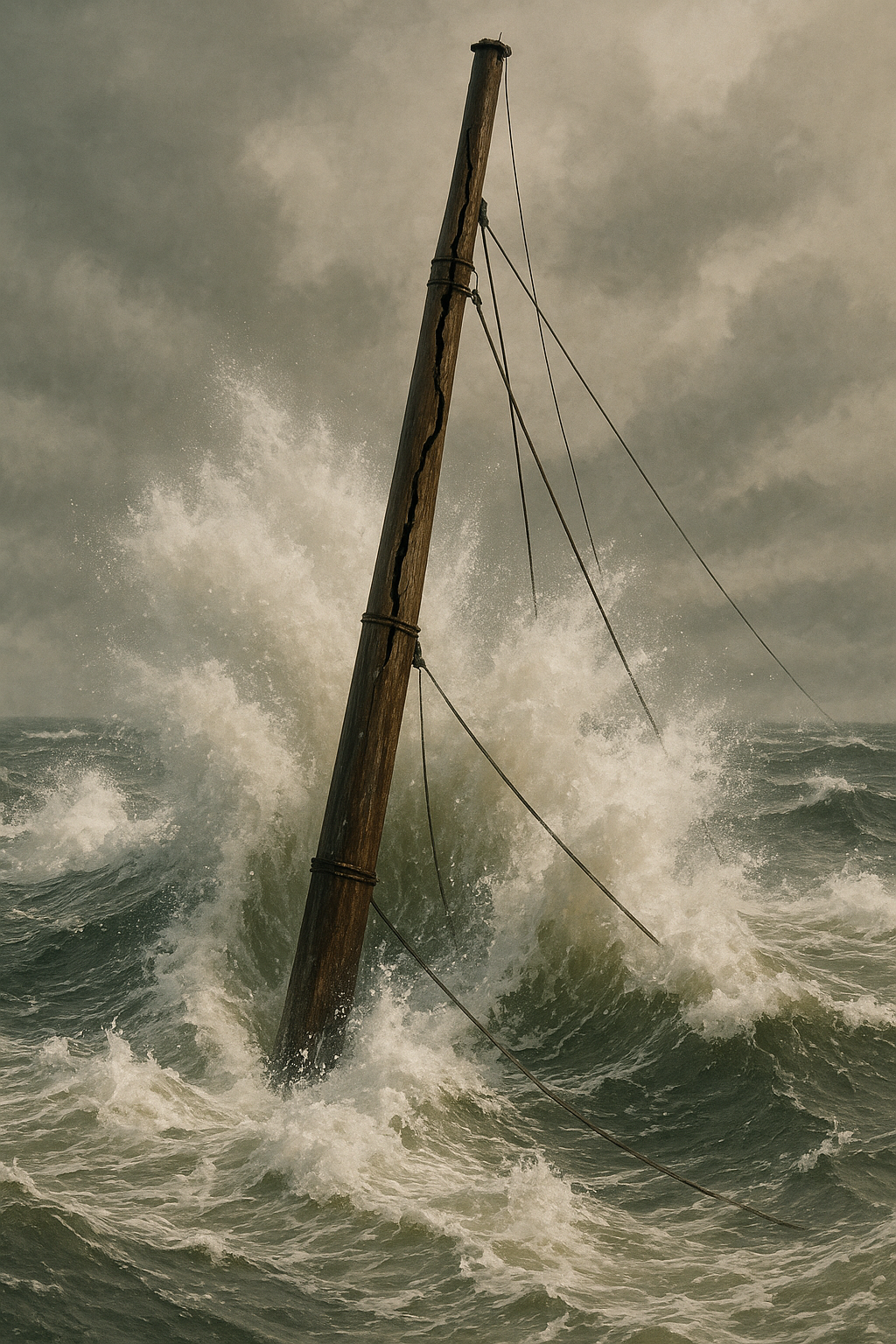
Three sailors win Cape2Rio, then their yacht dismasts 1,448km from Rio. Rescued by a bulk carrier, transferred to a warship.
The yacht Angel Wings won a big race, but a tiny crack in its mast grew into a huge problem. During a storm, the mast broke, leaving the crew stranded far out at sea. Luckily, a big ship rescued them, and the yacht was lost to the ocean. Now, new rules will help racers be safer.
What happened to the Angel Wings yacht after winning the Cape2Rio race?
Angel Wings, after winning the Cape2Rio race, suffered a mast fracture due to an undetected crack that worsened during a storm. The crew was rescued 1,448 km southeast of Rio by the bulker Bryant and later transferred to the SAS Adam Kok III. The yacht was ultimately written off as a constructive total loss and presumed sunk.
Get Cape Town news in your inbox
Stay updated with the latest stories from the Mother City.
1. Fireworks, Fractures and the Finish-Line High
The Royal Cape Yacht Club’s radio burst with elation on 29 January: Angel Wings, a 44-ft South-African-built flyer, had smashed both line-honours and overall records in the 2024 Cape2Rio. On board were the youngest all-local crew ever to win the classic - skipper Jaco van der Merwe (31), helm Sanelisiwe Mokoena (28) and trimmer Liezl van Niekerk (26). Their corrected time - 12 d 09 h 37 m 14 s - hacked a full eleven hours off the benchmark set by a European pro team in 2020. Above Rio’s Yacht Club da Guanabara, pyrotechnics painted the sky, caipirinha ice clinked against silverware, and the trio lifted the same sterling perpetual cup Sir Francis Chichester once carried around the planet.
Cameras missed the quiet villain: a hair-thin crack creeping through the carbon mast just under the first spreader. Four days earlier an unannounced 53-knot Pampero had hurled the yacht on to port tack, slamming the rig and opening a delamination no wider than a hair. A quick carbon patch, a mutual promise to “survey her properly at home,” and the party rolled on.
The crack, however, had its own calendar. While speeches droned and selfies flew, the laminate kept unzipping, molecule by molecule, waiting for the next load spike.
2. Weather Roulette and the Lure of the Roaring Forties
Homeward-bound software painted two pictures. Option A: climb north-east, hook into the steady south-east trades and amble 3,200 nm toward Cape Town at a gentle 140 nm per day - safe, slow, sane. Option B: drop to 38 °S, let the forties fling the boat across the 2,650 nm great-circle arc and maybe shave the passage to ten days - irresistible catnip for sailors who had just proved they loved speed.
The gradient looked tame: a 1020 hPa high sliding east at 25 knots, no brick-red low spirals on the chart. They chose the southern roller-coaster, hoisted the magenta A2 at dawn on 1 February, and posted a grin-drenched goodbye shot - three thumbs-up, one Brazilian flag, a horizon like polished gun-metal.
By sunset the first low thickened, barometer down two millibars in three hours. The new routing showed a narrow lane of 25-knot westerlies, then a harmless patch of calm. They pressed on, unaware the crack in the spar was sipping salt with every roll.
3. Snap, Drag, Drift: The Moment the World Closed In
At 01:46 on 3 February the 406 MHz beacon screamed. Satellite triangulation dropped a pin at 31° 42ʹ S, 24° 18ʹ W - 1,448 km south-east of Rio and 650 km from the nearest shipping lane. The mast had folded 1.2 m above the deck, folding radar reflector and VHF antenna into the cockpit like wet noodles. The starboard cap shroud slashed a three-metre L-shaped tear through the mainsail.
Textbook drills unfolded in 37 seconds: Felco cutters snapped stainless, the boom and sail went over the side, a 24-inch Jordan Series drogue streamed to keep the bow 45° off the south-westerly. Angel Wings was now a 7-tonne cork, drifting east at 1.8 knots in a force-six melee, 770 nm from Africa.
Van der Merwe booted the spare Iridium GO! A bare-bones mayday hit MRCC Cape Town, MRCC Brazil and the Amver plotting grid within four minutes. The algorithm spat three white hulls on the screen; closest was the 57,000-dwt Liberian bulker Bryant , Rio-to-Singapore with 54,000 t of soy, CPA nineteen kilometres in four hours. Captain Vikram Singh spun his helm 14° and shoved the MAN-B&W to 92 % power.
4. Transfer, Treaty and the Long Road to Yellow Roses
Dawn revealed Bryant’s* * orange flank rising like a cliff. Freeboard: 11.2 m; yacht toe-rail: 1.1 m. A pilot ladder spliced to a cargo net, weighted with fire hoses, dangled two metres above the crests. One by one the yachties climbed, timing surges, forearms trembling. Mokoena slipped mid-ladder, hung above the drop until bosun Rodel Agas snagged her harness. By 06:04 Angel Wings** was crew-less, her strobing EPIRB the only farewell candle.
Deviation drama followed. Every extra day on Bryant* * costs 22,000 USD; the charterer in Geneva balked. South Africa faxed a Letter of Indemnity plus a 30,000 USD humanitarian sweetener. Course reset toward a rendezvous with the Navy’s 62-m patrol vessel SAS Adam Kok III**, Commander Lindeni Jane Xakane conning the sleek Damen hull through 40-knot south-easters.
On 6 February, 05:15, Gemini RHIB leapt between steel mountains, six minutes to transfer three sailors, one Pelicase holding the Cape2Rio trophy, and a jerry-can half-full of contraband cachaça. Two days later a Highlanders piper played “Sarie Marais” while families pressed yellow roses - colour of safe return - into salt-streaked hands on Simon’s Town quay.
After-Shift: Records, Rules and the Silence Beyond the Swell
Insurance adjusters have written the hull off as constructive total loss; Angel Wings is presumed entombed in 4,200 m on the Meteor Seamount, another notch in Earth’s least-charted mountain chain. Race organisers have already tightened the 2026 Notice of Race: every yacht must now sail with a sealed return-leg grab-bag - 406 MHz PLB, seven-day food pack, 30 m heaving line - gear that would have shaved half a day off the trio’s exposure.
Commander Xakane’s nomination for the IMO’s Exceptional Bravery medal is the first for a black South-African woman. *Bryant * discharged her beans in Singapore on 3 March; Captain Singh received a Rolex engraved “For acts beyond commerce” and a board-room ovation. The sailors, bound by book and podcast contracts, still can’t reveal surveyor findings on that mast void, but dockside rumour fingers an autoclave blister that cycled itself into catastrophe beneath a Pampero’s punch.
The ocean, as always, keeps the last page blank; the three record-breakers, for now, keep their shoes on dry land.
What happened to the Angel Wings yacht after winning the Cape2Rio race?
Angel Wings, after winning the Cape2Rio race, suffered a mast fracture due to an undetected crack that worsened during a storm. The crew was rescued 1,448 km southeast of Rio by the bulker Bryant and later transferred to the SAS Adam Kok III. The yacht was ultimately written off as a constructive total loss and presumed sunk.
Who was the crew of the Angel Wings yacht?
The crew of the Angel Wings consisted of the youngest all-local team to win the Cape2Rio race: skipper Jaco van der Merwe (31), helm Sanelisiwe Mokoena (28), and trimmer Liezl van Niekerk (26).
What caused the mast of the Angel Wings to break?
A hair-thin crack, initially caused by a 53-knot Pampero storm four days prior to the mast breaking, developed in the carbon mast just under the first spreader. Although a quick carbon patch was applied, the crack worsened over time, eventually leading to the mast folding at 01:46 on February 3rd.
Where was the Angel Wings when its mast broke and how far away were they from land?
The mast of the Angel Wings broke at 31° 42ʹ S, 24° 18ʹ W, which is 1,448 km southeast of Rio and 770 nm (approximately 1,426 km) from Africa.
How were the crew of the Angel Wings rescued?
The crew activated their 406 MHz beacon, and an Iridium GO! mayday was sent to MRCC Cape Town, MRCC Brazil, and the Amver plotting grid. The Liberian bulker Bryant, carrying soy from Rio to Singapore, was the closest vessel and diverted its course to rescue the crew. Later, the crew was transferred to the South African Navy's patrol vessel SAS Adam Kok III.
What new safety rules have been implemented for future races following this incident?
Race organisers have tightened the 2026 Notice of Race. Every yacht must now sail with a sealed return-leg grab-bag, which includes a 406 MHz PLB (Personal Locator Beacon), a seven-day food pack, and a 30-meter heaving line. These items are intended to reduce exposure time in future emergencies.

A Russian-Spanish journalist and Cape Town native, channels his lifelong passion for South Africa into captivating stories for his local blog. With a diverse background and 50 years of rich experiences, Serjio's unique voice resonates with readers seeking to explore Cape Town's vibrant culture. His love for the city shines through in every piece, making Serjio the go-to source for the latest in South African adventures.
View all articles →