
SARS introduces compulsory foreign vehicle declaration
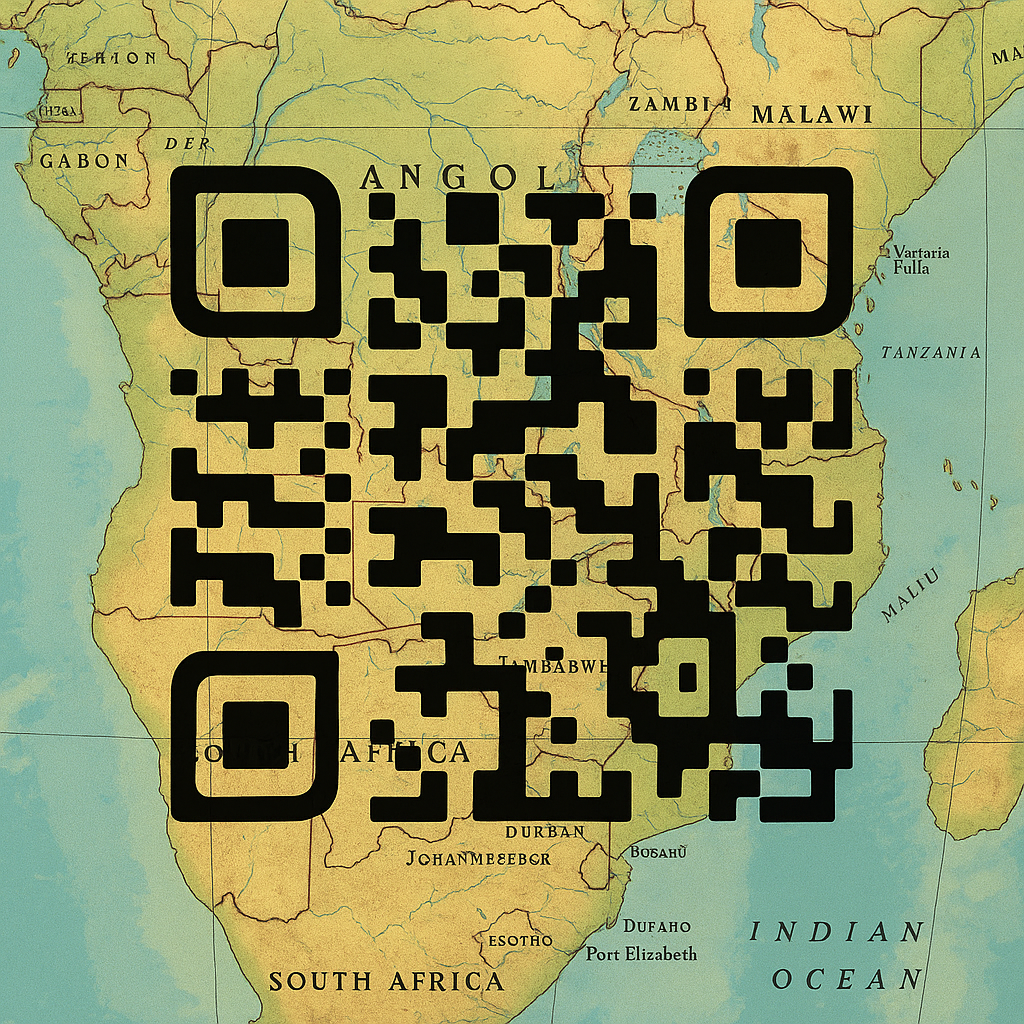
SA's 2026 vehicle pre-declaration mandate reshapes cross-border travel. Digital twin for every crossing, QR codes, and streamlined processes.
Get ready for a border revolution in South Africa starting June 1, 2026! Foreign vehicles will need to pre-register digitally, creating a "trust profile" for super-fast crossings. This new system means less waiting, no more piles of paperwork, and smoother journeys for everyone. It's all about making borders smarter and more efficient, turning frustrating queues into quick, easy passages.
What is South Africa's new early-registration rule for foreign vehicles?
South Africa's new rule, effective June 1, 2026, requires foreign-plated vehicles to digitally pre-register with the SARS Traveller Management System (TMS) before entering. This creates a six-month "trust profile" for frictionless border crossings, replacing repetitive paperwork and significantly reducing clearance times and improving revenue collection.
Get Cape Town news in your inbox
Stay updated with the latest stories from the Mother City.
1. The Silent Countdown to a New Era
When the sun rises on 1 June 2026, fifty-two South African land ports will wake up to a reality that feels almost science-fiction. At Beitbridge, Lebombo and every lesser-known gate, a digital echo of every foreign-licensed sedan, motorbike or camper van must already live inside the SARS Traveller Management System. Engines may idle on the Zimbabwean side of Beitbridge or on the Botswana tarmac at Ramatlabama, but if the four-wheeled visitor does not possess a geofenced, timestamped QR confirmation, the boom gate will stay locked. The slip is no longer paperwork tucked into a glovebox; it is the digital crankshaft turning the entire border process.
The change is deliberately one-sided. Cars wearing South African plates will continue life under the long-standing NAAMSA eNaTIS rules. Only foreign metal must enrol. In 2023, 1.2 million foreign light-duty vehicles crossed the frontier; nearly two-thirds came and went more than four times inside a single year. Instead of repeating the same dance at every arrival, owners gain a six-month “trust profile” that covers multiple journeys. Border life is being re-wired into one swift motion instead of a daily loop.
Repetition dies on that Monday in June. A bakkie that crossed yesterday, last week and last month will no longer clog the queue with the same paperwork each time. One advance declaration buys half a year of frictionless access.
2. Nine Clicks Between Home Garage and South African Tarmac
- Step 1 – Create your digital identity.*
Motorists open a TMS account using passport details, a company number if applicable, a working mobile, email and a password strong enough for a bank vault - 14 characters plus at least one non-Latin symbol.
Point your phone at the VIN sticker or type it in manually. The capture fields include make, model, year, engine number, chassis string, plate digits, country of registration and CO₂ class. A neural engine pings foreign licensing APIs; if the plate text or VIN does not match, the window closes in under a fifth of a second.
-
Step 3 – Split ownership from driving duty.*
A logistics firm in Windhoek can register forty trailers under its name yet delegate real-world driving to freelancers. Those drivers carry a rotating 90-day digital certificate instead of reams of proxy documents. -
Step 4 – State the mission.*
Tourism, daily commute, medical care, university semesters, humanitarian deliveries or formal trade - each label feeds a risk engine that decides how likely you are to meet a sniffer dog. -
Step 5 – Ask for temporary import status.*
Staying less than 182 calendar days per year triggers a multi-entry permit that auto-cancels once the clock runs out. -
Step 6 – Prove you can pay for a crash.*
Liability cover must originate from an insurer licensed in at least one SACU member. Optical character recognition checks the certificate against a whitelist of 2,037 approved underwriters. -
Step 7 – Post the security bond.*
SARS calculates 20 % of current landed value using Kelly Blue Book southern-Africa, Glass’s Guide UK and AutoTrader ZA. The money sits in a trust wallet and is refunded once final exit is confirmed. -
Step 8 – Collect the digital seal.*
A 128-bit AES-encrypted QR emerges, carrying the traveller’s photo and a silhouette of the car. It dies 72 hours after the stated arrival hour to block resale or photocopies. -
Step 9 – Let the system re-schedule you.*
If live sensors detect a queue longer than 25 minutes, TMS quietly shifts your slot and pushes a fresh code to your phone, flattening traffic before waves can form.
3. Where Minutes Shrink and Revenue Grows
In the south-bound lanes of Beitbridge, a quiet trial ran from October to December 2024. During those three months the data spoke louder than any briefing document.
• Average clearance time plummeted from 11 minutes 34 seconds to 4 minutes 3 seconds.
• The secondary inspection bay, once permanently congested, emptied by 38 %, gifting two extra lanes to freight rigs.
• Revenue that historically leaked away through under-valued imports jumped back by R27 million in 90 days.
No one tore the red-and-white boom out of the ground. Officers still crouch beside tyres, tap VIN rivets and peer under parcel shelves. What vanished was the ritual of re-keying every chassis number into the 1993-era CHIEF backbone, the slow heartbeat that once held everyone hostage.
4. The New Life Cycle of a Six-Month Permit
Start dates can be chosen up to 30 days in advance and are welded to the vehicle-owner pairing. Unlike the old DA 341 sheet, the permit captures the odometer on first entry. Each time the traveller re-crosses, logic checks the distance travelled; gains above 1,500 km per calendar day wave a red flag for illegal cabotage.
While the permit is active you may drive on any South African public road, yet the law draws five hard lines:
- No sales, leases or gifts.
- No collateral loans.
- No Gauteng e-toll registration.
- No tampering with the engine number.
- No swapping of licence plates.
One infraction shoves you from the green lane (random 1 in 30 inspection) into amber (every second visit) and finally into red lane (100 % check). Every offence is cumulative across SACU; what happens in Botswana does not stay in Botswana.
Money, Data and the Road Ahead
Bonds, Blockchain and Border Wi-Fi
Every foreign vehicle that opts for temporary importation posts a rolling 20 % security deposit. Industry analysts expect 400,000 vehicles to join the programme, translating into R20 billion sitting in SARS trust accounts. The earned interest - currently 4.75 %, higher than European transit guarantees - will bankroll the Border Management Authority’s drone surveillance fleet, a fiscal loop that pays for its own security.
Meanwhile, every VIN is hashed and dropped onto the South African National Blockchain Ledger, a permissioned layer riding Hyperledger Fabric. The ledger stamps out “double dipping,” the scam in which the same vehicle might try to sneak in at two border posts hundreds of kilometres apart.
To keep the whole machine humming, the Department of Communications is installing free 100-Mbps Wi-Fi within 500 metres of each port. The SSID “SARS-Assist” opens only the TMS site; cat videos and Instagram reels stay outside so that uploads remain priority.
Voices in the Queue: Communities, Traders, Patients
Lesotho’s 42,000 weekly mineworkers who cross Maseru Bridge in battered Toyotas now enjoy a six-month blanket permit that legalises ride-sharing and erases the Friday-night queue of four hundred tail-lights. Informal vegetable traders running tomatoes from Musina to Zimbabwe will gain a micro-enterprise exemption if turnover stays under R1 million and the vehicle is their sole asset. Medical NGOs transporting patients from rural Mozambique to Nelspruit can pre-register kombis under a humanitarian flag that shortens lane time without softening security.
Edge Cases Already Knocking on the Gate
• Electric vehicles: Tesla and BYD battery serial numbers morph after each firmware update. TMS stores both the original “stamped” and latest “logical” numbers, reconciled nightly by an encrypted OTA handshake.
• Classic cars: A 1954 Porsche 356 with no 17-digit VIN is issued a surrogate code “ZAF-CLV-XXX.” Pre-issued codes already exceed 3,200 for clubs in Germany, the UK and the US.
• Motorbike-and-sidecar combos: Botswana counts them as two units, the EU counts them as one. TMS sides with Brussels, keeping everything under a single line.
Timetable and Playbook for the Next 18 Months
30 September 2025 – Voluntary registration opens.
15 November 2025 – Government Gazette publishes final regulations.
15 January 2026 – Webinars for tourism boards and freight councils kick off.
1 March 2026 – RTMC eNaTIS 3.0 plugs into TMS.
1 June 2026 – Mandatory enforcement starts at 00:01 SAST.
1 August 2026 – Public dashboard shares 60-day performance metrics.
Punishment scales with stubbornness: first lapse earns a R2,500 admin fee and impound until declaration is completed; second offence within a year doubles bond from 20 % to 35 % and holds the car for 48 hours; a third refusal bars entry for 90 days across SACU. Fraudulent filings carry up to 12 months in prison or a R1 million fine.
From Cape Town to Mombasa: One Code, Eight Countries
Quiet negotiations with Kenya, Tanzania and the Democratic Republic of Congo seek mutual recognition of South African permits. If successful, a QR generated in Cape Town could stay valid all the way to Mombasa, turning the continent’s fragmented checkpoints into a single virtual corridor.
Today’s Action List
• Run a dummy registration at https://tms.sars.gov.za to learn the flow before it becomes law.
• Open a South African bank account if your home institution slaps punitive SWIFT fees on SARS EFT.
• Order a manufacturer-embossed replacement VIN plate if the current one is weather-worn; customs will reject hand-etching from June 2026 onward.
In the early hours of 1 June 2026 the only sound at Beitbridge may be the soft ping of an arriving QR code. The crowing of paper shuffling, the thud of rubber stamps and the murmured apologies for “just one more copy” will fade into memory.
What is South Africa's new early-registration rule for foreign vehicles?
South Africa's new rule, effective June 1, 2026, requires foreign-plated vehicles to digitally pre-register with the SARS Traveller Management System (TMS) before entering. This creates a six-month "trust profile" for frictionless border crossings, replacing repetitive paperwork and significantly reducing clearance times and improving revenue collection.
When does the new early-registration rule for foreign vehicles in South Africa come into effect?
The new rule will become mandatory on June 1, 2026, at 00:01 SAST. However, voluntary registration will open earlier, on September 30, 2025, allowing users to familiarize themselves with the system.
Which vehicles are subject to this new registration rule?
Only foreign-licensed vehicles are required to pre-register. Vehicles with South African plates will continue to operate under the existing NAAMSA eNaTIS rules. The system aims to streamline entry for the approximately 1.2 million foreign light-duty vehicles that cross the border annually, many of them multiple times.
What are the key steps for digitally pre-registering a foreign vehicle?
Motorists will need to create a TMS account using passport details, enter vehicle information (VIN, make, model, etc.), specify the purpose of their visit, request temporary import status (if staying less than 182 days), prove liability insurance from a SACU-licensed insurer, and post a security bond of 20% of the vehicle's landed value. Upon successful completion, a 128-bit AES-encrypted QR code will be issued.
What are the benefits of this new system for foreign vehicle owners?
The primary benefits include significantly reduced border clearance times (trials showed a drop from over 11 minutes to just over 4 minutes), the elimination of repetitive paperwork for frequent travelers, and the creation of a six-month "trust profile" for multiple journeys. The system also aims to flatten traffic queues by re-scheduling arrival slots if live sensors detect congestion.
What are the restrictions and penalties associated with the six-month permit?
While the permit allows driving on any South African public road, it prohibits sales, leases, gifts, collateral loans, Gauteng e-toll registration, engine number tampering, and license plate swapping. Infractions can lead to a tiered penalty system, ranging from administrative fees and impoundment to increased security bonds, temporary entry bans across SACU, and severe penalties for fraudulent filings, including imprisonment or a R1 million fine.

Sizwe Dlamini is a Cape Town-based journalist who chronicles the city’s evolving food scene, from boeka picnics in the Bo-Kaap to seafood braais in Khayelitsha. Raised on the slopes of Table Mountain, he still starts every morning with a walk to the kramat in Constantia before heading out to discover whose grandmother is dishing up the best smoorsnoek that day.
View all articles →