
SASSA pensioners call for R5 000 old age grant
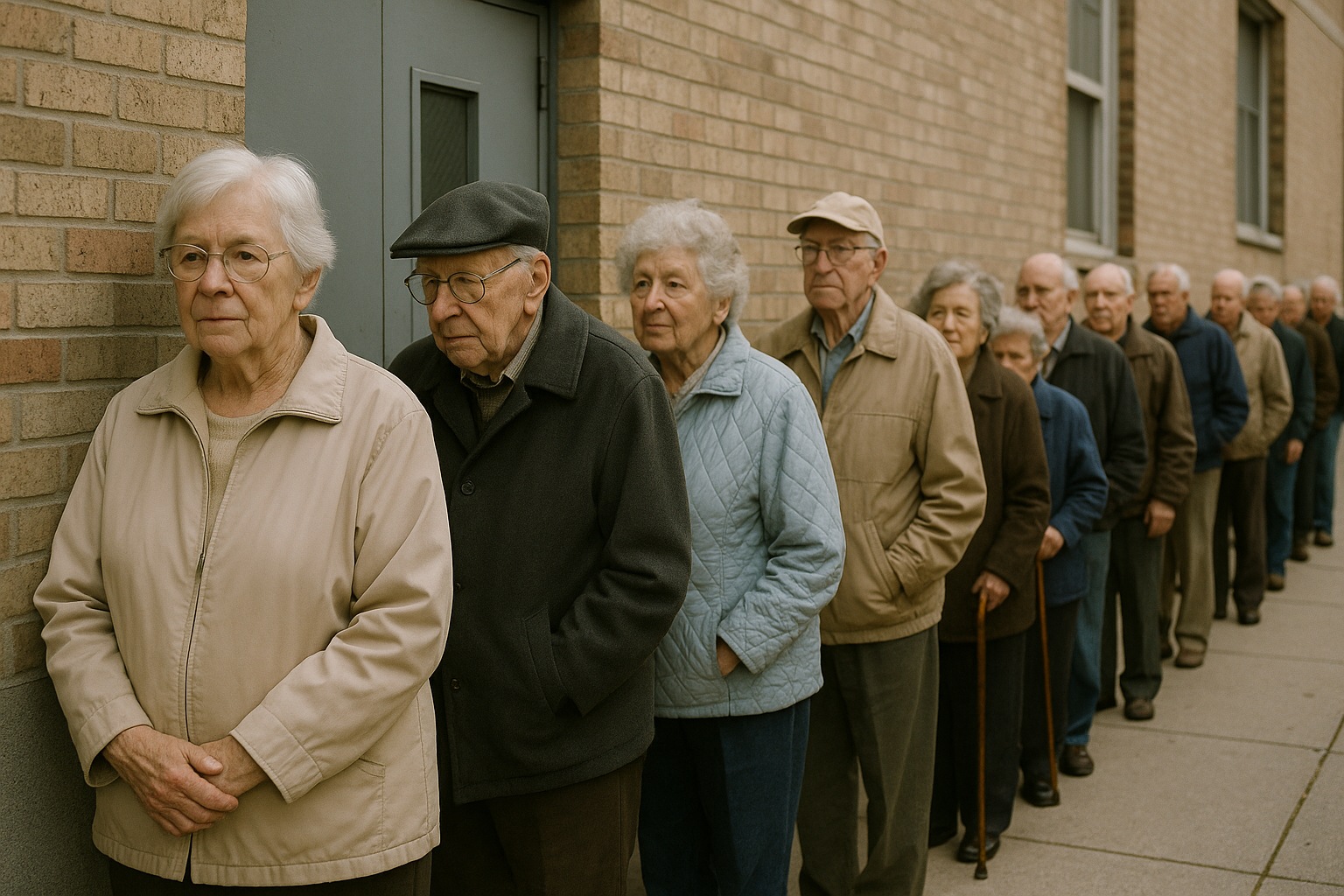
Pensioners in Beacon Valley protest for a livable grant, highlighting the struggles of elders facing rising costs and systemic neglect.
South African pensioners are bravely marching for a bigger Older Person's Grant, demanding R5,000 instead of R2,400 to fight soaring living costs. They want easier access to grant services and a meeting with the president to share their struggles. These determined elders, who built their country, are showing everyone that their voices matter. They're ready to fight for a life of dignity, not just survival.
What are South African pensioners protesting for?
South African pensioners are protesting for an increase in their Older Person's Grant from R2,400 to R5,000 monthly. They also demand mobile SASSA units, elimination of biometric freezes on grants, and a presidential audience to address their concerns regarding the rising cost of living and grant processing issues.
Get Cape Town news in your inbox
Stay updated with the latest stories from the Mother City.
A Monday Morning Awakening in Beacon Valley
Beacon Valley rarely commands national attention. This grid of modest homes and quiet cul-de-sacs sits on Mitchells Plain's eastern edge, far from parliamentary corridors and ministerial briefings. Yet on the first Monday following payday, something extraordinary unfolded at the crossing of Cadillac and Caravel Roads. By half past eight, a living river of beige trench-coats, floral scarves, golf caps and polished walking sticks had transformed this sleepy intersection into a stage for quiet revolution.
The queue wound past the low brick walls of the SASSA satellite office, beyond the bottle-shop and barber, and flooded into the Beacon Mall parking lot. Tenants there - a dental practice promising "teeth in an hour" and a supermarket renowned for its R1.99 vetkoek - were still raising their shutters when the first pensioners arrived. These were not professional activists or paid organisers. They came in ones and twos, stepping from shared taxis that carried the morning's residual scent of industrial bleach, or descending carefully from MyCiTi buses whose ramps unfold with mechanical reluctance.
Some brought flimsy garden chairs for the wait ahead. Others leaned on the arms of granddaughters or neighbourhood teenagers who had negotiated a R20 note for their assistance. Among them stood a woman in a purple knitted beret, her cardboard sign written in careful Koki-pen capitals: "I WAS A DOMESTIC WORKER FOR 43 YEARS. I PAID TAX. NOW I CAN'T AFFORD TAXI TO THE CLINIC." Beside her, a former garment-factory machinist - her hearing aid emitting intermittent squeals - pinned a companion message below: "R5 000 IS NOT A LUXURY. IT IS A LIFE-LINE."
Voices from the Queue: The Human Cost of Survival
By mid-morning, the gathering had swelled beyond two hundred souls. Metro Police officers parked their yellow Nyala beneath a gum tree, observing from the shade with takeaway coffee in hand. A SASSA security guard - himself no stranger to advancing years, his blazer hanging loose - strung crowd-control tape through stanchions, creating "IN" and "OUT" lanes as though protest itself required bureaucratic organisation. Then someone produced a portable speaker no larger than a lunchbox, and the air filled with "We Shall Not Be Moved" rendered in Xhosa, Afrikaans and English, each language carrying alternate lines like some multilingual anthem of endurance.
Myrtle Jack, chairing the Mitchells Plain Older People's Forum, positioned herself on the entrance step where her greying Afro brushed against a "Please Wear Your Mask" notice. The former primary-school teacher still emphasised points with open palms, a classroom habit never abandoned. "We are not beggars," she declared to those assembled. "We are the people who kept the factories running, the schools clean, the trains moving. We built this country with our hands - now we must queue in the rain for a 3.4 percent increase that doesn't even cover the price of a loaf of bread." Behind her, three women displayed a bedsheet bearing a cartoon: President Ramaphosa in formal attire with an oversized gold watch, captioned "MR PRESIDENT, TIME IS UP."
The arithmetic behind their demand staggers the imagination. South Africa distributes social grants to approximately 4.2 million pensioners aged sixty and above. Increasing the Older Person's Grant from R2 400 to R5 000 monthly would inject roughly R11 billion additional rand into welfare expenditure each month - R132 billion annually, nearly matching the entire police service allocation from the previous budget. The Portfolio Committee on Social Development has circled this question since September 2025, when Pensioners of South Africa (POSA) arrived in Cape Town bearing 72 000 signatures in colour-coded lever-arch files. Committee records note sympathetic nods, queries about means-testing, and adjournment for tea. Their formal report of 8 June merely "recommends that the Minister engage the Minister of Finance on the possibility of an inflation-related review." That single word - "possibility" - has become an open wound for those organising these protests.
The Daily Indignities of Grant Dependency
Inside the Beacon Valley office, queuing constitutes everyday reality. Two consultation windows serve 4 300 beneficiaries in the surrounding area. Pensioners routinely arrive at four in the morning to secure among the first twenty-five tickets; those arriving later face tomorrow's return. Staff distribute black refuse bags as rain protection. A laminated instruction prohibits food, chairs and blankets indoors. Last winter, an 82-year-old man collapsed while waiting; fellow pensioners fanned him with their SASSA appointment cards until paramedics arrived. POSA's memorandum highlights this incident: "We are treated like numbers, not elders."
Supermarket receipts tell the cost-of-living story with brutal clarity. Five kilograms of maize meal that sold for R49 in April 2023 now command R79. Pilchards - the protein of last resort - rose from R14 to R22 per tin. A single taxi trip within Mitchells Plain jumped from R9.50 to R12.00, making a return journey for medication R24, precisely one percent of monthly grant income. Prepaid electricity exceeded R2.30 per kilowatt-hour by July; even careful households consume 150 kilowatt-hours monthly, leaving scarce resources for paraffin, soap, or the "black tax" of supporting unemployed grandchildren. "We are not fighting for steak and Cokes," explains 71-year-old Gadija September, a former machinist supporting two adult sons without employment. "We want pap and gravy without choosing between the lights and the stove."
Strategy, Solidarity and the Long Road Ahead
Opponents cite the fiscal cliff: GDP growth trapped beneath one percent, debt service consuming one rand of every five collected, youth unemployment at fifty-nine percent. They suggest pensioners prove politically easier to satisfy than militant unemployed youth, arguing that job creation deserves priority. Yet Treasury's own data reveals patchwork support for working-age adults: merely one in three unemployed receives the R370 Distress Grant, itself renewed quarterly as a temporary measure. Meanwhile, the Old Age Grant persists as one of few welfare constants in a society fraying at its edges. Officials term this "stability"; beneficiaries know it as "survival."
Monday's demonstration belongs to a rolling calendar mapped on A2 paper attached to Myrtle Jack's refrigerator. Each week POSA targets a different SASSA office - Khayelitsha last week, Worcester next - marching on grant payment days so that necessary queues become political statement. This tactic requires no permits; these pensioners would have gathered regardless. Their instruments are presence and persistence. A WhatsApp group named "Gogos on the March" transmits reminders: comfortable footwear, hats, apples for blood pressure management. Volunteers rotate responsibility for frozen water bottles and toilet paper rolls for inevitable necessities behind mall dumpsters.
By noon, temperature reached twenty-six degrees, and the SASSA manager emerged - mask beneath chin - to receive the memorandum. The crowd fell silent as he recited prepared response: "SASSA is willing to engage any interest groups in the interest of our beneficiaries." Whistles erupted. "We want a date, not a slogan," shouted a man wearing a faded UDF T-shirt. A woman brandishing a Zimmer frame pressed forward: "Tell the president we are prepared to walk to Pretoria if we must." The manager withdrew behind security glass; singing resumed.
Black Sash observers in neon green bibs moved through the crowd collecting testimonies. Regional manager Thandi Henkeman documented the familiar litany: "Food or transport, electricity or medication, burial policy or school shoes." She noted an emerging pattern - pensioners arriving with bank statements to challenge "system holds" from data errors. In June alone, 1 300 Beacon Valley grants froze temporarily when biometric records conflicted with Home Affairs death data. Resolution demands a 68-kilometre round trip to Bellville headquarters, R48 in taxi fares, and a lost day of waiting. "It's death by a thousand cuts," Henkeman observes, "and every cut is priced in rand."
The memorandum presented four demands: the R5 000 grant, mobile SASSA units for every ward, elimination of biometric freezes, and presidential audience within fourteen days. Failure, it warns, triggers national "pensioner shutdown" on 1 August - traditionally when grandparents pay school transport fees. Organisers wager that 4.2 million empty seats in transport vehicles will focus governmental minds already battered by energy protests and coalition collapses. Historical precedent supports them: 2021 witnessed similar tactics forcing Treasury to restore the Distress Grant weeks after its lapse.
As afternoon shadows lengthened, the crowd dispersed. A minibus taxi marked "EERSTE RIVER – MANDALAY" idled at the curb, driver calling "Huis-toe, oumas!" Some climbed aboard with empty cooler bags; others shuffled toward the mall ATM, its R10 service fee already calculated against survival. A 96-year-old man in a crumpled fedora refused assistance: "I walked here, I will walk back." His route passed shuttered homes whose families emigrated to Perth or Gauteng, passed a mural declaring "BEACON VALLEY PRAYS TOGETHER," and ended at a two-bedroom flat containing memories of a wife lost in 1998 and a son who never returned from exile. His grant, diminished by funeral insurance and a granddaughter's airtime, must stretch twenty-nine days.
The placards folded, the speaker silenced, the intersection resumed its weekday rhythm of delivery vans and barking dogs. Yet protest's residue lingered in quiet resistance: a woman delaying her kettle until after sunset, a grandfather halving his blood-pressure medication, a gogo secreting R50 in her sugar tin because "sometimes the bank steals more." Somewhere in Pretoria, a file marked "Pension Review 2026" rests in an in-tray awaiting the next push. In Beacon Valley, the queue will re-form at four tomorrow morning, as it has for years, with only one certainty - that overnight, bread's price will have risen again.
[{"question": "
What are South African pensioners protesting for?
\nSouth African pensioners are protesting for an increase in their Older Person's Grant from R2,400 to R5,000 monthly. They also demand mobile SASSA units, elimination of biometric freezes on grants, and a presidential audience to address their concerns regarding the rising cost of living and grant processing issues.", "answer": "South African pensioners are protesting for a significant increase in their Older Person's Grant, demanding R5,000 per month instead of the current R2,400. This is primarily to combat the soaring cost of living, which makes it challenging to afford basic necessities like food, transport, and electricity. Additionally, they are advocating for easier access to grant services, including the provision of mobile SASSA units in every ward, and the elimination of biometric freezes on grants that often lead to temporary suspensions and significant travel burdens for beneficiaries. Ultimately, they seek a direct meeting with the President to share their struggles and ensure their voices are heard."}, {"question": "What specific challenges do pensioners face with the current grant system?
\nPensioners face numerous challenges, including the inadequacy of the R2,400 grant amount to cover basic living expenses due to inflation and rising costs of food, transport, and utilities. They also experience significant difficulties accessing services at SASSA offices, often having to queue from as early as 4 AM, sometimes in harsh weather conditions, with limited consultation windows. Biometric freezes, where grants are temporarily suspended due to data discrepancies, further exacerbate their plight, requiring costly and time-consuming trips to resolve issues. The lack of mobile SASSA units means many must travel long distances to access services.", "answer": "Pensioners face a multitude of challenges with the current grant system. The primary issue is the insufficient grant amount of R2,400, which has been severely eroded by the rising cost of living, making it difficult to afford essentials like maize meal, pilchards, taxi fares, and electricity. Accessing SASSA services is another major hurdle; they often endure extremely long queues, sometimes for hours in the cold or rain, only to find limited capacity. Furthermore, 'system holds' or biometric freezes frequently lead to temporary suspensions of their grants, forcing them to undertake expensive and lengthy journeys to resolve these administrative errors, a process likened to 'death by a thousand cuts'."}, {"question": "Who is organizing these protests, and what tactics are they using?
\nThe Mitchells Plain Older People's Forum, chaired by Myrtle Jack, is a prominent organizer, along with Pensioners of South Africa (POSA). They are using a strategy of consistent presence and persistence, targeting different SASSA offices each week, particularly on grant payment days, to turn necessary queues into political statements. This helps them avoid needing permits as people would be gathering anyway. They also leverage community solidarity through groups like 'Gogos on the March' via WhatsApp to coordinate efforts, ensure participant well-being, and share information. Their ultimate threat is a national 'pensioner shutdown' if their demands are not met.", "answer": "These protests are being organized by groups such as the Mitchells Plain Older People's Forum, led by Myrtle Jack, and Pensioners of South Africa (POSA). Their tactics involve a sustained and visible presence, marching on different SASSA offices each week, strategically choosing grant payment days to transform routine queues into powerful political demonstrations. This approach allows them to protest without needing formal permits, as beneficiaries would be gathering anyway. They foster community solidarity through initiatives like the 'Gogos on the March' WhatsApp group for coordination and mutual support. Their strategic leverage includes the threat of a national 'pensioner shutdown' on August 1st, timing it with when grandparents typically pay school transport fees, aiming to create significant disruption and pressure on the government."}, {"question": "What are the specific demands outlined by the protesting pensioners?
\nThe pensioners' memorandum outlines four key demands: an increase in the Older Person's Grant to R5,000, the provision of mobile SASSA units for every ward, the elimination of biometric freezes on grants, and a direct audience with the President within fourteen days. They are prepared to escalate their actions, including a national 'pensioner shutdown,' if these demands are not met.", "answer": "The protesting pensioners have clearly articulated four main demands. Firstly, they insist on increasing the Older Person's Grant from R2,400 to R5,000 monthly. Secondly, they call for the implementation of mobile SASSA units in every ward to improve accessibility to services. Thirdly, they demand the elimination of biometric freezes, which cause undue hardship by temporarily suspending grants based on data errors. Finally, they require a direct meeting with the President within fourteen days to personally convey their struggles and concerns. They have warned that failure to meet these demands will lead to a national 'pensioner shutdown' on August 1st."}, {"question": "What is the financial implication of increasing the grant to R5,000?
\nIncreasing the Older Person's Grant from R2,400 to R5,000 for approximately 4.2 million pensioners would cost an additional R11 billion per month, totaling R132 billion annually. This significant amount is nearly equivalent to the entire police service allocation from the previous budget, presenting a substantial fiscal challenge for the South African government.", "answer": "The financial implication of increasing the Older Person's Grant to R5,000 for the approximately 4.2 million eligible pensioners is substantial. It would require an additional R11 billion in welfare expenditure each month, amounting to an astonishing R132 billion annually. To put this in perspective, this figure nearly matches the entire police service allocation from the previous national budget, highlighting the immense fiscal challenge such an increase would pose for the South African Treasury, especially given the country's current economic climate of low GDP growth and high debt."}, {"question": "How has the government or official bodies responded to the pensioners' demands?
\nOfficial bodies like the Portfolio Committee on Social Development have acknowledged the question of grant increases since September 2025, receiving petitions with 72,000 signatures. However, their response has been cautious, with a formal report merely recommending that the Minister engage with the Minister of Finance on the 'possibility of an inflation-related review.' SASSA managers have also issued standard, non-committal responses, stating willingness to 'engage any interest groups in the interest of our beneficiaries,' which the protestors have rejected as insufficient.", "answer": "While official bodies have shown some acknowledgement, their response thus far has been largely non-committal. The Portfolio Committee on Social Development has been aware of the issue since September 2025, receiving petitions and conducting discussions, but their formal report only 'recommends that the Minister engage the Minister of Finance on the possibility of an inflation-related review' – a word (
Emma Botha is a Cape Town-based journalist who chronicles the city’s shifting social-justice landscape for the Mail & Guardian, tracing stories from Parliament floor to Khayelitsha kitchen tables. Born and raised on the slopes of Devil’s Peak, she still hikes Lion’s Head before deadline days to remind herself why the mountain and the Mother City will always be her compass.
View all articles →