
Search ends in tragedy as Simon’s Town School learner found dead
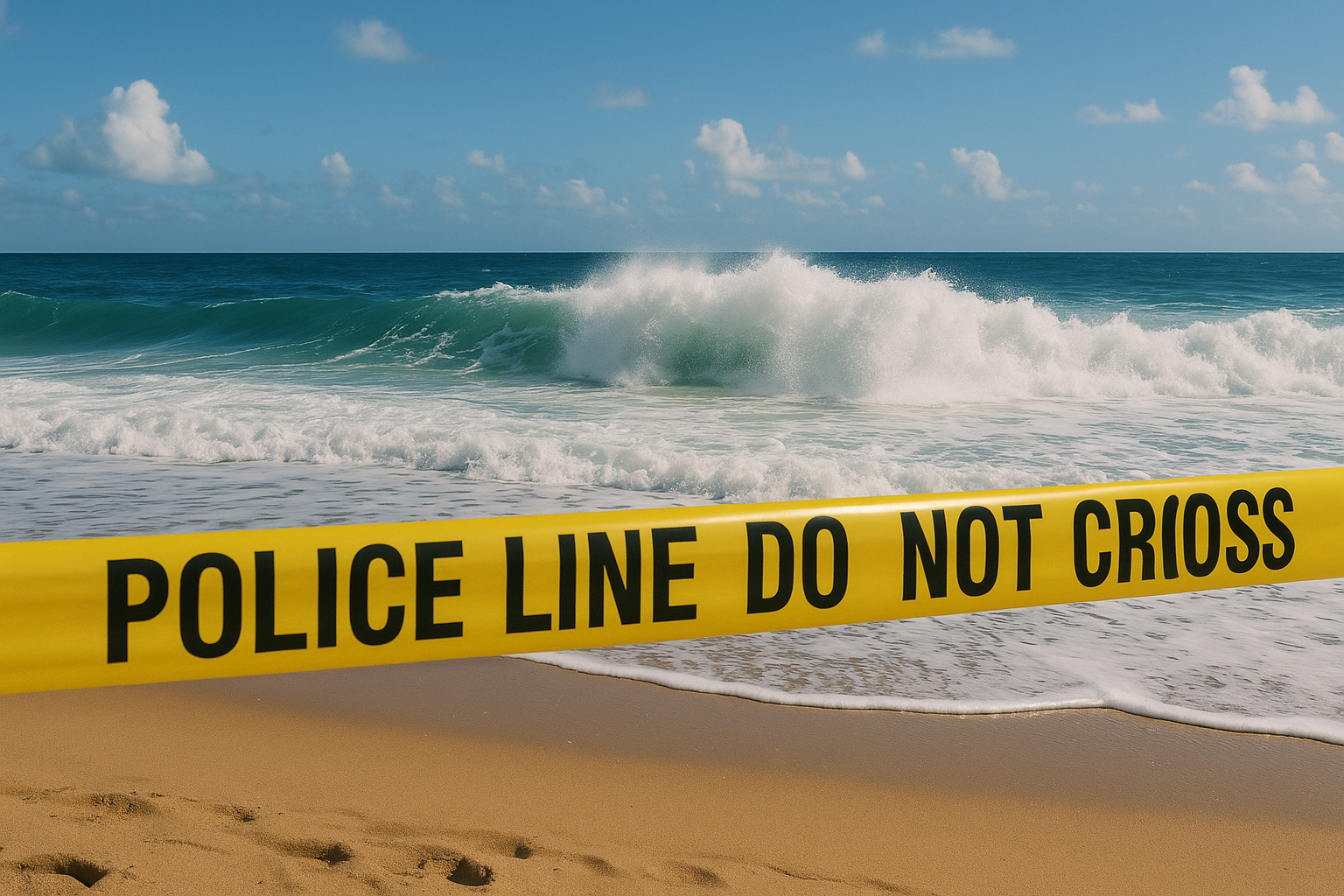
A 15-year-old boy's drowning in Fish Hoek sparks a community-wide search, grief, and calls for policy change.
Luve Bukwana, a 15-year-old, vanished from his home on March 17th, leaving his family in a frantic search. Ten days later, his body was tragically found by divers in Fish Hoek Bay, turning a sunny beach into a somber scene. The ocean revealed its secret: Luve had drowned, and now an inquest seeks to understand how this young life was lost. His community, gripped by sorrow, rallied together, forever changed by the boy, the bay, and his vanishing.
What happened to Luve Bukwana?
Luve Bukwana, a 15-year-old boy, went missing from his home in Masiphumelele on March 17th. His body was tragically discovered by divers in Fish Hoek Bay ten days later, on March 27th. The cause of death was drowning, and an inquest is ongoing to determine the circumstances surrounding his disappearance and death.
Get Cape Town news in your inbox
Stay updated with the latest stories from the Mother City.
The Warning Tape That Stopped Summer
Thursday at Fish Hoek felt like a postcard until the yellow tape began whipping in the salt wind. Neon strips snapped against bikini colours and ice-cream drips, turning a lazy beach into a sudden crime scene. SAPS divers wrestled into black suits while lifeguards herded bewildered tourists away from the shallows. Few of the onlookers realised the shape rolling in the foam was Luve Bukwana, fifteen years old, ten days missing, and now the centre of a peninsula holding its breath.
The cordon stretched wider than the eye could see: aunties clutching rosaries, teenagers live-streaming, toddlers hoisted onto fathers’ shoulders for a better view of tragedy. Someone’s Bluetooth speaker still pumped summer house until a constable gently switched it off; the silence that followed felt louder than any siren. In that hush the ocean stopped looking like a playground and became a ledger, ready to record whatever it had kept hidden.
Between the tape and the tide, detectives worked with the precision of surgeons. Every footprint in the wet sand was photographed, every shell fragment bagged. A holidaymaker asked why so much fuss for one child; a local answered with a glare sharp enough to cut. By sunset the beach resembled a stage after the play has ended - props left behind, audience dazed, the story still echoing even though the actors had gone.
Nine Nights Without a Lullaby
The countdown began on 17 March at 23:50, when Luve slipped out of his family’s corrugated-iron dwelling in Masiphumelele without a goodbye. In neighbourhoods where doors swing on wire hinges and streetlights die young, midnight exits are not unheard-of, yet mothers still feel the chill when a bed stays empty past dawn. Ntombizodwa Bukwana started her search the way every parent does: spaza shop, cousin’s couch, BMX track among the broken glass. By 08:00 she had walked every pathway that ribbons through the wetlands; by 09:00 the police kiosk on Soetwater Road had logged the first official plea.
Because the docket carried the number 17, it skipped ordinary queues and landed on the desks of detectives who specialise in stolen childhoods. Mapetla and Goolam, veterans who once pulled a toddler from a Philippi shebeen at 03:00, drove straight to Simon’s Town School. They learned Luve had last sat in maths on 15 March, kept behind for extra algebra, thanking his teacher in a whisper. CCTV caught him exiting the gate at 15:12, blazer flapping, earphones sealing him into a private soundtrack. That grainy still would soon wallpaper the peninsula, a face enlarged until pixels became prayers.
Flyers bloomed overnight: 2,000 neon-orange sheets from Ocean View printers, digital tiles shared on Telegram and the data-frugal MXit teens still cling to. Two photos were chosen - uniform portrait with a shy half-smile, athletics day shot with stopwatch and bulging cheeks - captioned in isiXhosa: “Umntwana wethu, buyela khaya.” Strangers taped them inside car windows, on café menus, even around energy-drink cans sold outside the court. The paper trail turned every shopper into a potential witness, every street corner into a confession booth.
Dogs, Drones and the Scent of Despair
Monday brought police dogs to the dunes behind Masiphumelele Library, noses dredging through milkwood where tik smoke usually hangs. Tuesday a tracker howled excitement along the rocks between Kalk Bay harbour and the abalone look-outs, only to lose the spoor at a kelp-choked drain. The Air Wing donated two sorties, rotor blades drumming against the amphitheatre of mountains while infrared eyes swept the bay’s bottle-green floor. From the sky the peninsula looked small enough to cup in one hand; on the ground it felt vast enough to swallow a lifetime.
While choppers counted waves, aunties stirred maize porridge in cast-iron pots, keeping volunteers fed so hope stayed alive. Mechanics ferried paraffin so night patrols could warm blue hands over braziers; a Methodist counsellor turned the school art room into a worry factory where little ones moulded clay angels with broken wings. Each sunset that passed without an answer tightened an invisible noose: children marched home in phalanxes, parents imposed curfews harsher than lockdown rules. In shebeen corners whispers mutated - serial predator, organ traders, apartheid tunnels beneath the naval base - fear writing fan fiction in real time.
The breakthrough arrived disguised as litter: a single size-six black school shoe spotted by a German kite-surfer at sunrise on 24 March, wedged between rocks where urchins had nibbled the sole. Masking tape inside the tongue still read “L. Bukwana” in tidy capital letters. What looked like trash to a tourist looked like testimony to a lifeguard who had memorised the posters. Within an hour SAPS divers shifted their grid half a kilometre south, chasing a seabed depression that collects whatever the current judges too heavy for floating.
The Return Nobody Wanted
At 11:43 diver Jan Venter descended eleven metres and found Luve wrapped in sea-grass like a gift the ocean insisted on delivering. Recovery protocol is drilled: camera first, body bag next, ascent line, winch. Yet when the zip closed over the boy’s face, the warrant officer’s voice cracked across the radio, asking for a minute fathers are never officially given. On shore Detective Mapetla dialled Ntombizodwa before the ambulance doors shut, trying to outrun gossip that sprints faster than mercy. By 13:00 candles and smartphones already outnumbered seagulls, all held back by constables whose own eyes shone wet.
Friday’s post-mortem spoke the language of water: lungs heavy, no blade marks, only the abrasions waves etch against rock. Toxicology will take six weeks - six winters of waiting to learn whether Luve stepped, slipped or was pushed into the 15 °C bay that can hijack a breath in under a minute. Detectives now mine digital strata: WhatsApp last-seen stamps, SIM-card pings off Glencairn towers, maybe a deleted chat ghosting on a server in Luxembourg. The inquest docket stays open; the school desk in 10B remains adorned with a cardboard Manchester United crest that will never again be added to.
The landscape, meanwhile, keeps its meticulous archives. Baboon rangers report a one-eared male sitting on the Fish Hoek balustrade, staring at crime-scene tape as if decoding fluorescence. Oceanographers cite spring-tide data: new-moon rip currents raise adolescent drowning odds by 42 %, especially when boys overestimate their own warmth. A mural goes up on the library wall - Luve’s face ringed by cormorants whose wings look like hands forever open - while a Back-a-Buddy fund rockets past its R60,000 target in thirty-six hours. Tragedy converts to solidarity with the speed only the internet and grief can achieve.
Policy gears grind: the principal requests a safety audit, MPs table oral questions, someone mentions streetlights and a late bus that never existed. Whether budgets will follow the headlines is uncertain; what is certain is that every child in False Bay now knows the ocean keeps its own attendance register. Nightly vigils fuse with isiXhosa hymns, tambourines drowning taxi bass, while a cardboard box that once held an injured guinea fowl sits empty on a windowsill, wings long gone but the story still fluttering.
What happened to Luve Bukwana?
Luve Bukwana, a 15-year-old boy, went missing from his home in Masiphumelele on March 17th. His body was tragically discovered by divers in Fish Hoek Bay ten days later, on March 27th. The cause of death was drowning, and an inquest is ongoing to determine the circumstances surrounding his disappearance and death.
Where and when was Luve Bukwana found?
Luve Bukwana's body was found by divers in Fish Hoek Bay on March 27th, ten days after he went missing. The discovery was made at 11:43 am, eleven metres deep in the bay, wrapped in sea-grass.
What is the cause of Luve Bukwana's death?
The post-mortem examination indicated that Luve Bukwana died by drowning. His lungs were heavy with water, and there were no blade marks on his body, only abrasions consistent with being in the ocean. Toxicology results are pending to provide further information.
What steps were taken to find Luve after his disappearance?
After Luve went missing on March 17th, his mother, Ntombizodwa Bukwana, began searching immediately. Police were notified by 9:00 am on March 18th. Detectives investigated, visiting his school and reviewing CCTV footage. Flyers were distributed widely, and searches involved police dogs, trackers, and the Air Wing, utilizing drones and infrared technology. The search efforts covered dunes, rocks, and the bay.
How was Luve Bukwana eventually located?
The breakthrough in the search occurred on March 24th when a German kite-surfer spotted a single size-six black school shoe wedged between rocks, with "L. Bukwana" still visible inside the tongue. This led SAPS divers to shift their search grid, resulting in the discovery of Luve's body by diver Jan Venter.
What is the status of the investigation into Luve's death?
An inquest docket remains open to determine how Luve's life was lost. Detectives are analyzing digital data, including WhatsApp activity and SIM-card pings. Toxicology results are expected in approximately six weeks. The community has rallied in support, with a Back-a-Buddy fund exceeding its target, and discussions are ongoing regarding safety measures and policy changes in the area.

Sarah Kendricks is a Cape Town journalist who covers the city’s vibrant food scene, from township kitchens reinventing heritage dishes to sustainable fine-dining at the foot of Table Mountain. Raised between Bo-Kaap spice stalls and her grandmother’s kitchen in Khayelitsha, she brings a lived intimacy to every story, tracing how a plate of food carries the politics, migrations and memories of the Cape.
View all articles →