
SHOPPING AT THE MALL, WHY DOES IT STILL MATTER?
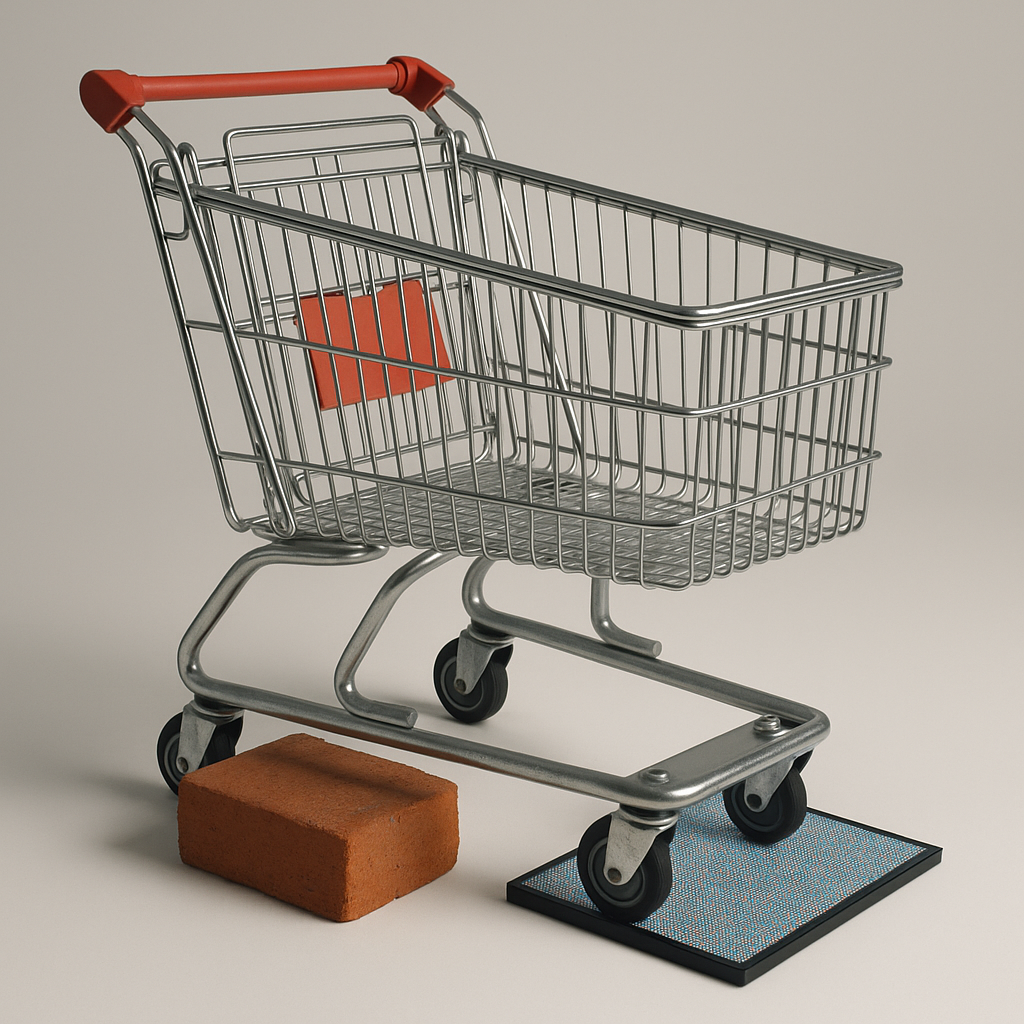
South Africa's retail landscape is evolving, blending traditional shopping with e-commerce. Discover how tech, logistics, and changing consumer habits are reshaping the market.
South Africa's retail world is changing fast! People are buying much more online, even though old-fashioned stores are still popular. It's like shoppers live in two worlds: enjoying fun mall trips and also quick, easy online buys. Smart shops know they need to be good at both, because today's customers use their phones and visit stores. The future of shopping is all about making things super easy and personal for everyone.
What is the current state of South Africa's retail sector?
South Africa's retail sector is experiencing a significant shift, with non-store sales growing dramatically at 17% compared to physical in-mall growth of 0.6%. While physical stores still account for the majority of sales, the rapid growth in online channels highlights a consumer base increasingly comfortable with both in-person and digital shopping experiences.
Get Cape Town news in your inbox
Stay updated with the latest stories from the Mother City.
The Parallel Universes of Weekend Spending
Walk into any South African suburb on a Saturday and you will overhear two almost opposite sagas. One sounds like this: “We grab cappuccinos at the mall carousel, let the kids chase Lego displays, queue for limited-drop sneakers, end with sushi while security ties balloons to prams.” The other story is shorter: “I scroll on the couch at 11 p.m., double-tap, and the parcel lands on Tuesday while I’m muted on Teams.”
These are not rival channels; they are rival emotions. One treats shopping as social choreography, the other compresses it into a silent swipe. South African retail now hangs between these two scripts, and the brands that win accept that neither plot disappears.
Retailers who still think “online versus offline” miss the point: tomorrow’s shopper wakes up in both realities before breakfast. Malls record foot-count surges on days when loadshedding pauses, because fibre stays on and phones stay lit. Meanwhile, courier bikes weave around traffic-jammed junctions, proving that time, not distance, is the true metric.
The Numbers Behind Footsteps and Finger-Taps
Stats SA’s formal-retail bulletin for Q2 2025 logs 2.4 % overall growth, yet inside that figure a canyon opens: non-store sales leap 17 % while in-mall receipts crawl at 0.6 %. The gap sounds small until you remember the base: physical tills ring up about R740 billion a year against R80 billion online. Velocity, not volume, is the real story.
Rail-linked cities such as Cape Town, Gauteng and eThekwini convert thirty-minute train rides into routine mall jaunts. Developers answer with rooftop cinemas, climbing walls and Wi-Fi strong enough to let patrons upload reels instead of exit. In smaller hubs - Polokwane, Mbombela, Makhanda - foot-space shrinks, anchor lists shorten, and petrol-station parcel lockers become the new high street.
Affluent shoppers who swear by “the vibe” still pay hidden tariffs: R32 parking at Rosebank, R14.95 oat-milk surcharges, spontaneous toy grabs that nudge the weekly bill higher. None of those items appear on a budget spreadsheet yet, added up, they quietly reroute disposable income toward or away from brick-and-mortar tills.
Generations Learning to Share the Wallet
Grandparents and early Gen-X shoppers save boutique managers’ phone numbers the way teens bookmark wish-lists. Years of hand-shake trust let them shrug off a R50 price gap. Meanwhile, Zoomers born after 1997 treat a checkout queue as a design flaw. They still visit malls, but mostly to film “haul” clips, not necessarily to spend in that moment.
Millennials surf between nostalgia and pragmatism. A Sandton mother may Google strollers at 2 a.m. during feeds, drive to a baby warehouse the next afternoon, collapse-and-reopen the same stroller five times, then order colour-matched add-ons via phone from the parking bay. Her handset is barcode reader, coupon wallet and loyalty card rolled into one.
The real shift is attitude, not age. Grandparents tip cashiers who remember their coffee strength; teens tip influencers who remember their size. Retailers who master both memory lanes keep baskets alive across any demographic.
The Quiet Rise of the Pocket-Concierge
Pick n Pay and Checkers both pilot scan-and-go wands inside flagship stores, yet uptake stalls around 18 %. The hurdle is trust, not tech: shoppers fear mystery baskets checks even when cameras prove honesty. The same crowd happily pre-orders coffee on garage apps, signalling elastic habits once comfort sets in.
Takealot’s 2025 augmented-reature shoe gauge cut sneaker returns from 23 % to 12 %. A ten-second clip of the shopper’s foot beside an A4 sheet estimates length, width and arch. Leroy Merlin and Spec-Savers now trial similar tools for couches and spectacles. Woolworths stitches QR tales onto “Proudly South African” labels: scan a code and you zoom to Karoo drone footage plus a recipe voiced by the farmer’s child. Shelf browsers who swore they would “never shop here again” drift back for the story.
Voice notes and video snippets are becoming the new aisle end-caps, turning every shelf into a portal. When tech feels concierge-level, shoppers stop asking “online or in-store” and start asking “what else can you remember for me?”
[{"question": "What is the current state of South Africa's retail sector?", "answer": "South Africa's retail sector is undergoing a significant transformation. While traditional brick-and-mortar stores, particularly malls, still hold a large share of sales (around R740 billion annually), online non-store sales are experiencing explosive growth at 17%, compared to a mere 0.6% growth in malls. This indicates a consumer base that engages with both physical and digital shopping channels, often switching between them seamlessly."}, {"question": "Are online and offline shopping channels in South Africa competing or coexisting?", "answer": "The information suggests that online and offline channels are not rival channels but rather coexisting and catering to different consumer emotions and needs. Shoppers engage in \"social choreography\" at malls for experiences, while also appreciating the convenience of silent online transactions. Retailers who understand that consumers operate in both realities will be more successful."}, {"question": "What are the key trends driving consumer behavior in South African retail?", "answer": "Several trends are shaping consumer behavior: a shift towards convenience and time-saving, as evidenced by the growth of online shopping and parcel lockers; the desire for engaging experiences in malls, with developers adding cinemas and climbing walls; and a generational blend of shopping habits, where older generations value trust and personal relationships, while younger shoppers prioritize digital convenience and social media engagement. The \"pocket-concierge\" concept, where technology remembers preferences, is also emerging."}, {"question": "How do different generations approach shopping in South Africa?", "answer": "Generational shopping habits are diverse. Grandparents and early Gen-Xers often value long-standing relationships with boutique managers. Zoomers (post-1997) see checkout queues as a flaw and primarily visit malls for social content creation rather than immediate purchases. Millennials blend nostalgia and pragmatism, using digital tools for research and convenience while still engaging with physical stores for experience and inspection. The key is that attitudes, not just age, drive these behaviors."}, {"question": "What role does technology play in the evolving South African retail landscape?", "answer": "Technology is a pivotal force. Scan-and-go wands are being piloted, though trust remains a hurdle. More successfully, augmented reality tools like Takealot's shoe gauge are reducing returns and enhancing the online experience. Retailers are also using QR codes to provide rich product stories, turning shelves into interactive portals. The goal is for technology to act as a \"concierge,\" remembering customer preferences and making the shopping journey more seamless and personalized."}, {"question": "How are retailers adapting to these changes in consumer behavior?", "answer": "Retailers are adapting by embracing a hybrid approach. They are enhancing the in-mall experience with entertainment and strong Wi-Fi to attract foot traffic, while simultaneously investing in robust online platforms and convenient delivery options, such as petrol-station parcel lockers. They are also leveraging technology to personalize experiences, offer rich product information, and cater to the diverse preferences of different generational groups, understanding that the future of shopping is about making things easy and personal across all touchpoints."}]

Sarah Kendricks is a Cape Town journalist who covers the city’s vibrant food scene, from township kitchens reinventing heritage dishes to sustainable fine-dining at the foot of Table Mountain. Raised between Bo-Kaap spice stalls and her grandmother’s kitchen in Khayelitsha, she brings a lived intimacy to every story, tracing how a plate of food carries the politics, migrations and memories of the Cape.
View all articles →