
Shoprite and Trevor Noah Foundation launch Soweto robotics lab
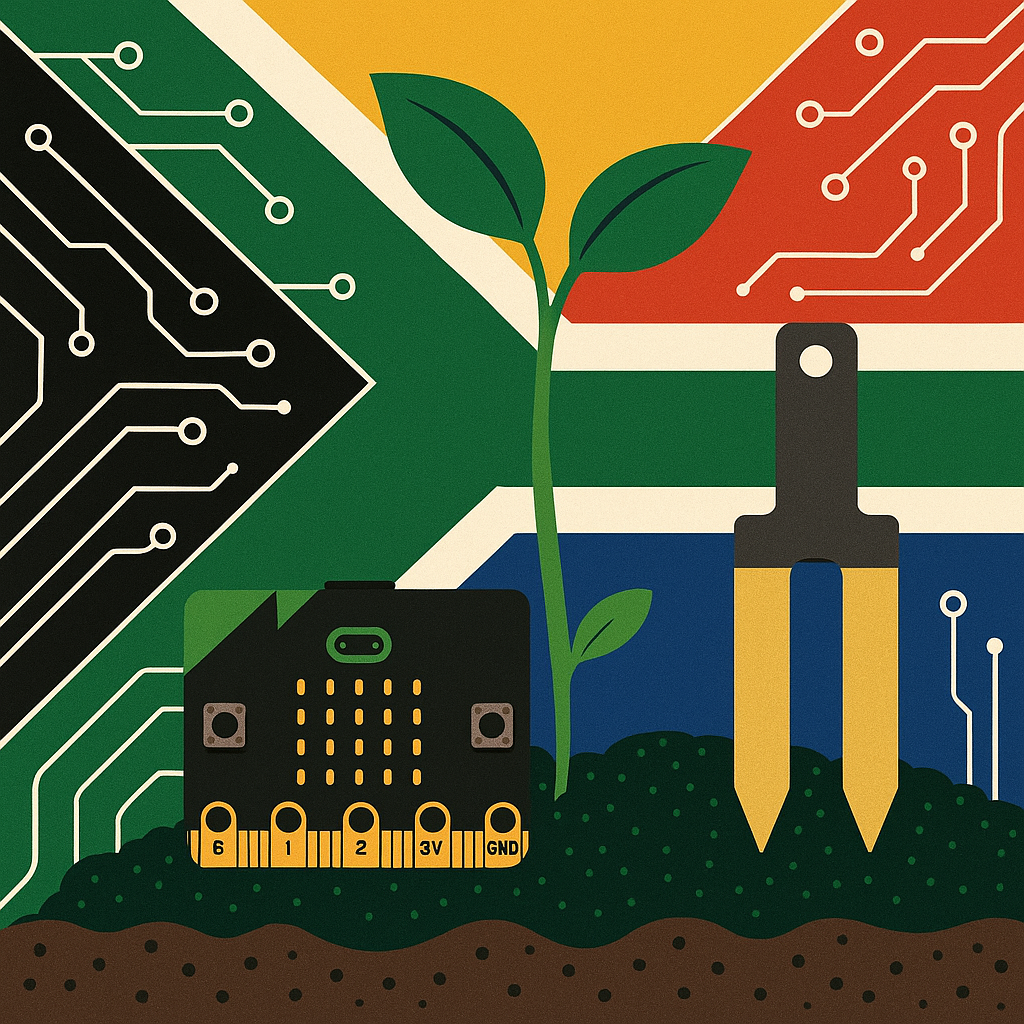
Siyabonga Secondary School transforms a storeroom into a robotics lab, empowering Soweto learners with tech skills for community impact.
Soweto's robotics launchpad is an amazing place where a forgotten storeroom became a high-tech learning hub. Kids use cool gadgets like Raspberry Pi to learn coding and AI. They even create smart solutions for their community, from farming to urban challenges. It's a vibrant space, showing that anyone can build a better future with technology.
What is Soweto's robotics launchpad?
Soweto's robotics launchpad is an 84-square-meter robotics studio at Siyabonga Secondary, transforming a forgotten storeroom into a high-tech learning space. Here, students utilize Raspberry Pi 4 boards and Jetson Nanos to learn robotics, coding, and AI, applying these skills to solve local community challenges from agriculture to smart urban solutions.
Get Cape Town news in your inbox
Stay updated with the latest stories from the Mother City.
1. The Ribbon Was Only the First LED
Siyabonga Secondary still wears its 1970s brown-brick jacket, wedged between hooting minibus taxis and the candy-pink “matchbox” houses that define Soweto’s skyline. Step past the prefab that once swallowed splintered desks, however, and servo motors replace chatter, relays tick like crickets, and twelve Raspberry Pi 4 boards glow raspberry-red on clear perspex towers. Tuesday’s ribbon-cutting turned the forgotten cubby into Gauteng’s freshest robotics studio - 84 square metres where teens who once passed around a single cracked phone now train convolutional nets on Jetson Nanos that actually belong to them.
Eight frantic weeks flipped the script. Shoprite’s logistics team trucked in flat-pack benches laser-cut from retired supermarket shelves; Trevor Noah Foundation fellows braided CAT-6 cables in green, gold, red, blue and white so learners can “read” network paths like a comic strip. Rare Breed Soweto sprayed the walls with cyber-izangoma symbols - point a lab tablet at the graffiti and a 3-D map of the township floats into view, ready for pollution or heat-island overlays captured by learner-built drones. Even the floor teaches: a one-metre Cartesian grid is printed under the polyurethane so learners debug robot odometry by pacing X and Y instead of staring at screens.
The buzz is deliberate. Every nut, bolt and LED was placed to remind learners that technology is not imported magic; it is something that can be unscrewed, examined and rebuilt before the next bell rings.
2. Beans, Beams and Boards: A Curriculum That Starts in Soil
Grade 8s open the year with “seeds and sensors.” Each learner pockets a bean seed, a styrofoam mug and a home-grown capacitive moisture probe soldered to a micro:bit. Six weeks later their PID loops slurp water the moment the reading dips below thirty percent. By harvest the room smells of loam and the aloe vera used to soothe glue-gun battle scars. Their readings gush into a shared Google Cloud bucket; 200 learners across five schools now track pH, heat and humidity block-by-block. Last month the pooled algorithm screamed at a moisture spike along Mzimvubu Road; a drone hop revealed a burst hydrant bleeding 30 000 litres a day - enough to flush 150 toilets.
Grade 9s go vertical. They salvage PVC offcuts and 3-D-printed elbows to bolt pocket-gardens onto shack walls. An ESP-32 drives a solar peristaltic pump while TensorFlow Lite eyes each leaf for early blight. When confidence tops ninety-two percent an SMS lands - in isiZulu, Sesotho or English - offering a kitchen-grade bicarb spray. Because the module straddles Life Sciences and Technology, one exam counts for both subjects. Average combined marks leapt 18 %; grocery spend for participating homes dropped 40 %, paying for taxi fare and data in the same breath.
The soil-to-silicon philosophy answers a question township kids rarely hear: “Where do you start if you want to change the world?” The answer is literally under their fingernails.
3. Sandbox After Dark: Where the Township Becomes a Git Repository
The moment the last bell rings the lab shape-shifts into “sandbox mode.” A salvaged home-security camera fitted with open-source IR lamps scans retinas; only authenticated learners can stay. Seniors jump onto a Kubernetes cluster hosted by CSIR where every pod is a persistent dev environment. They sprint in three-week cycles:
- Week 1: Immersion – Learners strap 360° cameras to bicycle handlebars, cruising alleys until OpenSfM stitches a living mesh of the neighbourhood.
- Week 2: Prototype – Tinkercad runs offline; an Ultimaker fed by inverter-backed batteries prints parts while the grid is awake.
- Week 3: Reality Check – Projects debut at Diepkloof Hall’s Friday market where gogos score usability and spaza owners negotiate deployment rights over vetkoek and politics.
Recent market champions include a smart-paraffin meter that predicts “day-zero” with ultrasonic greed and an AI-trafficked owl whose servo head swivels toward gunshots, strobing red while pinging WhatsApp patrol groups. Both gadgets hide circuitry inside everyday objects, lowering the loot-me factor that usually short-circuits township tech.
Sandbox rules are simple: if you can’t demo it in the street, you haven’t finished the code.
4. Humans Before Hardware: Teachers, Trailblazers and the Flywheel That Funds Them
Sifiso EdTech claims the lab is thirty percent gadgets, seventy percent humanware. Every Wednesday 26 teachers - some commuting two hours from Vanderbijlpark - cram into a #CodeLikeAGirl taxi for DevOps night school. They Git-branch MicroPython, unit-test on virtual micro:bits and push firmware through GitHub Actions while township stars blink outside. Badges are minted on Polygon, creating tamper-proof skills passports that travel with educators even if they change provinces.
To kill the “one-expert-leaves-collapse” dragon, every newcomer must re-host the workshop for five peers within six weeks. The ripple already touched 128 teachers across 19 schools. Mr. Dlamini, once a chalk-and-talk maths guru, now makes Grade 11s derive arc-length by programming a robot to spray-paint parabolas on a rollout vinyl floor. Wits University measured the payoff: robotics-taught learners scored 0.7 standard deviations higher than matched controls - the learning equivalent of an extra half-year of classes.
Girls claim 46 % of lab seats in a country where tech courses skew 77 % male. “Girls-first” blocks before 8 a.m. dodge morning dishes; braid-and-breadboard nights pair Shopify APIs with hair tutorials; a WhatsApp bot built by learner Aisha Mokoena trades daily coding wins for MTN data bundles. Since April, female after-school attendance has surged 31 % - and the boys had to level up to stay competitive.
Money is engineered to stick around. Learners manufacture “Soweto Sensors” kits that retail to Sandton private schools for R450 - double the BOM cost. Profit feeds a quartet of buckets: 40 % maintenance, 30 % learner bursaries, 20 % community-garden irrigation, 10 % angel investments for township start-ups. First-quarter sales hit R68 000, enough to replace a scorched 3-D printer and fly two learners to the African Robotics Network summit in Nairobi. Shoprite further guarantees to buy 1 000 smart-paraffin meters at cost for staff villages, smoothing cash-flow like a well-tuned PID loop.
Ethics, language and waste are treated as design specs, not afterthoughts. A learner ethics board enforces 5-cm drone-image resolution and 2-of-3 trustee key access; commit messages can breathe in isiZulu thanks to a Grade 10-authored plug-in called iCommit; graveyard POS terminals rise again as braille embossers for a neighbouring school for the blind. Even e-waste attends class.
Metrics refuse to worship pass rates alone. A blended dashboard tracks confidence index (3.2 → 5.6), community pull-requests (47 merged), parent head-count at showcases (37 → 214) and local tech spend (78 % leakage slashed to 41 %). Before December the lab will pipe Python to an ESP32 aboard the ISS, commanding a robotic arm to sow rocket seeds in micro-gravity while an ubuntu mantra climbs 408 km on the same packet: “Umuntu ngumuntu ngabantu” - a person is a person through other people, even if those people float in space.
From beans to boards, from Soweto to the stars, the quiet prefab that once slept behind broken desks now transmits a clear message: the next revolution will not only be coded here, it will be coded by teenagers who once shared a cracked smartphone - and who now refuse to share their futures with anyone.
[{"question": "What is Soweto's robotics launchpad?", "answer": "Soweto's robotics launchpad, located at Siyabonga Secondary, is a high-tech learning space that transformed a forgotten storeroom into an 84-square-meter studio. Here, students learn robotics, coding, and AI using tools like Raspberry Pi 4 boards and Jetson Nanos. They apply these skills to develop innovative solutions for local community challenges, ranging from agriculture to urban development."}, {"question": "What kind of technology do students use at the launchpad?", "answer": "Students at the launchpad utilize advanced technology such as Raspberry Pi 4 boards for coding and robotics, and Jetson Nanos for artificial intelligence and machine learning tasks. They also work with micro:bits for sensor-based projects, 3D printers, and even learn about networking with CAT-6 cables. The environment is designed to demystify technology, encouraging hands-on exploration and rebuilding."}, {"question": "How does the curriculum connect technology with real-world problems?", "answer": "The curriculum is designed with a 'soil-to-silicon' philosophy, starting with practical, community-focused projects. For instance, Grade 8 students learn about sensors by monitoring bean seeds, applying PID loops to optimize watering. Grade 9s tackle urban farming by constructing vertical gardens with recycled materials, using ESP-32 microcontrollers and TensorFlow Lite for plant health monitoring. These projects directly address local issues like water conservation and food security."}, {"question": "What is 'Sandbox After Dark' and what happens there?", "answer": "'Sandbox After Dark' is an after-hours program where the lab transforms into an advanced development environment. Only authenticated learners can stay, accessing a Kubernetes cluster hosted by CSIR. They work in three-week cycles: Week 1 for immersion (e.g., mapping the neighborhood with 360 cameras), Week 2 for prototyping (using Tinkercad and 3D printers), and Week 3 for reality checks, where projects are presented at a local market to gather feedback and negotiate deployment with community members."}, {"question": "How are teachers involved and supported in this initiative?", "answer": "Teachers are a crucial component, with 26 educators participating in 'DevOps night school' every Wednesday, commuting long distances. They learn MicroPython, unit-test on virtual micro:bits, and use GitHub Actions for firmware. A unique 'one-expert-leaves-collapse' prevention strategy requires newcomers to re-host workshops for peers. This has led to 128 teachers being trained across 19 schools, significantly improving educational outcomes and integrating robotics into traditional subjects."}, {"question": "How is the robotics launchpad sustained and funded?", "answer": "The launchpad generates its own income through various streams. Learners manufacture 'Soweto Sensors' kits that are sold to private schools, with profits allocated to maintenance, learner bursaries, community garden irrigation, and angel investments for local startups. Additionally, Shoprite guarantees to purchase smart-paraffin meters, ensuring a stable cash flow. This sustainable model helps fund operations, replace equipment, and even send students to international robotics summits."}]

Isabella Schmidt is a Cape Town journalist who chronicles the city’s evolving food culture, from Bo-Kaap spice merchants to Khayelitsha microbreweries. Raised hiking the trails that link Table Mountain to the Cape Flats, she brings the flavours and voices of her hometown to global readers with equal parts rigour and heart.
View all articles →