
Shoprite reaches 300 community food gardens across South Africa
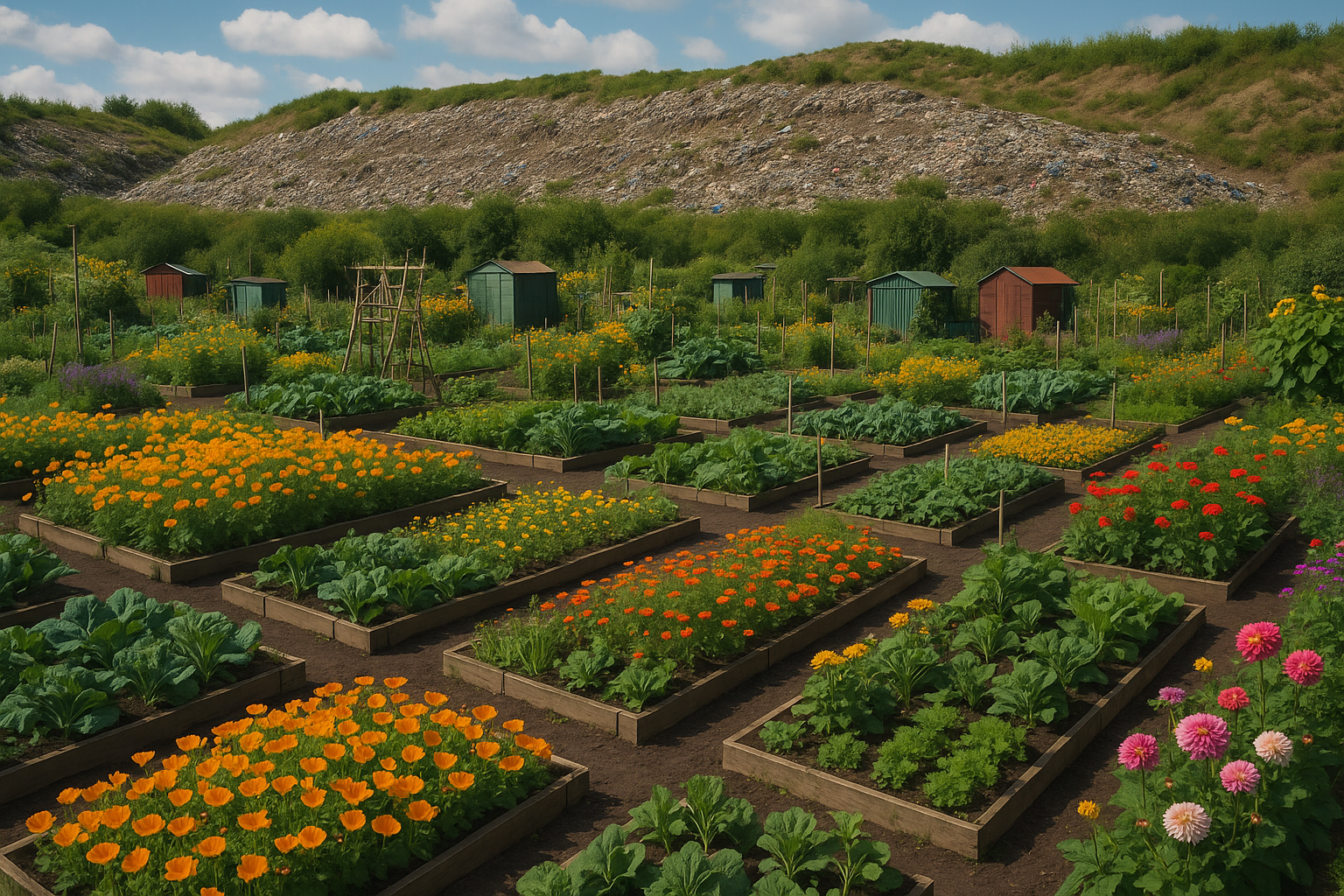
Shoprite's 300th community garden transforms waste into wealth in South Africa, creating food security & jobs through circular economy principles.
Shoprite's 300 community gardens are changing South Africa's food landscape in a big way! They turn old food waste into fresh veggies, creating jobs and making sure people have enough to eat. These gardens also teach communities how to grow food smartly, helping both people and our planet grow stronger together.
How is Shoprite transforming South Africa's food landscape?
Shoprite is transforming South Africa's food landscape by establishing 300 community gardens that convert organic waste into food production. These gardens create local employment, improve food security, and educate communities on sustainable farming practices. They also implement circular economy principles, benefiting both the environment and local economies.
Get Cape Town news in your inbox
Stay updated with the latest stories from the Mother City.
A Quiet Revolution Takes Root
Less than three kilometres from Bredasdorp's main thoroughfare, the Cape Agulhas Municipality Materials Recovery Facility once embodied every grim stereotype of rural waste management. Gulls circled overhead, plastic fluttered against chain-link fences, and garbage trucks delivered their malodorous cargo with relentless regularity. The site has undergone a remarkable metamorphosis. Eight local residents now navigate raised vegetable beds in emerald-green overalls, pouring kitchen-waste slurry into compost rows that release gentle wisps of steam in the morning air. Stretching across 700 square metres, dense plantings of spinach, beetroot, tomato, and heritage "Klip dagga" - an indigenous drought-resistant herb - flourish beneath protective netting that serves double duty against hail damage.
This transformation extends beyond mere aesthetics. The operation achieves something rare in modern agriculture: genuine circularity. No synthetic fertilisers arrive by truck; no harvested produce departs for distant markets. Everything grows, sells, and nourishes within the same postal code. The garden represents what happens when waste management reimagines itself as food production, when discarded resources become the foundation of community wealth.
The human dimension proves equally compelling. Workers here supplement seasonal farm earnings that typically fall below R1 800 with average monthly wages of R3 400. For families whose livelihoods depend on the unpredictable rhythms of agricultural labour, this stability offers something precious: predictability in an uncertain economy.
The Mathematics of Transformation
Behind the verdant rows lies a system of remarkable efficiency. Eight hundred households now participate in organic waste separation, depositing kitchen scraps into five-litre caddies distributed by municipal authorities. Each week, 1.2 tonnes of food waste arrives at the processing pads. Within forty-five days, this material metamorphoses into 0.9 tonnes of pathogen-free compost - ready to nourish the next growing cycle.
The productivity figures command attention. Every month, workers harvest 1 800 heads of lettuce alongside 650 kilograms of mixed vegetables. Distribution channels have evolved organically: a tuck-shop serves immediate neighbours, a nearby school receives produce for its feeding scheme, and a WhatsApp "harvest alert" keeps 317 local subscribers informed of fresh availability. Weekly sales reach R12 000 - substantial revenue circulating within a community that previously exported its purchasing power to distant supermarkets.
These numbers tell only part of the story. The true achievement lies in the system's self-reinforcing nature. Households participate because they receive tangible benefits: swapping full caddies for 10 percent discount vouchers redeemable at Shoprite's butchery and bakery counters. This incentive mechanism - adapted from South Korea's sophisticated RFID food-waste bag systems - has been simplified for a township economy where airtime purchases still occur in R2 increments. Accessibility matters more than technological sophistication.
Engineering African Circularity
The Bredasdorp model operates through interconnected cycles rather than linear production chains. The first loop engages households directly, teaching separation habits through immediate economic rewards. The second loop involves garden staff layering collected waste with shredded invasive acacia and biochar produced from vineyard prunings. This practice sequesters carbon in the soil at a rate the Council for Scientific and Industrial Research estimates at 2.3 tonnes of CO₂-equivalent annually - comparable to removing eighteen vehicles from South Africa's roads.
The third loop addresses protein security through elegant resourcefulness. Vegetables failing cosmetic retail standards undergo on-site pulping and fermentation into probiotic feed. Two hundred village chickens consume this nutrition, producing eggs that garden workers receive through barter arrangements. This closes a protein cycle that formerly depended on imported soya, substituting local biological processes for global commodity chains.
Each loop reinforces the others, creating resilience against the disruptions that plague conventional food systems. When diesel prices spike or supply chains fracture, these nested cycles continue functioning because they never depended on external inputs in the first place.
Cultivating Knowledge and Community
Education pulses through the garden's operations. On the first Saturday of each month, a repurposed shipping container becomes a classroom welcoming diverse participants: secondary students fulfilling compulsory service requirements, elderly residents recalling 1940s "victory gardens," and seasonal fruit pickers seeking skills to carry between harvest periods.
The curriculum follows seasonal rhythms. January sessions teach low-cost wicking bed construction using recycled beverage containers. March focuses on indigenous microorganism brews that eliminate synthetic fungicide requirements. June explores seed-saving practices derived from amaXhosa "ukuhlenga" traditions, preserving genetic diversity for future plantings. September addresses financial literacy - because producing cabbage at R4 per unit and selling at R12 still demands accurate record-keeping to sustain profitability.
The educational impact accumulates. To date, 1 047 residents have earned certificates through this programme. Forty-six graduates established backyard gardens, extending the model's influence. Three former participants now operate seedling businesses supplying the main site, creating entrepreneurial pathways from classroom instruction.
Climate Adaptation in Practice
The Overberg district experiences temperature increases of 0.27°C per decade - twice the global average rate. Last year, a single hailstorm destroyed R900 000 worth of canola in surrounding commercial fields. The Bredasdorp garden responds through layered adaptation strategies combining traditional wisdom with appropriate technology.
Shade-cloth tunnels, assembled from discarded orange-bag mesh, shield young tomatoes while permitting pollinator access. A low-pressure drip irrigation system draws from a repurposed wind-turbine battery storing surplus energy generated by the adjacent landfill's biogas flare. Stone lines and vetiver grass hedges - techniques adapted from Madagascan anti-erosion initiatives - stabilise soil on the site's 4 percent gradient, preventing the summer washouts that previously plagued the area.
Digital monitoring complements these physical interventions. A straightforward Arduino moisture sensor transmits alerts to the head gardener whenever bed moisture drops below 23 percent volumetric water content. This system conserves approximately 1.6 million litres of irrigation water annually - critical savings in a water-scarce region.
Replicating Success Across Diverse Landscapes
Shoprite's expansion strategy deliberately mimics franchise flexibility rather than corporate uniformity. Each new garden must meet three essential criteria: proximity to organic waste sources, access to municipal or tribal land parcels under two hectares, and committed local retail managers willing to reserve shelf space for garden produce. Beyond these fundamentals, designs adapt to local conditions.
In Mdantsane, Eastern Cape, shredded pineapple tops from a nearby cannery become silage feeding tilapia; fish effluent then fertilises terraced kale plantings. Kathu, Northern Cape, hosts a 1 500 square metre solar greenhouse atop a former mine slag heap where temperatures reach 42°C; evaporative cooling panels are fabricated from mining-belt industrial off-cuts. Soweto, Gauteng, transformed a former beerhall parking lot into 200 vertical grow-towers housed in shipping containers, with seedlings germinating under LED strips powered by rooftop photovoltaic panels.
The retailer limits capital exposure to R1.8 million per site while requiring communities to contribute 5 percent in cash or labour equity. This ownership stake has proven remarkably effective at preventing vandalism - when participants have invested their own resources, they protect the collective asset.
Economic Ripples Beyond the Balance Sheet
The 300 gardens collectively employ 2 400 people, 72 percent women. Yet Stellenbosch University research tracking five locations reveals broader multiplier effects: every rand spent on wages generates R1.67 in local township enterprise, from spaza shop restocking to fencing repairs to hair salons busy on payday.
Security improvements appear in official statistics. South African Police Service data indicates 12 percent reductions in common theft incidents within 500 metres of gardens operating longer than eighteen months - increased foot traffic and neighbourhood vigilance create informal surveillance networks.
Nutritional outcomes prove equally significant. World Food Programme diet diversity scores for children under five living within one kilometre of gardens improved 0.8 points over twenty-four months, equivalent to adding one additional vegetable portion every second day. These health benefits accrue without direct medical intervention - simply through transformed food access.
Technology Serving Rural Realities
Shoprite's information technology team developed a lightweight USSD platform accessible even on basic feature phones. Garden captains dial 134 88# to record harvest volumes, pest observations, and rainfall measurements. Cloud processing returns weekly voice messages in isiZulu, isiXhosa, or Sesotho, advising optimal timing for carrot thinning or cutworm anticipation.
Machine learning models trained on 42 000 historical harvest records now predict with 84 percent accuracy whether sites will experience surplus or shortage two weeks in advance. This foresight allows managers to pre-contract buyers or redirect excess to neighbouring gardens, smoothing supply fluctuations that would otherwise waste produce.
Navigating Policy Complexities
South Africa's National Food and Nutrition Security Plan (2018) targets 2 000 "micro-grams" by 2030. Fewer than 400 currently exist, many dormant due to water tariff structures, seed procurement bureaucracy, and agriculture department budgets that contracted 14 percent in real terms since 2016.
Shoprite's gardens circumvent these obstacles by positioning within municipal environmental departments rather than agricultural divisions, accessing urban-greening grants instead of farming subsidies. The Bredasdorp project pays nothing for water because it uses treated effluent from the neighbouring landfill leachage plant - classified as environmental remediation, exempt from irrigation tariffs.
Policy analysts suggest formalising this arrangement through new municipal by-law categories labelled "urban nutrient hubs," legitimising hundreds of similar initiatives without awaiting national policy alignment. The gardens demonstrate what becomes possible when regulatory frameworks are navigated creatively rather than accepted as constraints.
Looking Toward the Next 300
Shoprite targets network doubling by 2026. Bredasdorp insights already inform design evolution: compost pads will receive roofing to comply with emerging national emissions regulations; grow beds will elevate an additional 15 centimetres to accommodate 100-year flood projections for the southern Cape; every new site will dedicate 5 percent of land to traditional African grains - sorghum and cowpea - selected for climate resilience by the Agricultural Research Council.
The retailer gains supply chain advantages alongside social benefits. Produce contracts are fixed at 10 percent below prevailing wholesale prices, insulating stores from inflation shocks that recently drove tomato prices 47 percent higher year-on-year. This hedging strategy transforms community investment into commercial risk management.
An Open-Source Legacy
Nomfusi Mabandla, the Bredasdorp garden manager, maintains a weathered A4 folder titled "How to grow food from your neighbour's leftovers." Part diary, part illustrated manual, part engineering notebook, its pages bear the stains of kombucha cultures and practical experience. Every visiting delegation receives a scanned PDF within minutes of departure.
Open-source philosophy here serves practical survival. Should corporate strategy shift or aesthetic objections arise, distributed knowledge ensures continuity. The document already resides in fourteen university libraries, two provincial archives, and reportedly on a flash drive carried to Nairobi, where a community group seeks to adapt the model using matatu public transport food waste.
When asked what the 300th garden signifies personally, Mabandla continues bunching coriander without breaking concentration: "My children no longer associate that word with shame. For them, landfill means basil." She secures the bundle with a strip cut from a competitor's discarded shopping bag - transforming rival plastic into tonight's seasoning, laughing as she completes the circle.
[{"question": "What is the main goal of Shoprite's 300 community gardens in South Africa?", "answer": "Shoprite's 300 community gardens aim to transform South Africa's food landscape by converting organic waste into fresh produce. This initiative creates local employment opportunities, enhances food security for communities, and educates residents on sustainable farming practices. Ultimately, it fosters a circular economy that benefits both the environment and local economies by keeping resources within the community."},
{"question": "How do these gardens achieve a 'circular economy' model?", "answer": "The gardens operate on a principle of genuine circularity. They repurpose organic waste, such as kitchen scraps, into nutrient-rich compost, eliminating the need for synthetic fertilizers. The harvested produce is then sold and consumed within the same local area, often through tuck-shops, school feeding schemes, and local subscribers. This closed-loop system minimizes external inputs and supports local economies."},
{"question": "What benefits do communities receive from participating in these gardens, beyond food?", "answer": "Beyond fresh food, communities gain several benefits. Residents who separate organic waste receive discount vouchers for Shoprite's butchery and bakery. The gardens provide stable employment with improved wages, offering predictability in an uncertain economy. Educational programs teach valuable skills in sustainable agriculture, financial literacy, and entrepreneurship, leading to new ventures like backyard gardens and seedling businesses. Additionally, increased foot traffic around the gardens has been linked to reductions in common theft."},
{"question": "How does Shoprite ensure the sustainability and scalability of these garden projects?", "answer": "Shoprite employs a flexible, franchise-like expansion strategy, requiring new gardens to be near organic waste sources, have access to land, and have committed local retail managers. They also limit capital exposure and require communities to contribute in cash or labor, fostering a sense of ownership that helps prevent vandalism. The model adapts to local conditions, utilizing available waste streams like pineapple tops for tilapia in Mdantsane or repurposing industrial off-cuts for cooling panels in Kathu."},
{"question": "How does technology play a role in the success of these community gardens?", "answer": "Technology supports the gardens in various ways. A lightweight USSD platform allows garden captains to record data like harvest volumes and pest observations, receiving localized advice via voice messages. Machine learning models predict harvest surpluses or shortages, enabling efficient distribution and reducing waste. Furthermore, digital monitoring systems, such as Arduino moisture sensors, help conserve water, a critical resource in South Africa."},
{"question": "What challenges do these gardens address, particularly in the context of South Africa's climate and policy?", "answer": "The gardens address challenges like climate change by implementing layered adaptation strategies, including shade-cloth tunnels, efficient drip irrigation from repurposed sources, and soil stabilization techniques. They also navigate policy complexities by positioning themselves within municipal environmental departments, accessing urban-greening grants rather than agricultural subsidies, and creatively utilizing resources like treated effluent for irrigation, which circumvents water tariffs. This innovative approach demonstrates how regulatory frameworks can be creatively navigated to achieve impactful results."}]

Emma Botha is a Cape Town-based journalist who chronicles the city’s shifting social-justice landscape for the Mail & Guardian, tracing stories from Parliament floor to Khayelitsha kitchen tables. Born and raised on the slopes of Devil’s Peak, she still hikes Lion’s Head before deadline days to remind herself why the mountain and the Mother City will always be her compass.
View all articles →