
South Africa braces for historic fuel price hike next week
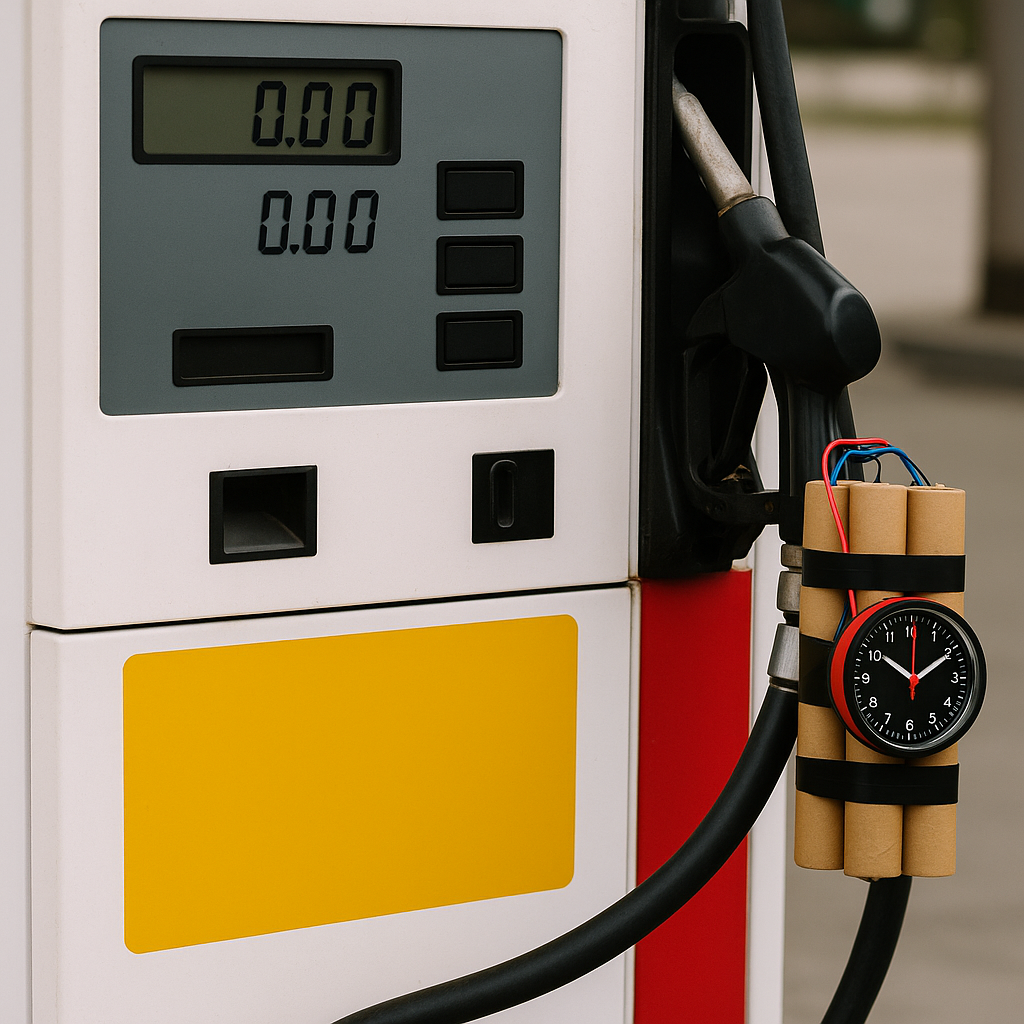
South Africa faces a R10/litre diesel price hike, triggering inflation, transport cost surges, and economic turmoil. Discover the full impact.
South Africa faces a "Black Monday" as diesel prices jump by R10 a liter. This massive increase will make everything more expensive, from your groceries to your taxi ride, which could go up by 40%. Even the cost of paraffin, used for cooking by many, will nearly double. This price shock comes from a mix of a weaker rand, higher oil prices, and refiners charging more, hitting the poorest families the hardest and sparking fears of widespread anger.
How will the R10-a-litre diesel price increase impact South Africa?
The R10-a-litre diesel price increase in South Africa will significantly impact daily life by driving up grocery prices, increasing minibus taxi fares by 40%, and raising the cost of illuminating paraffin by 91%. This surge, dubbed "Black Monday," is expected to cause widespread economic strain and potential social unrest.
Get Cape Town news in your inbox
Stay updated with the latest stories from the Mother City.
1. The Ledger That Blew Up – How Thirty Days of “Missing Money” Became a R10 Bomb
Every lunch-time the Central Energy Fund (CEF) uploads a spreadsheet that almost nobody reads, yet it rules the country’s wallet. The file shows how many rands and cents it theoretically takes to land one litre of fuel on Durban’s pier. Between late February and the third week of March the rand lost 4,3 % to the dollar while Brent crude clawed back to $87 a barrel. At the same time the Singapore refining margin - the bonus refiners earn for turning crude into diesel - exploded to $34 a barrel, three times the 2022 average. Multiply those three moving parts and the CEF calculator spat out the ugliest number since the formula was born in 2003: importers are short almost R10 on every litre of diesel.
Importers cannot print money, so they borrow the gap. If the hole is still open at sunset on 29 March, the law forces government to dump the entire shortfall onto the April pump price in one go. That single midnight adjustment has already been nick-named “Black Monday” by fleet managers who must issue invoices the next morning at prices they have never modelled. Petrol is also bruised - about R5,80 a litre under-recovered - but diesel is the blunt-force trauma.
The reason the shock feels instant is that wholesale diesel was deregulated years ago. Large transport buyers feel the pain weekly, not monthly, because surcharges are pegged to the CEF snapshot. By the time the public reads the headline, the freight industry has already priced the hike into every loaf, brick and tablet that will move after Easter.
2. Forklift to Taxi Rank – Why Diesel Hits Groceries, Paraffin and Minibus Fares First
South Africa swallows 12 billion litres of diesel a year, yet only one-third of that ever sees a retail forecourt. The rest powers forklifts, tractors, generators and 18-wheelers. Grain farmers already pay R7 200 to move a tonne of maize from the Free State to the coast; the R10 jump will add 78 cents to a 25 kg bag before it leaves the silo. Supermarkets keep three weeks of staple stock on hand, so shelf stickers will start changing by mid-April unless retailers choose to absorb the cost and watch their margins evaporate.
Low-income households that cook with illuminating paraffin will feel an even sharper sting. Paraffin carries no excise duty and zero bio-blend, so its price tag is nakedly linked to cargo costs. A R11,46 increase will shove the inland retail price to R24 a litre, a 91 % jump in 30 days. Municipalities are obliged to sell indigent households the first 50 litres at R14; the remaining R10 gap must be plugged either by cash-strapped councils or Treasury, which has already advised metros to “phase out” the subsidy. Expect renewed township protests where paraffin is still sold by the cupful.
Urban commuters will not escape. A typical minibus taxi gulps 35 litres every 100 km and covers 450 km a day around Johannesburg. The daily fuel bill will leap from just under R3 000 to R4 500, an extra R1 530 that must be recovered from 15 passengers. Santaco warns fares will rise 40 % on the first working day after Easter. A worker on the new minimum wage will then spend 14 % of take-home pay on a single Soweto–Sandton round trip; scholar-transport contractors, locked into flat monthly rates, are already refusing to renew permits that expire on 31 March.
3. From Eskom Peakers to Border Tankers – Hidden Feedbacks That Turn One Spike into a Year-Long Squeeze
Eskom’s 18 open-cycle gas turbines can swing into action when the grid groans, but they sip diesel at a ferocious rate. Last winter they were already running 13 % of the time; at R28 a litre the energy cost jumps to R6,40 per kWh, three times the average tariff. If stage 6 blackouts return, the utility will burn through an extra R1 billion a month and immediately ask Nersa for a tariff claw-back, baking tomorrow’s pain into next year’s electricity bills.
Across the Limpopo, Botswana keeps diesel capped at the equivalent of R15,80 a litre, opening a R12 arbitrage window. Intelligence officers report convoys of “slice” trucks crossing nightly, each paying protection fees of R50 000. Police confiscated 1,8 million litres in the first quarter - triple last year’s rate - yet the maximum fine remains a laughable R100 000. Parliament will soon resurrect the Petroleum Products Amendment Bill, threatening 15-year jail terms for anyone caught with more than 200 litres and no licence.
Further upstream, South Africa’s Strategic Fuel Fund lies empty. Four-fifths of the original 10 million barrels were sold off in 2015–16 to plug fiscal holes, leaving only 18 days of import cover - half the International Energy Agency’s 90-day norm. Refilling the tanks now would cost R18 billion, money Treasury simply does not have. The absence of any buffer makes the rand hyper-sensitive to every tanker route rumour, amplifying future shocks instead of softening them.
4. Black Monday Is Only the Opening Salvo – Micro-Moves and Macro-Risks That Stretch to December
International evidence shows motorists rarely buckle until petrol crosses R26 a litre; then behaviour snaps. Sri Lanka’s mileage fell 28 %, Kenya’s ride-hail fleet lost 40 % of drivers within two months. South Africa already leads the world in pooled long-distance commuting, and banks report a 60 % jump in 72-month hybrid finance applications. Yet the cheapest hybrid still retails for R430 000, pushing low-income households into debt just to stay mobile.
Corporate South Africa is scrambling to blunt the blow. Takealot rerouted 18 % of Cape Town drops to bicycle couriers, slicing delivery diesel from R8,20 to R3,40 per parcel. Woolworths is testing a four-day, 40-hour warehouse week, cutting 1,2 million staff-commute kilometres a year. Anglo American’s 240-ton Sishen haul trucks now run on a 5 % biodiesel mix salvaged from used cooking oil, trimming R200 million off the 2024 bill. Unfortunately the country’s entire biodiesel supply is capped at 50 million litres - barely one percent of demand - because the Biofuels Industrial Strategy has been stuck in draft form for a decade.
Bond markets are already pricing a 75 basis-point rate hike by July. Moody’s next review falls on 26 April, and a fuel-driven inflation print could tip local-currency debt into full junk, adding another 150 basis points to government borrowing costs. Meanwhile only 60 % of any March spike feeds into April; the rest leaks into May and June. Brent futures currently sit in backwardation, implying oil will retreat later in the year, but that same curve has crept $8 higher since January. If Russian cargoes disappear after October, the Central Energy Fund model shows another R4 under-recovery is already baked into December. Black Monday may therefore be remembered not as a single nightmare but as the first wave of a siege that lasts until the first citrus trucks roll in November and shipping surcharges finally relent.
{
"faq": [
{
"question": "How will the R10-a-litre diesel price increase impact South Africa?",
"answer": "The R10-a-litre diesel price increase in South Africa will significantly impact daily life by driving up grocery prices, increasing minibus taxi fares by 40%, and raising the cost of illuminating paraffin by 91%. This surge, dubbed 'Black Monday,' is expected to cause widespread economic strain and potential social unrest, hitting the poorest families the hardest."
},
{
"question": "Why is there such a sudden and massive diesel price increase?",
"answer": "This\"Black Monday\" price shock is due to a combination of factors: a weaker rand against the dollar (losing 4.3% in a month), higher Brent crude oil prices ($87 a barrel), and a significant increase in the Singapore refining margin (exploding to $34 a barrel, three times the 2022 average). These factors resulted in an almost R10 under-recovery per litre for importers, which, by law, must be passed on to consumers in a single adjustment."
},
{
"question": "How will this diesel price hike affect the cost of groceries and essential goods?",
"answer": "The increase will directly impact grocery prices. Since the majority of diesel powers transportation for goods (forklifts, tractors, 18-wheelers), the cost of moving produce like maize will increase significantly. Supermarkets, holding about three weeks of stock, are expected to adjust shelf prices by mid-April as retailers will likely not be able to absorb the increased logistics costs, leading to higher prices for consumers."
},
{
"question": "What will be the impact on public transport, particularly minibus taxis?",
"answer": "Minibus taxi fares are projected to increase by 40% on the first working day after Easter. A typical taxi's daily fuel bill will jump from nearly R3,000 to R4,500. This means a worker earning the new minimum wage could spend 14% of their take-home pay on a single Soweto–Sandton round trip, making commuting significantly more expensive for urban residents."
},
{
"question": "How will the diesel price increase affect households relying on illuminating paraffin?",
"answer": "Households using illuminating paraffin for cooking will experience a severe impact, with a 91% jump in price, pushing the inland retail price to R24 a litre. This is because paraffin's price is directly linked to cargo costs without excise duty or bio-blend. While municipalities are mandated to sell the first 50 litres to indigent households at R14, the remaining gap will strain councils or Treasury, potentially leading to renewed protests."
},
{
"question": "Are there any broader economic or social consequences expected beyond the immediate price increases?",
"answer": "Yes, significant broader consequences are expected. Eskom's reliance on diesel-powered open-cycle gas turbines means higher electricity costs, potentially leading to tariff increases. The large price difference with neighboring countries like Botswana could fuel illicit diesel smuggling. The lack of strategic fuel reserves makes South Africa vulnerable to future shocks. Additionally, bond markets are pricing in interest rate hikes, and Moody's review could downgrade local-currency debt, further increasing government borrowing costs. Social unrest and 'township protests' are also anticipated, especially concerning paraffin prices."
}
]
}

Thabo Sebata is a Cape Town-based journalist who covers the intersection of politics and daily life in South Africa's legislative capital, bringing grassroots perspectives to parliamentary reporting from his upbringing in Gugulethu. When not tracking policy shifts or community responses, he finds inspiration hiking Table Mountain's trails and documenting the city's evolving food scene in Khayelitsha and Bo-Kaap. His work has appeared in leading South African publications, where his distinctive voice captures the complexities of a nation rebuilding itself.
View all articles →