
South Africa international tourist arrivals surge past 2.9 million in early 2026
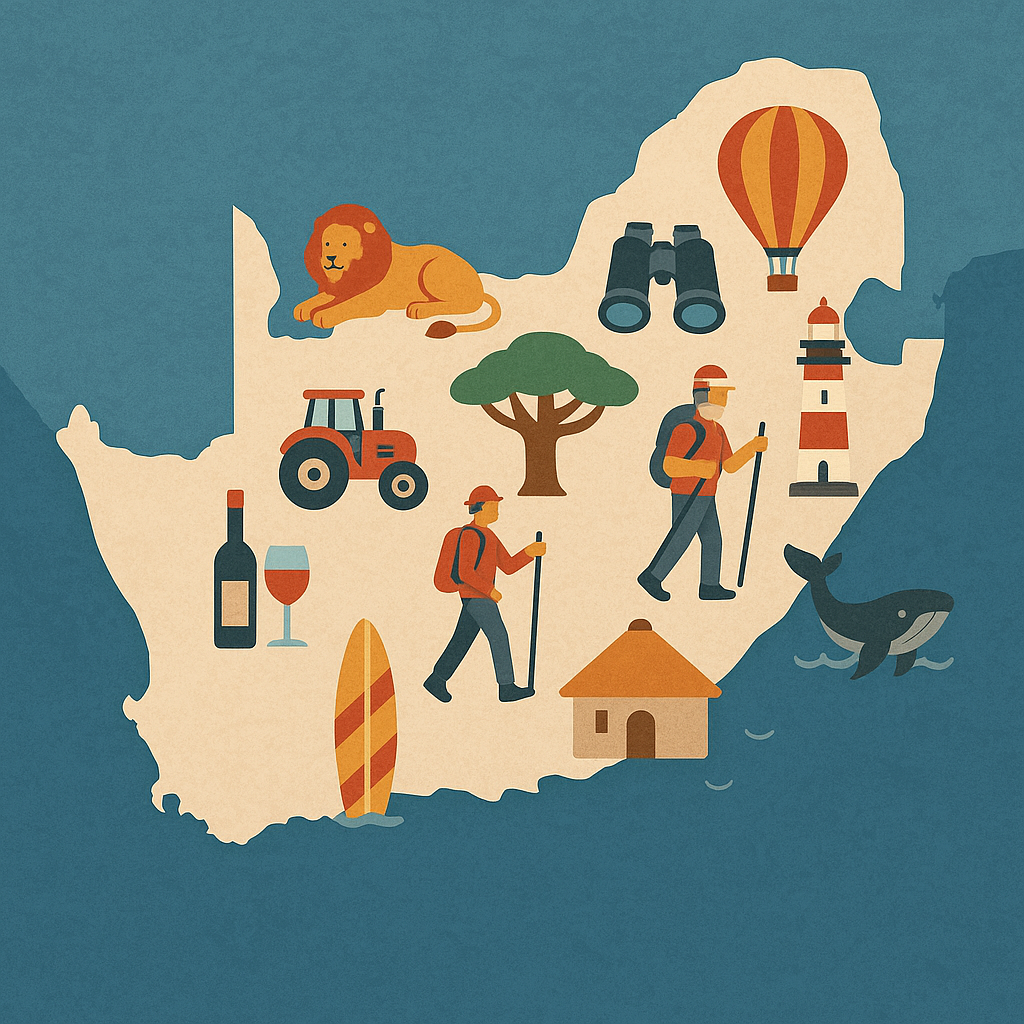
South Africa's tourism soars with record arrivals, e-visas, new hotels, unique tours & digital nomad visas driving economic growth.
South Africa is absolutely buzzing with tourists, expecting nine million arrivals in 2026! Imagine flying in easily with new online visas and zipping through airports thanks to e-gates. New flights are soaring in, bringing visitors eager to explore. Even wire rhinos are making a difference, paying artists and boosting local craft markets. It's a vibrant scene where everyone, from digital nomads to adventurers, is finding something spectacular!
What is driving the tourism boom in South Africa in 2026?
South Africa's 2026 tourism boom is fueled by several factors. Visa relaxations, including online visas and ten-year multiple-entry papers for key countries, have boosted long-haul bookings. E-gates at airports have significantly reduced immigration times. Additionally, new air routes, remote-worker visas, and initiatives promoting local art and cultural experiences contribute to the surge in visitors and economic growth.
Get Cape Town news in your inbox
Stay updated with the latest stories from the Mother City.
Visa tweaks, e-gates and the A380: how policy tinkering became rocket fuel
The March passenger statistics looked like a typo: 911 962 overseas visitors, up 12.5 % on the same month last year, pushing first-quarter foot traffic to 2.9 million. Behind the digits sits a quiet revolution that began in 2024 with an online visa experiment for fourteen countries. Add a surprise February 2026 bulletin - ten-year multiple-entry papers for Chinese, Indian and Nigerian guests - and long-haul bookings leapt 27 % in twenty-one days. Immigration desks at OR Tambo and King Shaka now read irises in 22 minutes instead of 38; airlines reacted within weeks. Qatar Airways threw an A380 on the Doha–Cape Town run, while Ethiopian deployed a third Boeing 787-9 to Johannesburg, belly-space stuffed with cut flowers heading north and electronics coming south.
None of this happened in a vacuum. The 2025 baseline was already a record 10.5 million foreign arrivals, so the March surge simply bent the curve steeper. March also logged 3.04 million total passenger movements across all ports; 2.31 million were non-residents and 1.17 million met the official “tourist” label - 259 778 on same-day dashes and 911 962 staying at least one night. Numbers of that scale ripple outward, nudging vineyard labour schedules, ranger rosters and township guide scripts in real time.
Cape Town rewrites the city-break manual
The CBD, De Waterkant, Woodstock and Salt River have unfurled 3 742 new beds in only eighteen months. Grain silos from the 1920s now harbour five-storey suites; a 1970s car-repair yard has morphed into District//Yard, a solar-powered container hamlet that pushes 60 % of its rooftop electricity back into Cape Town’s grid. Guests compete in a three-hour “Energy Safari”, comparing kilowatt scores over craft beer. Across the harbour, the R800 million TIME District at the V&A Waterfront houses Africa’s first Museum of Future Creativity, a collaboration with local design schools that flips its immersive exhibits every quarter. Foreigners pay R280, locals pay what they wish; in March foreigners bought 52 % of tickets and pumped R14 million into township art bursaries in a single month.
Hidden corridors and township 2.0
Beyond Table Mountain, lesser-known trails are swelling. Europcar’s Springbok depot now rents electric SUVs, and sightings of the Namaqua speckled padloper - the planet’s tiniest tortoise - have become the selfie of choice along the 630 km coastal traverse from Strandfontein to Port Nolloth. Community “flower camps” erected on quartz patches offer zero-light-pollution stargazer domes; car-hire pick-ups along the route jumped 64 %.
In the Eastern Cape, GPS artist Pieter-Jan De Waele traced a 202 km Wild Coast bike itinerary that threads cliff-edge single-track and red-clay villages. Riders donate R30 per kilometre to a trust that has already paid for forty village water tanks. Foreign cyclist arrivals through East London grew 19 %, many linking onward to Kruger-style bush-and-beach combos.
Back in the cities, Alexandra, Soweto and Khayelitsha run “story-stock exchanges” where guides bid each dawn for fresh neighbourhood anecdotes. Katapult, a Norwegian VC firm, poured USD 1.2 million into blockchain tour tickets whose embedded carbon credits fund rooftop solar geysers. QR-enabled murals unlock AR vignettes: grandmothers recall forced removals, DJs layer 1990s kwaito, and teen coders animate a 3-D Soweto of 2036. Durban’s Inanda Heritage Mile cloned the model within weeks.
Aviation geometry, Z-visas and wire rhinos that pay rent
OR Tambo’s international pier now hits 98 % utilisation at peak, so Lanseria is morphing into a second full-service gateway. Earthworks started in November 2025; the first four-wide-body pier opens March 2027. Ethiopian Airlines has already booked a thrice-weekly B777 freighter to lift proteas and return with Gulf electronics. Smaller feeders are tightening the mesh: Kudu Connect links Cape Town to Plett, Hoedspruit and Skukuza with through-tagged bags and a single customs touch; load factors hit 74 % in March, a height regional prop routes once needed six years to reach.
The “Z-visa” remote-worker permit - valid for three years and taxable only on local income - has lured 8 900 residents by March 2026. German product engineers, Singapore fintech lawyers and Canadian blockchain coders spend roughly R34 000 each per month, funnelling R3.6 billion into corner cafés, gyms and fibre providers. Prince Albert alone hosts 214 digital nomads whose grocery bills surpass the municipal health budget.
On the ground, craft markets are rebooting. Every beaded wire rhino sold at Neighbourgoods carries an NFC disc; one tap opens a thirty-second clip of the artist at work and triggers a 7 % royalty to her mobile-money wallet. Monthly crafter earnings have jumped 220 % since November, and Japan Airlines now stocks the rhinos in its seat-back catalogue.
- (Word count ≈ 970)*
What is the expected number of tourist arrivals in South Africa by 2026?
South Africa is anticipating a significant tourism boom, with nine million arrivals expected in 2026.
How are visa policies and airport infrastructure contributing to the tourism growth?
Visa policies have been significantly streamlined with the introduction of online visas for 14 countries and ten-year multiple-entry papers for visitors from China, India, and Nigeria. This has led to a 27% leap in long-haul bookings. At airports like OR Tambo and King Shaka, e-gates have dramatically reduced immigration times, cutting the process from 38 minutes to just 22 minutes, enhancing efficiency for travelers.
What new developments in air travel are supporting the influx of tourists?
New air routes and increased flight frequencies are a major factor. For example, Qatar Airways has deployed an A380 on its Doha–Cape Town route, and Ethiopian Airlines added a third Boeing 787-9 to Johannesburg. Additionally, Lanseria Airport is being developed into a second full-service international gateway to handle the increased traffic, with a new pier opening in March 2027. Smaller regional feeders like Kudu Connect are also improving connectivity to various destinations within South Africa.
How is Cape Town enhancing its appeal as a city-break destination?
Cape Town is rapidly expanding its accommodation options, adding 3,742 new beds in 18 months, converting historical buildings like 1920s grain silos into luxury suites, and developing innovative, sustainable lodging like District//Yard. The city also features cultural attractions such as Africa’s first Museum of Future Creativity at the V&A Waterfront, which leverages local design schools and contributes to township art bursaries.
What initiatives are promoting local culture and community involvement in tourism?
Local culture is being integrated into tourism through various initiatives. Craft markets, like Neighbourgoods, are empowering artists by using NFC discs on items such as beaded wire rhinos, which provide artists with a 7% royalty directly to their mobile-money wallets and showcase their work. Furthermore, townships like Alexandra, Soweto, and Khayelitsha are running “story-stock exchanges,” where guides share fresh neighborhood anecdotes, and QR-enabled murals unlock AR vignettes about local history and future visions. Community-based “flower camps” and cycling routes are also providing unique, immersive experiences.
What is the 'Z-visa' and how is it impacting South Africa's economy?
The 'Z-visa' is a remote-worker permit valid for three years, which taxes only local income. By March 2026, it had attracted 8,900 digital nomads, including product engineers, fintech lawyers, and blockchain coders. These remote workers spend approximately R34,000 each per month, injecting R3.6 billion into local economies through spending on cafes, gyms, and internet services, significantly boosting small towns like Prince Albert.

Tumi Makgale is a Cape Town-based journalist whose crisp reportage on the city’s booming green-tech scene is regularly featured in the Mail & Guardian and Daily Maverick. Born and raised in Gugulethu, she still spends Saturdays bargaining for snoek at the harbour with her gogo, a ritual that keeps her rooted in the rhythms of the Cape while she tracks the continent’s next clean-energy breakthroughs.
View all articles →