
South Africa ramps up support for Africa’s Ebola fight with substantial funding
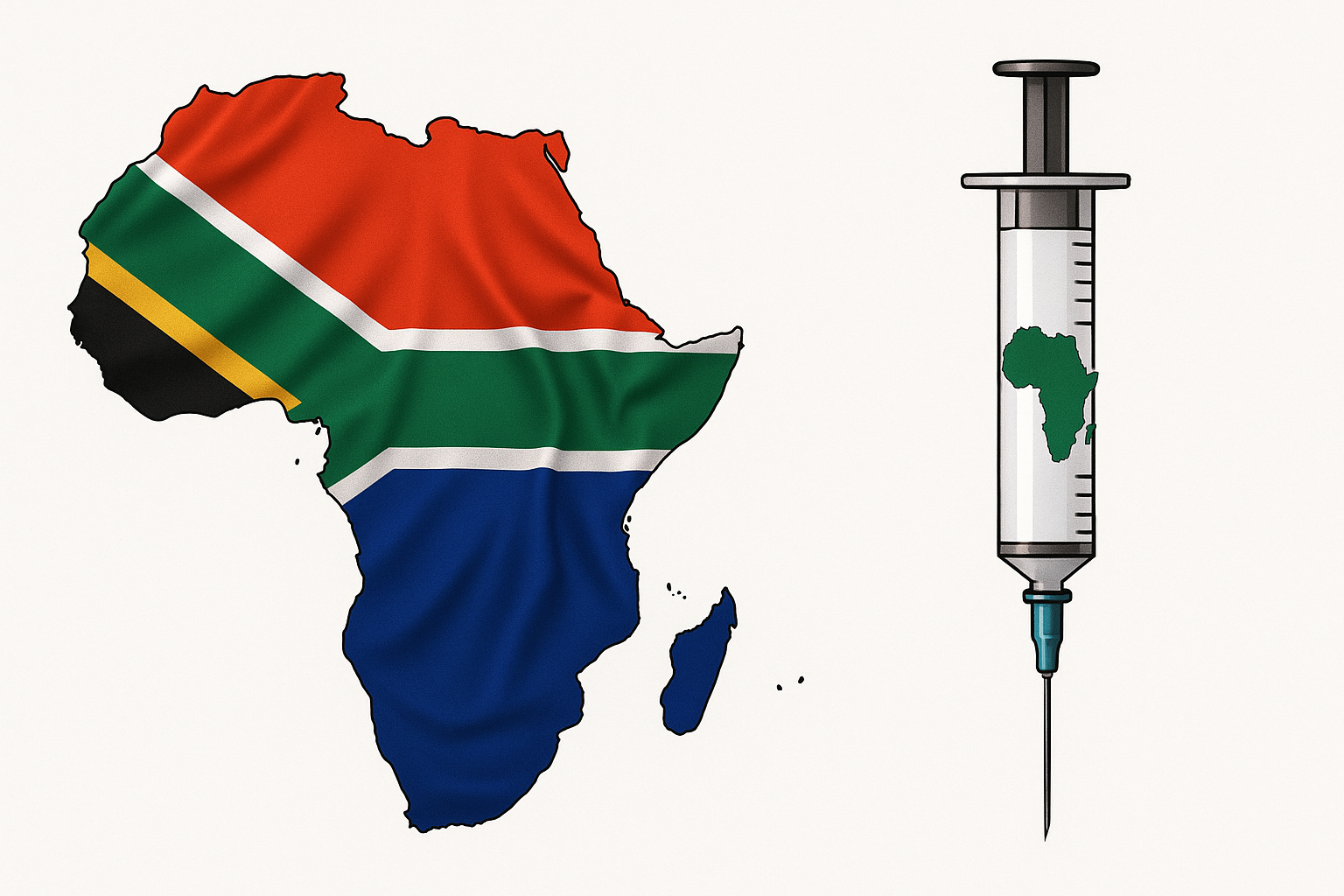
South Africa pledges $5M & mobilizes Africa for a multi-sectoral counter-offensive against the 2026 Ebola surge.
Africa is fighting a new, fast-moving Ebola wave in 2026 with a bold plan called "Operation Umoja." They're using quick mobile labs, making new medicines and vaccines, and stockpiling safety gear. The plan also uses technology, like special kiosks and online tools, and asks Ebola survivors to help. This big effort shows Africa is ready to beat the virus and keep its people safe.
How is Africa combating the new Ebola wave in 2026?
Africa is tackling the 2026 Ebola outbreak with a multi-pronged strategy, including rapid mobile diagnostic labs, accelerated drug and vaccine development, pre-positioned PPE, and community health worker support. "Operation Umoja" focuses on genomic surveillance, building Ebola Treatment Units, and securing experimental vaccines, alongside economic stabilization efforts and leveraging technology and survivor networks to control the virus.
Get Cape Town news in your inbox
Stay updated with the latest stories from the Mother City.
1. The Alarm Sounds: When a Virus Outruns Borders
On the first morning of the African Union Health Ministers’ summit in Kampala, every delegate received a slim envelope stamped urgent. It carried results no one wanted: the Bundibugyo strain had travelled 340 km east in just six weeks, vaulting from the DRC’s embattled North Kivu and Ituri provinces into four Ugandan districts once thought safe. Whole-genome scans revealed twenty-seven fresh mutations, a pace virologists at Africa CDC called “alarmingly quick for glycoprotein sites the immune system must recognise.”
The report listed 204 confirmed fatalities, already the continent’s second-worst Ebola count after the 2014 West Africa disaster. World Health Organisation forecasts warned that, without an immediate resource surge, case numbers would double every three weeks. The African Development Bank sketched the knock-on damage: a 1.4 percent GDP drop across the Great Lakes corridor by December, shoving more than two million additional citizens below the extreme-poverty line.
2. South Africa Opens Its Wallet - And Its Toolbox
President Cyril Ramaphosa did not pretend five million dollars could stop an outbreak alone; instead, he presented the cash as a spark to ignite wider action. Finance officials circulated the precise split the same afternoon.
2.1 Fast Diagnostics in a Suitcase
Afrigen Biologics in Cape Town will pack $1.75 million into three “mobile BSL-3” shipping-container labs that fit inside a cargo jet and go live within seventy-two hours anywhere on the continent. Each lab carries robotic RNA extractors, pocket sequencers, and drone-ready cold pods so that results beat the virus out of the gate.
2.2 Drug and Vaccine Sprint
Another million flows straight into a SAMRC therapeutic accelerator. Scientists anywhere on the continent can bid for grants to design monoclonal cocktails or small-molecule drugs aimed at the Bundibugyo glycoprotein. Winners get lab time, reagents, and fast-track animal models in Johannesburg and Durban.
2.3 Gear, People, and Truth
Three-quarters of a million dollars stockpiles personal protective kits in Entebbe, Goma, and Kisangani on a rotating six-month cycle so nothing expires. One million more tops up community-health-worker salaries along the porous Uganda–DRC border, funnelled through Médecins Sans Frontières and the Uganda Red Cross. A final half-million tackles misinformation with TikTok clips, Facebook Lite banners, and WhatsApp voice notes scripted by the Desmond Tutu HIV Centre’s behavioural team.
3. The Price Tag on Survival: $319 Million in Six Months
Code-named “Operation Umoja,” the continental blueprint runs from June to November 2026 and rests on four pillars that leave no room for guesswork.
3.1 Stay Ahead of the Mutation Curve
Genomic surveillance crews, mobile lab teams, and data scientists will map every new twist of the virus in near real time. One hundred and ten million dollars of the total pot builds forty-one Ebola Treatment Units equipped with negative-pressure pods, on-site incinerators, and enough beds to keep patients close to home instead of on muddy roads.
3.2 Discover, Test, and Deliver
Forty-five million sets aside three-point-three million doses of still-experimental vaccines, ready to ship the instant Phase IIb/III trials signal safety and efficacy. Trials will unfold under a new coalition called BARC - the Bundibugyo Accelerated Research Consortium - where African investigators hold majority authorship and South Africa’s SAMRC fund covers forty percent of start-up costs.
3.3 Keep the Economy Breathing
Thermally rugged vials, passive Arktek-YL coolers, and chartered cargo flights will keep the cold chain unbroken even when −80 °C freezers are fantasy. Meanwhile, a ten-nation mobile-money levy - just 0.002 percent per transaction - should raise another forty-two million while barely denting daily balances.
4. Trust, Technology, and Trade Routes: How Africa Keeps the Virus - and Panic - Contained
4.1 Eyes and Algorithms on the Forest Paths
Forty-seven informal footpaths spider across the 910 km Uganda–DRC frontier. Nine solar-powered “EbolaCheck” kiosks now read infrared temperature gradients and draw painless capillary-blood samples without human touch. Data hops over LoRaWAN every fifteen minutes to district offices. A Cape Town start-up’s computer-vision layer scans for conjunctival redness and flags possible cases with ninety-four percent sensitivity.
4.2 Survivors as Door-to-Door Diplomats
Military cordons bred mistrust in 2014. Operation Umoja instead mobilises Ebola survivors as “Survivor Champions.” South Africa is sending thirty-six KwaZulu-Natal veterans fluent in isiZulu and French to mentor local teams. A Lancet Global Health study shows survivor-led visits lift care-seeking by more than a quarter.
4.3 From Copper Mines to Air-Bridge Runways
Anglo American diverted seven-and-a-half million dollars from its DRC copper social fund to build two twenty-bed isolation wards beside Kolwezi airport, a stone’s throw from the outbreak rim. SAA Cargo and Ethiopian Airlines run thrice-weekly Boeing 777F shuttles between Addis Ababa, Kigali, Entebbe, and Goma, each freighter pre-loaded with fire-proof sample boxes.
4.4 A Dashboard for Cassava Prices
Panic buying jacked staple-food costs fourteen percent within two weeks. Stellenbosch University’s new “commodity price sentinel” now watches forty-two border markets in real time. When prices leap, the AU Social Protection Cluster triggers mobile-money cash drops inside twenty-four hours.
From genomic labs in shipping containers to TikTok myth-busters, from survivor mentors to copper-mine isolation wings, Africa’s 2026 playbook is not a plea for help - it is a statement of intent.
[{"question": "
What is Operation Umoja?
\nOperation Umoja is Africa's comprehensive and bold masterplan launched in 2026 to combat a new, fast-moving wave of the Ebola virus. This six-month continental blueprint, running from June to November 2026, aims to crush the virus through four main pillars: genomic surveillance, accelerated drug and vaccine development, economic stabilization, and leveraging technology and survivor networks. The total cost for this ambitious plan is estimated at $319 million.
\n","answer": null},{"question": "What specific technological advancements are being used in Operation Umoja?
\nOperation Umoja heavily relies on technology for rapid response and surveillance. Key technologies include quick mobile BSL-3 labs (equipped with robotic RNA extractors, pocket sequencers, and drone-ready cold pods) that can be deployed anywhere on the continent within 72 hours. Solar-powered \"EbolaCheck\" kiosks at border crossings read infrared temperatures and take painless capillary-blood samples, with data transmitted via LoRaWAN. A computer-vision layer scans for conjunctival redness to flag potential cases. Additionally, a \"commodity price sentinel\" monitors market prices in real-time to prevent panic buying, and social media platforms like TikTok, Facebook Lite, and WhatsApp are used to combat misinformation.
\n","answer": null},{"question": "How is Africa addressing the development and distribution of new medicines and vaccines?
\nAfrica is accelerating drug and vaccine development through a $1 million investment into a SAMRC therapeutic accelerator, offering grants for scientists to design monoclonal cocktails or small-molecule drugs targeting the Bundibugyo glycoprotein. The plan also sets aside $45 million to secure 3.3 million doses of still-experimental vaccines, ready for deployment once Phase IIb/III trials confirm safety and efficacy. These trials will be conducted under the Bundibugyo Accelerated Research Consortium (BARC), with African investigators holding majority authorship. The distribution will ensure a robust cold chain, utilizing thermally rugged vials, passive Arktek-YL coolers, and chartered cargo flights.
\n","answer": null},{"question": "What role do Ebola survivors play in Operation Umoja?
\nUnlike previous outbreaks where military cordons bred mistrust, Operation Umoja actively mobilizes Ebola survivors as \"Survivor Champions.\" These survivors act as door-to-door diplomats, building trust and encouraging care-seeking within communities. South Africa is sending 36 veterans from KwaZulu-Natal, fluent in isiZulu and French, to mentor local teams. Studies have shown that survivor-led visits significantly increase the rate of people seeking care, making them a crucial component in community engagement and public health messaging.
\n","answer": null},{"question": "How is Operation Umoja funded, and what economic measures are in place?
\nThe initial spark for wider action came from a $5 million donation by South African President Cyril Ramaphosa. The overall cost for Operation Umoja is $319 million over six months. Funding mechanisms include a $10-nation mobile-money levy (0.002% per transaction), which is expected to raise an additional $42 million. Economic stabilization efforts also involve the \"commodity price sentinel\" from Stellenbosch University, which monitors market prices and triggers mobile-money cash drops within 24 hours when prices for staple foods like cassava leap, thus safeguarding vulnerable populations against economic shocks.
\n","answer": null},{"question": "What makes the 2026 Ebola outbreak particularly challenging, and how is Africa responding to its unique characteristics?
\nThe 2026 Ebola outbreak, caused by the Bundibugyo strain, is particularly challenging due to its rapid spread (340 km east in six weeks) and the emergence of 27 fresh mutations, especially in glycoprotein sites critical for immune recognition, which virologists termed \"alarmingly quick.\" The virus has already caused 204 confirmed fatalities, making it the continent's second-worst outbreak after 2014. Africa is responding with intense genomic surveillance to map every new mutation in near real-time, building 41 Ebola Treatment Units with negative-pressure pods to keep patients close to home, and focusing on experimental vaccines specifically tailored to the evolving Bundibugyo strain. This proactive approach aims to stay ahead of the mutation curve and prevent further widespread devastation.
\n","answer": null}]
Thabo Sebata is a Cape Town-based journalist who covers the intersection of politics and daily life in South Africa's legislative capital, bringing grassroots perspectives to parliamentary reporting from his upbringing in Gugulethu. When not tracking policy shifts or community responses, he finds inspiration hiking Table Mountain's trails and documenting the city's evolving food scene in Khayelitsha and Bo-Kaap. His work has appeared in leading South African publications, where his distinctive voice captures the complexities of a nation rebuilding itself.
View all articles →