
South Africa’s marathon crowned the world’s most in-demand race
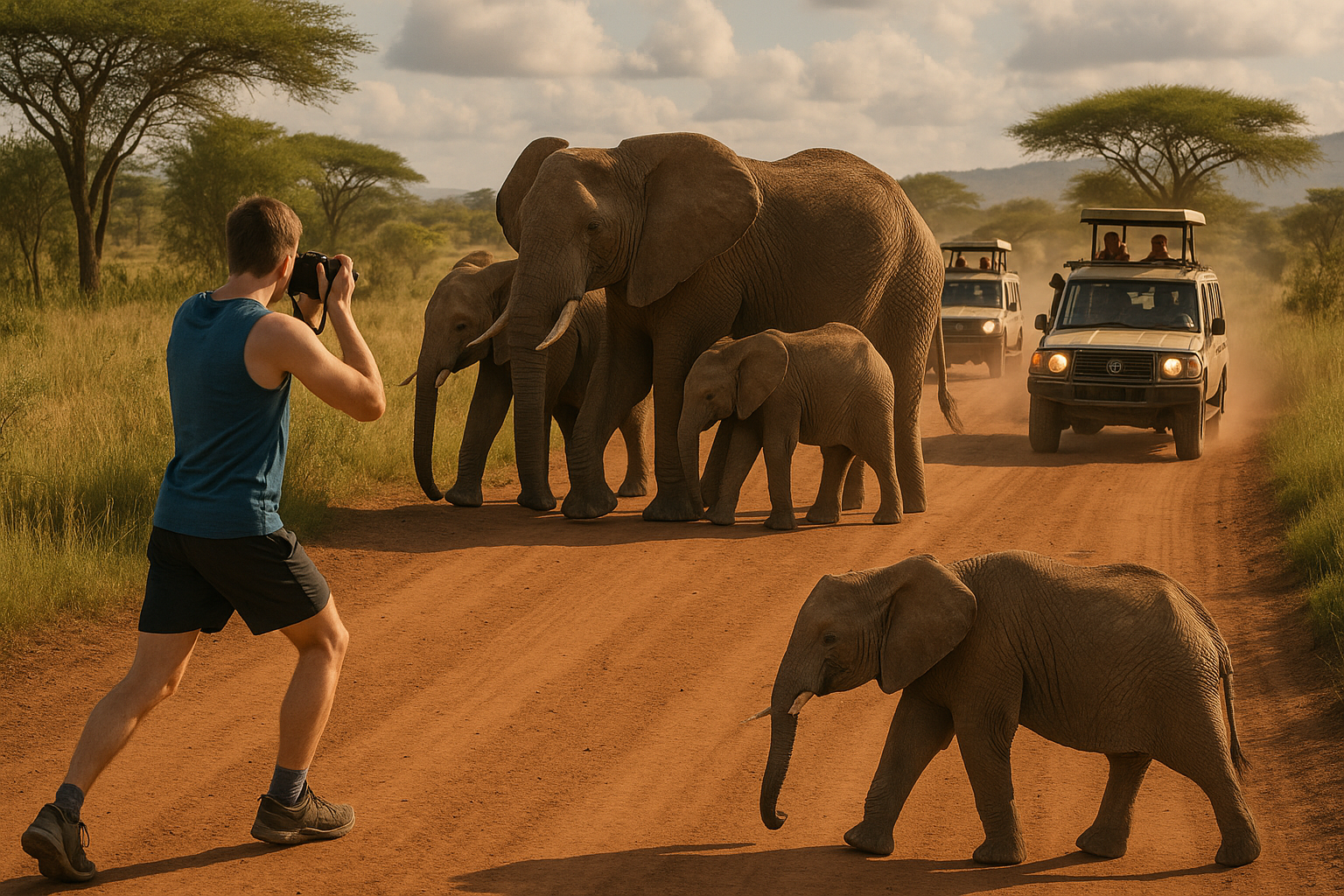
Experience the Big Five Marathon: a grueling race through South Africa's Entabeni Game Reserve, where wildlife encounters and conservation efforts redefine endurance.
Imagine running a marathon where elephants and rhinos are your cheerleaders! The Entabeni Safari Marathon in South Africa is a wild 42-kilometre race through a game reserve. Runners tackle tough terrain, see amazing animals, and help protect them. It's a truly special and challenging adventure for a good cause.
What is the Entabeni Safari Marathon?
The Entabeni Safari Marathon is a unique 42-kilometre race through South Africa's Entabeni Game Reserve. Runners navigate diverse terrains, encountering wildlife such as elephants and rhinos, while contributing to conservation efforts. It's renowned for its challenging conditions and commitment to ecological preservation, making it a highly sought-after event.
Get Cape Town news in your inbox
Stay updated with the latest stories from the Mother City.
Sunrise over the Waterberg bowl
A copper streak ignites the rim of the escarpment and the fever trees lift their chalk-white limbs like ghosts greeting the day. A turtle-dove’s mournful duet drifts across the cool air, answered by a single bass cough that vibrates through ribcages: lion, close enough to remind every hair on every arm who still writes the rules here. Ninety-nine nervous runners jog in place, LEDs still burning on their foreheads although the sky is already flirting with full daylight. They carry passports from twenty-eight nations, credit-card statements heavy enough to bankroll two white-rhino horn trims, and a single-page waiver whose opening line bluntly states: “I accept that wild creatures do not read race manuals.”
The Entabeni Game Reserve has been in lock-down mode since yesterday; check-in desks at the lodge are shuttered, gates bear “No Day Visitors” placards, and the only vehicles allowed beyond the barrier belong to rangers, medics, a drone crew, and a few lofty giraffes that have not yet received the memo. At six o’clock sharp the stillness shatters beneath a kudu-horn blast from Herman “Vleis” Viljoen, ex-bush-pilot turned race director. The pack shuffles forward, soles instantly cloaked in cinnamon-coloured dust that will accompany them for every subsequent kilometre. No electronic timing mats chirp; satellite watches must do the bookkeeping because anything that pings continuously can spook a six-ton tusker into stampede mode.
When geology writes the route
Barely four hundred metres in, the last scraps of tar surrender to gravel, then to twin-rut jeep trail, then to raw soil. The opening hill sneaks up like a thief: one hundred and eighty vertical metres compressed into a kilometre and a half, the slope disguised by a carpet of acacia pods that spin like tiny ball-bearings under pressure. Blood lactate spikes before any mammal the size of a labrador even appears, yet the payoff arrives instantly - seven bull elephants bar the crest, ears waving like slow semaphores. Athletes stand statue-still; a ranger chambers a .458 round but keeps the barrel earthward. Ten silent minutes dissolve while the herd deliberates, and somewhere a runner whispers that this is the only gridlock in history nobody resents.
The course traces a clover-leaf figure-eight so that impact stays inside one management block; animals keep their living rooms elsewhere. Even so, competitors traverse six micro-biomes - sour grassland, mixed bushveld, riverine strip, ironstone ridge, wetland pan, and the final sand-belt hugging the predator boma fence. Folding tables masquerading as aid stations surface every seven kilometres. Twenty-litre jerry-cans ride in on Unimogs; bananas, biltong, salt tablets, and a faint rooibos-coloured electrolyte share space beneath canvas fly-sheets. Plastic sachets are banned; runners collapse silicone cups like poker chips into their pockets.
Scarcity by the numbers
Sportshoes’ crude algorithm - worldwide Google hits for the exact phrase divided by finishers - reveals why travel agents smirk. Last year the tally hit 44 040 searches for ninety-nine official finishers, a ratio of 444 searches per medal that eclipses even the Antarctic Ice Marathon’s 346 and the Great Wall’s 193. Demand, however, is only half the equation. Entabeni’s supply ceiling is nailed down by a tri-partite memo linking the reserve, the provincial tourism board, and the Hananwa community. Anything above 120 runners would demand replanting 8 000 hectares of bush willow to neutralise aviation and lodge emissions - logistically impossible inside a single rainy season.
Start-line levy: R28 500 (about US$1 500), seemingly humble beside Antarctica’s US$22 500 - until you factor in the compulsory four-night safari, nudging the invoice toward R55 000. Still, democratisation exists: three entries are auctioned for charity; two Hananwa teenagers receive full grants, shoes included, plus a six-month build-up programme sketched by 1992 Comrades champion Nick Bester.
Preparing for ground that refuses to exist on the internet
Standard marathon plans worship Yasso 800s and 32-kilometre Sunday strolls; Big Five alumni scoff. Deep sand accounts for 5.8 kilometres and, according to University of Cape Town ergospirometry, costs an 18 % energy surcharge per stride. Altitude yo-yos between 1 050 m and 1 480 m, and radiant heat can kiss 34 °C before brunch - physiologically the day stretches toward 50-kilometre road effort. Bester therefore prescribes river-sand hill fartlek and long runs wearing a five-kilogram vest that mimics water flasks and camera gear once vehicle access vanishes at kilometre 28.
Footwear becomes religion. The 2023 victor chose Saucony Peregrine 12s with six-millimetre lugs; three carbon-plated road-racer devotees limped off at kilometre 19 with bruised mid-feet. Gaiters are compulsory - black-jack seeds act like miniature razors - and the front ten rows receive anti-venom pumps because the trail bisects a puff-adder corridor beside Serene Pan.
Sharing the road with trunk, tooth and claw
Race wallets contain a twenty-page “Animal Encounter Matrix.” Cheetah inside fifty metres? Form a volleyball huddle, raise arms, stare confident. Buffalo barricade? Detour solely on ranger whistle; buffalo despise panic sprints. Rhino? Single file on the down-wind edge, cameras dark. Runners rehearse the choreography on Friday, rangers prancing in zebra-striped tabards. The script is not cosplay: a 2019 bull-elephant mock-charge racked up 3.4 million YouTube hits and birthed an extra helicopter spotter for kilometre 7.
Flora fights back too. Acacia thorns can pierce outsoles; a 2022 finisher required surgery to remove a 38 mm spike that threaded heel skin like a sewing needle. Petroleum-slathered socks and “thorn-dentist” pliers nestle in every hydration vest.
Checkpoints that moonlight as bird-watching hides
At the halfway mark - Waterberg Lookout - Hananwa volunteers ladle homemade ginger beer so spicy it could cauterise a stomach ulcer. Between swigs, a logbook captures ornithological gossip: 09:17, two white-backed vultures on giraffe carcass; 09:23, secretary bird hunting 30 m west. Data wings its way to the resident ecologist, morphing refreshment stops into citizen-science hubs.
Nutrition parades local pride. Northern Cape Medjool dates oust syrupy gels; biltong slammers deliver 2.3 g sodium per fistful, vital when male sweat rates hit 1.1 L/h and female 0.9 L/h. One table experiments with marula-glazed baby potatoes - an Institute of Sport trial testing whether polyphenol-rich fruit speeds carbohydrate uptake.
The red-sand furnace and the final maths
Kilometre 32 dives into a four-kilometre radiant oven hemmed by ironstone walls where ground temps leap six degrees above ambient. Deep-sand arithmetic turns brutal: each stride sinks 11 mm yet returns only 8 mm of rebound, adding a hidden 42-metre hill after kilometre 38. HR monitors leap twelve beats inside 300 m; dropout here jumped from 4 % in 2018 to 11 % in 2023.
The finish gate materialises beside the lodge pool, turquoise rectangle winking like desert hallucination. Spectators balance Windhoek Lager bottles while warthogs vacuum the eighteenth fairway. The school choir hands out beaded medals threaded on recycled bicycle tube; colour codes match each athlete’s wildlife tally.
Podium, poaching and post-race economics
Kenyan beach-runner Joel Kiptoo clocks 2:59:17 and praises the sand as “training partner from home.” Swedish dentist Åsa Ringqvist leads the women in 3:27:04, crediting winter sauna sessions at 90 °C for taming Limpopo heat. Yet the digits that matter to the reserve arrive two weeks later: entry fees and auctions inject R1.2 million into the Dehorning Fund, enough to anaesthetise and shorten horn on eighteen black rhino, cutting poaching temptation by three-quarters per capita.
Meanwhile, Sportshoes’ ranking detonates demand; travel operators log a 240 % spike in queries for 2025 and a Swedish forum sees a bib flip for R82 000 - 1.5 × face value. Agents brand the event “the Comrades of the north, only with cats that can eat you,” geographically illiterate but emotionally spot-on.
Copy-cat conservation conundrums
No one owns the words “Big Five Marathon,” and three replicas already sprout: Laikipia in Kenya, Central Kalahari in Botswana, a “Mini-Big Five” half outside Phalaborwa. None has secured community-trust endorsement or a binding ecological cap. Purists fear “green-washing sprint tourism” where bait lures predators camera-close. Entabeni’s lease expires 2029; a clause already waits in the wings - any year in which human-linked rhino mortality exceeds 0.5 % automatically shelves the race.
Stories traded under constellations and generators
When the generator dies at 23:00, red-filter head-lamps paint the deck. Hyenas giggle beyond the finish arch; medals clink like wind chimes against beer glasses. The American physiotherapist recounts dropping to one knee at kilometre 19 while an elephant matriarch officiated. The Pretoria accountant laughs that a vervet monkey cost him a sub-4 by stealing his last date. Personal-best discussions dissolve; instead, people recite checklists: lion, elephant, buffalo, rhino… only the leopard remains a ghost story glimpsed by six lucky pupils at dawn.
Out in the dark, a ranger coils the finish tape into a metal box stencilled “Use again - only if we still have something left to run for.” Beyond the fence, a dehorned black rhino snorts once, already forgetting the soft-footed caravan that invaded its kingdom and left behind only footprints, ginger-beer cups, and enough cash to keep both horns and hopes a little shorter.
[{"question": "What is the Entabeni Safari Marathon?", "answer": "The Entabeni Safari Marathon is a unique 42-kilometre race through South Africa's Entabeni Game Reserve. Runners navigate diverse terrains, encountering wildlife such as elephants and rhinos, while contributing to conservation efforts. It's renowned for its challenging conditions and commitment to ecological preservation, making it a highly sought-after event."}, {"question": "What makes the Entabeni Safari Marathon unique and challenging?", "answer": "The marathon is unique due to its setting within a game reserve, offering encounters with wildlife like elephants and rhinos. The terrain is highly challenging, ranging from gravel and jeep trails to raw soil, steep hills, and deep sand (which accounts for 5.8 km of the course and significantly increases energy expenditure). Runners also face altitude changes, high radiant heat, and the constant awareness of wild animals, making it a physically and mentally demanding experience far beyond a typical road marathon."}, {"question": "How does the Entabeni Safari Marathon contribute to conservation?", "answer": "The marathon directly contributes to wildlife conservation, particularly through its Dehorning Fund. Entry fees and charity auctions inject significant funds (R1.2 million in one year) into initiatives like dehorning black rhinos, which drastically reduces the incentive for poaching. The event aims to protect the very animals that make the race so special, with a clause even stating the race will be shelved if human-linked rhino mortality exceeds 0.5% in a year."}, {"question": "What kind of preparation is recommended for runners?", "answer": "Standard marathon training plans are insufficient for this race. Experts recommend specific training to account for the challenging conditions, such as river-sand hill fartlek and long runs wearing a five-kilogram vest to simulate carrying water and gear. Footwear is crucial, with trail shoes with significant lugs being preferred over carbon-plated road racers. Gaiters are compulsory, and runners are advised on dealing with thorns and potential venomous snakes."}, {"question": "How do runners interact with wildlife during the race?", "answer": "Runners are provided with a detailed 'Animal Encounter Matrix' and rehearse protocols for different animal encounters, such as forming a huddle for cheetahs or following ranger whistles for buffalo. Rangers are present with firearms for safety, and measures like avoiding continuous electronic pings are taken to prevent startling animals. The course is designed to keep impact within one management block to minimize disturbance to wildlife habitats."}, {"question": "What is the cost and demand for the Entabeni Safari Marathon?", "answer": "The entry fee is approximately R28,500 (around US$1,500), but including a compulsory four-night safari, the total cost can be around R55,000. Despite the high cost, demand far outstrips supply, with over 444 searches for every finisher's medal in a recent year. The number of runners is strictly capped (around 120) due to ecological limits and community agreements, making it an exclusive and highly sought-after event, often referred to as 'the Comrades of the north, only with cats that can eat you.'"}]

Isabella Schmidt is a Cape Town journalist who chronicles the city’s evolving food culture, from Bo-Kaap spice merchants to Khayelitsha microbreweries. Raised hiking the trails that link Table Mountain to the Cape Flats, she brings the flavours and voices of her hometown to global readers with equal parts rigour and heart.
View all articles →