
Stroll along the Golden Mile
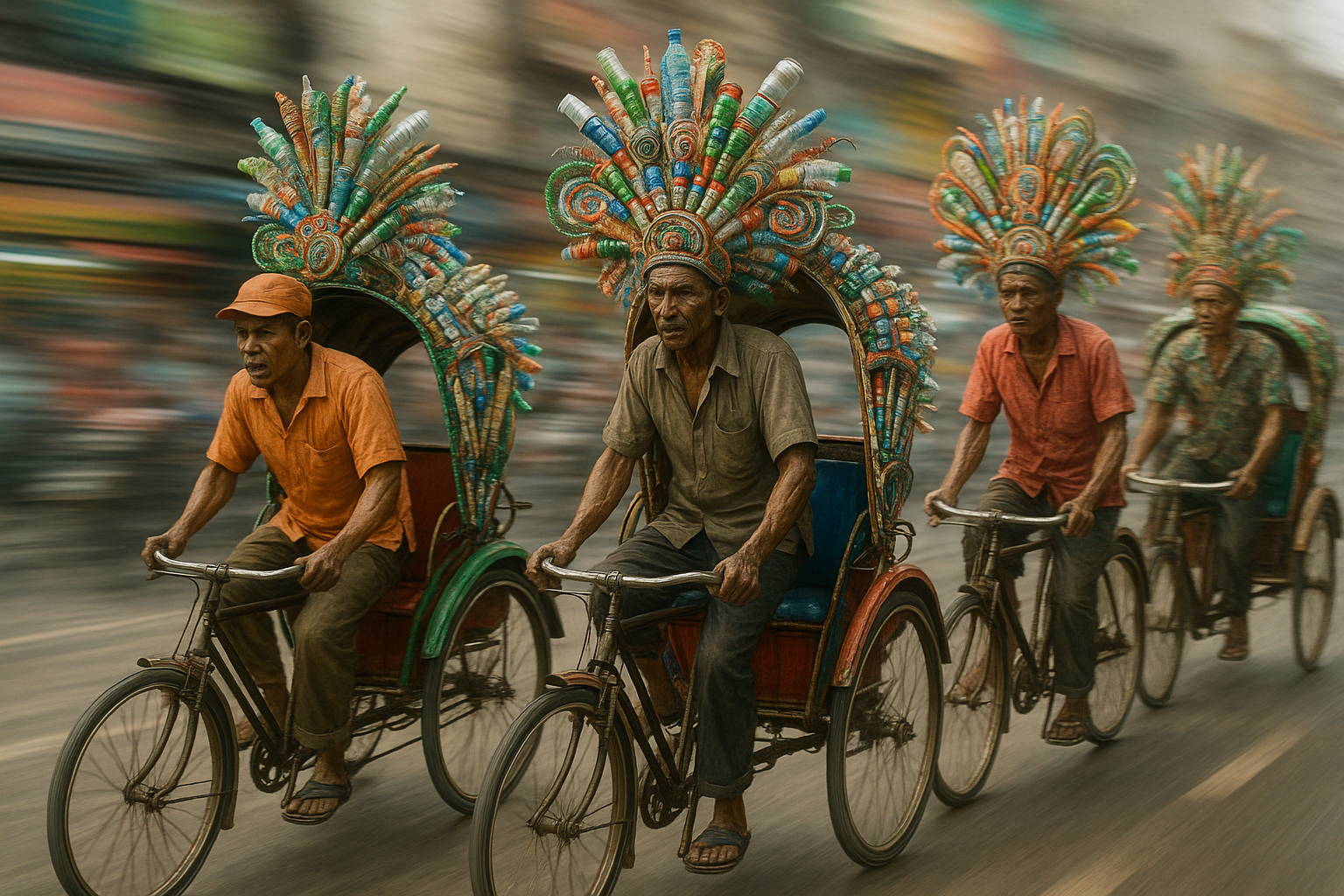
Discover Durban's vibrant pulse from dawn to dusk: surf, spice, marine wonders, botanical gardens, and thrilling adventures await.
Durban, South Africa, awakens before the sun, a vibrant tapestry of life unfolding along its Golden Mile. Surfers hit the waves at dawn, Zulu anglers cast lines, and rickshaws, like bright carnival jellyfish, parade along the promenade. From the depths of uShaka Marine World's aquariums to the peaceful embrace of Africa's oldest botanical gardens, the city pulses with a unique energy. Taste the fiery bunny chow, climb the iconic Moses Mabhida Stadium for breathtaking views, and dance to techno in a repurposed warehouse - Durban never sleeps, it simply cycles through its endless, spicy, and soulful rhythm.
What is Durban, South Africa known for?
Durban, South Africa, is known for its Golden Mile beachfront, diverse cultural experiences from Zulu anglers to Sufi dancers, and iconic attractions like uShaka Marine World. The city also boasts Africa's oldest botanical gardens, the impressive Moses Mabhida Stadium, and a vibrant culinary scene, particularly its famous bunny chow and Indian-influenced cuisine.
Get Cape Town news in your inbox
Stay updated with the latest stories from the Mother City.
The first light hasn’t even cracked the horizon when Durban’s daily overture begins. At 05:00 sharp, barefoot surfers trot across the rust-flecked railway bridge at New Pier, surfboards tucked under sun-bleached arms like oversized violin cases. Their footprints become the first signatures of the day on the damp sand. A few metres away, Zulu anglers in thick woollen caps sling lines from the north pier, swapping jokes in isiZulu laced with beach slang while they wait for shad or grunter to bite. On the paved promenade, pensioners in glow-stick trainers stride past teen skaters filming sunrise TikToks against a sky that looks like melted sorbet. Layered over the hush of dawn you’ll catch the hush of peeling waves, the clatter of skate trucks, and the soft thud of a soccer ball being juggled by shirtless kids outside the skate park. This six-kilometre strip nicknamed the Golden Mile is essentially an open-air theatre, and every sunrise is dress-rehearsal for whatever drama the day intends to stage.
The concrete ribbon beside the surf is more than a scenic walkway; it’s a slow-moving cultural conveyor. Outside Suncoast Casino, a Sufi grandfather performs tai chi as solemnly as a temple dancer. Near uShaka, dreadlocked drummers keep last night’s embers alive, drumheads lovingly patched with masking tape and hope. Rickshaws - bright as jellybeans - still bounce along the oceanfront, but today’s pullers are as ready to debate last night’s PSL score as to recite the 1902 origin tale of tin-cans and ostrich feathers. Pay the fare, hop on, and you’ll ride beneath headdresses woven from bottle-tops and plastic pearls - modern folk art bobbing above the crowd like carnival jellyfish.
uShaka Marine World technically unlocks its gates at nine, yet staff slip inside at dawn to balance salinity levels and thaw buckets of pilchards for the resident penguins. The park is five shipwrecks in disguise; the largest, the Phantom, shelters the aquarium. Wander through and you’ll swear you’re trespassing aboard a 1920s steamer now hijacked by coral and code. One tank holds Ntombi, a ragged-tooth shark rescued off the Wild Coast with a rusted hook in her jaw; she glides past perspex like sandpaper wrapped around a torpedo. Next door, 1,200 turquoise bleachers - matched to the city’s lifeguard-tower paint - face the Dolphin Stadium where the morning routine is scored to Gqom, Durban’s cracked-bass electronic export. When the dolphins back-flip in time with the bass drop, a choir of uniformed schoolkids shrieks as though the ocean itself just learned to dance.
Hidden behind the splashy shows, a rehab wing tends stranded loggerhead hatchlings. Each palm-sized patient bathes in a plastic tub christened after superheroes - last season’s lineup featured Black Panther and Storm - while they slurp vitamin-laced squid slurry. Visitors rarely see this humid room of gurgling filters and tiny flippers, yet a polite request at the info desk can earn you a quiet escort past the quarantine tanks, proof that the park’s heart beats far beyond ticket sales.
From Shipwrecks to Cycads: Green Lungs and Lonely Palms
Five minutes up John Zikhali Road the ocean roar fades to a polite murmur, replaced by the hush of Africa’s oldest surviving botanical garden. Proclaimed in 1849 as an imperial crop laboratory, the Durban Botanic Gardens now work as a 15-hectare set of emerald lungs in the city’s chest. Step through the avenue of Palmyra palms and street noise collapses into white-noise static. Follow the cycad boardwalk and you’ll meet Encephalartos woodii, arguably the planet’s loneliest botanic bachelor. Every last specimen on the planet is a male clone of one wild plant found near Ngoye in 1895; no female has ever surfaced, so the species survives only via cuttings - a lineage that refuses to die even though an entire gender is missing. A few strides away the orchid house exhales vanilla-scented steam; caretakers coax Phalaenopsis blooms to unfurl in relay so bridal couples always find a backdrop in flower. On Sunday afternoons the lawns become an alfresco concert hall where car boots morph into picnic bars and hadedas bash out cymbal-crash wings as jazz saxophones wander through improvised solos.
When the sun climbs to its fiercest, sensible citizens siesta under ceiling fans, yet the Moses Mabhida precinct thrives on rising thermals. The 105-metre arch - deliberately shaped like a Y from the national flag - doubles as a sail, funnelling sea breeze into the park below. A two-minute SkyCar ride climbs the northern spar; from the summit you can read Durban’s spine like flip-book history: Maydon Wharf’s century-old sugar terminals, Berea’s Edwardian mansions, and the Juma Mosque’s 1927 minaret modelled on a pocket-sized Taj Mahal. Daredevils trade indemnity signatures for the Big Rush Big Swing: an 80-metre free-fall into a 220-metre pendulum at 120 km/h, city and ocean swapping places like a Google-Earth glitch. Keep your eyes open; the horizon cartwheels, the sky flips below you, and for three seconds gravity feels optional.
Back on ground level, weekend soccer academies turn the stadium forecourt into a sizzle of rainbow flicks. Coaches are former PSL trialists who never got the final contract; they bark tactics in bilingual bursts - isiZulu clause, English noun, isiZulu verb. A 250-metre urban zip-line launches from the top deck of the parkade, whizzing over the skate bowl before dumping riders beside a trailer that serves red espresso - Rooibos pulled through a commercial handle, poured over ice for a caffeine-free hit that tastes like cedar dipped in honey.
Bunnies, Bunny Chow and Rooftop Poison: Durban’s Edible Timeline
High noon is the hour of chilli. The city’s most egalitarian kitchen is a corrugated-iron cube called Capsicum, parked where Dr Goonam meets Prince Street. Here, quarter-loaves of bunny chow arrive lined with stealth mint chutney - an edible fire extinguisher. Ask for mutton and the cook fires back “with or without?” - Durban shorthand for bones. Choose “with” and you receive an archaeological project: shank chunks soft enough to thumb apart, plus marrow you can slurp like seaside prawns. Veterans tear the loaf in concentric circles to avert collapse, never straight down. Pair it with falooda so dense with rose syrup it could pass for melted baklava. Across the street the Victoria Street Market supplies the arsenal: sacks of bird’s-eye chillies, cinnamon scrolls, turmeric that dusts your fingers sunrise-yellow. Upstairs Meena grinds masala to order; request a bunny-heavy mix and she’ll fold cumin and fennel into a newspaper cone that leaks ochre like urban pollen.
Afternoon heat sends office drones scurrying toward air-conditioning, yet Afro’s Chicken - a shipping-container kiosk jammed under the promenade - keeps its grill smoking. Here, corn-fed birds are basted with peri-peri laced with a whisper of Durban curry powder. Eat on the sand-dusted deck and watch container ships queue on the horizon like glowing Lego bricks. For deeper roots, cruise to the Britannia Hotel (est. 1879) in Stamford Hill. The curry buffet is ferried from copper pots so deep the ladle looks like a canoe paddle. Try geelbek fish curry, its tamarind tang a legacy of indentured labourers who swapped sea bass for whatever the catch handed them. Vegetarians duck into the Hare Krishna Lotus Vegetarian Restaurant where an all-you-can-eat thali costs less than a beachfront cappuccino and the halva is stirred to the soundtrack of bhajans echoing off industrial pots.
Nightlife refuses a single genre. Florida Road - once a jacaranda-shaded lane of Victorian brothels - now throbs with rooftop gin labs and nanobreweries that foam baobab-flavoured ale. Begin at the Chairman, a cigar lounge masquerading as a Shanghai speakeasy. Ask for a “Durban Poison”: cane spirit, marula liqueur, rim painted with crushed chilli sugar that flares on contact. Jazz brass spills onto the pavement where restored vintage cars serve as upholstered benches. For darker beats, trail the sub-bass to Unit 11, an Umgeni warehouse rigged with shipping pallets and coelacanth graffiti. Techno drops ricochet through industrial fans cannibalised from the old sugar mill; when the kick drum peaks, condensation rains from the rafters like a private micro-storm.
Dawn Again: Night Markets, Neon Prawns and the Eternal Rewind
Should you still have kilometres left on your internal clock, rendezvous at the 04:00 harbour fish market. Trawlers nudge the quay with crates of dorado, ruby snapper, and the occasional swordfish whose bill rivals a cricket bat in length. Auctioneers spit prices in English-Afrikaans mash while buyers torch gills with pocket LEDs. Buy a kilo of prawns straight off the deck, hand them to the on-site braai man, squeeze lemon, dust with peri-peri, and breakfast while the sky shifts from ink to butter-chicken orange. By 05:30 the first surfers trot across New Pier’s railway bridge again, salt crust already whitening their wetsuit shoulders. The movie rewinds, only now you’re inside the frame - spice on your tongue, brine on your lips, Durban’s rhythm synced to your pulse like a second soundtrack you never realised you carried home.
[{"question": "What are the best times to experience Durban's morning atmosphere?", "answer": "Durban awakens before the sun, offering unique experiences from dawn. At 05:00, surfers hit the waves at New Pier, and Zulu anglers cast lines. The Golden Mile comes alive with various activities as the sun rises, making any time from pre-dawn to mid-morning ideal for experiencing the city's vibrant start."}, {"question": "What unique cultural experiences can visitors find along Durban's Golden Mile?", "answer": "The Golden Mile is a hub of cultural activity. Visitors can witness Zulu anglers, Sufi grandfathers performing tai chi, and dreadlocked drummers. Iconic rickshaws adorned with modern folk art still parade along the oceanfront, offering a colorful and historical mode of transport while engaging with their pullers in lively debates."}, {"question": "What can I expect to see and do at uShaka Marine World?", "answer": "uShaka Marine World is designed to resemble shipwrecks, with the largest, the Phantom, housing the aquarium. You can observe marine life like Ntombi, a rescued ragged-tooth shark, and enjoy dolphin shows at the Dolphin Stadium, often set to Gqom music. The park also has a rehabilitation wing for stranded marine animals like loggerhead hatchlings, which can be seen upon polite request."}, {"question": "What makes the Durban Botanic Gardens special?", "answer": "The Durban Botanic Gardens, established in 1849, are Africa's oldest surviving botanical gardens. They offer a tranquil escape with features like the avenue of Palmyra palms and a cycad boardwalk, home to the rare Encephalartos woodii, a 'lonely botanic bachelor.' The orchid house provides a beautiful display, and on Sunday afternoons, the lawns host alfresco concerts."}, {"question": "What activities and sights are available at Moses Mabhida Stadium?", "answer": "The Moses Mabhida Stadium is an architectural marvel with an arch shaped like a Y from the national flag. Visitors can take a SkyCar ride to the summit for panoramic views of Durban, including Maydon Wharf, Edwardian mansions, and the Juma Mosque. For thrill-seekers, there's the Big Rush Big Swing, an 80-meter free-fall, and a 250-meter urban zip-line. The forecourt also hosts weekend soccer academies."}, {"question": "What are some must-try culinary experiences in Durban?", "answer": "Durban is famous for its spicy and soulful cuisine. A must-try is the bunny chow, a hollowed-out loaf of bread filled with curry, with Capsicum being a renowned spot. Other culinary highlights include peri-peri chicken from Afro's Chicken, authentic curries at the Britannia Hotel, and vegetarian thalis at the Hare Krishna Lotus Vegetarian Restaurant. For nightlife, explore Florida Road's gin labs and nanobreweries, or experience the unique 'Durban Poison' drink at The Chairman."}]

Tumi Makgale is a Cape Town-based journalist whose crisp reportage on the city’s booming green-tech scene is regularly featured in the Mail & Guardian and Daily Maverick. Born and raised in Gugulethu, she still spends Saturdays bargaining for snoek at the harbour with her gogo, a ritual that keeps her rooted in the rhythms of the Cape while she tracks the continent’s next clean-energy breakthroughs.
View all articles →