
Teen identified weeks after body discovered in Hangberg
Uncover the tragic last hours of Amiena Swano: a deeply moving account of loss, community grief, and the search for justice.
Amiena Swano, a teen from Hangberg, vanished after leaving her flat. Her body was found, and DNA confirmed it was her. Three people were arrested, highlighting a heartbreaking loss that shook her community. This story shows how a young life was sadly taken, and how her neighborhood felt the pain deeply.
What happened to Amiena Swano?
Amiena Swano, a teenager from Hangberg, vanished after leaving her flat. Her body was later discovered at the base of "the Washing Machine" rock formation. DNA confirmed her identity, leading to the arrest of three suspects. The case highlights the tragic disappearance and discovery of a young life, resonating deeply within her community.
Get Cape Town news in your inbox
Stay updated with the latest stories from the Mother City.
1. Dawn After Seventeen Years
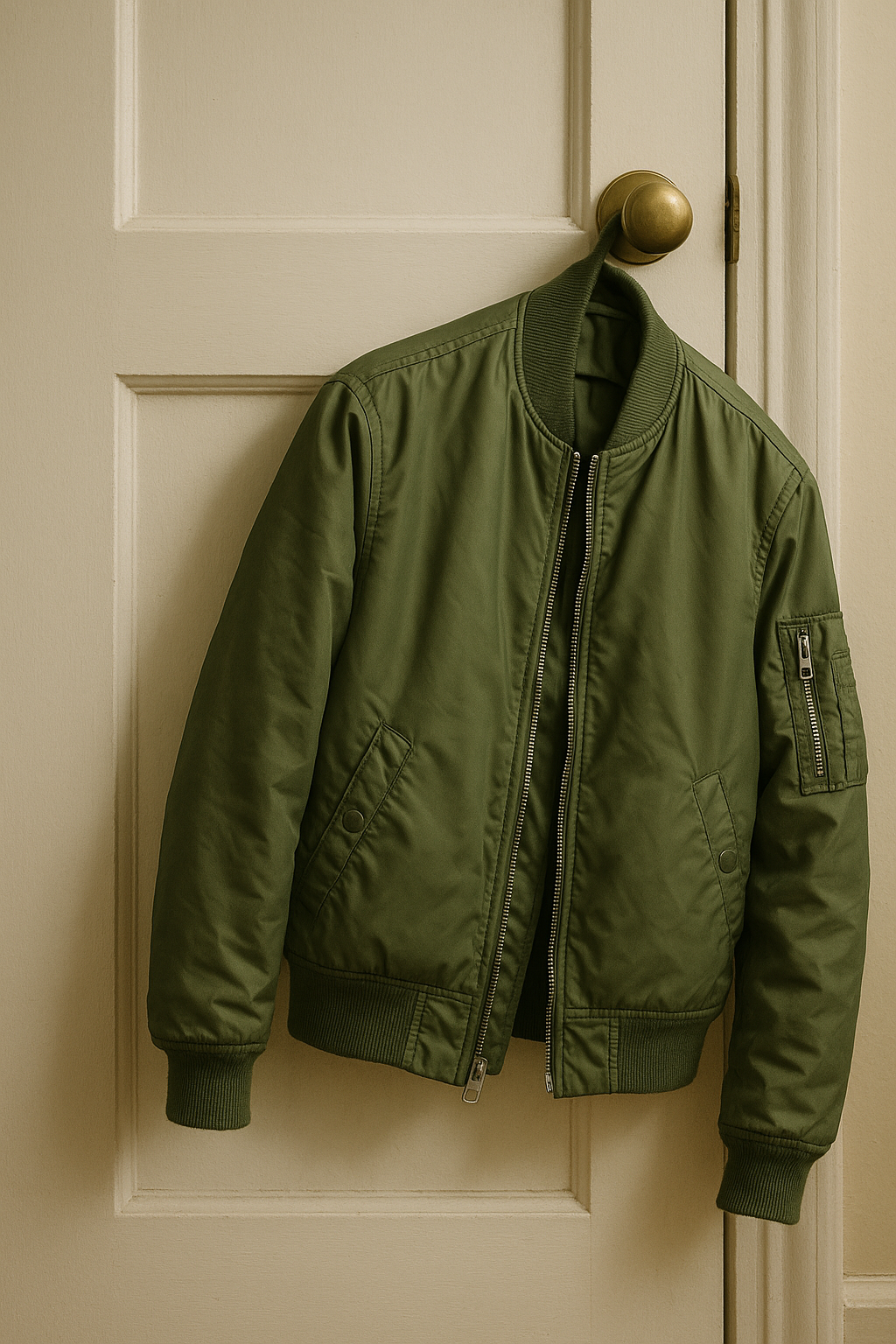
At 06:42 on a Monday sand-blasted by the south-easter, Warrant Officer Dreyer pressed the bell of Flat 9 for the third time. Two weeks earlier a black vinyl bag had rolled through the Salt River morgue gates; inside lay an unclaimed teenager the pathologists called UX-73-2024. Mrs Swano had been upright since three that morning, the exact minute her daughter entered the world seventeen years before and - she believed - the same minute the girl’s soul finally tore free of the rocks below the flats. When the officer said “DNA confirms it,” the mother did not collapse. She simply stepped back, allowing the policeman to see the living-room time capsule: Xbox pad on the carpet, Jungle Oats cemented to a bowl, the green bomber jacket dangling from a hook because Amiena hated climbing stairs with bulky clothes. Dreyer offered a grief-counselling leaflet; Mrs Swano turned it into a paper plane and parked it on the sill so the wind could finish the conversation.
The flat smelled of chip oil and brine, a scent every resident of Sea View carries home on their clothes. In the corridor, the lift groaned like an old man turning in bed. Dreyer noted the untouched scene, then asked for a glass of water he never drank. Mrs Swano complied, placing the tumbler beside the congealed oats, as though food and grief should share the same table. She told the officer she had saved every WhatsApp voice-note her daughter ever sent; the officer replied that the technicians might need the phone. “Take it,” the mother said, “but leave me the charger; the cord still smells of her coconut hair spray.”
Before leaving, Dreyer asked if she wanted a victim-support officer to stay. Mrs Swano shook her head, explaining that the goldfish needed feeding and the routine would keep her sane. Only after the door clicked shut did she open the freezer and remove the cake baked for Amiena’s eighteenth, now frozen into a mausoleum of icing. She cut a single slice, set it on the counter, and waited for the south-easter to dry it into a relic.
2. A Triangle That Leads Nowhere
Hangberg sits wedged between the harbour’s container stacks and Chapman’s Peak’s vertical sandstone. Taxi drivers label it “the last stop before the sea,” a phrase that sounds romantic until you realise the sea is a dead end. From the ridge at dusk you count roughly 3 000 roofs - some tin, some plank, some nothing more than advertising banners nailed to pallets - each with a single red TV diode blinking like a cardiac monitor. Amiena spent her life in one of the brick cubes called Sea View Flats, a 1970s walk-up whose name mocks every tenant; the only panorama is a parking lot ending in a wire-mesh fence where bait bags hang like prayer flags for fishermen who leave before sunrise.
The flats’ communal staircase carries the nickname “Oyster Card” because you tap the rusty railing on the way up and tap again when the ten-pm curfew whistle blows. On the morning she vanished, a cleaner discovered Amiena’s off-white Nike Air Force 1s on the second-floor landing - one shoe unlaced, tongue gaping as if she had evaporated mid-stride. The cleaner set the pair on the windowsill opposite the lift, an unspoken code every child understands: owner now barefoot, hurry and help. By sunrise the sneakers had become a shrine; someone tucked plastic rosary beads inside the left toe, another painted a tiny green heart on the suede. The caretaker swore he would lock them away, but mothers insisted they stay, arguing that shoes, unlike bodies, can point the way home.
Below the flats, alleys corkscrew toward the tidal pool mothers call “the washing machine.” Teenagers treat the rocks as an amphitheatre for first kisses and last goodbyes. The geography is intimate: every graffiti tag is a signature you recognise, every broken streetlamp a landmark. Yet the same closeness makes vanishing easy; once you drop below the ridge, no traffic camera follows. Amiena’s friends still draw maps on the backs of homework sheets, marking every blind spot where a body could slip between frames. They call the exercise “making the invisible visible,” but the cliffs keep rewriting themselves with each storm, erasing even grief’s footnotes.
3. Signals That Outrun the Night
By 08:00 the neighbourhood WhatsApp groups were blistering. The first ping landed in “Hangberg Moms 2.0”: “Please pray - Amiena missing.” Eleven minutes later the message had been cropped, retyped, decorated with red “KIDNAPPED” banners and SAPS emergency numbers in Comic Sans. A Sandton influencer shared the poster with the hashtag #BringHerHome, accidentally attaching a stock photo of a white schoolgirl. Four thousand likes accumulated before the correction; by then the algorithm had already gorged itself on the wrong face. Amiena’s brother, Zaheer, muted his chats, telling friends the vibration felt like “a hive interrogating my pocket.”
Facebook’s content mill swung into gear. Western Cape Missing Persons issued an official flyer: last seen 19:30, denim shorts, green bomber jacket. Shares ricocheted from Rondebosch to Richards Bay, each iteration shedding context. Someone superimposed a dove; another added throbbing angel wings. In Hangberg, teenagers screenshotted the original image and set it as their profile frames, but within hours they peeled them off, complaining the colours clashed with their aesthetics. The digital afterlife of a person, they learned, competes with sunset selfies and brunch flatlays.
Offline, the search party coalesced faster than any municipal meeting. Boys who normally hawk crayfish from coolers volunteered their quad bikes; aunties arrived with pots of curry and stacks of foil plates. The strategy was low-tech: split into teams of three, cover every path from the mangroves to the peak, shout the name, listen for the echo. By dusk the mountainside swarmed with torch beams that looked like a constellation sliding downhill. When darkness won, they returned home hoarse, shoes full of sand, only to find their phones glowing with fresh rumours: she’s in Bloemfontein, she’s locked in a container, she’s already overseas. The information superhighway had turned a local tragedy into a national pastime, and the family into reluctant content curators.
4. Rocks, Water and the Science of Retrieval
The corpse surfaced at the base of a twelve-metre sandstone outcrop nicknamed “the Washing Machine,” where waves cannon into rock and ricochet back as foam fists. Retired trawler captain Johan “Oom Jan” Smit spotted gulls circling something pale that was not kelp; he rowed closer, recognised human curvature, and dialled the harbour master. The spring tide was turning, so police had two hours to winch the body up a cliff brittle as dried bread. Rope lines snagged, a constable split his lip on shale, and the black bag finally crested the ridge to a hush of onlookers - shop stewards on smoke breaks, skollies in balaclavas, a Russian tourist streaming to VKontakte. Back home the clip auto-plays beneath an advert for erectile tablets, justice reduced to sidebar commerce.
Salt water is a hostile witness. It erodes skin, leaches DNA inhibitors, complicates amplification. The forensic lab tagged the remains UX-73-2024 and placed them in a refrigerator queue of 1 400 unidentified dead. Yet minors trigger Protocol P1; technicians worked overtime, Lizzo thumping from a phone. A blood card from Amiena’s childhood clinic visit supplied the final allele match at 23:51 on a Friday. When the chart flashed green, the scientist whispered “sorry” to a girl she would never meet, then emailed the result before the next backlog vial thawed.
Three suspects aged nineteen, twenty-one and twenty-four were arrested at dawn. The youngest lived one floor below Amiena and once rented his PlayStation for five rand a round; the twenty-one-year-old deckhand failed his skipper exam twice after being caught with forty abalone; the eldest posted matric-dance photos in a white suit, corsage blooming like evidence. Court papers cite common-law murder, kidnapping and “defeating the ends of justice.” A fourth man was cleared when CCTV showed him buying airtime in Diep River. Outside the Philippi Magistrate’s Court, #TotalShutDown activists pressed pink palms against the glass, branding the dock with ghost handprints that cleaners wipe away only for new ones to appear the next morning. The case remands to 27 August; the docket, 1 147 pages thick, travels in a green bulldog clip salvaged from a cupboard labelled “HOUT BAY 2010.” Every hearing, Mrs Swano arrives early, clutching a foam cup of filter coffee she never drinks, staring at the accused’s shoes to see if they remember to polish away the past.
[{"question": "
What happened to Amiena Swano?
", "answer": "Amiena Swano, a teenager from Hangberg, vanished after leaving her flat. Her body was later discovered at the base of \"the Washing Machine\" rock formation. DNA confirmed her identity, leading to the arrest of three suspects. The case highlights the tragic disappearance and discovery of a young life, resonating deeply within her community."}, {"question": "When was Amiena's body found and identified?
", "answer": "Amiena's body was found two weeks after her disappearance, at the base of \"the Washing Machine\" rock formation. She was initially identified as UX-73-2024 by pathologists. Her identity was confirmed through DNA analysis at 23:51 on a Friday, using a blood card from her childhood clinic visit, seventeen years to the exact minute her mother believed her soul \"tore free of the rocks\"."}, {"question": "Where did Amiena live and what was her community like?
", "answer": "Amiena lived in the Sea View Flats in Hangberg, a community nestled between the harbour and Chapman's Peak. The flats, built in the 1970s, offered no actual 'sea view' but overlooked a parking lot. Hangberg is described as a close-knit community where everyone knows each other, but its intimate geography also makes it easy for someone to vanish without a trace."}, {"question": "How did the community react to Amiena's disappearance and death?
", "answer": "The community's reaction was immediate and profound. WhatsApp groups quickly spread the news, and an offline search party formed, with residents volunteering their time and resources. The discovery of her shoes became a shrine, and mothers insisted they remain as a symbol of hope. After her death, #TotalShutDown activists protested outside the court, and the pain of her loss deeply affected her neighbourhood."}, {"question": "Who were the suspects arrested in connection with Amiena's death?
", "answer": "Three suspects, aged nineteen, twenty-one, and twenty-four, were arrested at dawn. The youngest lived one floor below Amiena, the twenty-one-year-old was a deckhand, and the eldest had posted matric-dance photos. A fourth man was cleared by CCTV footage. They face charges of common-law murder, kidnapping, and \"defeating the ends of justice.\""}, {"question": "What challenges did the investigation face due to the circumstances of her body's discovery?
", "answer": "The discovery of Amiena's body in salt water posed significant challenges for forensics. Salt water erodes skin and can inhibit DNA analysis, complicating the identification process. Despite these difficulties, technicians worked overtime, and a childhood blood card ultimately provided the crucial DNA match, accelerating her identification from a backlog of unidentified remains."}]
Emma Botha is a Cape Town-based journalist who chronicles the city’s shifting social-justice landscape for the Mail & Guardian, tracing stories from Parliament floor to Khayelitsha kitchen tables. Born and raised on the slopes of Devil’s Peak, she still hikes Lion’s Head before deadline days to remind herself why the mountain and the Mother City will always be her compass.
View all articles →