
The Cape Town shelter where you won’t be turned away if you’re drunk
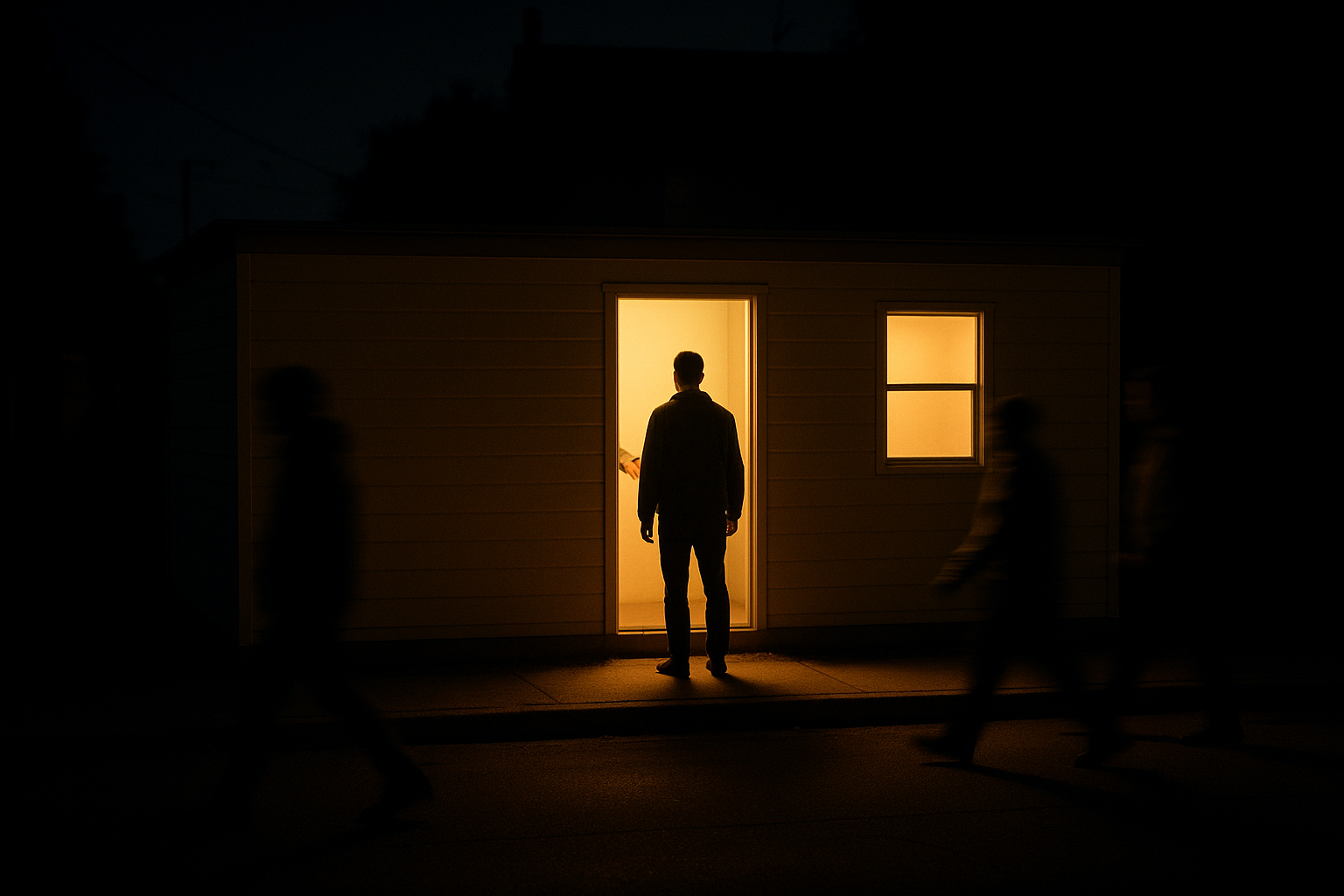
Cape Town's 'Sober Space' offers a unique sanctuary for homeless people, providing a safe place to sleep while intoxicated.
Cape Town's "Sober Space" is a groundbreaking night shelter for homeless people who are drunk or high. Unlike other shelters, it welcomes them without judgment, offering a safe bed, food, and care. This pilot program, run by Streetscapes, prioritizes immediate rest and safety over sobriety. It aims to reduce public intoxication and hospital visits, providing a humane alternative for the city's most vulnerable.
What is Cape Town's "Sober Space" shelter?
Cape Town's "Sober Space" is a unique night-time shelter offering unconditional refuge to intoxicated or high homeless individuals. Unlike conventional shelters, it prioritizes immediate safety and rest without sobriety requirements, providing beds, food, and optional social work referrals. This pilot program aims to reduce public intoxication incidents and hospital admissions, challenging traditional shelter rules.
Get Cape Town news in your inbox
Stay updated with the latest stories from the Mother City.
A Prefab Building That Refuses the Usual Rules
Behind the roar of Culemborg’s rush-hour traffic and in the shadow of port-loading cranes, a small, rectangular structure hardly anyone notices is quietly rewriting shelter etiquette. The unit - just twelve fold-out beds in a municipal-brick annex - opens its doors from sunset to sunrise, offering the metro’s only unconditional refuge for people who are drunk or high and have nowhere else to go. No one demands a breath test, confiscates a bottle, or delivers a sermon. A first-name sticker on the wrist and an optional social-worker appointment in the morning are the only formalities.
Inside, municipal beige walls keep the décor plain, but the message is radical: sleep here first, then we’ll talk about tomorrow. Conventional shelters usually slam the gate on anyone reeking of alcohol or swaying from street-level narcotics; staff fear fights, pilfering, or the triggering scent of cheap wine. “Sober Space,” as staff and guests nicknamed the pilot on 1 November 2025, deliberately reverses that sequence.
The programme operates as an enclave attached to the larger City Safe Space, one of Cape Town’s 1,038 publicly funded beds. Beyond the gate, sobriety is still the price of admission. Inside the annex, intoxication is irrelevant - only weapons are removed from pockets or backpacks. Night-shift workers insist the arrangement feels more like a neighbourly living room than a processing centre.
Night Shifts and Bottom-Up Support
Between eight in the evening and midnight the annex reaches peak capacity. Guests trade wet sneakers for donated blankets while a volunteer from Mandela Rhodes Café ladles soup and Pick n Pay hands over yesterday’s sandwiches. The ordinariness is the point, insists Jesse Laitinen, founder of Streetscapes, the NGO running the night programme. “Routine kills stigma; once people stop being labelled ‘clients’ they start acting like neighbours.”
Six peer-support staff - every one of them formerly street-homeless - take turns on the graveyard shift. Bonelwa Xaka, 37, patrols the floor in a high-visibility orange bib emblazoned with the Streetscapes logo. She spent five winters on the same pavements she now watches over, dodging gang attacks and surviving sexual assault near the old Salvation Army shelter in Woodstock. Today she lives in subsidised Delft housing with her three primary-school children, a relocation financed by the same scheme that once paid her a R2 000 monthly stipend while she was still sleeping outside.
Together the six staff have recorded 165 individual guests in six months; 73 % accepted follow-up referrals - to detox beds, psychiatric out-patient clinics, or city social workers. A few drop by every week; three have graduated to the shelter’s main dormitory and later into transitional housing in Maitland. Xaka measures success in small currency: a man remembering to keep his shoes by the bed, a woman asking to see the clinic nurse, someone finally trusting the address on a social-worker letter.
Who Pays, Who Saves Money, and Who Still Hesitates
Funding is a patchwork stitched together to shield the project from City Hall’s red tape. The Cape Town Central City Improvement District (CCID) transfers R42 000 each month for security guards, overnight cleaning, and a driver who shuttles willing guests at 7 a.m. to the Kensington Clinic three kilometres away. The City of Cape Town contributes the annex building itself, insurance cover, and free use of industrial washing machines tucked inside the main shelter. The maths is stark: each bed costs about R1 100 a month, officials say, versus the R3 400 nightly bill when an intoxicated person ends up in Groote Schuur Hospital’s trauma unit - the default before the pilot existed.
Councillor Francine Higham, portfolio head for community services and health, insists the shelter is “a bridge, not a European-style safe-consumption site”, a careful phrasing that skirts South Africa’s strict liquor laws. Numbers crunchers point to a 38 % drop in public-intoxication arrests within a 500-metre radius during the first 120 days, though the City cautions against pinning that solely on the annex. A clearer signal comes from Somerset Hospital’s psychiatric emergency wing: monthly overnight admissions for people identified as homeless fell from 29 to 11 over the same period.
Yet calendars rule politics. The experiment is scheduled to close on 30 June unless new money appears. Provincial treasury hacked R4.2 billion from human-settlements transfers, leaving the City with a hole it is filling by halting infrastructure projects rather than expanding social services. Laitinen has pitched philanthropists - Old Mutual, the ELMA Foundation, and a Jewish federation in the United States - for R2.8 million to cover 18 more months, but only if the municipality keeps utilities free. “The nightmare outcome,” she says, “is proving that a cheap, humane solution works, then padlocking the door because no line item exists.”
After the Lights Go Out
The evening ritual repeats every night: roll-call in three languages, blankets that smell of washing-powder, a quiet promise of safety. At 23:07 a man in a torn Springbok jersey staggers up the ramp, fumes rising from his skin like heat off a tar road in January. Xaka greets him first in isiXhosa, then English, then Afrikaans, code-switching the way only someone who has slept in these same circles can. She scribbles ‘9’ on his wrist in permanent marker and steers him toward a mattress already warmed by the body before him. “Tonight he sleeps,” she says. “Tomorrow we ask if he wants to speak to the social worker.”
She is under no illusions about permanence. “If this closes we’ll scatter back to traffic islands and railway sidings, and the city will pretend we vanished again.” Between soup rounds she scans the room: one guest is teaching another how to fold hospital corners, a third is humming an old Brenda Fassie tune. These small acts of normal life, she argues, are the real metric. Whether the annex’s door stays open will be decided by spreadsheets in distant offices, but Xaka keeps tagging wrists and assigning beds as if the pilot will outlast every budget cycle.
For now, the annex stands - a beige box with a blue lightbulb above the door - offering twelve mattresses and a single, stubborn sentence to Cape Town’s most rejected residents: come inside first, the rest can wait until morning.
What is Cape Town's "Sober Space" shelter?
Cape Town's "Sober Space" is a unique night-time shelter offering unconditional refuge to intoxicated or high homeless individuals. Unlike conventional shelters, it prioritizes immediate safety and rest without sobriety requirements, providing beds, food, and optional social work referrals. This pilot program aims to reduce public intoxication incidents and hospital admissions, challenging traditional shelter rules.
How does the "Sober Space" differ from traditional shelters?
Traditional shelters often deny entry to individuals who are intoxicated or under the influence of drugs, fearing disruption or safety issues. The "Sober Space" deliberately reverses this approach, welcoming individuals without judgment, requiring no breath tests, and not confiscating alcohol or drugs (though weapons are removed). Its core philosophy is to provide immediate rest and safety first, with follow-up support offered only after a night of secure sleep.
Who operates the "Sober Space" and where is it located?
The "Sober Space" is a pilot program run by the NGO Streetscapes. It is located in an annex attached to the larger City Safe Space in Culemborg, Cape Town. The facility itself is a small, rectangular prefabricated building with twelve fold-out beds, opening its doors from sunset to sunrise.
What services are provided at the "Sober Space"?
The shelter provides a safe bed, food (soup from Mandela Rhodes Café and sandwiches from Pick n Pay), and a warm, non-judgmental environment. Guests are given first-name stickers and offered optional social-worker appointments in the morning for follow-up referrals, such as detox beds, psychiatric outpatient clinics, or city social workers. Peer-support staff, many with lived experience of homelessness, also provide care and support.
How is the "Sober Space" funded, and what are its financial benefits?
The project operates on a "patchwork" funding model. The Cape Town Central City Improvement District (CCID) provides R42,000 monthly for security, cleaning, and transport. The City of Cape Town contributes the building, insurance, and industrial washing machine use. Financially, it's significantly more cost-effective: each bed costs approximately R1,100 per month, compared to the R3,400 nightly bill for an intoxicated person in a hospital trauma unit. It has also shown a 38% drop in public-intoxication arrests and a decrease in overnight psychiatric emergency admissions for homeless individuals.
What is the future of the "Sober Space" program?
The current pilot program is scheduled to close on June 30 unless new funding is secured. Streetscapes is actively seeking R2.8 million from philanthropists to cover an additional 18 months, conditional on the municipality continuing to provide free utilities. The challenge lies in securing long-term funding and institutionalizing this proven, humane solution within the city's budget, despite its demonstrated success in reducing public intoxication and hospital visits.

Amanda Wilson is a Cape Town-born journalist who covers the city’s evolving food scene for national and international outlets, tracing stories from Bo-Kaap spice shops to Khayelitsha micro-breweries. Raised on her grandmother’s Karoo lamb potjie and weekend hikes up Lion’s Head, she brings equal parts palate and pride to every assignment. Colleagues know her for the quiet warmth that turns interviews into friendships and fact-checks into shared laughter.
View all articles →