
The pundits weigh in
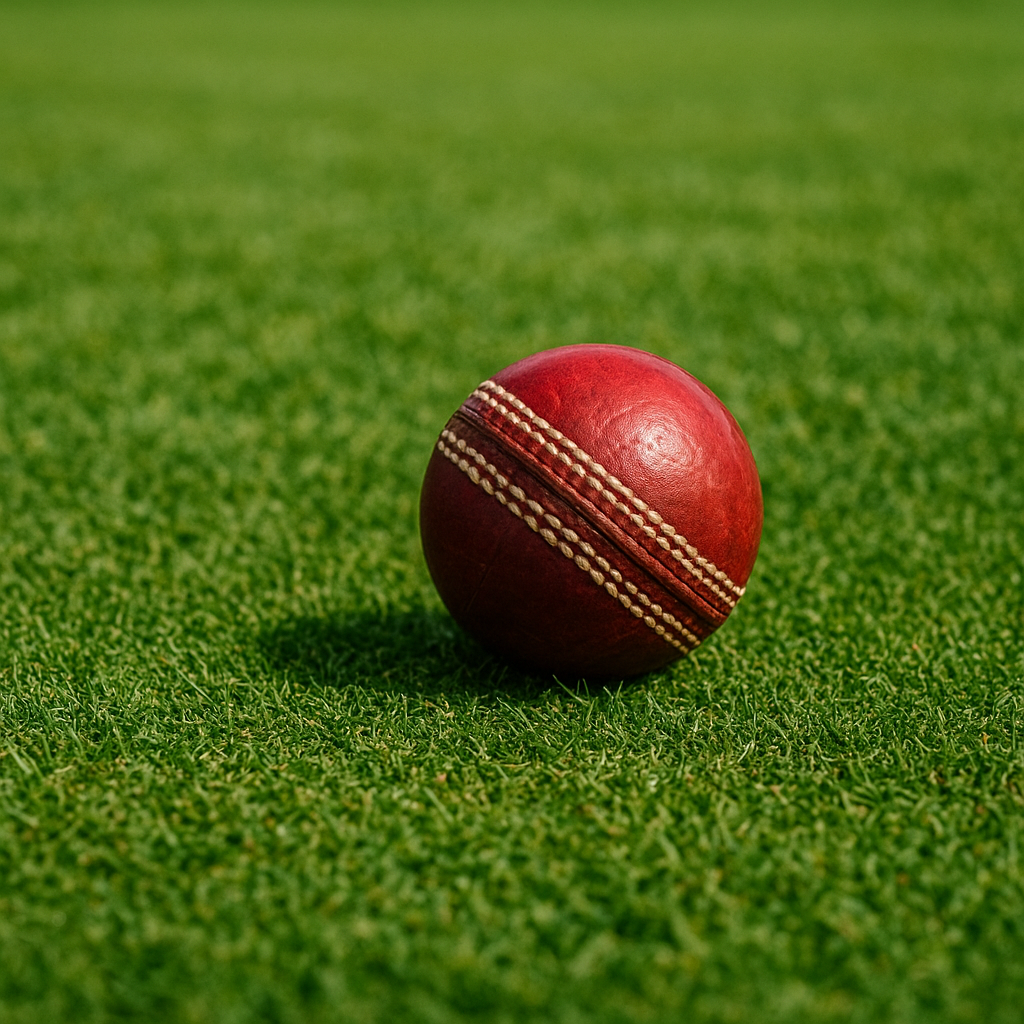
Relive a thrilling cricket match at Highveld Grounds! Experience fierce competition, dramatic catches, and post-game camaraderie.
The Old Diocesans and the Armadillos played a thrilling cricket match on the Highveld. The Old Diocesans scored 198 runs, thanks to amazing batting from Tanguy Durrant and others. The Armadillos tried their best, with a strong partnership from Morgan and Oates, but only managed 175 runs. The game ended in a fun draw, leaving everyone happy and ready for the next match.
What happened in the cricket match between the Old Diocesans and the Armadillos?
The Old Diocesans, led by Tanguy Durrant's 63 and other key contributions, posted 198-8 in 35 overs. In response, the Armadillos, despite a strong partnership from Morgan and Oates, fell short at 175-9, resulting in a draw declared as "satisfying as a Szechuan peppercorn on the tongue."
Get Cape Town news in your inbox
Stay updated with the latest stories from the Mother City.
Mist, Monograms and a Busload of Legends
Just after dawn, a pale veil hovered above the square on Lord Colville’s estate, seven kilometres east of Witbank, tinting the grass sepia. The chartered coach pulled in at 07:30, suspension creaking beneath embroidered kit-bags, stainless-steel flasks of Bloody Mary and the mysterious Amaretto bottle Brett swore was purely for emergencies. Every Old Diocesan reached overhead to reclaim his navy blazer as if unsheathing Excalibur; wool fibres carried the faint murmur of school fixtures played a century ago on the Bishops outfield in Cape Town.
The estate gates swung open and the mood dialled up immediately. House-staff waved from a distance, the club flag snapped in the breeze, and the batting cage clanged with throw-downs. Someone cracked open the first beer before the team bus had cooled its brakes. A jacaranda shed purple confetti on the walkway while hadedas scolded from the treetops like unpaid bookies.
By 08:15 the pavilion stairs rattled with studs. Players spread across the veranda swapping predictions, the scent of coffee mingling with linseed oil. A roaming photographer asked the Armadillos to bunch tight for the ritual squad photo; the Bishops boys photo-bombed from the balcony, flexing imaginary muscles. In the background, the square already looked eager - striped, rolled, and glowing faintly under the vaporous light.
Rumours, Politics and the Art of Looking Innocent
Before a single ball was bowled, gossip swept the ground faster than any quick single. Files labelled “Epstein,” Mandelfrengensen’s latest tactical car crash, murmurs that Downing Street had started drafting a shortlist - each scrap of whispers flickered between stretching exercises and glove checks. Pickers, captain of the visitors, answered every question with a thin half-smile, the kind you offer traffic cops at a roadblock. “Politics,” he finally said, slotting the middle stump into place like he was loading a rifle, “sorts itself out once the numbers go up on the board.”
Brett circulated with the Amaretto disguised in a water bottle, sharing nips that tasted like Christmas. A London banker tried to explain derivative trading to a Free State farmer who merely nodded and pointed at the pitch: “This is the only market that never closes early.” The Armadillos’ coach, ex-Kent stalwart Teddy Braithwaite, scribbled notes on a damp scorecard, then crossed out half of them with theatrical disgust.
Meanwhile, Lord Colville’s labrador trotted around with a spare bail in its mouth, tail wagging like a metronome, unaware it had become the bookies’ favourite for “first interference.” A steward placed tiny South African flags on the sight-screen scaffolding - only for a brisk wind to flip two upside-down and spark a brief diplomatic joke about Commonwealth relations.
Toss, Taunts and a Slice of Green Mamba
At 09:45 Colville strode out in an MCC-yellow cap tilted at buccaneer angle, moustache freshly waxed and glinting. He called correctly, grinned like a man who sells ivory but lectures on conservation, and chose to set the Armadillos loose on a wicket tinged with emerald. “Green mamba,” he proclaimed, twirling the coin between thumb and forefinger. “Let’s see how these Southern Hemisphere lads handle a bit of English spice.”
His fast men, left-armer Kriek van der Walt and offie De Villiers Snyman, jogged in like eager bloodhounds. They had spent the previous evening analysing YouTube clips of each Bishops batsman while demolishing two platters of peri-peri wings - research fuelled by capsaicin and lager. On the boundary, a groundsman relayed their sledges through a walkie-talkie to the scorers’ hut; the commentary box exploded every time Kriek’s Afrikaans met a microphone.
Pickers scribbled the batting order on the back of a beer coaster he later lost in his sock. The Armadillos removed their blazers in choreographed synchrony, revealing shirts so white they hurt to look at. A brass band - three sousaphones and a snare - launched into an off-key version of “I’d Like to Teach the World to Sing,” providing the day’s first laugh track.
Bishops Dig In, Collapse, Then Claw Back
Blood on the Tracks - 0 for 3 in Four Overs
Cunningham took guard, tapped three times, then watched his off stump cartwheel as Kriek bent one back through the gate. Next ball, Murray Mac’s inside edge ricocheted off pad to short leg, who pouched it gleefully. Debutant Southey followed with a waft so airy it belonged in a perfume ad; the keeper snaffled the edge and the scoreboard froze at 0-3. Bishops supporters reached for Bloody Marys as if they were defibrillators.
Tangwyn Durrant’s Paris-by-Way-of-Newlands Masterclass
With the top order splintered, Tanguy Durrant walked out, pads buckled by his father’s big hands that once swung a guitar like an axe. He rode the bounce late, wrists rolling shut like a safe door, and punished anything over-pitched with drives that hummed through extra cover. His half-century arrived off 63 balls - an on-drive so pure it should have been framed. Olly Cunningham re-emerged in spirit through a 40-run cameo, Murray Mac added a sinewy 50, and the score stubbed its toe forward.
Cunners and Orps: Protein-Fuelled Carnage
Nick “Tasty” Cunners, still burping last night’s chicken livers, marched in at 120-5. He treated Snyman like an overripe papaya, slog-sweeping him into a jacaranda whose hadeda tenants flapped skywards in moral outrage. Neil “Dr Spinal Cracker” Orps rotated the strike, off-breaks disguised as therapy, and chipped in with a 25 that involved one reverse-sweep so audacious the umpire nearly swallowed his counter. The pair smashed 72 in nine overs before Tasty holed out for a 36-ball half-century, bat raised like a barbecue fork.
Pickers, Gordo and the Late Blitz
At 180-7 Pickers signalled intent by reverse-sweeping his first ball for four that streaked past Lady Colville’s sunhat. Gordon “Gordo” Mansfield, economist by day, emergency hitter by crisis, launched a straight six that drowned in Mrs. Colville’s Pimms. The innings closed on 198-8 after 35 overs, leaving exactly 38 overs for the chase. Colville blew his cheeks out; his spreadsheet brain already running permutations.
Tea-Time Sabotage and the Armadillos’ Reply
Lord Colville’s hospitality crew laid tea tables heavy as cargo ships: bobotie spring rolls, mini-bunny chows, koeksisters lacquered to amber. A sly grin spread among the hosts - nothing slows a fielder like a belly full of syrup. Gordo stuffed three samoosas into one pocket and declared himself “carb-loaded for the apocalypse.” Meanwhile, Brett set odds on who would vomit first; the favourite was the wicket-keeper after sprinting in from third man.
Colville addressed the pavilion: “Eat well, gentlemen. A sluggish outfield means more boundaries for us.” Nobody believed him, but everyone applauded. A local running club jogged past the boundary to “warm up”; they were greeted with slow-claps and someone shouting, “Show-offs!”
Armadillos Chase, Stall and Finally Settle
Gordo’s Venomous First Over
Armadillos openers appeared in helmets so new the stickers still squeaked. Gordo’s first ball nipped back and clipped Jannie Hattingh’s off peg; the bail twirled like a baton. The estate staff gasped in unison. Over the next five overs Gordo sent down a cocktail of swing and spite, conceding just 14 - including a beamer so loathed that batsman Vermeulen retreated to square leg for a three-minute existential crisis.
Morgan & Oates: A Commonwealth Partnership
Peter Morgan sauntered in at 12-2, sleeves rolled like an Old Etonian on safari. Alongside Jason Oates - Perth-born, Oxford-polished - he rebuilt with cover drives that purred. Together they carted Cunners and Orps to all sectors, reaching 120-2 at drinks. When Oates cover-drove yet another four, the boundary fielder moaned, “That’s straight out of a Fremantle sea-breeze.” The scoreboard flirted with possibility; one wag updated the “required” column on his phone every ninety seconds.
Pickers’ One-Handed Lightning
At 127-2, Oates (on 86) skipped out to loft Pickers over mid-on. The skipper back-pedalled, right hand sky-high, fingers stretched as if playing an impossible jazz chord, and grabbed the ball inches from doom. The momentum twirled him clean around; blazer tails flapped like ravens. Colville applauded with the weary grace of a man whose horse just refused Becher’s Brook. Oates departed mouthing an expletive so polite it might have passed the Queen’s English Society.
Collapse, Stumping and the Honours Even
Needing 24 off 24 with three wickets left, the Armadillos blinked. Orps lured Johnny Colville down the track; keeper Murray whipped off the bails faster than you can say “chiropractor.” Mike WB, tall enough to star as his own sight-screen, hammered yorkers into the blockhole and let slip only a handful of singles. When Snyman skied a catch to deep mid-wicket, the score froze at 175-9. Four overs remained, but the Armadillos shook hands and declared the draw “as satisfying as a Szechuan peppercorn on the tongue.”
Flames, Songs and Loose Ends in the Darkness
Brett commandeered a braai grid the size of a small aircraft wing: boerewors spirals, lamb sosaties marinated in rooibos, and wings that required a liability form. The Armadillos rolled in a keg of Windhoek lager; the Bishops countered with crates of Cape Pale Ale smelling of fynbos and weekend guilt. James Durrant, father of the Gallic hero and slayer of three wickets, produced a guitar and strummed “Santiano” until it mutated into “De la Rey,” joined by Colville staff clapping Zulu rhythm on braai tongs.
An impromptu throwing contest ended with the match ball stranded on the helipad; security radioed for retrieval by torchlight. Wagers flew on whether Pickers’ catch would reach the BBC; the consensus: only during a slow Brexit news cycle. Philosophers - fuelled by amaretto - argued whether T20 had murdered the classical draw. Verdict: rain and bad caterers remain the only true villains.
Highway Harmonies and Unanswered Phones
By 20:00 the mist had burned off, replaced by a Milky Way so sharp it looked freshly flaked with sugar. The bus rolled west toward Johannesburg, headlights slicing eucalyptus tunnels. On the back seat, Tanguy and Jason compared surf breaks - Cottesloe versus Glen Beach - until someone unearthed a dog-eared Wisden 1975 and began reading the Brisbane carnage card by card. Engine noise turned lullaby; even the insomniacs nodded off.
Far away, Mandelfrengensen’s phone buzzed unanswered in a London hotel. In Witbank, the groundsman stood over the strip, wondering whether to trim another millimetre off the green mamba for next season’s sequel. And aboard the night coach, Pickers - eyes shut, head against the window - mentally drafted an imaginary cabinet, slotting cover-point fielders where former allies used to stand.
What was the final score of the cricket match?
The Old Diocesans scored 198 runs for 8 wickets in 35 overs. The Armadillos replied with 175 runs for 9 wickets, also in 35 overs, resulting in a draw.
Who were the standout players for the Old Diocesans?
Tanguy Durrant was a key contributor with 63 runs. Other significant performances included a 40-run cameo from Olly Cunningham, Murray Mac with a sinewy 50, Nick "Tasty" Cunners who smashed a 36-ball half-century, and Neil "Dr Spinal Cracker" Orps who chipped in with 25 runs.
Where was the match played?
The match took place on Lord Colville’s estate, seven kilometres east of Witbank, South Africa. The setting was picturesque, with mist, jacaranda trees, and a grand pavilion.
What was the atmosphere like before and during the match?
The atmosphere was lively and festive, starting early with the arrival of the chartered coach and players. There was plenty of banter, gossip, and even a brass band playing. Lord Colville, the host, added to the theatricality with his coin toss and choice of a "green mamba" wicket. Post-match, a braai, singing, and camaraderie continued into the evening.
What unique elements were present at the match?
Beyond the cricket, there were several eccentric details: an Amaretto bottle disguised as water, a London banker discussing derivatives with a Free State farmer, Lord Colville’s labrador trotting with a spare bail, diplomatic jokes about upside-down flags, and a tea spread described as "heavy as cargo ships" designed to slow fielders.
What happened after the match concluded?
After the draw was declared, a large braai (barbecue) was held with boerewors, lamb sosaties, and wings. There was a plentiful supply of beer and Cape Pale Ale, accompanied by guitar playing and singing. An impromptu throwing contest led to the match ball landing on the helipad, and philosophical discussions about cricket ensued until the team bus departed for Johannesburg.

Liam Fortuin is a Cape Town journalist whose reporting on the city’s evolving food culture—from township kitchens to wine-land farms—captures the flavours and stories of South Africa’s many kitchens. Raised in Bo-Kaap, he still starts Saturday mornings hunting koesisters at family stalls on Wale Street, a ritual that feeds both his palate and his notebook.
View all articles →