
TotalEnergies in court over offshore oil and gas drilling
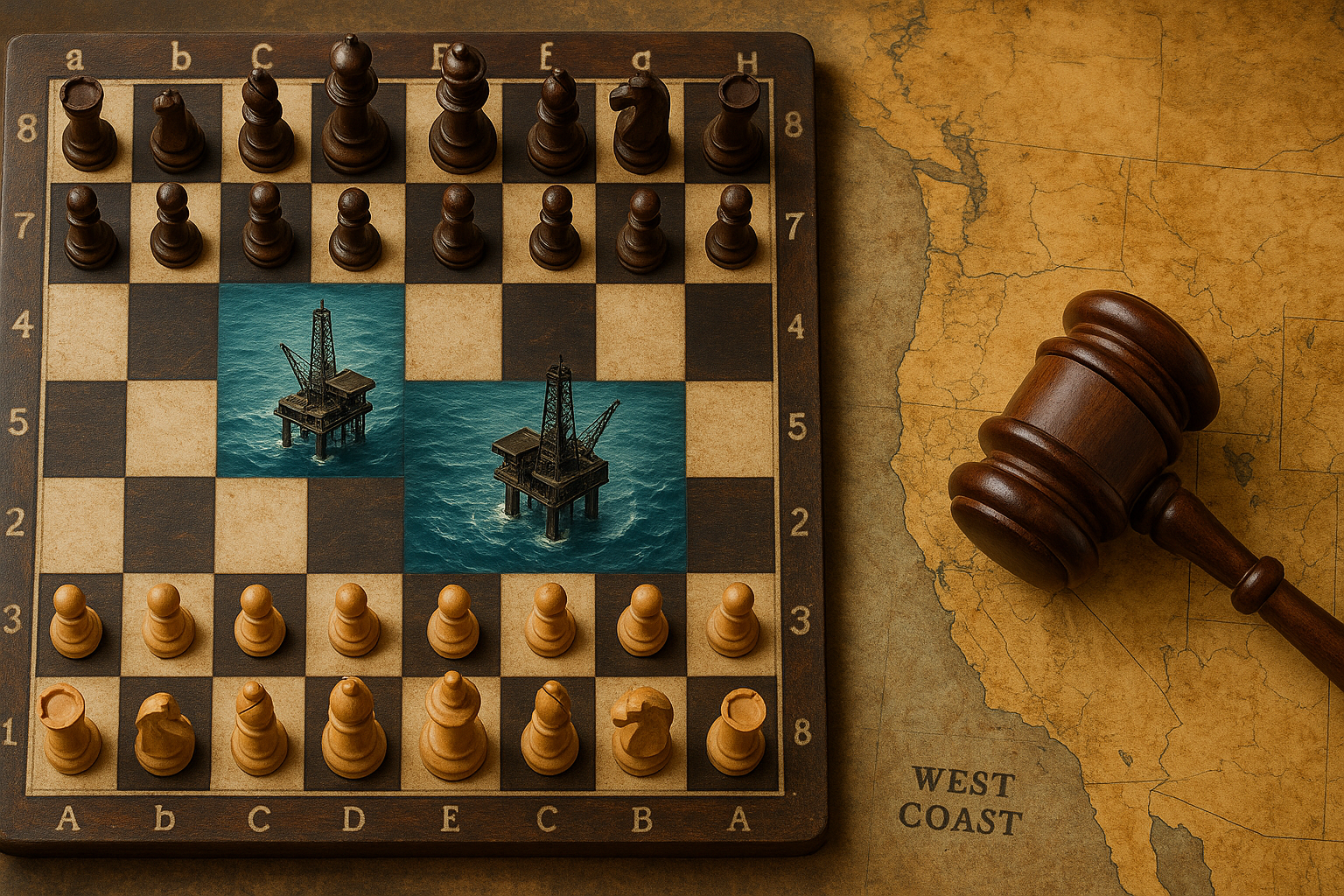
Court battle ensues over TotalEnergies' 30,000 km² ocean gamble. Activists & fishers challenge deep-sea drilling; Total defends economic benefits.
TotalEnergies is in big trouble in court over its plans to drill for oil and gas off South Africa's beautiful West Coast. People say their environmental plan is bad and could hurt the ocean and the folks who live there. They worry about big oil spills and how it might mess up fishing, which many families depend on. The company says they are being safe and will bring jobs and money, but judges are asking tough questions about climate change and protecting the sea for everyone, even for whales and tiny sardines.
What is the main legal challenge against TotalEnergies' exploration off the West Coast?
TotalEnergies faces a legal challenge in the Cape Town High Court regarding its Block 5/6/7 exploration, covering 30 000 km² off South Africa's West Coast. Applicants argue the project's environmental impact assessment (EIA) is flawed, that it poses significant ecological and livelihood risks, and breaches public trust by not adhering to environmental regulations and ignoring the rights of local communities.
Get Cape Town news in your inbox
Stay updated with the latest stories from the Mother City.
1. Dawn on Adderley Street: banners, brine and a borrowed trumpet
Cape Town’s south-easter slaps the High Court steps at 09:02. Protest-handlers knot a living tunnel two-hundred strong; cardboard placards snap like gulls with clipped wings. “Our fore-fathers are fish,” one reads; “Total, tune into the tide,” yells another. Magrieta Kasper, 71, keeps time on an empty kreef crate. She rode 400 km in a minibus that still smells of dried snoek because, she says, “the sea issued my birth certificate and now I must stand guarantor for its good name.”
Inside, the foyer reeks of waxed floors and last-minute nerves. Guards seize bottled water; advocates juggle dog-eared tomes; a clerk wheels in a Jenga-tower of TotalEnergies appendices - enough pages to wallpaper three bedrooms. Court 16, newly lined with sound-baffling fins shaped like whale tails, fills with muffled coughs. Three scarlet robes sweep in: Judge President Mark Sher dead-centre, flanked by Judges Babalwa Mantame and Ncumisa Mayosi. Gavel lands; air-conditioning becomes the loudest voice in the room.
2. Chessboard in the Cold: the patch of ocean no one can drop-stitch
Block 5/6/7, hugging the shoreline from 40 km north of Port Nolloth to 60 km west of Saldanha, fans across 30 000 km². The outer edge dives from 200 m to 3 000 m in a single, knifing step carved by the Benguela Current - an elevator for hake, anchovy, sardine and rock-lobster larvae. Chlorophyll maps from UCT show plankton blooms so rich they tint NASA satellite frames emerald each September; climatologists have downloaded that data set 2 300 times since 2020 to track carbon sinking into the abyss. The applicants’ message: kill the bloom and you starve the pantry that feeds the entire south-east Atlantic.
Beneath that green veil lie ultra-deep targets - 5 500 m below sea level, double the depth that birthed the Deepwater Horizon slick. Temperature gradients tighten; pressure climbs toward 1 200 bar, a realm where standard blow-out preventers approach their burst rating. Norwegian regulators recorded a three-fold jump in well-control incidents beyond 4 000 m depth, a statistic the applicants flash like a warning buoy. One mis-calculation, they argue, and the current that normally gifts nutrients could ferry crude all the way to the lobster rocks of Namaqualand.
3. Four-pillar offensive: why the applicants say “no”
-
Pillar 1 – The sliced loaf fallacy*
Peter Hathorn SC opens with a sepia fade: 1952 wooden trawlers dissolve into today’s rusted crayfish plants. He contends the EIA illegally hacked the project into “exploration now, production later,” dodging life-cycle scrutiny required by Regulation 23(1)(b) of the 2014 EIA rules. A leaked 2022 email from a Total geologist - "exploration only pencils if we bank on a 30-year tail" - is waved like a smoking gun. Hathorn’s analogy: judging a cigarette by its first puff and ignoring the cancer. -
Pillar 2 – Pressure-cooker arithmetic*
Video-link witness Dr. Samantha Mooi, petroleum engineer, testifies that planned down-hole pressure would outrun standard BOP specs off West Africa. She ridicules the 0.0143 % spill probability: "Small comfort to a sardine - if sardines read actuarial tables." Her affidavit cites a 2023 DNV study linking ultra-deep wells to triple the risk of blowouts, turning cold statistics into hot drama. -
Pillar 3 – Erased livelihoods*
Lionel "Ouboet" September, head of the Aukotowa fishers, tells the bench that 68 % of Port Nolloth’s breadwinners rely on intertidal harvesting or small-boat line-fish; average pay is R2 800 a month. Dr. Masego Ramagoshi quantifies the downside: a November slick could torch R84 million and 1 200 seasonal jobs before the lobster moult is finished. The EIA, she notes, grants six pages to shipping lanes and 1.2 pages to artisanal fishers - "a ledger of whose lives matter." -
Pillar 4 – The public-trust blind spot*
Neither the mining department nor the environment ministry applied the Integrated Coastal Management Act, which brands the seashore "public trusteeship property" and orders benefits to be "equitably shared." Hathorn quotes section 8(1): coastal property is held "especially for the poor." Allowing a French major to bury drill cuttings on that commons, he argues, breaches a fiduciary duty written in the Constitution itself.
4. Corporate return-fire: gates, odds and barrels of money
-
Exploration ≠ Production*
State advocate Peter Lambardt defends the split: "Parliament designed incremental gatekeeping; you don’t buy the cow when you only taste the milk." He cites Section 80(2) of the MPRDA: any future production will need a fresh right, so speculation about it now is premature. -
Risk is ALARP – as low as reasonably practicable*
Steven Budlender SC reels off Total’s safety net: dual diverters, acoustic triggers, a capping stack berthed in Cape Town, oil-spill vessels on retainer, and 50 000 Monte Carlo runs by DNV GL. Prevelling Benguela upwelling would shove surface oil seaward for seven days, he claims - "oceanography, not optimism." -
Socio-economic upside ignored*
A commercial find, Budlender projects, could pour R40 billion into the fiscus, shave 18 % off oil-import bills and mint 5 000 upstream jobs. He accuses activists of "commodifying poverty" by freezing Port Nolloth in a snow-globe of despair while ignoring harbour upgrades and skills transfer a discovery could seed. -
Climate change? Wrong hearing*
All respondents insist that one exploration well emits no more CO₂ than an expert’s round-trip flight from Oslo. Future combustion, they say, should be judged at the production stage and anyway falls under South Africa’s Paris promises, not a local review. Exploration drilling is, in their phrase, "a data quest, not a carbon event."
5. Ghosts the papers didn’t summon
-
The Sei-whale corridor*
An amicus brief reveals that the lease area slices across a migratory highway used by the endangered Sei whale - sighted locally only twelve times since 1947. Ship-strike models predict a 2 % chance of a lethal hit during the 110-day drilling window, a toll equal to one-third of the country’s known Sei visitors. -
Russian hardware, global jitters*
Although QatarEnergy and a Canadian pension fund own 35 % of the project, the subsea "christmas tree" valve array comes from Gazpromneft-linked suppliers, raising quiet fears of sanctions blow-back if geopolitics sour further. -
Diesel vs. batteries*
Treasury quietly earmarked R6.8 billion in 2023 for Eskom diesel top-ups. Critics contend every rand chasing seabed oil is a rand not building grid-scale batteries or solar-powered cold-storage plants that could keep Kasper’s kreef export-ready without burning the fuel they hope to find.
6. Bench bombs and market aftershocks
Tuesday brings judicial curveballs. Judge Mantame asks whether the Climate Change Bill’s "just transition" clause already signals an expectation that exploration will taper off. Judge Sher piles on: "If exploration is harmless, do we keep passing the parcel until the music stops for our children?" The bench orders extra affidavits on how new hydrocarbons square with the IPCC’s 1.5 °C carbon ledger - evidence none of the parties filed.
By lunch, TotalEnergies’ JSE listing slips 1.8 %, erasing R14 billion in market cap; Sasol, sniffing feedstock, rises 2 %. In Port Nolloth, a crackling radio links neighbours to the drama; a pastor prays for "wisdom thicker than crude." #PortNolloth tops Twitter, buoyed by drone footage of crimson algal blooms swirling beneath the very rigs on trial.
7. Gavel falls, tides keep writing
The registrar collects written closings - due in 30 days. Sher, Mantame and Mayosi exit; the air-conditioning exhales one last time. Outside, Magrieta Kasper reclaims her autographed crate. "We are not against progress," she tells a camera, "but progress must learn our names." The ocean, unrepresented at the bar, keeps drafting its own brief - arguments in foam, footnotes in kelp, a manuscript no gavel can finalize.
1. What is the core legal challenge against TotalEnergies' exploration off the West Coast?
TotalEnergies is facing a lawsuit in the Cape Town High Court concerning its Block 5/6/7 exploration project, which spans 30,000 km² off South Africa's West Coast. The applicants allege that the environmental impact assessment (EIA) for the project is inadequate and flawed. They argue that the exploration poses significant risks to the marine environment and the livelihoods of local communities, contending that it violates environmental regulations and breaches public trust.
2. What are the primary environmental and social concerns raised by the opponents of the project?
Opponents are deeply concerned about potential ecological damage, particularly the risk of large-scale oil spills, which could devastate the rich marine biodiversity of the Benguela Current system – a vital ecosystem for hake, anchovy, sardines, and rock lobster. They also highlight the severe impact on local communities, especially artisanal fishers in areas like Port Nolloth, whose livelihoods are intrinsically linked to the health of the ocean. The environmental plan is criticized for understating these risks and not adequately addressing the socio-economic consequences for dependent communities.
3. What technical risks are associated with the proposed drilling activities?
Drilling is planned for ultra-deep targets, reaching 5,500 meters below sea level, which is twice the depth of the Deepwater Horizon incident. Experts have testified that the extreme pressures at these depths could exceed the burst ratings of standard blow-out preventers. There's a significantly increased risk of well-control incidents in ultra-deep wells, potentially leading to catastrophic oil spills that could be carried by ocean currents to sensitive coastal areas and vital fishing grounds.
4. How does TotalEnergies defend its exploration plans?
TotalEnergies argues that its safety measures are robust, incorporating advanced technologies like dual diverters, acoustic triggers, and a capping stack readily available in Cape Town. They claim that prevailing oceanographic conditions (Benguela upwelling) would push any surface oil seaward. Furthermore, the company emphasizes the economic benefits, projecting R40 billion for the fiscus, an 18% reduction in oil import bills, and the creation of 5,000 upstream jobs. They also state that exploration is distinct from production, requiring separate environmental approvals, and that the climate change impacts of future combustion are not relevant to the current exploration phase.
5. What legal and policy frameworks are central to the applicants' arguments?
The applicants employ a 'four-pillar offensive.' They argue that the EIA illegally segmented the project into 'exploration now, production later,' violating Regulation 23(1)(b) of the 2014 EIA rules which requires full life-cycle scrutiny. They also contend that the project breaches the public trust doctrine, specifically referencing the Integrated Coastal Management Act, which designates the seashore as 'public trusteeship property' to be managed for the benefit of all, especially the poor. They argue that allowing drilling on these commons violates a fiduciary duty enshrined in the Constitution.
6. What unexpected elements or 'ghosts' have emerged during the court proceedings?
During the proceedings, unexpected concerns have surfaced, including the fact that the lease area intersects a migratory corridor for the endangered Sei whale, raising fears of ship strikes. There are also geopolitical concerns due to the involvement of Gazpromneft-linked suppliers for critical subsea equipment, potentially exposing the project to sanctions risks. Additionally, questions have been raised about the broader allocation of national resources, contrasting the investment in offshore oil exploration with the urgent need for renewable energy infrastructure and the 'just transition' away from fossil fuels, as implied by the Climate Change Bill.

A Russian-Spanish journalist and Cape Town native, channels his lifelong passion for South Africa into captivating stories for his local blog. With a diverse background and 50 years of rich experiences, Serjio's unique voice resonates with readers seeking to explore Cape Town's vibrant culture. His love for the city shines through in every piece, making Serjio the go-to source for the latest in South African adventures.
View all articles →