
Trump says Iran ceasefire is over as oil prices jump amid renewed conflict
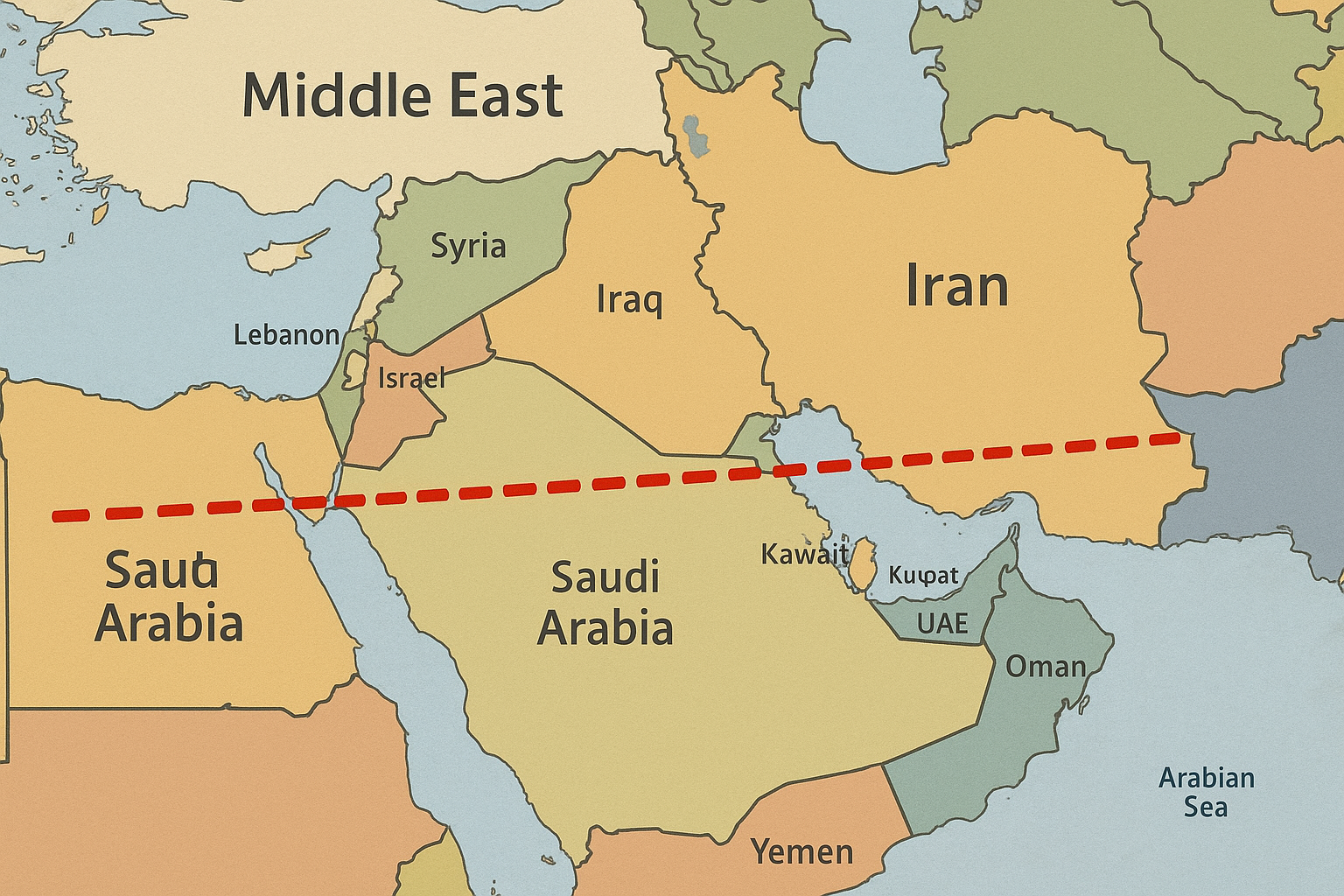
Trump ends US-Iran ceasefire at NATO summit amid renewed Gulf tensions. Military strikes, economic impacts, and regional escalation risks rise.
The ceasefire between the US and Iran is completely over, President Trump declared. He called Iranian leaders "scum" and said he doesn't want to deal with them anymore. This happened after both sides attacked each other's military spots in the Gulf. This means big trouble for global oil prices and makes war in the Middle East more likely.
What is the current status of the US-Iran ceasefire?
The temporary ceasefire between the US and Iran has completely collapsed. President Donald Trump announced its end at a NATO gathering, citing renewed military exchanges in the Gulf region, including US strikes on Iranian locations and Iranian counter-strikes on US military sites in Bahrain and Kuwait, as reasons for the diplomatic breakdown.
Get Cape Town news in your inbox
Stay updated with the latest stories from the Mother City.
Diplomatic Breakdown at NATO Summit
The temporary halt in hostilities between Washington and Tehran has collapsed completely, with President Donald Trump announcing in no uncertain terms that the truce has reached its final chapter. Addressing attendees at the NATO gathering, Trump delivered remarks that slammed shut any possibility of extending the agreement brokered mere weeks ago, representing one of the most dramatic reversals in Middle Eastern diplomacy seen in recent memory.
Military exchanges had already resumed throughout the Gulf region by the time Trump spoke, with American forces striking Iranian locations following renewed threats to commercial vessels navigating the Strait of Hormuz. Tehran answered swiftly through the Islamic Revolutionary Guard Corps, which acknowledged launching overnight assaults against US military sites in Bahrain and Kuwait. These developments exposed how rapidly security conditions had degraded since negotiators first hammered out the fragile peace.
Trump's assessment of Iranian leaders marked a new intensity in his public discourse. "I think it's over. I don't want to deal with them any more; they're scum," he informed journalists present, adding for emphasis: "As far as I'm concerned, it's over." Such wording transcended ordinary policy dispute, amounting instead to a wholesale dismissal of any meaningful interaction with Iran's current political establishment.
The Collapsed Agreement and Accusations of Bad Faith
Negotiators had constructed the now-defunct ceasefire around several linked priorities that appeared achievable when talks began. Foremost among these stood the imperative of securing unrestricted passage for international vessels through the Strait of Hormuz, an objective carrying immense financial weight given the chokepoint's centrality to worldwide energy distribution. The understanding also created space for ongoing dialogue about Tehran's atomic ambitions, tackling the persistent security worry that has shaped regional policy approaches for close to two decades.
Trump's decision to walk away from the table grew from particular grievances about how Iranian representatives conducted themselves during discussions. When pressed about previous negotiating rounds, the president responded bluntly: "They're liars." He insisted that both governments had accepted terms forbidding Iranian acquisition of nuclear arms, only to watch Iranian officials subsequently reject these same commitments in public forums.
This charge of intentional deception highlights a persistent difficulty in relations between the two capitals: the gap between what negotiators privately accept and what authorities later proclaim. Iranian leadership must simultaneously satisfy domestic constituencies and international counterparts, a balancing act that historically produces discrepancies between understood agreements and official pronouncements. Trump apparently views these complications not as unavoidable diplomatic friction but as evidence of essential unreliability.
Military Dimensions of the Renewed Confrontation
The sequence of armed exchanges that preceded Trump's declaration revealed the ceasefire's practical dissolution well before its ceremonial end. American forces had hit Iranian positions following assaults on merchant traffic in the Strait of Hormuz, reactivating a familiar pattern of maritime threats that periodically endanger this vital corridor. Tehran answered with strikes on American installations in Bahrain and Kuwait, showing both the capability and determination to hit back at US military infrastructure directly.
The geographical distribution of these clashes deserves careful notice. Naval Support Activity Bahrain accommodates the headquarters of the US Navy's Fifth Fleet, giving it exceptional symbolic weight as a retaliatory target. Kuwait's substantial American military footprint, built up through years of regional operations, provides further chances to pressure US forces without reaching American territory itself. Target selection in these locations indicates deliberate communication: Iran aimed to prove it could reach entrenched American positions while stopping short of actions likely to provoke crushing reprisal.
The military equation underlying these clashes features imbalances that inform strategic thinking on each side. American conventional dominance is overwhelming in straightforward engagement, yet Iranian investments in rocket technology, allied militia networks, and sea-lane interference tools generate options for sustained pressure short of catastrophic defeat. This reality has yielded repeated cycles of limited escalation followed by bargained restraint, a rhythm that the present rupture now disrupts.
Global Energy Markets and Economic Implications
The Strait of Hormuz carries economic importance so outsized that any military activity there instantly produces worldwide repercussions. Roughly one-fifth of global petroleum demand travels through this slender passage, making its protection a priority for oil-importing countries across every inhabited continent. The waterway's susceptibility to armed disruption has long served as Iran's most powerful deterrent against American coercion, a geographical fact that limits strategic choices for everyone involved.
Financial markets reacted promptly and forcefully to Trump's announcement and the accompanying military developments. Crude prices climbed about five percent following the president's statement, as traders concluded that extended instability endangered supply reliability. While notable, this movement stayed beneath thresholds associated with major historical interruptions, indicating markets had partly prepared for diplomatic breakdown while retaining some expectation of eventual moderation.
The propagation of Gulf turbulence into South African economic circumstances demonstrates how thoroughly contemporary energy markets interconnect. Domestic fuel pricing reflects international petroleum benchmarks, currency movements, and local taxation, with the international element especially responsive to Middle Eastern events. Sustained elevation in crude values would intensify existing inflationary burdens affecting South African families, showing how conflicts thousands of kilometers away create concrete household impacts.
Beyond instantaneous pricing effects, extended insecurity in the Strait of Hormuz raises structural questions about supply diversification and emergency stockpile approaches. Countries heavily reliant on Gulf petroleum face recurring exposure to regional volatility, generating motivation for developing alternative sources, reducing consumption, and building reserves. These adaptations, while sensible from individual national viewpoints, collectively transform worldwide energy market patterns in ways that may gradually diminish the Strait's strategic importance over coming decades.
Regional Escalation Risks and International Positioning
The official abandonment of ceasefire diplomacy markedly increases dangers of broader regional conflict spreading. Both capitals have traded charges of truce violations, constructing explanatory frameworks that rationalize continued armed action rather than fresh negotiation. This reciprocal assignment of blame for diplomatic collapse follows familiar patterns in international crises, yet in this case appears to have genuinely blocked return to the prior negotiating structure.
Overseas observers have voiced particular alarm about possible entry of additional regional participants. Gulf monarchies, Israel, and assorted allied fighters across Lebanon, Syria, Yemen, and Iraq hold stakes in how the US-Iran confrontation resolves that might encourage unilateral military moves. Earlier episodes of heightened friction have shown how isolated incidents can widen participation through alliance obligations, retaliatory sequences, or opportunistic exploitation of distracted adversaries.
Beijing's stance in this shifting landscape merits close attention, though explicit Chinese policy reactions to the present emergency remain unreported. China maintains massive energy interests in Gulf tranquility while simultaneously cultivating strategic ties with Iran that frustrate straightforward alignment with American goals. Chinese diplomatic involvement has previously assisted regional de-escalation, most strikingly through enabling Saudi-Iranian normalization, suggesting possible future contribution if Beijing judges its interests endangered by uncontrolled hostilities expansion.
European partners, assembled at the NATO summit where Trump issued his statement, face awkward positioning between alliance loyalty and independent evaluation of negotiation prospects. Previous US-Iran confrontations have revealed transatlantic divergences regarding the desirability of talks and acceptable concession limits. European administrations have generally preserved channels to Tehran that Washington has abandoned, creating potential for separate crisis management approaches should opportunities for renewed diplomacy eventually surface.
The Uncertain Path Forward
Trump's declaration delivers diplomatic clarity obtained at considerable strategic price. By eliminating uncertainty about American readiness to maintain negotiated restraint, the president has stripped away Iranian motivation for measured conduct based on expected benefits. Tehran's leadership, now formally branded as untouchable "scum" by the American head of state, faces reduced domestic political room for compromise even if personally inclined toward flexibility.
What supplants the failed ceasefire architecture stays undefined. Trump's indication that negotiators might persist with discussions despite his personal refusal of further engagement sends puzzling signals about actual American policy. This seeming contradiction between presidential language and subordinate diplomatic activity may stem from genuine internal disagreement, calculated ambiguity for bargaining leverage, or simply inconsistent messaging typical of this administration's communications.
Military planners in both countries now function without the limited guardrails that ceasefire arrangements had supplied. The pace and geographical reach of forthcoming operations may widen considerably, with each party probing the other's tolerance for response and counter-response. Historical patterns in US-Iran confrontation suggest neither side seeks decisive military engagement, yet the absence of agreed boundaries substantially raises miscalculation dangers.
For civilian populations across the region, diplomatic failure means renewed vulnerability to conflict consequences that had briefly seemed reducible. Economic disturbance, military mobilization, and the psychological toll of continuous tension resume without the moderating hope that negotiation might eventually yield settlement. The humanitarian effects extend through Gulf Arab communities, Iranian society, and the numerous foreign worker populations whose economic survival depends upon regional stability.
The termination of this ceasefire, however foreseeable given preceding armed exchanges, constitutes a significant moment in the ongoing American-Iranian confrontation that has shaped Middle Eastern security for a generation. Whether it proves a brief interruption in eventually successful diplomacy or the opening phase of more extensive conflict will hinge upon decisions still pending in capitals on both sides of this enduring rivalry.
What is the current status of the US-Iran ceasefire?
The ceasefire between the US and Iran has completely ended. President Trump declared it over at a NATO gathering, explicitly stating he no longer wishes to deal with Iranian leaders, whom he referred to as "scum." This follows renewed military exchanges in the Gulf region, including US strikes on Iranian locations and Iranian counter-strikes on US military sites in Bahrain and Kuwait.
Why did the ceasefire collapse?
The ceasefire collapsed due to a resumption of military attacks by both sides in the Gulf region. American forces struck Iranian positions after threats to commercial vessels in the Strait of Hormuz, and Iran's Islamic Revolutionary Guard Corps retaliated with assaults on US military sites in Bahrain and Kuwait. President Trump also cited a breakdown in trust, accusing Iranian leaders of being "liars" and rejecting commitments made during previous negotiations regarding nuclear arms.
What are the immediate implications for global oil prices?
The declaration of the ceasefire's end and the reignited tensions in the Gulf region have led to an immediate increase in global oil prices. Crude prices climbed approximately five percent following President Trump's statement. This is because the Strait of Hormuz, a critical chokepoint for roughly one-fifth of global petroleum demand, becomes vulnerable to disruption, raising concerns about supply reliability.
How does this situation increase the risk of war in the Middle East?
The official abandonment of ceasefire diplomacy significantly heightens the risk of broader regional conflict. Both the US and Iran are now operating without the limited restraints previously in place, increasing the likelihood of miscalculation and escalation. The involvement of regional allies and proxies, as well as the potential for isolated incidents to widen into larger confrontations, further contributes to this risk.
What are the military targets involved in the recent exchanges?
American forces struck Iranian positions, likely in response to threats against commercial vessels in the Strait of Hormuz. Iran, in turn, launched overnight assaults against US military sites in Bahrain and Kuwait. Naval Support Activity Bahrain houses the headquarters of the US Navy's Fifth Fleet, and Kuwait hosts a substantial American military presence, making these significant targets for Iranian retaliation.
What are the broader economic consequences beyond oil prices?
Beyond the immediate impact on oil prices, sustained instability in the Gulf region could lead to long-term economic repercussions. Countries heavily reliant on Gulf petroleum may seek alternative energy sources or build reserves, potentially shifting global energy market patterns. For civilian populations, diplomatic failure means renewed vulnerability to economic disturbance, military mobilization, and the psychological toll of continuous tension, impacting local economies and foreign worker populations.

Isabella Schmidt is a Cape Town journalist who chronicles the city’s evolving food culture, from Bo-Kaap spice merchants to Khayelitsha microbreweries. Raised hiking the trails that link Table Mountain to the Cape Flats, she brings the flavours and voices of her hometown to global readers with equal parts rigour and heart.
View all articles →