
Two law enforcement officers arrested in R3000 bribery scandal
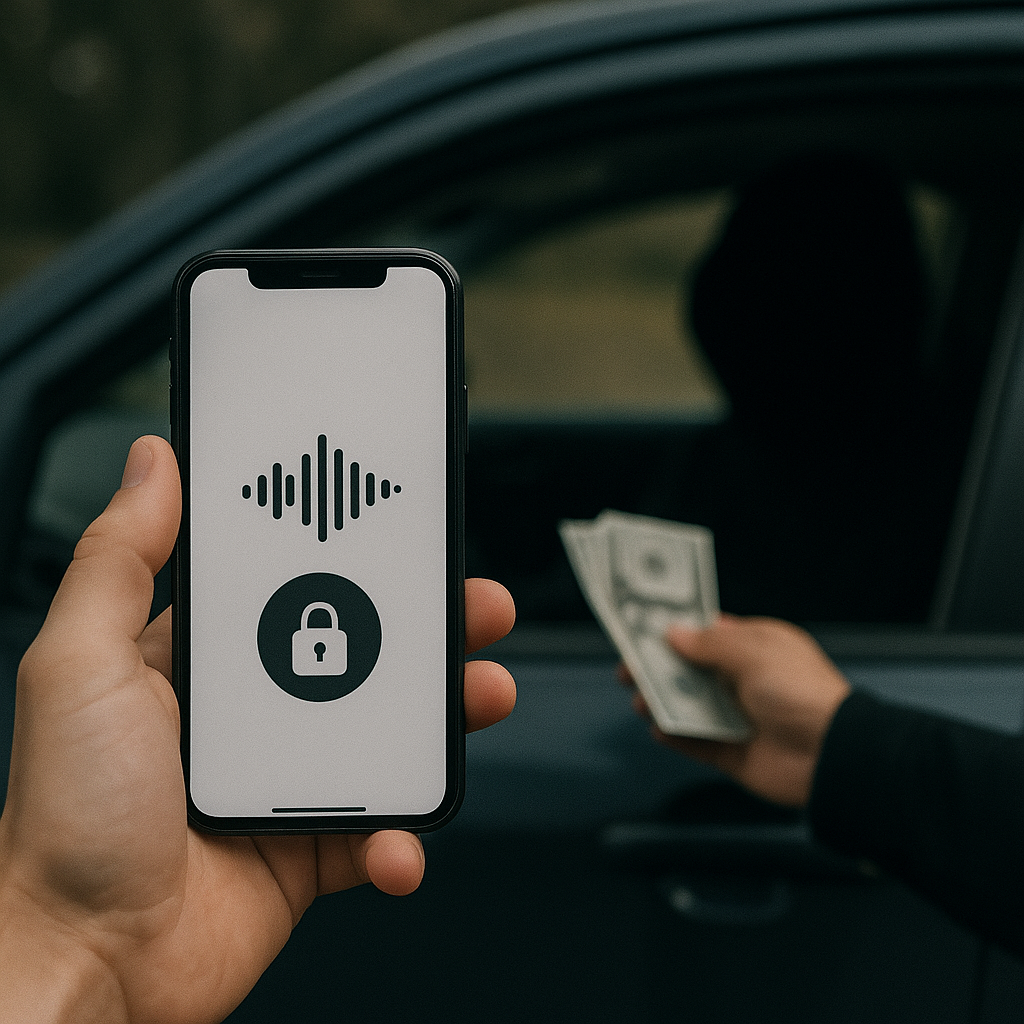
Two traffic cops in Western Cape turned a DUI stop into a R3,000 bribe, caught by the driver's courage and digital forensics.
Voortrekker Road Receipt: How Two Cape Cops Turned a Drunken Stop into a Self-Sabotage Masterpiece
Two crooked Cape Town cops tried a slick new trick: instead of taking a bribe right away, they filmed a drunk driver and planned to collect the money later. But their sneaky plan backfired big time! The driver told on them, and the Anti-Corruption Unit set a trap with hidden cameras and marked money. The officers walked right into it, getting busted in a flash, proving that even clever criminals can't outsmart everyone when good people and smart tech team up.
How did two Cape Town police officers get caught taking a bribe?
Two Cape Town police officers were caught taking a bribe through a meticulous sting operation. The victim reported the bribe to the Anti-Corruption Unit, who then cloned his phone, marked R100 notes, and fitted his car with a hidden camera. Undercover investigators monitored the exchange at a Caltex garage from a panel van, leading to the constables' swift arrest.
Get Cape Town news in your inbox
Stay updated with the latest stories from the Mother City.
1. The Five-Minute Anatomy of a R3 000 “Lay-By” Bribe
Friday 5 January 2026 should have ended like any other shift for the two LEAP constables patrolling Parow’s main strip. The four-lane artery funnels more than 45 000 vehicles a day past neon-lit petrol stations and 24-hour fast-food joints. At 19:40 the sodium lamps had just flickered alive when a white Polo drifted across the solid white line. Behind the wheel sat 28-year-old call-centre agent Mr. L, still flushed from three Windhoek Lagers swallowed at a colleague’s promotion braai.
What followed broke the usual 68-second script - licence, breathalyser, cuffs. Instead, Senior Constable M. Booysen allegedly leaned in and murmured, “Ons kan hierdie ding laat verdwyn, maar dit gaan jou R3 000 kos.” His partner, Constable L. Jantjies, steadied a Samsung Galaxy A54 against the window, filming blood-shot pupils before saving the clip under “Klient 5Jan”. A casual handshake sealed the deal; no money changed hands. The officers drove off, leaving the driver stunned and still drunk, but technically free.
The innovation was the deferred payment. Cash-on-delivery bribes are the national norm, yet these two had perfected a “lay-by” model: record, release, collect later. Investigators say the pair ran the same scam twice since October, using the footage as leverage. If the motorist ghosted them, they could still open a docket and claim fresh evidence had surfaced. The risk felt negligible; the profit, double their monthly take-home.
2. Turning the Tables: From Victim’s Guilt to Police Trap
Shame kept Mr. L awake the entire weekend. By Saturday afternoon he confessed to his partner, who typed “traffic cop bribe complaint cape town” into a search bar and landed on the Anti-Corruption Unit’s anonymous WhatsApp line launched five months earlier. Ninety minutes later the jittery driver was inside a repurposed shipping container behind Bellville civic centre, handing over his phone to Colonel Darryn January. Investigators cloned the Samsung, embedded a GPS ping, and photocopied ten R100 notes whose barcodes had been surgically altered to glow only under a 365-nanometre torch.
A Section 252A authorisation - the clause that lets police induce but not entrap - was signed the same afternoon. The pick-up was scheduled for 13 January, a Monday both suspects had rostered as leave, neatly removing the “in performance of duties” tag that can stretch corruption sentences from 12 to 25 years. Detectives chose a Caltex garage with vacuum bays because its private CCTV already fed a control room, giving them three extra angles without installing their own bulky rigs. Mr. L’s Polo was fitted with a 4K dash-cam disguised as a third brake-light; the plumbing-panel van parked opposite hid four investigators sipping yoghurt to kill the adrenaline.
At 17:12 the silver Amarok arrived. Jantjies joked on camera about deleting the clip “before you crash like Schumacher”, then theatrically pressed delete. The file, however, had already auto-synced to Google Photos. When Mr. L passed over the envelope, Booysen fanned the notes under the petrol station’s dome light, exposing every marked serial to the lens overhead. The coded line - “Is jy seker ek is skoon?” - triggered the takedown. A BolaWrap cord whirled around the constables’ ankles before either could swallow his SIM. Arrest to miranda: 38 seconds.
3. Evidence Room and Economic Fallout: Why R3 000 Was Only the Beginning
The docket now sits on a Hawks investigator’s desk, 4 GB of cloud footage included. Google’s California portal surrendered the files in 18 hours. A voice-note recovered from Booysen’s device - “Die gif is uit jou stelsel” - doubles as an informal receipt and a confession. Forensics found 27 duplicate “client” clips, suggesting an assembly-line extortion scheme. A station roster proves both men were on duty during three earlier incidents callers had whispered to the hot-line yet investigators had never linked.
Because Cape Town’s metro police fall outside IPID’s mandate, the Hawks’ Serious Corruption team will run with the case once the ACU signs off. The NPA’s brand-new Integrity Management Unit has flagged the matter for the specialised Commercial Crimes Court, aiming for a seven-month turnaround - half the national average for graft trials. If prosecutors succeed, it will be the fastest officer-corruption verdict on record, a deterrent broadcast in real time.
The macro-numbers are sobering. Corruption Watch lists the average traffic bribe at R1 340, up from R212 a decade ago. The “Voortrekker Road tariff” of R3 000 is positional: Parow straddles the N1 and M16, where towing and impound charges start at R2 500. Officers understand that a motorist staring at a R20 000 DUI fine will bargain from a higher ceiling. Add South Africa’s cash-light trend - 42 % of drivers carry no physical money - and extortion quotes must cover instant e-wallet groceries for the cop’s family that night.
4. Tech Arms Race, Global Fixes and the Next 200 Days
Body-worn cameras were supposed to prevent exactly this scenario. A R78 million tender approved in 2022 collapsed when the sole bidder was blacklisted for BEE fronting. A pilot with 200 devices cut complaints by 76 %, yet unions argue officers can switch them off during “covert interactions” - the same loophole that let 5 January slide. A Stellenbosch start-up is now beta-testing always-on holster-triggered cams that buffer 30-second loops to the cloud; rollout is pencilled for December 2026, too late for Booysen and Jantjies but possibly in time for the 2027 holiday blitz.
Africa is already writing the instruction manual. Kenya’s e-Citizen platform pipes fines straight to a central ledger, eliminating roadside cash. Lagos traffic drones read plates and mail tickets, making physical stops obsolete. Rwanda arms officers with QR scanners linked to digital licences; no licence, no negotiation, no bribe. Cape Town officials toured Kigali in September 2025 but returned empty-handed - South Africa’s data-protection laws forbid facial recognition without explicit consent, something a drunk driver is unlikely to grant.
Civil society is filling the vacuum. NGO Open Secrets has subpoenaed 114 Parow dockets where admission-of-guilt fines were paid within 48 hours - an unnatural sprint that screams pre-trial shakedown. If the court rescinds those fines, the City faces R1.3 million in refunds, an uninsured liability. Meanwhile, an app called Bribescape is crowdsourcing real-time GPS alerts; three independent reports from one roadblock in 30 days auto-escalate to the ACU dashboard. Since November the pilot has already flagged two Bellville South roadblocks later corroborated by marked-banknote stings.
Discovery Insure is pushing a market fix: a 5 % premium rebate for motorists who install dual-facing dash-cams and consent to footage subpoenas. Analysts predict that within five years traffic-corruption dockets will hinge more on telematics than on undercover cops, flipping the burden of proof from state entrapment to data analytics. Interpol’s Integrity in Action database already lists 1 400 former officers; Booysen and Jantjies are poised to become the first Southern African entries for solo bribery, a red notice waiting at any border.
Court watchers expect the duo to plead guilty in exchange for suspended sentences, the pattern in 11 of the last 15 ACU convictions. Yet a fresh NPA directive insists on direct jail time when the amount exceeds R1 000, raising the bargaining floor. Mr. L, meanwhile, has been approached by a streaming platform pitching a true-crime mini-series. His lawyer wants appearance fees diverted to a township programme that lends breathalysers to bars, arguing that the cheapest bribe is the one never requested. Whatever the verdict, the R3 000 receipt has become a case study no academy lecture can ignore: when technology, transparency and tenacious citizens converge, the thin blue line can snap in under fourteen seconds.
[{"question": "What was the innovative 'lay-by' bribe scheme used by the Cape Town police officers?", "answer": "Instead of demanding an immediate bribe, the officers would film the intoxicated driver as evidence and then release them. They would then arrange to collect the bribe, typically R3,000, at a later date, using the footage as leverage. This 'deferred payment' model was designed to mitigate the immediate risk of being caught with marked money."}, {"question": "How did the Anti-Corruption Unit manage to trap the crooked officers?", "answer": "After the victim reported the incident, the Anti-Corruption Unit cloned his phone, marked R100 notes with special ink visible only under UV light, and equipped his car with a hidden 4K dash-cam disguised as a brake light. Undercover investigators monitored the exchange at a Caltex garage using CCTV and hidden cameras, leading to a swift arrest after the marked money was handed over."}, {"question": "What evidence was crucial in building the case against the officers?", "answer": "Key evidence included the cloned phone data, the hidden camera footage from the victim's car, the marked R100 notes, and cloud footage from Google Photos (where the officers' own recording of the incident had auto-synced). A voice-note recovered from one officer's device also served as an informal confession. Furthermore, forensic analysis revealed 27 duplicate 'client' clips, indicating a systematic extortion scheme."}, {"question": "Why is this case significant for combating corruption in South Africa?", "answer": "This case is significant because it highlights a new modus operandi for bribery ('lay-by' model) and demonstrates the effectiveness of combining smart technology with tenacious anti-corruption efforts. If prosecutors succeed, it could lead to the fastest officer-corruption verdict on record, setting a strong precedent. It also showcases the collaboration between the Anti-Corruption Unit, the Hawks, and the NPA's new Integrity Management Unit."}, {"question": "How does technology, both current and future, play a role in preventing such corruption?", "answer": "Current technology, like the hidden cameras and marked money used in the sting, was crucial. Future solutions include always-on holster-triggered body cameras that buffer footage to the cloud, as well as initiatives in other African countries like Kenya's e-Citizen platform for fines, Lagos's traffic drones, and Rwanda's QR scanner-linked digital licenses. Civil society apps like Bribescape also crowdsource real-time alerts. Discovery Insure is even offering premium rebates for dual-facing dash-cams, shifting the burden of proof to telematics."}, {"question": "What are the potential outcomes for the officers and the broader impact of this case?", "answer": "The officers, Booysen and Jantjies, are likely to face charges under the NPA's new directive, which insists on direct jail time for bribes exceeding R1,000. This could lead to a precedent-setting verdict. The case also highlights the economic fallout of corruption, with the average traffic bribe significantly increasing. Ultimately, it serves as a case study demonstrating that when technology, transparency, and vigilant citizens unite, even 'clever' criminals can be exposed and brought to justice."}]

Liam Fortuin is a Cape Town journalist whose reporting on the city’s evolving food culture—from township kitchens to wine-land farms—captures the flavours and stories of South Africa’s many kitchens. Raised in Bo-Kaap, he still starts Saturday mornings hunting koesisters at family stalls on Wale Street, a ritual that feeds both his palate and his notebook.
View all articles →