
Two Oceans runner robbed during race, claims belongings stolen from car
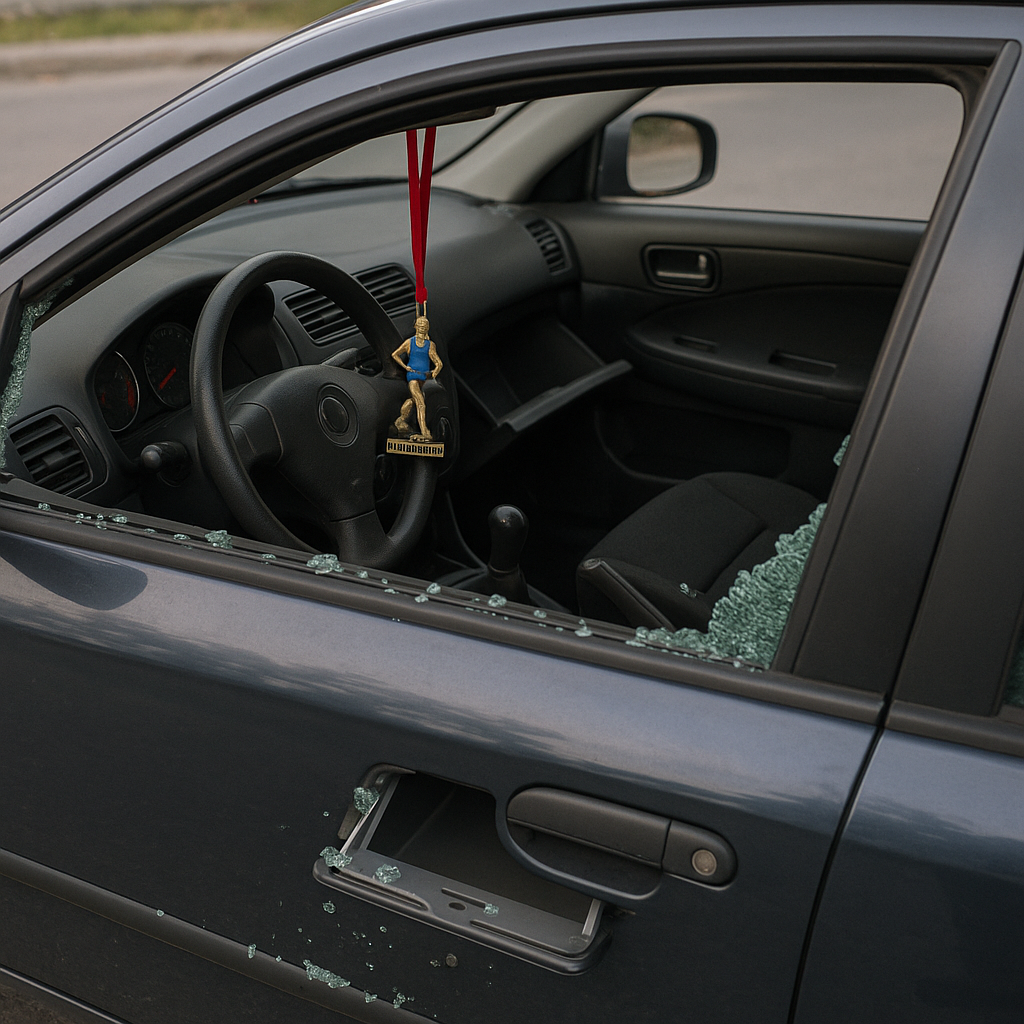
Two Oceans Marathon marred by crime: Runner's car broken into despite official parking. The incident sparks debate on safety and race responsibility.
The 'prettiest marathon' turned ugly when many runners, including Oscar von Platen, had their cars broken into at the official, 'safe' parking lot. Thieves stole valuables and drained credit cards before the race even ended, revealing huge security problems. This big robbery made people question how safe big events are, especially for people visiting. Even with the bad news, athletes and communities showed amazing kindness, helping those who were robbed.
What happened at the Two Oceans Marathon parking lot?
At the Two Oceans Marathon, Oscar von Platen and at least 37 other athletes had their vehicles broken into at the designated 'safe, paid parking' facility. Thieves stole valuables including laptops, phones, and cash, maxing out credit cards before many runners finished the race, highlighting significant security failures at the event's official parking.
Get Cape Town news in your inbox
Stay updated with the latest stories from the Mother City.
Sunrise on the Peninsula, Shattered Glass in the Car Park
At 06:30 sharp on Saturday, 12 April, the Cape Peninsula vibrated with 13 000 heartbeat-drums as runners surged from the Indian-Ocean side toward the Atlantic. Chapman’s Peak bloomed with fynbos, whales flashed their tails, and Table Mountain wore a sunrise scarf of cloud - classic imagery for the Two Oceans Marathon, marketed as “the planet’s most scenic 56 km”.
Yet every Capetonian athlete knows the postcard has a flip-side: smash-and-grabs so common that locals brag about parking “Cape-Town-empty” - glove box yawning, boot unlatched, nothing inside worth a window. Oscar von Platen, 34, head of department at Alberton High on the East Rand, had heard the one-liners but believed the official race booklet: “Safe, paid parking at Groote Schuur High - 400 m stroll to the start.”
He crossed the finish in 5:08:42, slicing 40 minutes off last year’s time, only to learn his silver Renault Sandero was already on a police truck bound for Mowbray pound. The rear window had been vacuumed into glittering cubes that looked like spilled table salt across the tarmac.
A Yellow Sticker Goes Global
Still dripping sweat, Von Platen stepped into the athletes’ food marquee and filmed an Instagram reel. In fluorescent gloom he lifted the bright crime-scene label officers had stuck where his number plate belonged. “I paid the guard in the reflective vest, parked in a bay marked ‘Athletes Only - R100’, locked wallet, ID, school laptop and two phones beneath the false floor,” he explains. “Afterwards the boot stood open, seat folded, guard gone.”
A teammate panned across the upper lot: hazard lights winking like tired fireflies, foil-wrapped runners arguing with tow-truck crews. By nightfall the school’s Facebook reviews were disabled; by dawn #TwoOceansRobbery out-trended the race itself.
Bank pings sketch the loot’s journey. At 07:04 the cards lit up for R2 900 at Engen Observatory; by 07:11 R5 000 was yanked from Capitec Langa; at 07:18 another R4 200 disappeared inside Shoprite Gugulethu - all before most runners hit the 15-km marker. The crooks maxed daily limits before the race clock ticked past two hours.
The Organisers’ Quiet Tuesday
Race headquarters pocketed R46 million from sponsors and entries this year, hired 1 300 marshals, 55 medics and 400 private guards - yet parking sits with sub-contractors who pay casual staff R250 a shift. In 2022 the same school recorded a spree of break-ins; athletes got a template “we will review” mail. History simply upsized in 2024: insurance slips obtained by the Sunday Times name at least 38 claims, with officials guessing the real figure is higher because cash-policy holders from up-country seldom bother.
Geography explains the blind spot. Chapman’s Peak bristles with CCTV domes; the UCT finish swarms with metro cops. Groote Schuur High, wedged above the M3, is a sieve: spectators pour across the footbridge to the 28-km cheer zone, and a 90-second slide down the embankment spits thieves onto the highway. One traffic cop told CapeTalk that once the front-runners return, the lot “looks like Black Friday at a mall - everyone in tights, nobody checks tickets.” Guards from “StarZone Events” admitted they carried no radios, no barcode readers, and were ordered “don’t argue” when anyone claimed athlete status.
Meanwhile Von Platen’s MacBook, set to find open networks, auto-joined Khayelitsha Mall Wi-Fi and began dumping vacation photos into iCloud - each file stamped with a shebeen’s GPS dot. The bar owner later shrugged he’d “bought the parts only.”
From Crowdfunding to Classroom Calculations
Running lore worships toughness; #ComradesSpirit doubles as social currency. Within minutes of the post strangers arranged lifts to Home Affairs, guest bedrooms, even a “Coach Parry” crowdfunding kitty that cracked R18 000 in three hours - enough for the insurance excess and an emergency passport.
The episode also nudged a pricklier chat. Fly-in suburbanites vent shock while township club runners laugh: “Welcome to our normal.” A viral meme pairs Von Platen’s tearful selfie with a club athlete holding a broken lace: “We don’t report this.”
Overseas headlines dubbed Cape Town “the new Caracas”; UK bookings for 2025 safari-marathon packages dipped 12 % within seven days. Local reaction stayed practical: the Sports Science Institute hosted a free “Safe Parking” webinar; Comrades floated a R2 million tender for RFID athlete-only lots; Durban inventors hawked a 2 kg fold-up steel boot box that sold out in 48 hours.
Back in Alberton, Grade-10 geographers turned the mess into maths. They plotted the route, overlaid SAPS stats and worked out that one foreign runner injects roughly R27 000 into the local economy. Their verdict: every vehicle burgled inside an “official” lot vaporises about R1 million in future spend. They tweeted the mayor; 24 hours later the class had a Zoom call with the city’s events portfolio.
Smaller races are already beta-testing hacks. Nelson Mandela Bay Half issued tamper-proof cable ties matching race numbers; entry leapt 18 %. Winelands trail events collect car keys in a numbered hessian sack watched by neighbourhood volunteers who earn R30 a key plus lunch - zero thefts in 2024, 99 % thumbs-up on surveys.
Two Oceans broke silence the following Tuesday, pledging a “forensic probe” and refunding the R100 parking fee to 312 claimants. The chair’s wording - “unforeseeable criminality” - prompted legal warnings that the Consumer Protection Act still demands “reasonably safe” facilities. Actuaries predict claims will top R3 million, nudging next year’s entry toward R900, a touchy jump where the minimum wage is R25 an hour.
Von Platen’s last chapter played out at OR Tambo at 05:30 on Tuesday. Home Affairs, tipped off by a journalist, unlocked early; an SAA agent upgraded him to business. He landed, reached Alberton by 08:00 and still chaired the staff meeting, then jogged an easy 8 km lap around the lake at sunset, GoPro rolling. “I’m not terrified,” he told the lens, vapour billowing in Highveld chill. “I’m simply wiser. Next year I’ll ride the shuttle, stash nothing, and maybe clock 4:55. The mountain is still gorgeous; crime is just another incline - train for it, don’t drop out.”
[{"question": "What happened at the Two Oceans Marathon parking lot?", "answer": "At the Two Oceans Marathon, Oscar von Platen and at least 37 other athletes had their vehicles broken into at the designated 'safe, paid parking' facility. Thieves stole valuables including laptops, phones, and cash, maxing out credit cards before many runners finished the race, highlighting significant security failures at the event's official parking."}, {"question": "What valuables were stolen and how were they used?", "answer": "Thieves stole items such as laptops, phones, wallets with IDs, and credit cards. The stolen credit cards were used rapidly and extensively, with transactions totaling thousands of Rands occurring at various locations like Engen Observatory, Capitec Langa, and Shoprite Gugulethu, all before many runners had even completed a quarter of the race. This indicates a sophisticated and quick operation by the thieves."}, {"question": "How did the event organizers initially react to the incident?", "answer": "Initially, the event organizers, specifically Two Oceans, issued a statement pledging a 'forensic probe' and offered to refund the R100 parking fee to 312 claimants. Their initial characterization of the events as 'unforeseeable criminality' drew criticism and legal warnings, as the Consumer Protection Act still demands 'reasonably safe' facilities for attendees."}, {"question": "What security failures were identified at the parking lot?", "answer": "Several security failures were identified. Despite being a 'safe, paid parking' area, there was a lack of adequate security personnel with proper communication tools (radios) or verification methods (barcode readers). Guards from 'StarZone Events' admitted they were instructed 'don't argue' when anyone claimed athlete status, allowing easy access. The location itself, Groote Schuur High, was described as a 'sieve,' with easy access for thieves to the M3 highway after committing crimes."}, {"question": "How did the running community and others respond to help the victims?", "answer": "The running community and strangers showed remarkable kindness. Strangers arranged lifts to Home Affairs, offered guest bedrooms, and a 'Coach Parry' crowdfunding kitty quickly raised over R18,000 to cover insurance excesses and emergency passports. This demonstrated the strong 'Comrades Spirit' or community support within the running world."}, {"question": "What long-term impacts and proposed solutions have emerged from this incident?", "answer": "The incident led to significant long-term impacts, including a potential decline in international bookings for South African safari-marathon packages. Locally, it sparked practical solutions: the Sports Science Institute hosted a 'Safe Parking' webinar, Comrades floated a tender for RFID athlete-only lots, and new anti-theft products like a fold-up steel boot box sold out quickly. Smaller races are also beta-testing hacks like tamper-proof cable ties for car keys and volunteer-managed key collection points with zero thefts, demonstrating that effective solutions are possible."}]

Chloe de Kock is a Cape Town-born journalist who chronicles the city’s evolving food culture, from township braai joints to Constantia vineyards, for the Mail & Guardian and Eat Out. When she’s not interviewing grandmothers about secret bobotie recipes or tracking the impact of drought on winemakers, you’ll find her surfing the mellow breaks at Muizenberg—wetsuit zipped, notebook tucked into her backpack in case the next story floats by.
View all articles →