
UCT parking lot eviction case: Court blocks immediate removal of former students
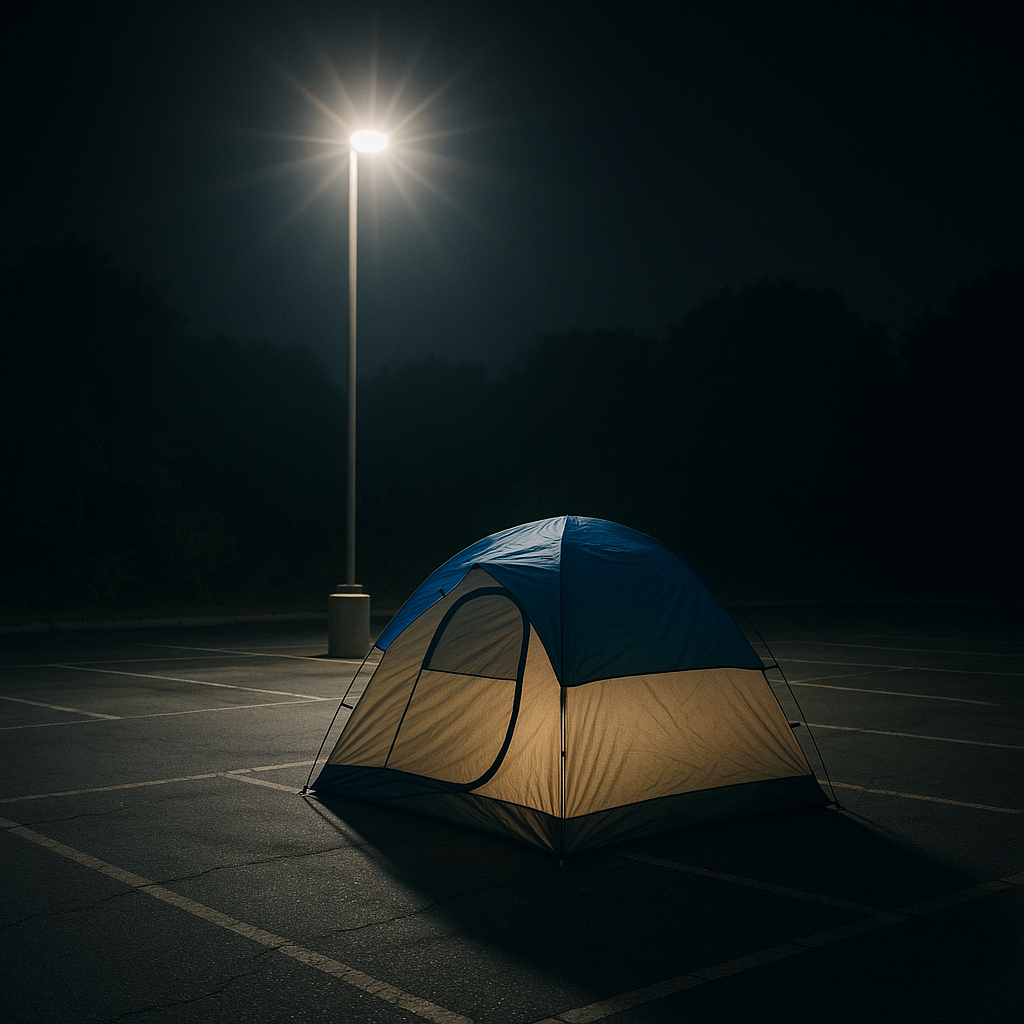
Students evicted from campus housing now live in a parking lot, exposing South Africa's student housing crisis and legal precedents.
Two former students, Mr. Van Staden and Mr. Kraai, now live in tents in a university car park after being evicted. They face daily struggles for basic needs like food and hygiene, highlighting a bigger crisis in student housing. They're fighting the university in court, arguing that their tents are now their homes, showing how tough it is for students to find a place to live.
What is the story of the UCT car park turned refuge?
The UCT car park became a refuge for former residents, Mr. Van Staden and Mr. Kraai, after their eviction from Philip Kgosana Residence in December 2025. They live in tents, facing daily challenges for basic needs, while navigating legal battles with the university under the Prevention of Illegal Eviction Act, highlighting broader student housing crises.
Get Cape Town news in your inbox
Stay updated with the latest stories from the Mother City.
A Footpath of Forgotten Objects
On a soft spring morning, if you leave the Philip Kgosana Residence and turn east, a narrow path guides you past the quiet aftermath of a drawn-out eviction. A single maroon slipper, a kettle rusted orange still holding half a cup of water, the torn cover of a scaffolding-training manual - these trifles mark the corridor where students once carried laundry and laughter. After twenty metres the trail widens and suddenly you are at the hockey precinct. Between the green AstroTurf and the rattling fence lies a parking bay whose white stripes have been rubbed grey by tyres and rain. Since the last week of December 2025, that asphalt rectangle has also had to absorb two dome tents, a single-burner gas stove, and the daily reality of Mr Van Staden and Mr Kraai - former residents now charging phones, cooking pap and trying to sleep beneath a stadium floodlight that never quite goes off.
Their belongings sit in plastic crates labelled “Property of UCT Libraries.” A 20 000 mAh solar brick, a gift from the university’s Green Campus Initiative, rests by the tent flap; phones still need a 200-metre walk to the Environmental & Geographical Science block where a cracked window allows access to a wall socket. The hockey clubhouse opens at six for early-bird players; after ten its toilets are locked, so a 25-litre jerry-can stands guard at the tents and is refilled from a neighbouring residence garden tap. Two nights a week the Souper Troopers van rolls up beside the Sasol garage, ladling out soup and bread. On the other days Van Staden, once a chemical-engineering hopeful, measures mielie-meal with the precision of a lab technician and balances the pot on a Cadac cylinder salvaged from a braai stand.
Security cameras sweep the lot every thirty seconds, the feed watched by an off-site firm. When drifters from Mowbray Main Road wander in, a quick text to the 24-hour control room usually summons a rubber-duck patrol within six minutes. The rhythm is oddly domestic: fold blankets at dawn, hide laptops under the groundsheet, greet the 22:10 patrol car, wait for the 20-minute lull that allows water to boil without a reprimand. This is how two men - aged twenty-three and twenty-six - make a life between the lines meant for cars.
Legal Moves and Courtroom Chess
From Notice to Novel Jurisprudence
The saga formally begins in mid-2025 when UCT informs the last 138 residents of Philip Kgosana that the residence will be mothballed after decades of concrete cancer and sagging balconies. An eviction notice grants them until 31 August to leave. August turns into September, and after long evenings in the SRC offices and a mediation chaired by the Mowbray Community Police Forum, the parties sign on a new date: everyone must be out by 20 December. That deadline too arrives. On 19 December a sheriff and private movers arrive; personal belongings are stacked into open-bed trucks and driven a mere three hundred metres to the hockey parking area. Two nights later, Van Staden and Kraai erect the first two tents. By Christmas week the cluster peaks at seven tents, then collapses to two as couch offers and bus tickets out of the city thin the group.
UCT responds on 7 February 2026 with an urgent High Court bid to resurrect the original order and to ban any further occupation of university land. Acting Judge C. Booysen is not persuaded. On 28 March he declines summary execution and orders UCT to start afresh under the Prevention of Illegal Eviction from and Unlawful Occupation of Land Act - better known as PIE. Overnight, a piece of legislation normally reserved for township backyards and hijacked inner-city buildings becomes the shield of two men in a campus car-park.
When Tents Count as Homes
The university argues that “studentship” creates a unique relationship exempt from PIE’s elaborate safeguards: once you are no longer a registered resident, the argument goes, you become a trespasser. Judge Booysen disagrees. He points to Blue Moonlight Properties v Occupiers of Saratoga Avenue and Residents of Joe Slovo v Thubelisha - landmark rulings holding that even “brief occupation can transfigure bare land into a home” if the occupants have nowhere else immediately accessible. Van Staden’s sworn statement details eleven people already living in his mother’s RDP house in Kraaifontein; Kraai’s medical records reveal chronic asthma worsened by previous winter damp in backyard shacks. The court concludes that both would slide into outright homelessness harsher than the discomfort of a parking-lot tent.
UCT’s three main submissions are rejected point by point. The August order applied only to the residence interior, not to the adjacent asphalt, so res judicata cannot leap 300 metres of bitumen. The claim that the occupants are “not vulnerable” founders on affidavits showing overcrowded family homes and pressing health needs. Finally, the university’s appeal to institutional order is acknowledged but tempered: convenience cannot override constitutional rights lest “academic landlessness” become a norm.
Inside the Micro-Village
The Everyday Logistics of Survival
Open Google Earth to coordinates –33.9575, 18.4612 and zoom until the beige rectangle sharpens into two MSR Elixir 2 tents patched with grey duct tape after the second southeaster of the year. A folded fruit box scavenged from the Food & Nutrition loading bay becomes a floorboard that keeps sleeping bags above rainwater puddles. Flattened boxes also double as whiteboards; Van Staden sketches mass-transfer diagrams on the brown interior with a discarded koki so that, he jokes, “engineering muscle memory doesn’t atrophy.”
Four afternoons a week Kraai pedals a UCT-registered bicycle - still valid, still cable-locked to the fence - to an Airbnb in Mowbush, where he scrubs two studio apartments in exchange for 5 GB of prepaid data and a hot shower. On Saturdays both men ride nine minutes to the supermarket, saddle-bags bulging with mielie-meal and tinned beans paid for partly by selling second-year thermodynamics cheat sheets on Stuvia at R60 a pop; March income: R780. A Rondebosch Baptist WhatsApp group delivered eleven duvets in early March; the extras circulate through the crate-library system that now services six other ex-residents couch-surfing nearby.
Money, Data, and the Art of Barter
The financial ecosystem around the tents is improvised but efficient. Kraai’s Airbnb cleaning gig secures data bundles without cash exchanging hands. Van Staden’s Stuvia side-hustle funds toiletries and paraffin for the Cadac. When a night-time drizzle seeps through the tent seams, flattened cardboard petitions the gaps; when the wind snaps a guy-line, duct tape performs surgery. A donated solar brick charges two phones, a headlamp and a Kindle whose cracked screen still displays Perry’s Chemical Engineers’ Handbook - the intellectual lifeline that keeps Van Staden connected to the degree he has paused but not abandoned.
A Crisis Painted in Provincial Numbers
Beds, Budgets and Backyards
Zoom out and the parking-lot drama is a pixel in a much larger frame. NSFAS will cap its 2026 off-campus allowance at R45 000 a year. A single room in a subdivided Rondebosch garage now lists at R4 200 a month - R50 400 a year, R5 400 above the stipend before food or transport are counted. UCT’s own 2025 report admits to 6 886 beds for 29 000 students, a ratio of one bed for every 4.2 learners. Stellenbosch University’s Bureau for Economic Research calculates the province will need 26 000 additional student beds by 2030 just to keep pace with expected enrolment growth.
While the university shutters Philip Kgosana, the provincial Human Settlements asset list still carries 14 inner-city buildings empty since the 2010 World Cup. A former nurses’ hostel in Salt River could yield 450 beds at a retrofit cost below R70 000 each - cheaper than the R120 000 per bed for new residence towers. Ownership, split between provincial Health and national Public Works, has so far stalled any formal proposal. Meanwhile, students priced out of mainstream listings retreat to backyard wendy-houses in Langa and Gugulethu, paying R1 800–R2 400 monthly for four plywood walls barely wide enough for a single bed and a kettle. Fire safety here is an afterthought; in 2025 two blazes in Nyanga destroyed the belongings of 13 UCT students inside a week. The City’s bylaw enforcement unit cited only one landlord; the rest continue below the regulatory radar.
The Ripple Effect of One Judgment
Acting Judge Booysen’s decision has already set administrative gears in motion. If UCT chooses to relaunch the case under PIE, three parallel tracks emerge. First, court-ordered mediation within thirty days must probe settlement options, including possible interim housing or a staggered exit plan. Second, the City’s Social Development directorate must compile a social-impact report mapping emergency-shelter availability and the feasibility of relocating the pair to NGO-run facilities. Third, UCT must open its spreadsheets and chase external money - perhaps the Department of Higher Education’s new Critical Student Infrastructure grant (2026 national pool: R2.8 billion) or a public-private partnership with the Government Employees Pension Fund, which has publicly eyed income-producing student blocks as a long-term investment.
Professor Ruth Hall from PLAAS argues the case will “test whether universities see student housing as auxiliary or as essential to academic success as bandwidth and libraries.” Incoming SRC president Ziyanda Mgweba warns that if redevelopment plans for Kgosana do not appear, students may vote to withhold the annual R7 million SRC levy until a binding housing strategy is tabled. And somewhere in Kloof Street, a barista named Ms M - evicted the same December night - still wakes at 3 a.m. smelling hockey-field sprinklers and wondering whether the tents still stand. The shame of having nowhere to go, she says, weighs more than any piece of paper embossed with a court seal.
Epilogue: Plaques That Refuse to Stay Put
UCT’s signage unit has twice tried to bolt a brushed-steel plaque to the hockey fence: “No Overnight Staying. By Order: Office of the Registrar.” By dusk both plaques vanish. Van Staden swears they do not steal them - “we just lay them flat under the tents so the pegs don’t sink into the melting tar.” The third plaque, left anonymously last Tuesday, reads only: “This space is contested.” Between the gridlines and the gavel, that single sentence may be the clearest map of where higher education, housing policy and constitutional rights collide - on one small, floodlit rectangle that used to be just another place to park a car.
What is the story of the UCT car park turned refuge?
The UCT car park became a refuge for former students Mr. Van Staden and Mr. Kraai after their eviction from Philip Kgosana Residence in December 2025. They now live in tents, facing daily challenges for basic needs, and are engaged in a legal battle with the university, highlighting the broader student housing crisis in South Africa.
Why were Mr. Van Staden and Mr. Kraai evicted?
Mr. Van Staden and Mr. Kraai, along with 136 other residents, were evicted from the Philip Kgosana Residence because the building was deemed structurally unsound due to "concrete cancer and sagging balconies." The original eviction notice gave residents until August 31, 2025, but this was later extended to December 20, 2025, after mediation.
What legal arguments are being made in court?
The university is arguing that once students are no longer registered residents, they become trespassers, and the relationship is thus exempt from the Prevention of Illegal Eviction from and Unlawful Occupation of Land Act (PIE). However, Acting Judge C. Booysen disagreed, citing landmark rulings that even brief occupation can "transfigure bare land into a home" if occupants have no other immediate housing options. The court found that forcing Van Staden and Kraai to leave would result in outright homelessness harsher than their current living situation.
What are the daily struggles faced by Van Staden and Kraai?
They face numerous daily struggles for basic needs. These include charging phones (requiring a 200-meter walk to a cracked window for a wall socket), accessing sanitation (using a jerry-can for water as toilets are locked after 10 pm), and obtaining food (relying on Souper Troopers twice a week and cooking pap with precise measurements). They also contend with security surveillance, unpredictable weather, and the constant need to protect their belongings.
How do they manage to survive financially and logistically?
Their survival involves a mix of resourcefulness and informal arrangements. Kraai works at an Airbnb in exchange for prepaid data and a hot shower, while Van Staden sells second-year thermodynamics cheat sheets online. They also receive donations, such as duvets from a WhatsApp group, and utilize salvaged items like a Cadac cylinder for cooking. A donated solar brick helps charge their devices, and they repurpose flattened cardboard for insulation and as a whiteboard for studying.
What does this situation reveal about the larger student housing crisis?
This case highlights a severe student housing crisis in the Western Cape. NSFAS off-campus allowances are often insufficient to cover the cost of even a single room, leading to a significant bed shortage. UCT's own report indicates a ratio of one bed for every 4.2 students. The province needs tens of thousands of additional beds by 2030, yet potential housing solutions, like repurposing empty government buildings, are stalled by bureaucratic hurdles. This forces many students into unsafe and informal backyard dwellings, exposing them to fire risks and exploitative living conditions, underscoring that student housing is essential for academic success.

Lerato Mokena is a Cape Town-based journalist who covers the city’s vibrant arts and culture scene with a focus on emerging voices from Khayelitsha to the Bo-Kaap. Born and raised at the foot of Table Mountain, she brings an insider’s eye to how creativity shapes—and is shaped by—South Africa’s complex social landscape. When she’s not chasing stories, Lerato can be found surfing Muizenberg’s gentle waves or debating politics over rooibos in her grandmother’s Gugulethu kitchen.
View all articles →