
Val de Vie Estate named among world’s top wellness estates
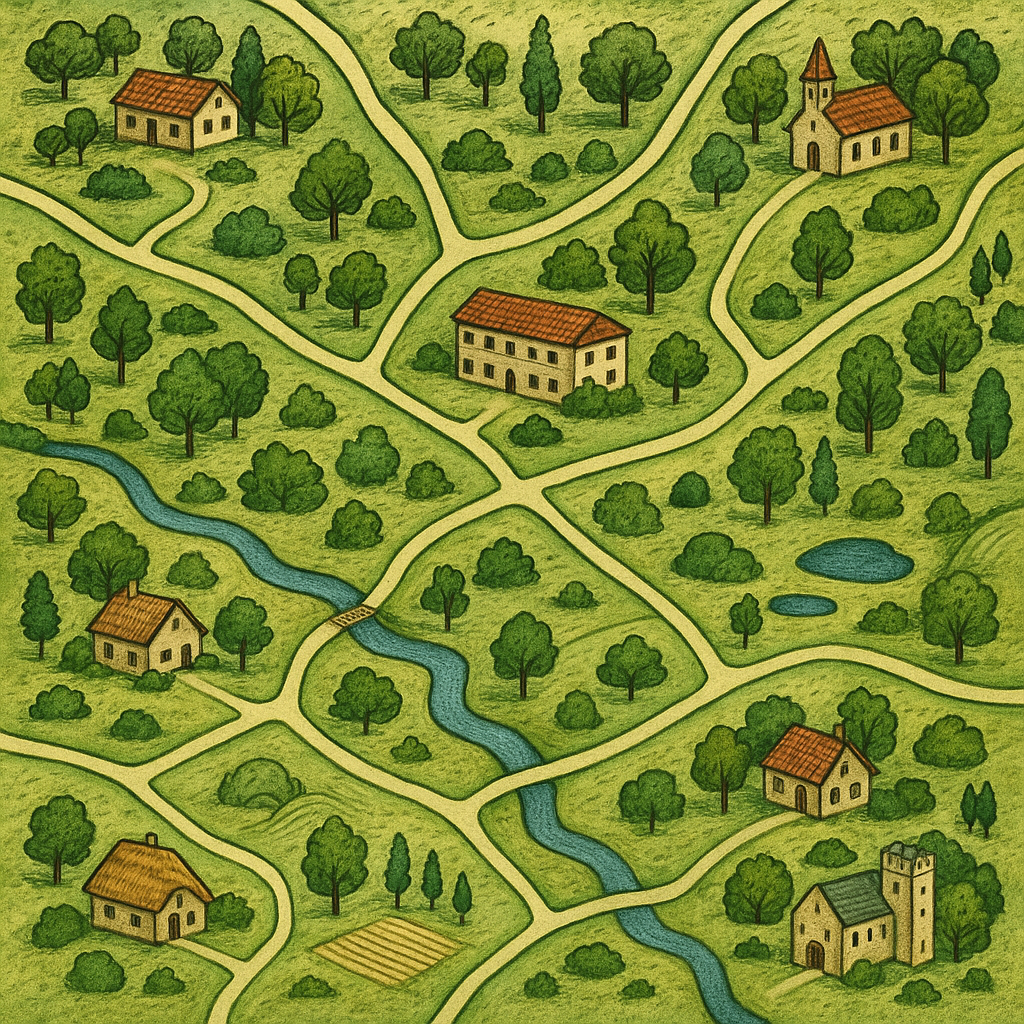
Val de Vie Estate: A leading wellness real estate model in South Africa, integrating body, landscape & tech for enhanced living.
Val de Vie Estate in South Africa is a super fancy place that's changing how people live well. It's like a wellness wonderland with everything from horse riding to special recovery rooms. They focus on moving your body, eating good food, relaxing, being part of a group, helping the planet, and having a purpose. It's so cool, it's even on a special map that shows homes that help you live longer!
What is Val de Vie Estate?
Val de Vie Estate is a 917-hectare luxury residential development in South Africa's Cape Winelands, recognized as a flagship wellness address. It integrates six pillars - movement, nutrition, restoration, community, environment, and purpose - into its infrastructure to promote residents' well-being and is featured on the 2026 Wellness Real Estate Atlas.
Get Cape Town news in your inbox
Stay updated with the latest stories from the Mother City.
Sunrise to Starlight – One Day Inside Africa’s Flagship Wellness Address
Riding at a steady canter through narrow trails framed by fynbos, the day begins with dust rising in golden shafts. By late afternoon, the same residents move barefoot across heated marble inside a candle-lit hammam where eucalyptus steam curls like slow ballet. From open-air motion to cocooned stillness, life at Val de Vie Estate is engineered as an intentional dance between muscle, topography and code. While wellness real estate used to be a boutique footnote, the property now propels South Africa onto the 2026 Wellness Real Estate Atlas, a Global Wellness Institute project that measures how homes literally lengthen lives.
The map stretches across 917 hectares trapped between Paarl’s granite domes and the orchards of Franschhoek. Atlas editors refuse to crown single trophy villas; instead they crunch decades of biometric data before listing a development. Analysts argue the estate proves that South African wellness addresses can outperform far costlier peers when philosophy and metrics are treated as equal partners.
Six non-negotiable pillars - movement, nutrition, restoration, community, environment and purpose - are not policy slogans but concrete, soil and software decisions that anyone can touch, taste or track on a phone.
The Six Circles of Well-Being – Infrastructure You Can Feel
1. Motion & Muscle
Forty-two kilometres of deliberately mixed surfaces - crushed gravel, pine bark, boardwalk - carry specific load ratings lifted straight from Olympic sports-science manuals. As twilight arrives, lights embedded flush with the trail fade along a curve synced to anonymised circadian data harvested from residents’ wearables. Warmer hues dim first, signalling the brain to begin its melatonin cascade earlier than street-lit suburbs allow.
2. Food as Medicine
Eleven hectares of biointensive beds grow more than 220 kinds of fruit, herbs and heirloom vegetables that end up on restaurant plates within four hours of harvest. Soil scanners grade micronutrient density in real time; the read-out is chained to an open-source ledger. Diners scan a table-top QR code and see the exact flavonoid score of the rocket that landed in last night’s salad.
3. Restoration & Recovery
The Yard, a 4,000-square-metre cube of glass and cedar, houses a –110 °C cryo chamber fuelled by reclaimed CO₂, hyperbaric pods pressurised to 1.5 ATA, and a float tank whose seven-hundred-kilogram Epsom brine is perpetually re-mineralised through nanobubble filtration. Heart-rate monitors on the exit wall show vagal tone rebounding in less than eight minutes.
4. Community Glue
A lightweight social app keeps loneliness at bay. If the platform registers three straight days without a Bluetooth handshake between a resident’s wearable and another device, it serves gentle invitations: join a dawn trail run, learn polo basics, or taste Swartland grenache with a sommelier-in-residence.
5. Planet First
Once a scarred quarry and over-farmed vineyard, almost half of the estate is now restored Renosterveld and wetland. A 20 MW floating solar sheet blankets the old quarry lake, sending 3 MW to Drakenstein municipality at peak. Stormwater - 2.4 million litres annually - cascades through engineered reed beds that cut potable demand by almost forty percent.
6. Purpose Beyond Property
Every property transfer diverts 1.5 % to the Val de Vie Foundation. Cash seeds coding academies in nearby townships, bankrolls equine therapy for under-resourced schools, and backs micro-loans for agri-entrepreneurs in Klapmuts. An open API lets any resident embed live impact stats - jobs created, hectares conserved - into their personal dashboard to quantify their footprint beyond square metres.
Evergreen Neighbourhood – Ageing as a Continuum, Not a Cliff
Val de Vie Evergreen Lifestyle operates as a parallel district with the same six pillars calibrated for older bodies. Sidewalks balloon into gentle eight-shaped loops that automatically lengthen a daily stroll without the walker noticing. Benches appear precisely every ninety metres, the exact span gerontologists flag as the average rest cue for sarcopenia patients. Shade structures double as totems guiding the way, and each one shelters an automated external defibrillator reachable within a two-minute dash.
Residents over sixty-five gain access to Equine-Assisted Cognitive Therapy using retired polo ponies. Sensors on horse and rider stream heart-rate variability to an AI that flags proto-dementia patterns four times earlier than the standard Montreal Cognitive test. Meanwhile, pickleball courts contain invisible fall-detection grids; a downward acceleration of 9.2 m/s² triggers a physio crew on fat-tyre e-bikes who arrive within six minutes.
Sensors, Satellites & Saffron – The Tech Layer Few Ever Notice
The Invisible Net
Val de Vie hosts one of Africa’s densest private sensor meshes. Every thirty seconds, air-quality nodes log PM2.5, ozone and fungal spores. That stream crosses with cardiopulmonary metrics from eighteen hundred wearables. When analysts spotted fungal spikes preceding asthma inhaler use by forty-eight hours, vineyard irrigation shifted: no more 2 a.m. sprinkler cycles that leave leaves damp until sunrise.
Net-Positive Architecture
Building rules demand each home must export more energy than it consumes. Passive orientation, phase-change gels inside wall cores, and rooftop gardens that act as thermal sponges push most villas into surplus. A private blockchain handles peer-to-peer electron trading; residents sell power to neighbours or gift kilowatts to low-income Paarl homes.
Agritainment & Biotech
Hyperspectral drones sample grape flavonoids fourteen days before harvest, guiding micro-batches timed to hit exact polyphenol peaks for Japanese importers. Left-over skins and stems feed black-soldier-fly larvae; the larvae frass boomerangs back as high-nitrogen fertiliser within twenty-one kilometres, closing the nutrient loop.
Brew hobbyists join “yeast safaris,” swabbing their own forearms to harvest novel Saccharomyces strains. The winning isolate - “Paarl Dawn,” redolent of litchi and white pepper - is awaiting patent approval and is already pouring at the estate taproom.
The Numbers Behind the Neighbourhood – Wealth That Spills Over
Stellenbosch University’s Bureau for Economic Research calculates that Val de Vie and the adjoining Pearl Valley pumped *R4.7-billion * into the Drakenstein economy from 2016 to 2023. Construction created the equivalent of 6,400 full-year jobs, while wine tastings, polo fixtures and the annual Life Festival added 1,900 seasonal positions every year.
Critically, the two estates supply eleven percent of the town’s total property rates, bankrolling fibre rollout now reaching 86 % of Paarl households and a new wastewater bioreactor treating thirty percent of the town’s sewage to irrigation quality.
Global Scorecard – Where the Estate Leads and Where It’s Catching Up
In the Atlas dataset, Val de Vie outranks luxury benchmarks such as California’s Rancho Mission Viejo and Portugal’s Vilamoura Four Seasons on intergenerational cohesion and nutritional environment. It still trails on micro-mobility carbon offset, a metric that checks if e-scooters and e-bikes draw from accredited renewable sources. Engineers are launching vehicle-to-grid trials: resident Teslas and e-mountain bikes will sell stored energy back into the commonal grid at night, erasing the last 2.1 tons of household CO₂ per year.
Culture & Future Casting
Sunday Stoep Sessions set live Afrikaans folk against Congolese rumba on the dam wall. The latest census logged thirty-one nationalities; kids attend trilingual immersion streams. Monthly culinary pop-ups swing from Basque txoko communal banquets to Himalayan momo classes led by Tibetan refugees resettled via the Foundation’s skills programme.
By 2027, floating eco-villas - modular timber pontoons that rise with the dam - will export 170 % of their own energy. Vertical hydroponic skirts on each pontoon will soak up excess phosphorus, turning spinach and lettuce into living water purifiers.
A research licence is pending for 0.4 hectares of *saffron * under retractable solar canopies. Early trials predict revenues of R950,000 per hectare per year, positioning Val de Vie as the southern hemisphere’s largest commercial saffron grower - and another chapter in a story that refuses to end at real estate.
What is Val de Vie Estate?
Val de Vie Estate is a 917-hectare luxury residential development located in South Africa's scenic Cape Winelands. It's renowned as a flagship wellness address globally, integrating six core pillars – movement, nutrition, restoration, community, environment, and purpose – to enhance residents' well-being and longevity. It has even been recognized on the 2026 Wellness Real Estate Atlas for its innovative approach to living.
What are the six core pillars of well-being at Val de Vie Estate?
Val de Vie Estate is built around six non-negotiable pillars: Movement & Muscle, Food as Medicine, Restoration & Recovery, Community Glue, Planet First, and Purpose Beyond Property. These aren't just concepts but are integrated into the estate's infrastructure, from Olympic-standard trails and biointensive farms to advanced recovery facilities and community-building initiatives.
How does Val de Vie Estate promote physical activity and recovery?
The estate features 42 kilometers of diverse trails designed with Olympic sports-science principles. For recovery, The Yard offers state-of-the-art facilities like a -110 °C cryo chamber, hyperbaric pods, and float tanks. For older residents, the Evergreen Neighbourhood includes features like gentle walking loops, strategically placed benches, and even Equine-Assisted Cognitive Therapy using retired polo ponies.
What makes Val de Vie Estate stand out in terms of nutrition and sustainability?
Val de Vie cultivates 11 hectares of biointensive beds, growing over 220 varieties of produce delivered to restaurants within four hours of harvest. Soil scanners provide real-time micronutrient data. Environmentally, nearly half the estate is restored natural habitat, and it boasts a 20 MW floating solar sheet, with building rules demanding homes to be net-positive in energy consumption.
How does Val de Vie Estate foster community and social well-being?
A lightweight social app helps prevent loneliness by suggesting activities like trail runs, polo lessons, or wine tastings if a resident hasn't had a social interaction in three days. The estate also hosts cultural events like 'Stoep Sessions' and culinary pop-ups, promoting interaction among its diverse resident population of over thirty nationalities.
How does Val de Vie Estate contribute to the local economy and community?
From 2016 to 2023, Val de Vie and Pearl Valley injected R4.7-billion into the Drakenstein economy, creating significant job opportunities. Furthermore, property rates from the estates contribute eleven percent of Paarl's total, funding essential services like fibre rollout and a new wastewater bioreactor that treats a substantial portion of the town's sewage.

Aiden Abrahams is a Cape Town-based journalist who chronicles the city’s shifting political landscape for the Weekend Argus and Daily Maverick. Whether tracking parliamentary debates or tracing the legacy of District Six through his family’s own displacement, he roots every story in the voices that braid the Peninsula’s many cultures. Off deadline you’ll find him pacing the Sea Point promenade, debating Kaapse klopse rhythms with anyone who’ll listen.
View all articles →