
Vergelegen launches black-and-white photo contest for 2026
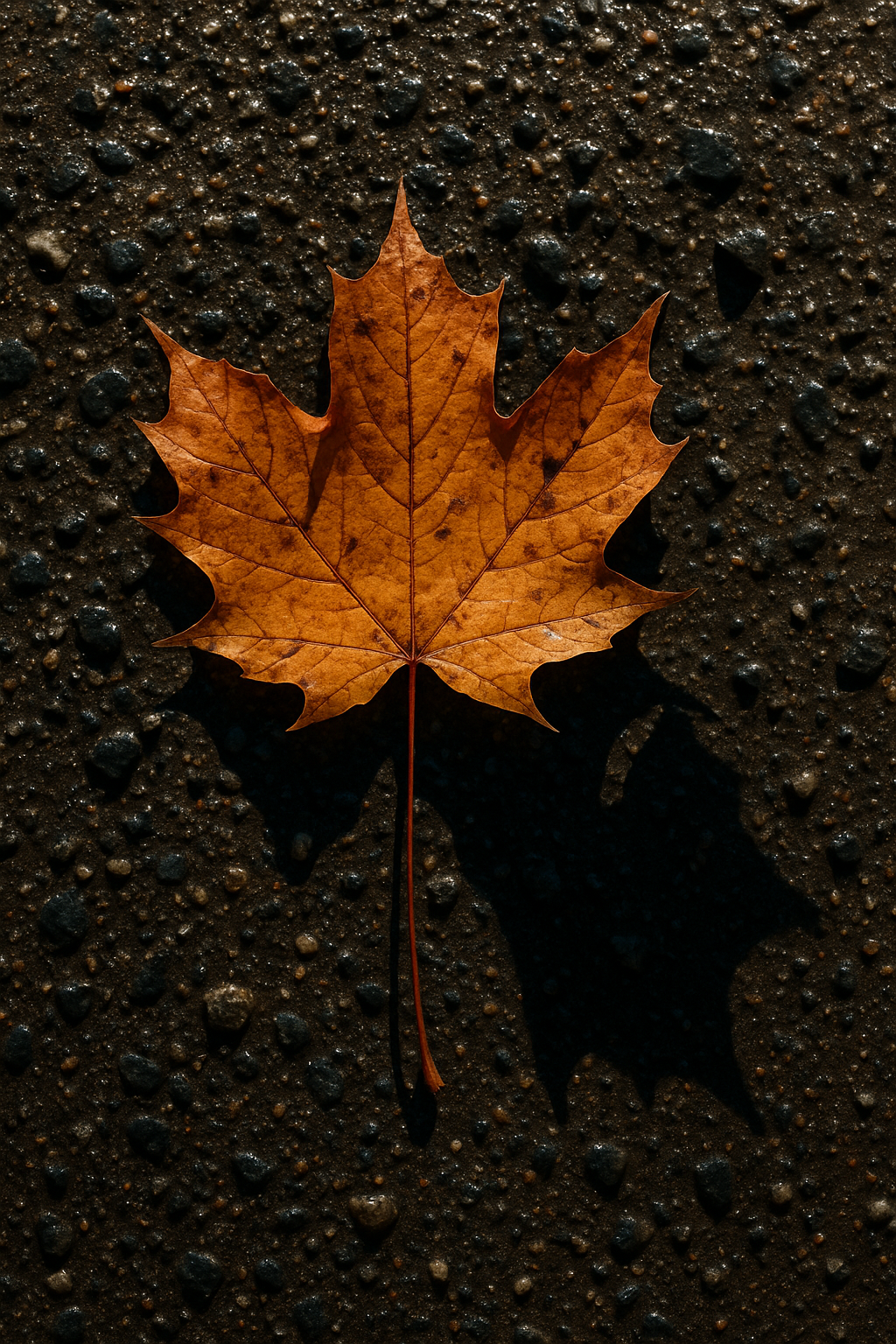
Vergelegen's 2026 Black-and-White Photography Experiment challenges photographers to capture the estate's essence in monochrome.
Vergelegen is holding a cool photo contest called "Monochrome Autumn." You have to take black-and-white pictures on their huge property. They want photos that show feelings and shapes, not just pretty colors. The winners get awesome prizes, like fancy cameras and special tours. This contest helps Vergelegen see their land in a new, artistic way.
What is Vergelegen's "Monochrome Autumn" photo contest?
Vergelegen's "Monochrome Autumn" is a black-and-white photography contest held between April 1 and May 31. Participants capture greyscale images anywhere on the estate, focusing on tonal steps, leading lines, and emotional temperature, aiming to record the land's feel, not just its look, without color.
Get Cape Town news in your inbox
Stay updated with the latest stories from the Mother City.
1. A Season Stripped of Colour
On the last night of March, the season’s first cold front slid across the Hottentots-Holland peaks and peeled Virginia creeper from Vergelegen’s white gables. By sunrise the scarlet petals lay like spent copper coins across the carriage drive, and the estate’s annual photo hunt had begun. This time the rules are blunt: every frame must be black-and-white, captured anywhere on the 3 000-hectare property between 1 April and 31 May. Sepia sliders and chocolate-shadow presets are banned; the brief is greyscale, full stop.
Marketing head Caroline van Schalkwyk says technicolour sunsets had become predictable. “We drowned in 200 look-alike scarlet skies,” she laughs, scrolling through last year’s entries. The new constraint shoves attention away from obvious autumn fire toward subtler architecture: tonal steps, leading lines, emotional temperature. The goal is to record not just what the land looks like, but how it feels once colour is erased.
The idea tips its hat to 1939, when a 22-year-old Ansel Adams exposed “Monolith, the Face of Half Dome” through a deep-red filter, turning sky into slate and granite into radiant plaster. Vergelegen hopes for a Cape cousin: Somerset-West sandstone instead of Yosemite granite, 300-year-old oak roots in place of Sierra pine, Khoi footprints beneath colonial brick.
2. Reading Light That Doesn’t Shout
Autumn sun never climbs above 42°, gifting long sculptural shadows that compress neatly into 256 shades of grey. Yet low light also deletes the quick emotional cue that crimson or tangerine once provided. Photographers must manufacture contrast instead of harvesting it from a colour wheel. They wait for dawn mist rolling off the Schapenberg or hunt for textural collisions: the matte underside of a plane leaf against wet slate, the brushed-steel gleam of a wine tank beside the velvet of a moth wing.
To help them, horticulturist Richard Arm marked fifteen micro-sites for tonal range rather than chromatic punch. One marker points to a derelict pump-house where ferns grow upside-down through missing slats; another singles out a lone quince whose fruit, back-lit, looks like clustered moons. Pocket cards titled “See Like Silver” suggest spot-metering for highlights and bracketing when dynamic range tops eight stops. Two floodlights near the camellia garden were even switched off so night shooters can harvest star-salted darkness without sodium glare.
The second guided walk convenes on 9 May. Fujifilm ambassador Tarryn Goldman will demo portraiture with nothing but a silver reflector, while Orms specialist Chad Chapman brings a buffet of GFX100 II bodies and tilt-shift glass. Fuji will lend bodies and lenses on the spot, then burn a drive of each participant’s RAW keepers. The first walk booked solid in 37 minutes; online chatter claims some bartered spots for bottles of small-batch gin.
3. How Winners Are Chosen and Rewarded
Entry stays democratic: two JPGs, 3 000 pixels on the long side, each paired with a fifty-word caption that must “defend the absence of colour.” Judges – three heritage staff plus two imaging technicians – will calibrate monitors to 6500 K and score at 100 % magnification. A weighted rubric governs: tonal gradation 30 %, compositional geometry 25 %, narrative clarity 20 %, emotional punch 15 %, technical polish 10 %. A parallel People’s Choice category, voted by visitors in November, keeps the event from sliding into a sensor-size arms race.
Prizes have ballooned with the wine-club roster. The camera-class victor pockets a Fujifilm X-T5, 30 mm macro, vertical grip and a private barrel tasting for six inside the 1706 cellar. The smartphone winner nets a DJI OM 6 gimbal, R5 000 Orms voucher and a sunset picnic curated by chef Shaun Schoeman, complete with chilled 2021 Méthode Cap Classique. Juniors under 17 compete for an Instax Wide 300 bundle and a day spent digitising 1912 glass-plate negatives in the estate archive. Every finalist’s print will be face-mounted on 4 mm Diasec and hung in the restored orangery, where humidity is pegged at 45 %, perfect for silver-gelatin survival.
Beyond trophies, the contest doubles as data harvest. Thirty shortlisted frames will enter Vergelegen’s permanent digital vault, tagged with GPS coordinates so future curators can overlay them onto LiDAR scans and track how oak limbs sag or whether the camellia ‘Lady Gowrie’ finally succumbs to root rot. The estate already archives 12 000 pesticide-stained Kodachromes and 800 linen-backed plans as 16-bit DNGs; contemporary monochrome views will serve as tomorrow’s baseline.
4. Fog, Phones and the Future of Seeing
Shooting sans colour hides an ecological memo: viewers confront scaffolding, veins, decay. Since 2018 the estate has felled 120 000 bluegums; their charcoal stumps now read like topographic studies even before conversion to greyscale. The 380-head Nguni herd, dressed in ivory, charcoal and gunmetal, graze among fynbos corridors, offering ready-made tonal layers for anyone awake at 7 a.m.
Atmospheric river events are the wildcard. Cut-off lows can drop cloud bases to 200 m, smothering the octagonal garden in lactescent fog that erases colour for human eyes too. Last year engineer Dillon van Rooyen flew a Phase One IQ4 on a dawn grid above the camellia lawn; the greyscale orthomosaic revealed every deer-path and aphid colony as micro-eddies of tone. Judges archived the file as a spectral map; early birds now study it like a cheat sheet.
Social strategy has pivoted with the palette. Reels shot on iPhone 15 Pro in LOG, graded to 18 % grey, tripled engagement; TikTok clips show vintners back-lighting grapes until fruit becomes a solar eclipse. Junior entrant Amara Johnson, 13, last year used a metal straw as a snoot on a cracked Huawei; her trick now lives in three pros’ metadata. The submission portal shows captions ballooning from 28 to 46 words, proof that monochrome forces explicit storytelling. At 00:42 a.m., just after dessert wine service ends, uploads spike. One entrant withdrew a colour frame with the note: “It lied.”
When the orangery doors swing open in November, visitors will sip a limited Pinotage aged in Hungarian oak whose label art began life as a 13-year-old’s phone RAW file. Until then, Vergelegen remains an open sketchbook: every shutter click deletes a hue, every grey pixel casts a vote on how the estate will remember itself once the final leaf drops.
What is Vergelegen's "Monochrome Autumn" photo contest?
Vergelegen's "Monochrome Autumn" is a black-and-white photography contest held between April 1 and May 31. Participants capture greyscale images anywhere on the 3,000-hectare estate, focusing on tonal steps, leading lines, and emotional temperature, aiming to record the land's feel, not just its look, without color. The contest encourages a deeper artistic interpretation of the estate's landscape, moving away from predictable color photography.
Why did Vergelegen switch to a black-and-white only format?
Vergelegen's marketing head, Caroline van Schalkwyk, noted that previous contests were

Kagiso Petersen is a Cape Town journalist who reports on the city’s evolving food culture—tracking everything from township braai innovators to Sea Point bistros signed up to the Ocean Wise pledge. Raised in Bo-Kaap and now cycling daily along the Atlantic Seaboard, he brings a palpable love for the city’s layered flavours and even more layered stories to every assignment.
View all articles →