
Video: Motorist responds after Kruger Park footage outrage
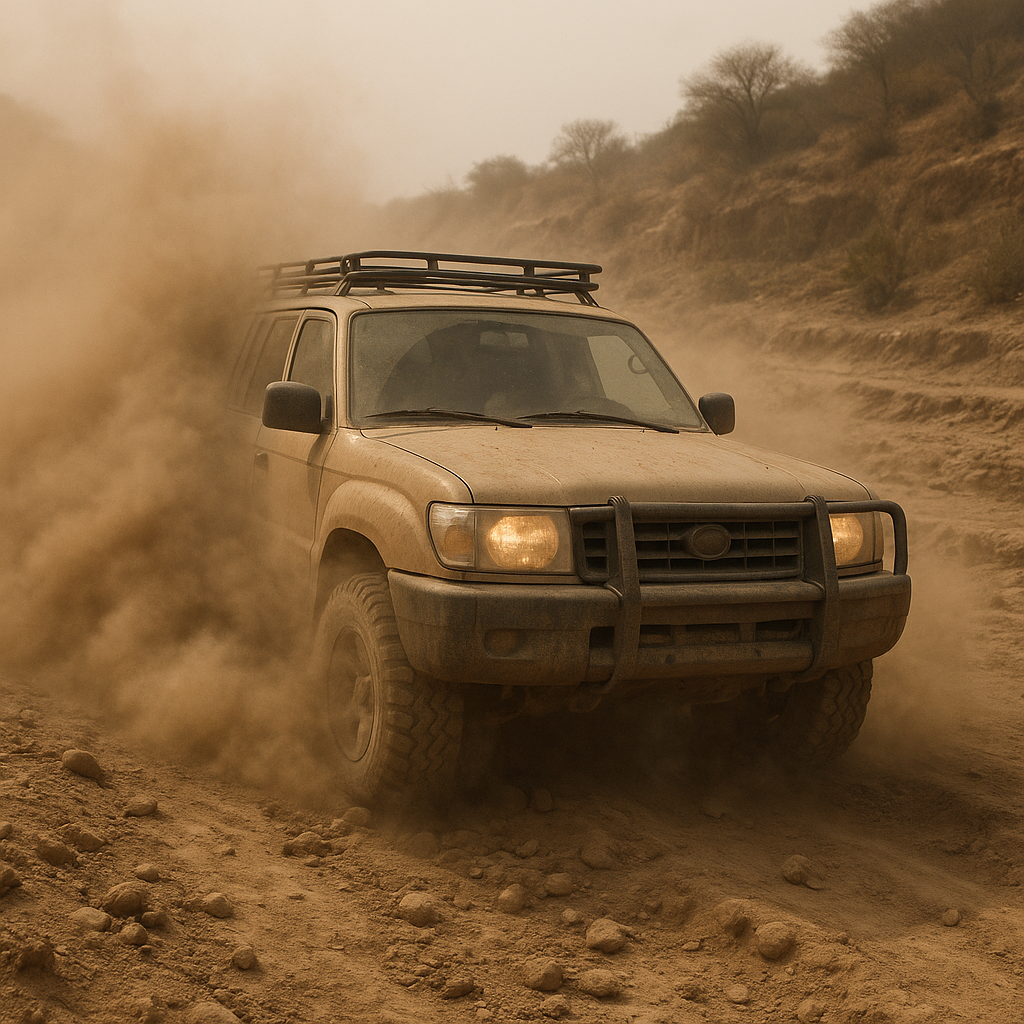
Driver ignites Kruger firestorm by going off-road, sparking national debate on reckless tourism and park policing in the digital age.
A driver in a white Ford went off-roading in Kruger National Park, ignoring a 'ROAD CLOSED' sign and filming it for social media. This reckless act caused a huge uproar online and in real life. The driver was caught thanks to digital detectives and faced a massive fine, a lifelong ban from national parks, and might even have to pay to fix the damaged nature. This incident showed how hard it is to protect huge wild areas from irresponsible tourists.
What consequences did the driver of the white Ford face for off-roading in Kruger National Park?
The driver faced a negotiated admission-of-guilt fine near R750,000 and a lifetime ban from all national parks. Additionally, discussions included a public apology video to be pinned on the park's Instagram for a year, alongside a civil suit for habitat rehabilitation.
Get Cape Town news in your inbox
Stay updated with the latest stories from the Mother City.
The Clip That Launched a Million Clicks
A blink-and-you-miss-it smartphone snippet - twenty-seven seconds shot from the passenger seat of a snowy-coloured double-cab - has detonated a conservation furore that refuses to die down. The footage, captured inside South Africa’s flagship wilderness sanctuary, shows the bakkie bombing along a sand-choked riverbed, rooster-tailing pale dust, before clawing its way up an eroded slope crowned by a sun-bleached “ROAD CLOSED” disc. Posted at dawn on 12 May 2026 with a winking emoji and the cocky caption “Detour > Highway,” the clip snowballed across TikTok, WhatsApp and X, racking up 3.4 million views in a single day. Before SANParks’ media team had brewed their first pot of coffee, #FindTheFord was trending country-wide and the grinning silhouette behind the wheel had become the poster-child for thrill-seeking tourism gone rogue.
Beneath the tsunami of outrage lies a tougher narrative: how do you patrol a living space the size of Israel with fewer boots on the ground than a single NYPD precinct? Kruger’s 19 485 km² sprawl of fever-tree groves, basalt ridges and feverish savanna is Africa’s oldest proclaimed park, yet its 180 field rangers must each police an area larger than Paris. The viral moment therefore exposed more than one driver’s lapse - it laid bare the perennial imbalance between the smartphone in every tourist’s hand and the ranger in the far-off bush.
Digital Detectives & the Smell of Burning Rubber
Crime-watcher Yusuf Abramjee’s repost kept the clip’s GPS metadata intact, dropping the pin inside N’waswitshumbe, a remote patch south of Shingwedzi that has stayed off-limits since Cyclone Freddy destroyed its low-water bridge in March 2024. Within minutes cyber-sleuths had harvested four smoking guns: a Gauteng plate beginning with “NDR”; a bull-bar design sold only for the 2018-’20 Ford Ranger 3.2; a faded University of Pretoria sticker sun-tinted to mopane ochre; and a half-second reflection of turquoise bead bracelet previously flaunted in an April post tagged #KrugerBoundAgain. By 9 a.m. a side-by-side collage of wrist-ware and licence plate had 12 000 shares; ten minutes later @BlueKrugerCat - bio reading “PE-based auto detailer” - DMed: “I’m literally one DM away,” his profile pic matching the video’s sunglassed grin.
While the internet sharpened its pitchforks, field ranger Lindiwe Ngobeni reminded a Skukuza workshop why criminal prosecution rarely sticks. “We need an unbroken, time-stamped visual of the driver, verified GPS points, and a soil-disturbance affidavit from ecology,” she shrugged. SANParks consequently leans on administrative muscle: lifetime blacklisting, confiscated conservation fees, and civil suits for habitat rehab. In 2023 a Gauteng magnate who jet-skied on the Sabie River quietly paid R1.1 million to resuscitate the eroded bank; the Ford driver, officials hint, should brace for a similar invoice covering 450 mm-deep ripping, indigenous reseeding and three years of monitoring.
Politics, Publicity & the Quest for Justice
For many citizens Kruger is not merely a park; it is the nation’s communal pulse. Mandela’s 85th birthday gathering at Malelane in 2003 dubbed the reserve “a place where all South Africans breathe as one.” A 2025 Afrobarometer poll now shows 62 % of respondents believe the rich laugh at green laws - up five points in four years - so the political calculus demanded loud, swift theatre. The Department of Forestry, Fisheries & the Environment thundered about “decisive action,” the Mpumalanga Tourism Agency offered R25 000 for tips, and the EFF’s provincial chair demanded the driver be “permanently blacklisted from every state-run park in SADC.” Even the AA piled on, noting that off-road bravado “shrinks the tourism economy that feeds 1.5 million livelihoods.”
Yet beyond the hashtags lies the asymmetry Richard Mabuza, section ranger for the 72 000 ha between Tshokwane and Letaba, confronts daily. He juggles two ageing Hiluxes, nine rookies and an 18-minute drone while deciding whether to chase Instagram idiots or stop cable thieves who could black out the entire telemetry grid. Kruger’s CCTV network hugs the six major camps; once a vehicle leaves tar for gravel it slips into “the grey,” tracked only by the same motion-trigger cameras meant for leopard counts. Ironically, one biodiversity cam first snapped the Ford’s tyre signatures crossing a protected vlei on 9 May - three days before the Instagram boast.
A 2024 plan to deploy AI-enabled drone swarms able to read plates from 150 m was postponed after budget cuts shunted the launch from July to October. AerialSure CEO Tariq Carrim now scrapes the viral clip frame-by-frame, training algorithms to distinguish the Ranger’s bull-bar from 47 similar white bakkies filmed last month. He dreams of real-time alerts pinging rangers’ phones the instant a tyre strays off the grid.
Dollars, Dirt & the Price of Bravado
Ecologically, the offence is not trivial. Kruger’s rivers are lifelines in a landscape where rainfall yo-yos between 400 mm and 750 mm. A single set of tracks compacts sediment, collapses Nile crocodile nests and diverts floodwater enough to topple centuries-old fever trees. CSIR research shows off-road jaunts cut invertebrate numbers by 42 % and seedling survival by 38 % over five years; multiply that by the 12 km of illegal spoor documented last year and the damage rivals a boutique mine.
The rand-and-cents fallout is equally sobering. Tourism pumps R2.4 billion annually into neighbouring municipalities, with 68 % coming from law-abiding self-drivers. After a 2023 British YouTuber’s “bush-bashing” escapade near Pafuri, northern camp bookings slumped 7 % the next quarter. Hospitality CEO Ingrid Ribbink warns that “every reckless clip costs jobs: a cancelled weekend, a maid loses a shift, a craft trader stays home.”
By mid-week SANParks had compiled a 42-page dossier - drone imagery, soil-compaction cores, an iPhone video from a tourist who tailed the Ford for 4 km, and a geochemical match between sand in the tyre tread and samples from N’waswitshumbe. Investigators subpoenaed Meta for IP logs; the driver, now lawyered-up, is negotiating an admission-of-guilt fine near R750 000 plus a lifetime ban. Talks include a public apology video pinned to the park’s own Instagram for a full year - an unheard-of public shaming in local conservation circles.
Out in the bush, rangers on dawn patrol watch the horizon where dust from lawlessness mingles with the first light over the Lebombo, knowing the next viral storm is only a phone upload away.
[{"question": "What severe consequences did the driver of the white Ford face for off-roading in Kruger National Park?", "answer": "The driver faced a negotiated admission-of-guilt fine of nearly R750,000, a lifetime ban from all national parks, and was required to record a public apology video to be pinned on the park's Instagram for a year. They also faced a civil suit for habitat rehabilitation, with officials hinting at an invoice similar to one for R1.1 million paid by another offender for bank rehabilitation."}, {"question": "How was the driver of the white Ford identified so quickly after the incident?", "answer": "Digital detectives played a crucial role. Crime-watcher Yusuf Abramjee reposted the video with its GPS metadata intact, pinpointing the location. Cyber-sleuths then used details like a Gauteng license plate, the specific design of the bull-bar on the 2018-2020 Ford Ranger 3.2, a faded University of Pretoria sticker, and a reflection of a turquoise bead bracelet previously seen on social media posts to identify the driver."}, {"question": "What ecological damage can off-roading cause in Kruger National Park?", "answer": "Off-roading in areas like riverbeds can cause significant ecological damage. It compacts sediment, collapses Nile crocodile nests, and can divert floodwater, potentially toppling centuries-old fever trees. Research indicates that off-road jaunts can reduce invertebrate numbers by 42% and seedling survival by 38% over five years, rivaling the damage of a small mine."}, {"question": "Why is it challenging to patrol and protect vast areas like Kruger National Park from irresponsible tourists?", "answer": "Kruger National Park spans 19,485 km², an area larger than Israel, but has a limited number of field rangers (180). Each ranger is responsible for an area larger than Paris, making it difficult to patrol every corner. While CCTV networks cover major camps, vehicles often go \"off-grid\" once they leave tarred roads, making real-time tracking difficult. The imbalance between tourists with smartphones and the limited resources of rangers makes enforcement a constant challenge."}, {"question": "What broader implications did this incident have for South African national parks and tourism?", "answer": "The incident highlighted the difficulty of protecting vast wilderness areas from irresponsible tourists and sparked a national conversation about conservation. It also underscored the perception that the wealthy often disregard environmental laws. The incident resulted in significant political and public outrage, with various organizations and government bodies demanding decisive action. Economically, such reckless acts can deter tourism, which is vital for the 1.5 million livelihoods supported by the industry, with a previous \"bush-bashing\" escapade leading to a 7% slump in northern camp bookings."}, {"question": "What administrative tools does SANParks use for enforcement when criminal prosecution is difficult?", "answer": "SANParks often relies on administrative measures when criminal prosecution is challenging due to strict evidentiary requirements (like unbroken, time-stamped visuals and soil-disturbance affidavits). These administrative tools include lifetime blacklisting from national parks, confiscation of conservation fees, and civil suits for habitat rehabilitation. This approach allows them to impose significant penalties and recover costs for environmental damage.", "tag": "SANParks, enforcement, administrative tools"}]

Amanda Wilson is a Cape Town-born journalist who covers the city’s evolving food scene for national and international outlets, tracing stories from Bo-Kaap spice shops to Khayelitsha micro-breweries. Raised on her grandmother’s Karoo lamb potjie and weekend hikes up Lion’s Head, she brings equal parts palate and pride to every assignment. Colleagues know her for the quiet warmth that turns interviews into friendships and fact-checks into shared laughter.
View all articles →