
Watch: Khoi and San remains return for Steinkopf reburial
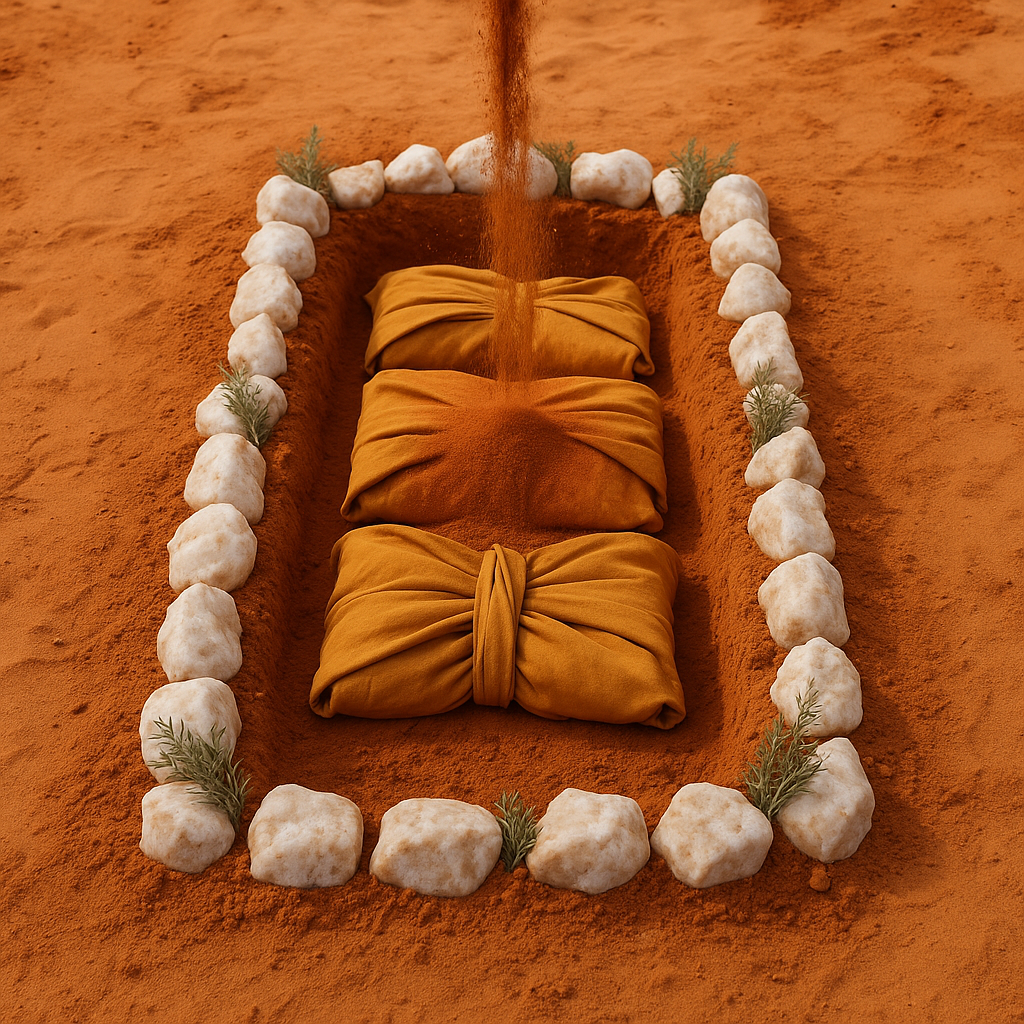
63 Khoi and San ancestors, long held in European museums, are reburied in South Africa, marking a historic restitution and cultural reclamation.
On March 23, 2026, a truly special homecoming will happen on the Ridge in South Africa. Sixty-three ancestors, whose bones were taken long ago and kept in museums far away, are finally returning home. This event is not just a burial; it's a powerful moment of healing, closing a painful chapter of history, and showing the world how to make things right after years of injustice. It's a chance for ancient spirits to rest and for their people to feel whole again, making a new path for memory and healing across nations.
What is the significance of the homecoming ceremony on the Ridge?
The homecoming ceremony on the Ridge signifies the restitution of 63 ancestral remains to their indigenous communities in South Africa. This event, occurring on March 23, 2026, marks the largest repatriation of human remains since 2017, closing a historical loop of colonial injustice and offering a template for future post-colonial memory and cultural healing across continents.
Get Cape Town news in your inbox
Stay updated with the latest stories from the Mother City.
The Long Wait at the Water’s Edge
Just after dawn on 23 March 2026, a single hole in the pink-grey granite above the rail hamlet of Steinkopf will accept sixty-three small parcels of ochre cloth. Inside each lies a puzzle of human bone - femur pieces, shattered skull plates, milk teeth - whose genetic chords once echoed across the southernmost deserts. One-hundred-and-thirty-three winters ago these same pieces were ticketed “Bushman 27a,” boxed as “Hottentot crania,” and locked into drawers in Glasgow, Edinburgh, Vienna, finally resting in the Hunterian Museum. On Monday they move only a stone’s throw: from a tin storeroom at the Kinderlê Monument to a pit ringed with white quartz and scented buchu. President Cyril Ramaphosa will stand in silence while Khoi and San elders release the first red handfuls of Kalahari sand, closing a loop that began in 1891 when a British trooper swapped tobacco for the corpse of a Griqua widow shot on the Langeberg frontier.
The burial crowns the biggest restitution of human remains since Parliament wrote the Human Tissue Act of 2017, but its emotional blueprint is far older. In the 1930s Nama chronicler |Khuseb warned Cambridge scholar Dorothea Bleek that “the dead do not cross the ocean; they wait at the water’s edge for the day the tide walks backward.” The council remembered that prophecy in 2024 when they asked Glasgow for “our elders so the tide may reverse.” On 12 October 2025 the university signed the release, the first UK institution to surrender bones without demanding storage fees or research rights. A C-130 Hercules touched down at Waterkloof in November carrying crates escorted by Ouma Katrina Esau - the planet’s last fluent speaker of N|uu - and Khwe youth delegate A!Tae Aran, her infant son asleep in an ostrich-shell sling, an unbroken bloodline stepping onto the tarmac.
Police convoys covered the nine-hundred kilometres south-west, but the destination was not a sterile lab; it was a canvas tent on the mission commonage. For four months grandmothers and archaeology students sat knee-to-knee on hessian, coaxing each skeleton into anatomical order under guidelines drafted by Iziko Museums and the Northern Cape cultural office. Camel-thorn fires glowed all night so no bone cooled faster than its neighbour, and every sunrise a Nama matriarch scattered the coals. DNA swabs were permitted only when the cotton tip went back into the same bundle - an indigenous safeguard against the “second exile” of data to distant servers. Osteologists counted thirty-eight adults, nineteen juveniles, six infants; cut-marks on three skulls betrayed nineteenth-century trophy hunting. One jaw still cradled a powder-blue trade bead in its canine socket; the trinket will stay with its owner, completing a century-and-a-half of accidental adornment.
A Town Built on Unmarked Graves
Steinkopf itself is a parchment overwritten many times. The London Missionary Society raised a station here in 1813 as a buffer between the Cape Colony and trans-Gariep Khoi chiefdoms. The 1943 Kinderlê obelisk - local granite erected to 132 children lost in the 1918 flu - squats on an earlier cemetery where San trackers, paid in brandy by the colonial magistrate, were dumped without stones. Under apartheid the hamlet became a “coloured rural reserve”; in 1987 the army turned surrounding koppies into an artillery range, blasting Stone Age flakes across the impact zone. Pastor Hendrik Basson still remembers picking tiny quartz arrowheads after night manoeuvres and storing them in a coffee tin until the Truth Commission warned that “every sherd is a witness.” That rusted tin now waits in the monument archive to be lowered alongside the bones - landscape as archive, not museum exhibit.
Monday’s rite will braid three strands of time. At 05:30 teenagers will sing a Khwe sunrise anthem learned from 1936 wax cylinders recorded by German linguist Ernst Westphal. At 07:00 an Anglican canon will recite the 1662 burial prayer in Khoekhoegowab, a translation finalised only last year by the Namibian Synod. At 08:30, as the sun lifts above Ploegberg, a healer named N|ama will begin the “circle dance of return,” bare heels drumming quartz until the pebbles hum like mbira tines. Guests - three hundred only - must slip off their shoes; protocol staff have been issued soft leather veldskoens to avoid spearing the calico. Cameras will stream in 8K, but the audio feed carries a thirty-second delay so broadcasters can mute the ultrasonic San clicks that some listeners hear as ringing ears.
Digital Ghosts and Mineral Shadows
While the grave closes above ground, an electronic afterlife blossoms online. The University of Cape Town’s Archive and Public Culture Research Initiative is releasing 11,000 high-resolution scans of the Glasgow inventory cards - many defaced by phrenology scrawl - onto a blockchain ledger run by a San council smart-contract. Every academic download triggers a micro-payment in the cryptocurrency !Xo token that feeds a land-restoration trust in the Kalahari. Codenamed “Gaunab” for the Khoi god of night, the project flips the usual script: museums once billed for “storage”; now they receive automated compliance receipts hashed on Solana. Even technophobic elders grin at the reversal.
Language, though, resists quick fixes. “Bushman” still stains the 1910 burial ledgers; “Hottentot” is chiselled into a 1938 slab two hundred paces from Monday’s pit. Government masons have carved fresh plaques reading “|Khomani, Griqua, Korana, Nama and San Ancestors,” yet historians note that none of those labels existed as neat tribes before conquest. The compromise is austere: each bundle bears only a GIS coordinate plus a string of phonetic clicks rendered in IPA script. The anonymous woman once typed “Bushman 27a” will descend as “ǂʼAuǁgaes 29°17′34.5″S 17°44′12.3″E,” precise, unpronounceable, untainted.
Logistics nearly capsized when lithium-bearing pegmatite dykes were mapped beneath the koppie. The Department of Mineral Resources granted a prospecting license, turning the funeral into a race against drills. In an emergency session last week Parliament invoked the 2023 Indigenous Knowledge Systems Protection Act, declaring the two-square-kilometre monument a “living heritage exclusion zone.” Cultural law, for once, bulldozed mining law, and lawyers are still gasping.
A Ceremony Becomes a Code
Weather is the last sovereign force. A cut-off low threatens Atlantic rain; San cosmology forbids covering bones during a storm lest the soul’s echo pool inside wet cloth. Contingency crates hold eighty clear umbrellas emblazoned with the national coat of arms - an object surreal under apartheid when rural Black mourners carried permit books. Forecasters will ping the president’s pilot hourly; if cloud-base drops below five kilometres the helicopter will wait at Port Nolloth.
Micro-acts of mending ripple outward. A local science club has erected a solar weather station whose cups measure wind in “rips,” the distance a Bushman arrow flies before losing lethal speed. Entrepreneurs are bottling red sand in fifty-millilitre ampoules labelled “Return Soil,” selling them to Khoisan diaspora in Rotterdam and Winnipeg who cannot travel. A Nama choir has written a five-part hunting-bow overtone suite; it will hit Spotify the instant the final bundle settles. Even rock hyraxes have roles - University of Fort Hare students have GPS-collared six dassies whose nightly foraging will, when plotted, trace the ǂNuǁi click consonant in the sky, a fleeting geoglyph legible only to satellites.
Strip away the choreography and what happens is simple: a severed circuit between people and place is soldered shut again. Scientists speak of osteobiography, lives legible in calcium; San elders speak of “ǀkhaoǁae,” the breath that lingers after meat is gone. The two definitions meet when quartz stones clatter against cloth, when Western notions of provenance surrender to older ideas of belonging that predate title deeds. This grave cannot atone for the thousands still boxed in European cellars - Vienna alone shelves 1,004 Namibian skulls - but it offers a template that can be copied continent to continent. Leiden has already hinted it will release eleven crania “once the South African protocol proves replicable”; Berlin’s Charité lists forty-seven candidates waiting for “community-driven logistics.” Monday thus becomes open-source code in the worldwide operating system of post-colonial memory.
On the ridge the turned soil will receive no mound. Instead, botanists will sow the endangered succulent Conophytum stephanii, button-leaves polished like river pebbles, whose scarlet blooms open each March in time for the 1918 flu anniversary. Every year the flowers will flash across the stones, a living mirror of what lies beneath: calico, bone, quartz, red sand, and the echo of a language the earth never needed to write down because it always remembered.
[{"question": "What is the \"Homecoming on the Ridge\" event?", "answer": "The \"Homecoming on the Ridge\" is a significant event taking place on March 23, 2026, in South Africa. It involves the repatriation and reburial of 63 ancestral human remains that were taken long ago and kept in museums, primarily the Hunterian Museum. This event is not merely a burial but a powerful moment of healing, closing a painful chapter of history, and a template for post-colonial memory and cultural healing."}, {"question": "When and where will the reburial ceremony take place?", "answer": "The reburial ceremony will take place just after dawn on March 23, 2026, at the Ridge in Steinkopf, South Africa. The remains will be placed in a single hole in the pink-grey granite, ringed with white quartz and scented buchu."}, {"question": "What is the historical background of these ancestral remains?", "answer": "These ancestral remains were collected through colonial practices, often labeled with disparaging terms like \"Bushman\" or \"Hottentot,\" and stored in museums in Glasgow, Edinburgh, and Vienna. Some were acquired through unethical means, such as a British trooper swapping tobacco for the corpse of a Griqua widow in 1891. They represent individuals from various indigenous groups including \u01c2Khomani, Griqua, Korana, Nama, and San."}, {"question": "What is the significance of the digital initiatives associated with this repatriation?", "answer": "The University of Cape Town's Archive and Public Culture Research Initiative is releasing 11,000 high-resolution scans of the inventory cards onto a blockchain ledger. This project, codenamed \"Gaunab,\" flips the traditional script by generating micro-payments in \u0021Xo token for a land-restoration trust with every academic download, ensuring that data access benefits the indigenous communities."}, {"question": "How are the identities of the ancestors being recognized during the reburial?", "answer": "To rectify the dehumanizing labels of the past, fresh plaques will read \"\u01c2Khomani, Griqua, Korana, Nama and San Ancestors.\" Each bundle of remains will bear only a GIS coordinate and a string of phonetic clicks rendered in IPA script, ensuring a precise, untainted, and respectful identification, such as \"\u02c0'Au\u01c1gaes 29\u00b017'34.5\"S 17\u00b044'12.3\"E.\""}, {"question": "What is the broader impact and legacy of this event?", "answer": "This event is the largest restitution of human remains since the Human Tissue Act of 2017 and serves as an important template for post-colonial memory and healing worldwide. It demonstrates a reversal of historical injustice and provides an \"open-source code\" for other institutions to follow, with other museums, like Leiden and Berlin's Charit\u00e9, already indicating a willingness to release their collections based on the South African protocol. It symbolizes the soldering shut of a severed circuit between people and place, moving from Western notions of provenance to older ideas of belonging."}]

Chloe de Kock is a Cape Town-born journalist who chronicles the city’s evolving food culture, from township braai joints to Constantia vineyards, for the Mail & Guardian and Eat Out. When she’s not interviewing grandmothers about secret bobotie recipes or tracking the impact of drought on winemakers, you’ll find her surfing the mellow breaks at Muizenberg—wetsuit zipped, notebook tucked into her backpack in case the next story floats by.
View all articles →