
Watch: SIU told to release luxury cars linked to alleged tender kingpin Hangwani Maumela
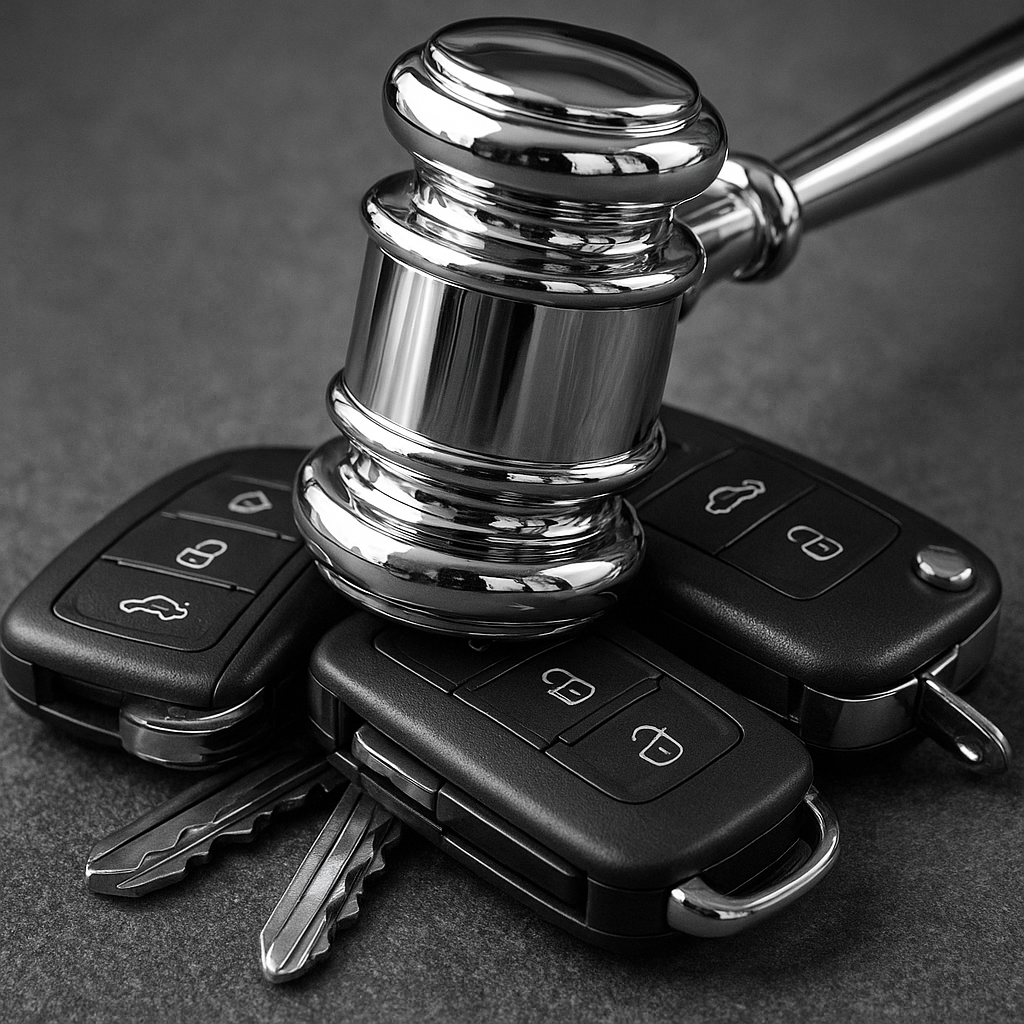
Judge's gavel forces SIU to loosen grip on R240M chrome-plated evidence, revealing how luxury cars almost slipped away amidst a major looting probe.
Fancy cars, worth a whopping R240 million, linked to alleged COVID-19 fraud, mysteriously got released from state seizure. The Special Investigating Unit (SIU) messed up by not telling the whole truth, making the court let the cars go, provided bank guarantees were given. This decision shocked everyone, making it seem like the rich can get away with anything, turning public money into luxury toys. Now, everyone's wondering if justice truly works for all.
How did R240 million in super-cars evade state seizure despite being linked to alleged COVID-19 procurement fraud?
The Special Tribunal ordered the release of five luxury vehicles, including Aston Martins, Ferraris, and a Rolls-Royce, because the Special Investigating Unit (SIU) allegedly "withheld material particulars" and "breached the duty of utmost good faith" in their preservation bid. The tribunal required Omar’s Motor Den to provide bank guarantees equal to the cars' showroom value.
Get Cape Town news in your inbox
Stay updated with the latest stories from the Mother City.
1. A Friday PDF That Reset the Rules
15:42 on 7 February 2026 will go down in whistle-blower lore as the moment a single e-mail shrank the State’s grip on five of the country’s flashiest automobiles. Tribunal clerk Philile Dlamini pressed “send” on a 14-page order coded MOJ/CFT/02-2026; by 16:00 the file had detonated across the Advocates’ Guild WhatsApp hub. Retired president of the Special Tribunal, Margaret Victor, minced no words: the Special Investigating Unit had 72 court hours to unlock the SAPS pound in eMalahleni - provided Omar’s Motor Den furnished bank paper equal to each car’s showroom sticker price.
Victor’s language was unusually spicy. She ruled that the SIU’s August 2025 preservation bid had “withheld material particulars” and thereby “breached the duty of utmost good faith.” In plain English, the Unit exaggerated the emergency and buried awkward truths; the reward for that sleight of hand was a conditional green-light for a quarter-billion-rand convoy to disappear into the long-weekend traffic.
The order landed like a thunder-clap because investigators had sold the public a simple story - covid-procurement loot had been laundered into chrome-plated toys and the law had finally caught up. Instead, the tribunal practically handed back the keys, asking only for a bank’s promise as collateral. Suddenly every South African with a data bundle understood that asset-forfeiture chess can end with the king in check but the queen already off the board.
2. Meet the Metallic Celebrities
Twitter has given each vehicle its own persona, complete with fan accounts. The 2023 Aston Martin DBX707 “Project Kudu” packs 520 kW and ceramic rotors wide enough to serve as coffee tables. Its garage-mate, a 2022 Vantage F1 Edition dubbed “Rose Gold,” wears factory paint coded “Satin Kopi Susu”; only 99 siblings exist and second-hand bids already exceed list by nearly a fifth. A 2021 Ferrari SF90 “Amarula” adds electrons to its 735 kW frenzy, vaulting to 200 km/h in 6.7 seconds while the passenger display still carries protective plastic.
Completing the quartet is the 812 GTS “Thohoyandou,” a naturally-breathing V12 that many collectors call the last mechanical symphony before Maranello goes all-hybrid, and a 2023 Rolls-Royce Cullinan Black Badge “Makhadzi” whose roof liner carries 1 340 fibre-optic stars arranged to spell the initials “HNHM.” Aggregate replacement value hovers around R240 million - enough to resuscitate nine rural clinics for a full year, according to Treasury spreadsheets that never seem to reach the showroom floor.
3. Treasury Invoice → Chrome Wheel: The Laundering Circuit
The SIU’s 400-page affidavit - now partly unsealed - traces a four-year laundering helix. Between April 2021 and September 2023, Tembisa Hospital’s supply-chain division issued 68 covid-related purchase orders for oxygen plants, modular wards and decontamination tunnels. Shelf companies with year-old registrations invoiced R2.04 billion, marking up catalogue prices by an average 680 %. Treasury paid within eleven days, each invoice tagged “emergency disaster management,” sidestepping the three-quote rule meant to stop exactly this brand of plunder.
Seventy-three cents of every looted rand bounced to Giyani Infrastructure Solutions, a firm registered at 9 Fricker Road, Illovo - identical to the address of Omar’s Motor Den’s holding entity. Bank statements show instant onward jets to three high-net-worth individuals, one of whom is listed director Muhamed Ismail Omar, proprietor of Omar’s Motor Den. From December 2023 to June 2024 the dealership imported the five headliners under “racing-and-demonstration” rebate codes normally reserved for track-day fleets, saving R18.7 million in duty. Yet logbooks show zero Kyalami laps; odometers averaged 311 km - delivery mileage for a proud new owner.
Floor-plan finance came from HNHM Luxury Rentals, a shelf entity 51 % held by the 22-year-old daughter of Hangwani Maumela, the voice-note celebrity whose initials twinkle above the Cullinan’s headliner. Investigators insist the choreography is classic round-tripping: public money leaves a hospital, pirouettes through corporate shells and re-materialises as limited-edition exotica. The dealership counters that paperwork is clean until a court says otherwise; Victor’s ruling suggests the Unit failed to stitch that narrative into admissible evidence.
4. The Appeal, the Guarantee & the Road Ahead
Monday 10 February saw Omar’s attorneys knocking on bankers’ doors for guarantees totalling R198.5 million, plus R500 k cash for “storage telemetry.” Two institutions balked at “reputational contagion”; the third demanded a 40 % cash-backed deposit, turning the super-cars into very expensive bargaining chips. Tuesday the SIU lodged an appeal but pointedly omitted a stay application, effectively consenting to release once the ink dries on the bank paper. Wednesday civil-rights group #UniteBehind launched a high-court bid to unseal the full SIU dossier, arguing that the public has a right to see how hospital money morphed into horsepower.
By Thursday the vehicles were spirited to an OR Tambo cargo bay for “security detailing,” a discreet phrase for court-approved GPS implants and tracker wiring worthy of a spy thriller. Friday the showroom principal uploaded an Instagram reel - Ferraris bellowing on a dyno, hashtag #JusticeIsNeutral - clocking 1.8 million views before supper. The NPA hastily reminded viewers that guarantees are not acquittals, but the optics belong to the celebrants.
Market watchers detect seismic ripples. Asset-finance houses already whisper about securitising impounded exotics, bundling guarantees into rand-hedge products for yield-hungry investors. Auctioneers fear residuals slipping 12–15 % if multiple super-cars hit the block together. Insurers rush to insert “adverse tribunal finding” clauses, voiding cover when owners forget to mention preservation clouds. Parallel cases from Bloemfontein to KwaZulu-Natal show hospitals feeding similar ecosystems of Lamborghinis, BMW i8s and Brabus G800s, each VIN etched into theatre kits or bar-coded implants, cementing the term “vehicular kleptocracy” in academic journals.
Dubai custom logs reveal that 38 of 61 “temporary-export” super-cars shipped since 2024 never returned. Investigators have 90 days to file seizure requests under mutual-assistance treaties; miss that window and Emirati courts demand a 20 % counter-security deposit, a price tag beyond the SIU’s annual R1.2 billion purse. Meanwhile spreadsheets suggest R1.6 billion of the original Tembisa haul still roams shelf companies, trusts and an unlicensed forex broker pinging from a Dubai Marina tower.
When the guarantees are finally posted, the five creations of Aston, Ferrari and Rolls-Royce will roar onto the N12 or idle at Zwartkops, engines warm and paperwork cool. Yet the money they embody will remain digital vapour, flickering across balance sheets most citizens will never stroke, let alone spend. The Friday PDF freed the cars; it did not even try to cage the cloud.
What was the initial controversy surrounding the super-cars?
The super-cars, collectively valued at R240 million, were linked to alleged COVID-19 procurement fraud. They were initially seized by the state but were later released, sparking public outrage and questions about the fairness of the justice system.
Why were the super-cars released from state seizure?
According to the Special Tribunal, the cars were released because the Special Investigating Unit (SIU) allegedly "withheld material particulars" and "breached the duty of utmost good faith" in their preservation bid. The Tribunal ordered the release on the condition that Omar’s Motor Den provide bank guarantees equal to the cars' showroom value.
What are some of the specific luxury vehicles involved?
The collection includes a 2023 Aston Martin DBX707 "Project Kudu," a 2022 Vantage F1 Edition "Rose Gold," a 2021 Ferrari SF90 "Amarula," an 812 GTS "Thohoyandou," and a 2023 Rolls-Royce Cullinan Black Badge "Makhadzi." These vehicles are high-performance and extremely rare, with some having unique custom specifications.
How was the alleged money laundering scheme structured?
The SIU's affidavit details a four-year laundering scheme where R2.04 billion in COVID-19 related purchase orders from Tembisa Hospital were issued to shelf companies with inflated prices, bypassing standard procurement rules. A significant portion of this money was then transferred to Giyani Infrastructure Solutions, which shares an address with Omar’s Motor Den's holding entity, and subsequently to individuals including Muhamed Ismail Omar, the proprietor of Omar’s Motor Den. The dealership then imported the luxury cars under
Michael Jameson is a Cape Town-born journalist whose reporting on food culture traces the city’s flavours from Bo-Kaap kitchens to township braai spots. When he isn’t tracing spice routes for his weekly column, you’ll find him surfing the chilly Atlantic off Muizenberg with the same ease he navigates parliamentary press briefings.
View all articles →