
Watch: South Africans react to Orania life, without fences
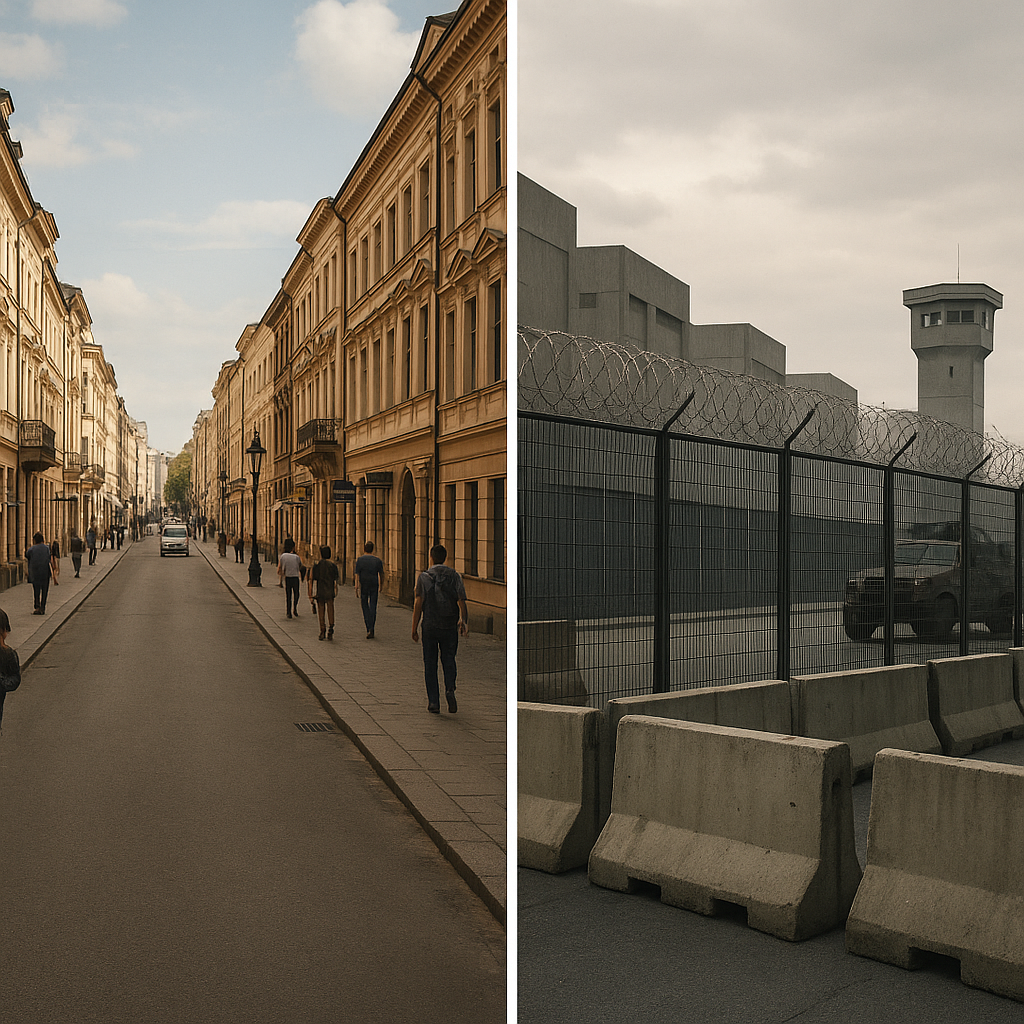
A 30-second video of Orania went viral, sparking debate on safety, exclusion, and self-governance in South Africa.
A short video from Orania, a unique Afrikaner town in South Africa, unexpectedly went viral. It showed a peaceful street scene, sparking a huge online debate about safety and privilege. People compared Orania's calm to the high-security living in other parts of the country, making many wonder if Orania's way of life could offer solutions to safety problems. This little town, with its own rules and money, stirred up a big conversation across the nation.
What is Orania?
Orania is a private, self-governing Afrikaner-only town located in South Africa's Northern Cape. It operates with its own currency, infrastructure, and community rules, aiming to preserve Afrikaner culture and language. The town emphasizes self-sufficiency and a strong sense of community safety through unique local governance and social structures.
Get Cape Town news in your inbox
Stay updated with the latest stories from the Mother City.
1. The Clip That Broke the Timeline
Frans de Klerk woke up on 27 May 2026, aimed his phone down the unremarkable asphalt of Kerkstraat, and pressed record for twenty-seven seconds. The caption - “Hoe ry julle werk toe?” - was equally casual. He logged off and went to breakfast. By the time he rinsed his cup the post had already eclipsed three million views, mutated into TikTok duets, and soundtracked YouTube explainers.
The footage showed nothing cinematic: two cyclists drifting past trimmed verges, a bakkie easing from a driveway, an elderly woman flicking dust from her stoep. Yet every frame was notable for what it omitted - no electric fencing, no motion-activated spotlights, no grim plaque promising “Hier word geskiet.” The silence felt louder than a drum kit.
The contrast detonated in the comment thread. A Gauteng estate agent uploaded a still of his own street - four-metre walls crowned with rotating spikes - and lamented, “R3 800 a month in levies just so I can live in a cage.” The jolt of envy, more than any political slogan, rocketed the clip beyond partisan corners into the nation’s mainstream feed.
2. Where on Earth Is Orania?
Head south-east from Kimberley for ninety minutes, drift north-east from Bloemfontein for the same stretch, and you will strike a horseshoe bend in the Orange River. There, on 8 000 hectares once dismissed as marginal sheep country, sits Orania. Co-ordinates: 29° 48′ S, 24° 24′ E. Population: 3 000 permanent, 7 000 if you count seasonal workers and district students.
Pay for a cold drink and you will receive the Ora - polymer notes backed one-for-one by rand deposits at the local Koöperatiewe Bank. Inflation since launch: 1,9 % versus the national 4,8 %. The land belongs to Vluytjeskraal Aandeleblok, a private company; residents buy shares and then vote for a council under the Northern Cape’s municipal code. Eskom sells the kilowatts, but the town maintains its own wires. Water rises from an underground aquifer; sunlight meets a 2-megawatt array and drives the daytime load.
A first-time visitor scans for drama and finds only the everyday. The BP canopy is the same royal blue as any other. Inside the Spar, Ouma rusks sit on the same shelf. Yet Afrikaans alone appears on street-name plates; municipal bakkies sport olive livery and the old Transvaal crest; every noticeboard ends with “God seen die Orania Gemeenskap.” The quirks are quiet, unmissable.
3. Four Solid Struts Under the Notion of Safety
3.1 Scrubbed Kerbs and Painted Stones
Each Saturday residents in neon bibs sweep gutters, repaint kerbstones, and trim oleanders that could hide an intruder. The act is optical as much as practical - the loudest message is “We keep our own streets.”
3.2 Wallet-Backed Discipline
Because the town prints its own vouchers it can dock fines straight from the Koöperatiewe Bank. Scrawling graffiti costs a flat 150 Ora, payable only from wages earned inside the enclave. The ledger is printed weekly and tacked to the library door.
3.3 One Road In, One Road Out
A single public lane and one gravel track enter Orania. Cameras read licence plates; visitors fetch a paper slip at the boom and must be signed out by a resident. The setup is low-tech, but the funnel is narrow.
3.4 Culture as Constable
Two police reservists split 22 patrol hours each week, yet the larger force is reputational. Everyone already knows whose son lobbed a stone or whose uncle staggers home too late. The stiffest penalty is civic shaming; the ultimate sanction is forfeiting company shares.
4. Fires Outside the Fence
Twitter erupted, trench warfare style. A Johannesburg account posted two aerials - Orania’s open verges and Alexandra’s corrugated alleys - captioned “Same country, different planets.” The EFF’s infrastructure commissar retorted, “Apartheid 2.0 in daylight.” Within minutes rival maps appeared: one tracing Orania’s lone boom, another counting 23 private checkpoints ringing Sandton.
Geographers waded in, noting South Africa’s Gini coefficient of 0,63 makes intra-town inequality almost unavoidable; Orania, they said, merely pushes poverty outwards. Economists from Stellenbosch countered: per-capita income here is R14 000, below the national mean, yet earned inside the fence rather than through grants or remittances.
The debate sprawled into the small hours. Each statistic arrived bundled with fresh sarcasm, each image paired with its ideological twin. The feed never slept; the line between envy and indictment blurred with every scroll.
5. What Might Travel Beyond the River Bend
Urbanists argue the Orania recipe can survive only in micro-doses - co-operative hamlets of 300–500 households that self-fund water, power, and waste. A pilot already runs in Limpopo: Hananwa Cooperative Village outside Polokwane. After eighteen months it boasts a self-built sewer-biogas digester and burglary rates 60 % below baseline. Gatekeeping is a quarterly assembly conducted in Sepedi with Afrikaans translation.
Meanwhile, Frans de Klerk still answers queries on the original thread. “Yes, we pay VAT on every Ora transaction.” “Black electricians can tender, they just can’t overnight here.” “Gates shut at 22:00, but residents carry transponders.” A Joburg father uploads footage of his kids behind electrified bars and types one stark Afrikaans word: “Jaloers.” The thread scrolls on, the dust on Kerkstraat barely settled, the conversation louder than any siren.
What sparked the viral debate about Orania?
A short, 27-second video filmed by Frans de Klerk on Kerkstraat in Orania, showing a peaceful street scene with two cyclists, a bakkie, and an elderly woman, unexpectedly went viral. The casual caption, "Hoe ry julle werk toe?" (How do you drive to work?), contrasted sharply with the high-security living prevalent in other parts of South Africa, leading to widespread online debate about safety and privilege.
What is Orania and where is it located?
Orania is a private, self-governing Afrikaner-only town in South Africa's Northern Cape. It's situated on an 8,000-hectare plot at a horseshoe bend in the Orange River, approximately 90 minutes southeast of Kimberley or northeast of Bloemfontein. The town aims to preserve Afrikaner culture and language, operating with its own currency (the Ora), infrastructure, and community rules, emphasizing self-sufficiency and local safety.
How does Orania maintain its unique sense of safety?
Orania maintains safety through four key mechanisms: community upkeep (residents regularly clean and maintain public spaces, sending a message of collective ownership), financial discipline (fines are directly deducted from wages earned within the enclave via the Koöperatiewe Bank and its Ora currency), controlled access (a single public road and one gravel track with cameras and a visitor sign-out system), and strong social cohesion (reputational pressure and civic shaming act as primary deterrents, with residents knowing each other and formal police presence being minimal).
What is the "Ora" and how does Orania manage its economy?
New residents must hold a share in a private company (Vluytjeskraal Aandeleblok) that owns the land, and then vote for a council under the Northern Cape’s municipal code. The "Ora" is Orania's local currency, polymer notes backed one-for-one by rand deposits at the local Koöperatiewe Bank. This system has contributed to a lower inflation rate (1.9%) compared to the national average (4.8%). While Eskom supplies electricity, the town maintains its own wires, and water comes from an underground aquifer, supplemented by a 2-megawatt solar array for daytime power.
What were some of the reactions and criticisms to Orania's viral video?
The viral video sparked intense debate, with many comparing Orania's calm to the high-security environments elsewhere in South Africa, often with envy. Critics, including the EFF's infrastructure commissar, labeled it "Apartheid 2.0." Geographers and economists noted that while Orania's per-capita income is below the national average, its self-contained economy highlights broader issues of inequality in South Africa. The debate often blurred the lines between envy and indictment, reflecting deep-seated societal divisions.
Can Orania's model be replicated in other communities?
Urbanists suggest that Orania's model for self-sufficiency and safety might be viable in micro-doses, specifically in co-operative hamlets of 300-500 households that can self-fund essential services like water, power, and waste management. An example is the Hananwa Cooperative Village in Limpopo, which has successfully implemented a self-built sewer-biogas digester and reported a 60% reduction in burglary rates. The emphasis is on community-led initiatives and local governance, with gatekeeping often managed through regular community assemblies.

Amanda Wilson is a Cape Town-born journalist who covers the city’s evolving food scene for national and international outlets, tracing stories from Bo-Kaap spice shops to Khayelitsha micro-breweries. Raised on her grandmother’s Karoo lamb potjie and weekend hikes up Lion’s Head, she brings equal parts palate and pride to every assignment. Colleagues know her for the quiet warmth that turns interviews into friendships and fact-checks into shared laughter.
View all articles →