
Watch: Whale and her calf glide through Bloubergstrand waters
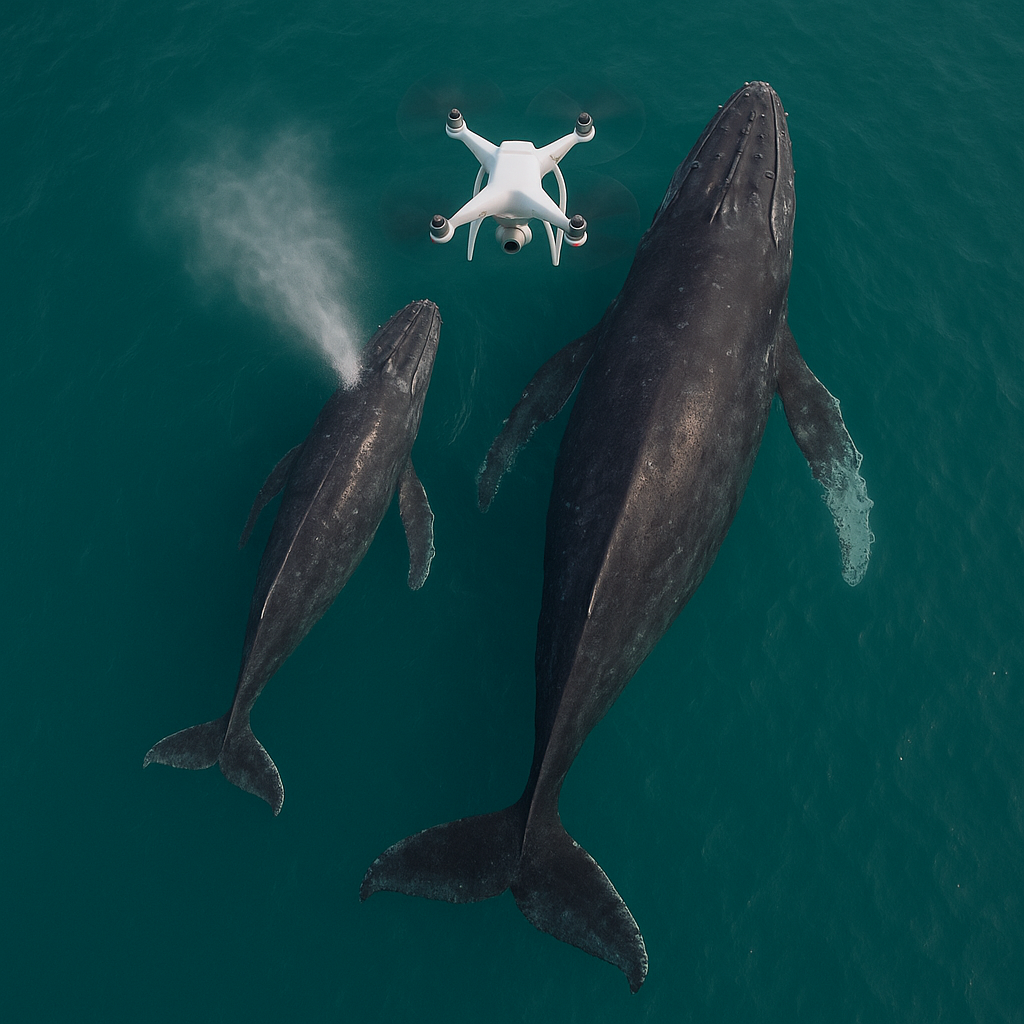
Explore Cape Town's incredible floating nursery for southern right whales. This drone's-eye guide reveals their recovery & best viewing spots.
Cape Town's waters are a special 'nursery' for southern right whales. These gentle giants, once hunted almost to extinction, now return yearly to calve and raise their young. Drones and keen observers capture their amazing comeback story. It's a natural wonder where baby whales grow big and strong, safe from harm.
Where do southern right whales calve in South Africa?
Southern right whales calve in the shallow, protected waters along South Africa's southwest coast, primarily between Cape Columbine and Cape Agulhas. Key locations include Table Bay, False Bay, and the Overberg region, offering warm temperatures, food, and safety from predators for their newborns.
Get Cape Town news in your inbox
Stay updated with the latest stories from the Mother City.
1. A Quiet Sunday That Reset the Clock
At eight-thirteen on a breath-still winter Sunday, Donovan Henry flicked a palm-sized quadcopter into the sky above Bloubergstrand’s dune parking. The Atlantic mirrored glass, Table Mountain scrubbed clean by a night-long southeaster. Within minutes the live feed revealed two charcoal outlines gliding at strolling speed, their V-shaped spouts hanging like silver exclamation points. Every Capetonian recognises the signature: a 15-metre southern-right matriarch and her four-metre calf nosing through water barely deeper than their tail width. Henry’s 164-second clip hit social media before his coffee cooled; by sunset it had swept past 1,3 million views. Yet the tale began centuries earlier, inked in blubber and barnacles rather than pixels.
The spectacle is annual, but each year feels like the first. Mothers round the Cape of Storms in May, hugging the 30-metre depth contour as if it were a handrail. They stay until early December, long enough for a newborn to treble its weight on milk thicker than double cream. The drone’s eye simply magnifies a drama that has been running since commercial harpoons went quiet in 1935.
What Henry captured was more than luck; it was the intersection of wind, tide and a species that recovered from virtual oblivion. The next sections unpack how the whales choose these addresses, and how you can repeat his morning without plagiarising nature’s script.
2. From Oil Casks to Instagram – The Rebound of the “Right” Whale
Colonial whalers labelled them the “right” quarry: slow, shore-hugging, buoyant once dead, and dripping barrels of oil plus corset-grade baleen. By the mid-1930s the southern herd was written off at fewer than a hundred animals. Global protection that same year threw them a lifeline; today the population tops 12 500 and climbs seven per cent yearly - one of conservation’s least-sung comebacks.
South Africa’s south-west corner is the epicentre of that revival. Each austral winter, close to a thousand cows pause between Cape Columbine and Cape Agulhas to calve in water warm enough for infants born with almost no insulation. The return journey to Antarctic feeding grounds is a 4 000-kilometre gamble completed on an empty stomach, yet the gamble pays off more often than not.
The whales’ trust in the Cape is hard-won. Orcas - their only natural foe - rarely patrol the shallow shelf, and the narrow continental margin means deep water is reachable in minutes should danger appear. In effect, Table Bay and False Bay have become open-air nurseries where a calf can practise breathing every three minutes without becoming breakfast.
3. Physics of a Liquid Crèche – How 80 kg a Day Happens
Southern rights are capital breeders: they eat nothing while lactating, instead milking the savings account laid down in krill-rich latitudes. A calf piles on roughly 80 kg daily - equivalent to a large Labrador - on a milkshake that is 45 % fat, triple the richness of whipping cream. The continental shelf’s 15- to 30-metre depth band keeps thermoregulation costs low and predators at bay.
Calories alone don’t explain the location; optics matter too. Cape Town’s infamous southeaster, loathed in summer for sandblasting beachgoers, becomes midwinter’s cinematographer. When it blows 15–20 km/h from the east, it peels back swell, turning the bay into a polished lens. Add a high-pressure cell above 1 020 hPa and the whale’s exhal becomes a back-lit silver plume visible five kilometres away - a drone pilot’s dream and a TikTok algorithm’s darling.
The calf’s surfacing rhythm is keyed to lung volume, not show business. Still, the predictable eight-to-twelve-minute cycle gifts land-bound observers repeatable, cinematic cameos. Mother, meanwhile, occasionally lifts the base of her tail, a hydrodynamic brake that keeps her in the infant’s slipstream without burning precious blubber.
4. Your Turn to Frame the Spout – A Mile-by-Mile Seasonal Metro Map
Forget random spots; picture the coast as a four-branch railway where whales clock in on schedule.
- West-Coast Line (cold, nutrient-rich)*
Langebaan’s mouth registers first cows in late May, numbers peaking August. The lagoon is too shallow, so calves loaf outside the inlet where depth suddenly drops to 12 m. Yzerfontein’s 16-Mile-Beach gives 30-metre sight-lines from vegetated dunes; light turns golden after 2 p.m. when the sun drops behind you.
Doringbaai’s pocket harbour is the only place where rights occasionally cruise between trawlers, lured by kelp shade on glass-calm afternoons.
- Table-Bay Arc (the postcard stretch)*
Blouberg remains the drone capital - easterly winds push surface water offshore, flattening the sea. Melkbosstrand adds low-angle dawn light; cows often shadow the invisible plume of the Koeberg nuclear station’s warm-water outlet. Further south, the shipping lane is merely a corridor - watch for container ships posting “whale on bow” selfies rather than nursery action.
Robben Island’s lee side is kayaker territory; mothers nap in wind shadow, but permits are required and engines are banned.
- Peninsula Loop (False Bay maternity ward)*
Boyes Drive is the original amphitheatre: cliff-top lay-bys BP4 and BP7 place you eye-level with whales 200 m below. Clovelly Corner hosts a submarine canyon within 400 m of shore; upwellings trap plankton, pinning cows to a predictable two-kilometre loop for days.
Simon’s Town waterfront is stroller-friendly; park at the rail station and stroll Jager’s Walk where morning backlight turns blows into miniature rainbows.
- Overberg Express (east-of-the-bay lingerers)*
Clarence Drive (R44) threads between mountain and 80-metre drop-offs; cows use the 30-metre contour as an underwater GPS. Betty’s Bay penguins perfume the air with anchovy, tempting curious calves.
De Hoop Reserve offers the five-day Whale Trail; hikers sleep in cottages within earshot of a hundred cows at peak season. In still nights at Arniston, limestone cliffs magnify the exhal into a distant steam-train hoot - history’s echo when the same sound meant profit, not wonder.
5. Field Etiquette and the Cameo Cast – How Not to Be That Visitor
South African law forbids encroaching within 300 m of a cow-calf pair by boat, drone or fin-power. Henry’s Blouberg clip was shot at 250 m horizontal and 120 m altitude - legal but borderline. Rule of thumb: launch from land, stay 60 m above the animal, keep the sun at your back to avoid prop-shadow stress, and land within eight minutes to spare the bay the angry-bee soundtrack.
If a whale suddenly hurls its flukes skyward and reverse-arches, you have crossed the line; power off and retreat. Better yet, log the sighting on the free “SeaKeys: Spot a Whale” app. Your GPS pin and time-stamp feed straight into the University of Pretoria’s Whale Unit, tightening population models and nudging shipping lanes when traffic overlaps with nurseries.
While you wait, scan the co-stars: Heaviside’s dolphins will surf your kayak wake; fur-seal bulls breach like portly torpedoes; Mola mola sunbathe beyond the backline, attended by albatross. If every blowhole suddenly vanishes, look for the tall, monochrome dorsal of the CAPE-8 orca pod - transient hunters that silence the bay quicker than a power cut.
Pack 10×42 binoculars and a circular polariser to cut glare. Arrive thirty minutes before civil sunrise; low-angle light turns the slightest spout into a searchlight. Listen as hard as you watch: on still days the exhal carries two kilometres, a hollow “whoof” like a giant champagne cork. Hear it once, sweep thirty degrees either side; an eight-minute timer is now running for the next act.
The season closes in December when the last juveniles pirouette eastward. By March the same whales will be glutting on ice krill south of 42 °S, their metabolic engines reversing from nursery to larder. Somewhere off Antarctica a calf born in Cape Town waters is practising its first breach, already imprinted with the magnetic flavour of the African margin. When it returns at age four, another dawn jogger will pause, another phone will tilt, and the cycle - old as oil casks, fresh as a newsfeed - will begin again.
What makes Cape Town's waters a special 'nursery' for southern right whales?
Cape Town's waters are a special 'nursery' for southern right whales because they provide shallow, protected areas with warm temperatures, abundant food, and safety from predators. These conditions are ideal for mothers to calve and raise their young, allowing the calves to grow big and strong before their journey to Antarctic feeding grounds.
When do southern right whales typically visit Cape Town's waters?
Southern right whales typically visit Cape Town's waters annually, with mothers rounding the Cape of Storms in May. They stay until early December, giving birth and nursing their calves. This period allows newborns to treble their weight on their mother's milk, which is exceptionally rich.
How did southern right whales recover from near extinction?
Southern right whales were once hunted almost to extinction due to their slow, shore-hugging nature, buoyancy after death, and high yield of oil and baleen. By the mid-1930s, their population dwindled to fewer than a hundred animals. Global protection enacted in 1935 provided a lifeline, and today, their population has rebounded to over 12,500, growing at about seven percent annually, making it one of conservation's great success stories.
What are some key locations for whale watching around Cape Town?
Key locations for whale watching around Cape Town include the West-Coast Line (Langebaan, Yzerfontein), the Table Bay Arc (Bloubergstrand, Melkbosstrand), the Peninsula Loop (Boyes Drive, Clovelly Corner, Simon's Town), and the Overberg Express (Clarence Drive, Betty's Bay, De Hoop Reserve). These areas offer diverse viewing experiences, from cliff-top observations to drone photography opportunities.
How much weight does a southern right whale calf gain daily?
A southern right whale calf gains approximately 80 kg daily, which is equivalent to the weight of a large Labrador. This rapid growth is fueled by their mother's milk, which is incredibly rich, containing about 45% fat, three times the richness of whipping cream. Mothers do not eat while lactating, relying instead on energy reserves built up in krill-rich Antarctic waters.
What are the regulations for observing southern right whales in South Africa?
South African law prohibits approaching within 300 meters of a cow-calf pair by boat, drone, or fin-power. For drone operators, it is recommended to launch from land, stay at least 60 meters above the animal, keep the sun at your back to minimize disturbance from prop-shadow, and limit flight time to eight minutes. Observers are also encouraged to log sightings using the 'SeaKeys: Spot a Whale' app to contribute to research and conservation efforts.

Hannah Kriel is a Cape Town-born journalist who chronicles the city’s evolving food scene—from Bo-Kaap spice routes to Constantia vineyards—for local and international outlets. When she’s not interviewing chefs or tracking the harvest on her grandparents’ Stellenbosch farm, you’ll find her surfing the Atlantic breaks she first rode as a schoolgirl.
View all articles →