
Western Cape proposes actions to improve Port of Cape Town efficiency
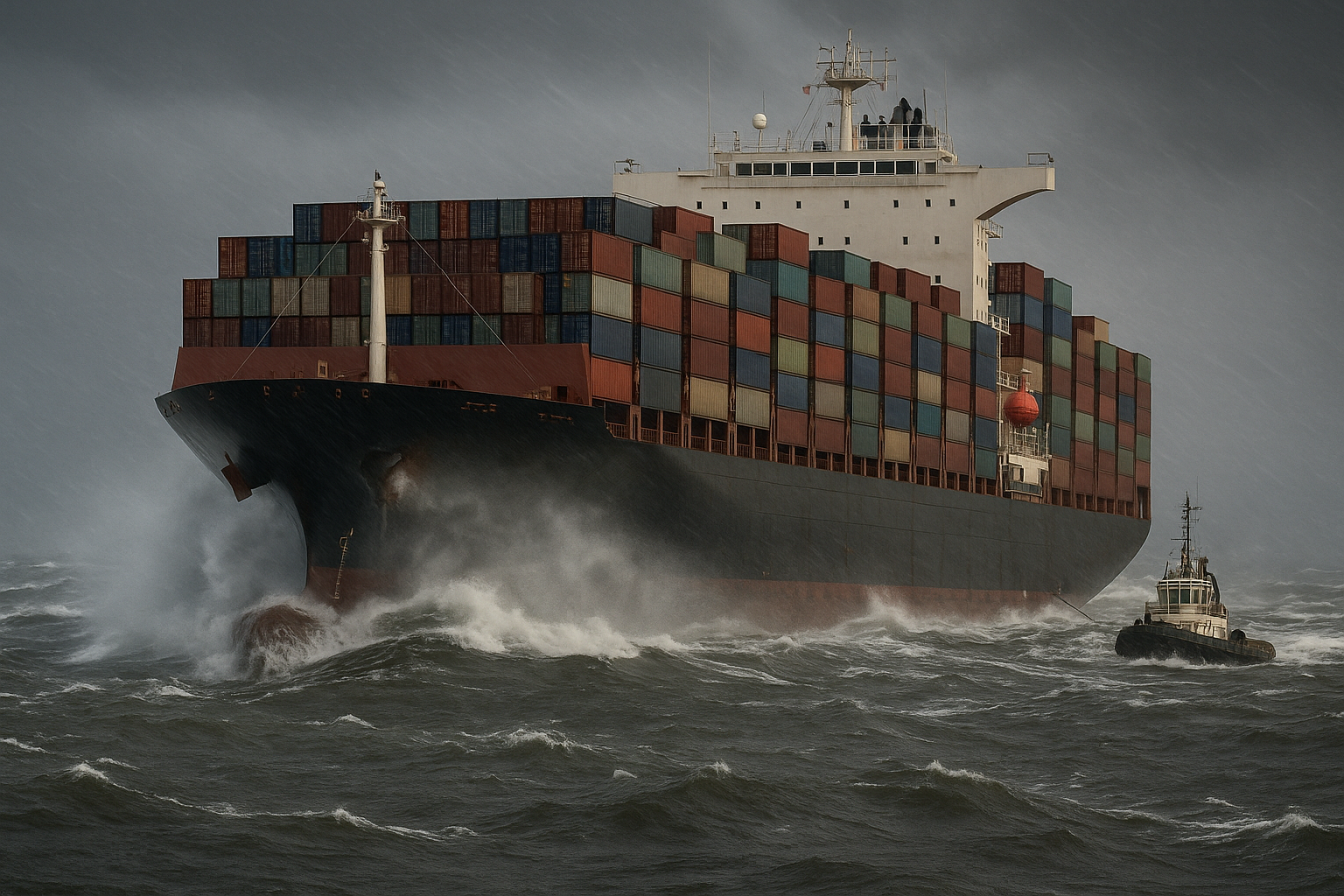
Cape Town's port ranks 400th globally, crippling SA's exports. Discover the shockwaves and innovative plans to revive its crucial role.
Cape Town's port is in big trouble, officially the worst in the world! Strong winds, crowded spaces, and slow cranes make ships wait forever. This hurts farmers, puts billions in fruit exports at risk, and threatens thousands of jobs. But, there's a plan filled with smart tech, new fences to fight the wind, and better power for cold storage. They're all hoping to make the port fast and save South Africa's fruit business.
What is the main problem facing Cape Town's port?
Cape Town's port faces severe inefficiencies, ranking last among 400 harbours globally due to gale-force winds, congested stacking yards, and slow crane operations. These issues cause significant delays for vessels, jeopardize R62 billion in fruit exports, and threaten 192,000 jobs in South Africa's Western Cape region.
Get Cape Town news in your inbox
Stay updated with the latest stories from the Mother City.
1. The Morning That Exposed the Crisis
A thick autumn mist still clung to the Atlantic when the MSC Palak eased past the breakwater at 04:43. To the casual observer, the 337-metre box-ship looked like any other blue-hulled caller carrying citrus, berries and a last-minute cargo of abalone. Inside the control tower, however, a red ring on the digital dashboard told a different story: berth occupancy for this lone vessel was forecast at ninety-six hours and change - roughly twice the global benchmark for a ship her size.
Cape Town’s port authorities had seen dozens of similar warnings in the previous twelve months. The system had already logged 96 vessels since the 2026 financial year began, and Palak - call sign Z-D-G-K - was merely the 97th reminder that something fundamental had broken.
What the tug masters did not know was that the World Bank’s soon-to-be-published Container Port Performance Index 2025 would crown Cape Town dead-last among 400 harbours. Even battered Pacific micro-atolls and terminals scarred by conflict had outranked the mother city’s maritime gateway.
2. A Score the World Can’t Ignore
Behind the wooden-spoon ranking sits a brutally simple spreadsheet. The World Bank’s analysts divide the elapsed time between a pilot boarding and the last container leaving by every single box handled. They then blend in crane density, weather black-outs and labour stoppages before spitting out a single number. Cape Town tallied 47 out of 100 - slow enough to look like a malfunctioning slide show.
Three gremlins dominate the regression. First, gale-force winds sweeping in from the Southern Ocean stall cranes for one working hour in every nine, the worst ratio outside the North-Sea storm belt. Second, the stacking yard resembles a Tetris grid at 92 % capacity, so incoming fruit reefers often compete for the same plug the outgoing lot still occupies. Third, the ship-to-shore cranes average a lethargic 18,6 moves per hour - half Durban’s Pier 2 rate and barely one-third of Jebel Ali’s pace.
Load-shedding, copper theft on the railway spur and union rules that forbid more than two-thirds of daytime crane drivers working at night complete the gridlock cocktail. The result is a terminal that feels stuck in a permanent dawn.
3. The R62-Billion Fruit Pipeline at Risk
Western Cape farmers export 3,2 million tonnes of produce each year - grapes, apples,, pears, citrus and line-caught seafood - earning the country R62 billion in hard currency. That figure eclipses both Gauteng’s vehicle exports and KZN’s automotive hubs combined. One in every four farm labourers in the province depends on this harvest making its ship on time.
Each extra twenty-four hours in port triggers a cascade of pain. Demurrage and additional plug fees add US$1,4 million per delayed vessel. Inside the containers, pulp temperature creeps up by roughly 0,7 °C, pushing eleven percent of pallets past supermarket shelf-life thresholds. Downstream ports in Rotterdam and Southampton then delay discharge windows by another two days, handing a marketing edge to rival growers in Peru and Chile.
Put simply, the port’s lethargy is not a logistics hiccup; it is an existential threat to 192 000 jobs and a provincial export economy that prides itself on tasting the world’s breakfast tables.
4. Data, Wind-Fences and the 52-Hour Moon-Shot
4.1 Digital Twins & Micro-Optimisation
The provincial government has spent two years feeding AIS pings, gate scans and TOS updates into a real-time digital twin. Monte-Carlo simulations of this “ghost port” have already trimmed average dwell time by one-third in 2026. A mundane example: unlocking the back gate half-an-hour earlier rescued twenty-six truck minutes per round-trip and freed 180 reefer slots before midnight. Another tweak - steering ships via the north-west traffic-separation lane during Cape Doctor days - promises an eight percent cut in gust-related crane stops.
4.2 Four Poles of Reform
Officials now travel to Washington in October 2026 with 1,2 billion rows of raw data. The ask is modest: bake wind-rose curves, plug-scarcity functions and the province’s lopsided 62 % export reefer mix into next year’s CPPI formula and give Cape Town the same “typhoon discount” East Asian ports enjoy.
Back home, Transnet carries a wish-list worth R4,3 billion. Treasury will release the cash only if cranes break 25 moves per hour for ninety consecutive days. The province sweetens the pot: meet the target and the Western Cape will absorb 35 % of TNPA’s interest bill, using leftover Covid-era coffers. Night-shift gantry caps are also being nudged from 65 % to 82 % after marathon CCMA talks.
4.3 Private Muscle
Port users have formed the Cape Town Port Users’ Alliance, pooling volumes six months in advance and pre-paying for reefer slots. Members can reclaim slot fees when service-level agreements collapse. They have even crowd-funded a R120 million pop-up inland terminal at Kalbasfontein, 36 km away, where boxes are chilled to –1 °C before convoying in after dark, effectively creating a virtual yard.
5. Wind, Power and Labour - The Physics of Change
5.1 Taming the South-Easter
Cape Town’s 2,1 km North Jetty, built in 1938, funnels wind straight onto the quay. Two fixes are on the drawing board. A 14-metre porous wind-screen, borrowed from Bilbao’s playbook, could cut gust stoppages by 42 %. Alternatively, the three highest container stacks could be relocated to a bonded depot at Montague-Gifts, reached by an under-used Cape-Gauge spur, slicing wind resistance and lowering yard density to 78 %.
5.2 The Electricity Trilemma
Only 2 086 reefer plugs serve a peak demand of 2 486 during grape rush. Transnet’s answer is a 3,6 MWh lithium-iron-phosphate micro-grid topped up by 6 MW of rooftop solar. During load-shedding stages 1-4 the battery bank can keep 1 450 reefers alive for four hours, bridging Eskom’s 19:00–23:00 blackout slot. Old Mutual’s Infrastructure Debt Fund owns 30 % of the R530 million scheme, with the city’s new Green-Ports SPV guaranteeing availability payments.
5.3 Labour’s Fork in the Road
The 1 600-strong Cape Town Terminal Workers’ Union has accepted a productivity bonus worth up to 28 % of wages, contingent on cranes sustaining 23,5 moves for ninety consecutive shifts. Automation will stay “semi-automatic,” preserving 540 driver positions. In exchange, Transnet secures a thirty-month no-strike clause, covering the next two citrus seasons and giving investors breathing space.
6. Beyond the Breakwater - A Province Holds Its Breath
If the cocktail of digital twins, wind-fences, battery-backed reefers, hybrid concessions and inland cool-logistics parks delivers on the optimistic curve, the Cape Town of 1 July 2028 could look radically different. Ship agents would quote 52-hour port stays for 9 000-TEU vessels, night-shift gangs would notch 27,8 crane moves per hour, zero reefers would queue for power, and no export fruit would detour to Durban or Ngqura.
Every hour sliced off the clock pumps an extra R22 million into South Africa’s current-account and creates 42 direct cold-chain jobs within the province. A 44-hour saving therefore translates into roughly R1 billion and 1 800 newly employed young people - numbers that matter in a region where one in three school-leavers still cannot find work.
Whether Cape Town leaps from 400th to inside the CPPI’s top 100 is ultimately a bet on execution. What is no longer in doubt is that South Africa’s ambition to push non-mineral exports from 27 % to 35 % of GDP by 2030 stands or falls on the docks beneath Table Mountain.
[{"question": "What are the main issues contributing to Cape Town's port inefficiency?", "answer": "Cape Town's port suffers from several critical issues, including gale-force winds that halt crane operations, severely congested stacking yards operating at 92% capacity, and exceptionally slow ship-to-shore crane operations, averaging only 18.6 moves per hour. Additionally, load-shedding, copper theft affecting railway spurs, and union rules limiting night-shift crane drivers exacerbate the gridlock, making it the worst-performing port globally."}, {"question": "What is the financial impact of the port's inefficiencies on South Africa's fruit exports?", "answer": "The port's inefficiencies place R62 billion (approximately US$3.3 billion) in annual fruit exports at significant risk. Delays result in US$1.4 million in demurrage and additional plug fees per delayed vessel. More critically, the extended time in port increases pulp temperature in containers, pushing 11% of fruit pallets past their marketable shelf-life and causing further delays at downstream ports. This situation threatens 192,000 jobs in the Western Cape region and undermines the province's export economy."}, {"question": "What technological and infrastructural solutions are being implemented to improve port performance?", "answer": "Cape Town is implementing advanced solutions including a 'digital twin' of the port for real-time simulations and micro-optimisation, which has already reduced average dwell time by one-third. Plans also include constructing a 14-meter porous wind-screen to reduce wind-related stoppages by 42%, relocating container stacks to decrease yard density, and developing a 3.6 MWh lithium-iron-phosphate micro-grid with 6 MW of rooftop solar to ensure continuous power for reefer plugs. Additionally, a pop-up inland terminal has been crowd-funded to pre-chill boxes and alleviate yard congestion."}, {"question": "How are stakeholders collaborating to address the port's challenges?", "answer": "The provincial government is actively seeking international recognition for its unique challenges, aiming for a 'typhoon discount' in the CPPI formula. Transnet has a R4.3 billion wish-list for improvements, with the province offering to absorb 35% of Transnet National Ports Authority's interest bill if productivity targets are met. Port users have formed the Cape Town Port Users' Alliance to pool volumes, pre-pay for reefer slots, and fund an inland terminal. The Cape Town Terminal Workers' Union has also agreed to a productivity bonus structure and a 30-month no-strike clause in exchange for preserving driver positions and semi-automation."}, {"question": "What are the targets for improved port efficiency and their potential economic benefits?", "answer": "The goal is to achieve a 52-hour port stay for 9,000-TEU vessels and increase night-shift crane moves to 27.8 per hour. If successful, these improvements could add an extra R22 million (approximately US$1.2 million) to South Africa's current account and create 42 direct cold-chain jobs for every hour saved. A 44-hour saving would translate to roughly R1 billion (approximately US$54 million) and 1,800 new jobs, significantly boosting the region's economy and supporting South Africa's ambition to increase non-mineral exports."}, {"question": "What is the World Bank's Container Port Performance Index (CPPI) and how does Cape Town rank?", "answer": "The World Bank's Container Port Performance Index (CPPI) measures the efficiency of container ports worldwide by evaluating the elapsed time between a pilot boarding a vessel and the last container leaving, considering factors like crane density, weather disruptions, and labor stoppages. Cape Town was ranked dead-last among 400 harbours in the CPPI 2025, scoring a mere 47 out of 100, highlighting its severe operational challenges compared to other global ports."}]

Chloe de Kock is a Cape Town-born journalist who chronicles the city’s evolving food culture, from township braai joints to Constantia vineyards, for the Mail & Guardian and Eat Out. When she’s not interviewing grandmothers about secret bobotie recipes or tracking the impact of drought on winemakers, you’ll find her surfing the mellow breaks at Muizenberg—wetsuit zipped, notebook tucked into her backpack in case the next story floats by.
View all articles →