
Western Cape provides free vehicle safety checks ahead of school reopening
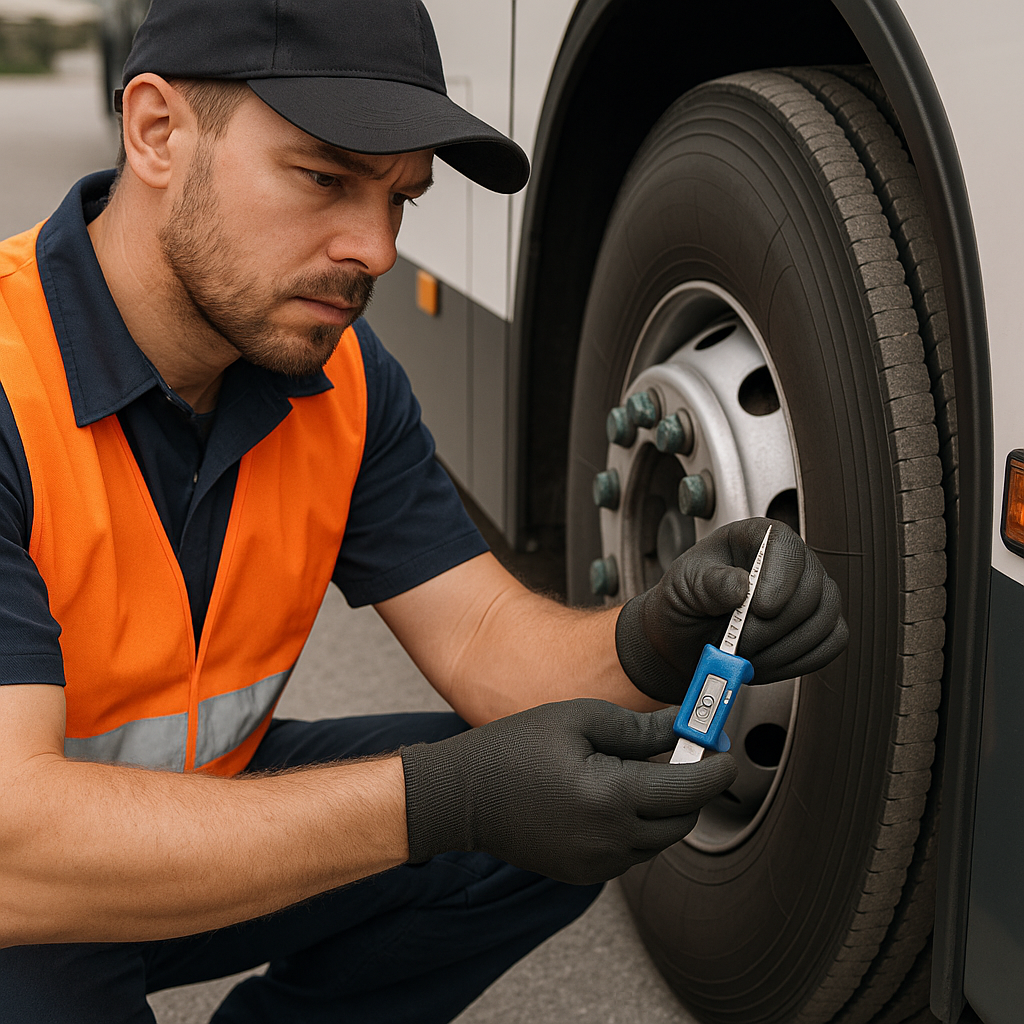
WCape offers free safety checks for scholar transport (taxis, vans, buses) in July 2026 to prevent accidents and save lives. Get a 37-point inspection, report, and discounts.
The Western Cape is making school transport super safe with free vehicle checks. They look at 37 things to find problems before they cause accidents. This helps kids stay safe and even gives drivers discounts for fixing things. This smart plan uses tech and even VR to show drivers why safety matters, making sure all school rides are the safest they can be.
What is the Western Cape's new initiative for school transport safety?
The Western Cape has launched a new initiative offering voluntary, free 37-point inspections for scholar and public transport vehicles. This program, focusing on preventative maintenance and driver education, aims to identify and rectify mechanical failures before they lead to accidents, enhancing safety for young passengers while supporting transport operators.
Get Cape Town news in your inbox
Stay updated with the latest stories from the Mother City.
A New Approach to Road Safety
Between 08:00 and 15:00 on 21, 22 and 23 July, holders of scholar-transport or public-transport permits can bring their vehicles to any of nineteen provincial centres scattered from Brackenfell's Gene Louw Traffic College to a modest traffic depot in Citrusdal. Each participant receives a comprehensive 37-point inspection completed within roughly fifteen minutes, roughly the duration of a coffee break. The process requires no advance booking, no priority fees and no immediate obligation to fix identified problems. Drivers depart with a colour-coded A4 document serving dual purposes: a detailed repair checklist and, where defects prove minor, documented evidence of due diligence for insurance providers and traffic officials.
This initiative distinguishes itself from typical roadside operations that conclude with little more than citations and financial penalties. Instead, the programme targets potentially lethal mechanical failures before vehicles ever reach the road, protecting young passengers while respecting the economic realities faced by transport operators.
The Science Behind the Inspection
The examination protocol mirrors a medical vital-signs assessment in its thoroughness and precision. Qualified traffic officers, each possessing an additional National Diploma in Vehicle Testing, execute the inspections using specialised equipment and rigorous standards. They elevate vehicles on portable jacks, employ mirror-tipped wands for undercarriage examination and insert miniature probes into exhaust systems to assess emissions.
Specific tolerances govern every assessment. Tyre tread must measure minimum 1 mm across three-quarters of the contact surface; inspectors photograph any deficiencies on tablets with automatic geotagging. Brake-fluid analysis employs pocket-sized refractometers to measure hygroscopicity, with water content exceeding 4 % triggering amber warnings. Laser stencils projected onto portable screens verify headlamp alignment, recommending recalibration when beam patterns deviate beyond 10 cm tolerance bands. CV boots undergo manual compression testing, with cracks opening wider than 0,5 mm constituting automatic failure. Shock-absorbers face depression testing via calibrated push-pull gauges, while wiper-blade rubber must withstand 180-degree flexing without retaining permanent deformation. Every procedure appears on laminated two-sided cards hanging from examiner lanyards, ensuring absolute consistency and eliminating subjective interpretation.
The selection of these particular components reflects hard data rather than arbitrary choice. Provincial crash statistics covering 2019 through 2025 reveal that 42 % of all minibus-taxi casualties on 80 km/h routes involved pre-existing defects in precisely these systems. A devastating tyre-burst incident on the R44 near Wellington in 2023 hospitalised twelve learners and catalysed the provincial cabinet's shift from annual road-worthiness certificates to voluntary twice-yearly pre-screenings. The July 2026 programme expands this pilot to provincial scale, strategically timing the intervention for the period when vehicles, hardened by holiday use, resume peak-load operations without the benefit of post-holiday workshop attention.
Community Collaboration and Smart Incentives
Municipalities throughout the province have reorganised operations to accommodate this ambitious undertaking. The AVTS station in Table View, typically booked weeks in advance, has suspended regular appointments for these three days. Swartland's Malmesbury depot operates dual-shift rotations, enabling vehicles from remote dairy and wheat farms to access inspections following early-morning delivery schedules. In Beaufort West, where long-distance taxi ranks experience lulls between 10:00 and 14:00, station management has transformed a disused caravan into a mobile rest facility featuring shade-netting and complimentary coffee from a local Spar donation. This accommodation serves strategic purpose: well-rested drivers demonstrate greater patience and lower abandonment rates when queues move slowly.
Financial incentives reinforce participation. Operators presenting pre-booked repair appointments at participating fitment centres qualify for 15 % discounts on parts purchased before 31 August. Bridgestone's Epping supply hub has stockpiled 1 200 entry-level 14-inch light-commercial tyres, with provincial treasury subsidies enabling replacement of tyres marked "unserviceable" during inspections at R150 below standard trade pricing. This model underwent successful testing in December 2025, when 2 300 taxis queued at the Wingfield facility. Subsequent telemetry demonstrated that 87 % of flagged tyres underwent replacement within ten days, dramatically exceeding the 34 % replacement rate observed without subsidy incentives.
Educational institutions assume active rather than passive roles in this ecosystem. The Western Cape Education Department incorporates QR codes onto 2026 fourth-term re-registration forms, enabling parents to verify whether their child's transport vehicle completed July safety checks. Scanning resolves to a live dashboard displaying green ticks for passed inspections, amber indicators for logged-but-rectified defects, and red warnings for unchecked vehicles. Transport brokers failing to elevate red statuses within thirty days face suspension from the Scholar Transport Scheme, a consequence that eliminated two small fleet operators from the programme last year, costing them R1,3-million annual contracts.
Technology, Psychology and Lasting Impact
Robust technological safeguards ensure programme integrity. Examiners wear continuously recording body-cameras, with encrypted footage archived for ninety days and available for subpoena during post-crash investigations. Number-plate recognition cameras at exit gates automatically populate provincial blockchain ledgers, preventing vehicles from obtaining duplicate "clean" reports at multiple stations. This system identified four taxis attempting exactly such manipulation in 2025 - hiding defective tyres with borrowed spares before seeking additional inspections - their permits subsequently referred for review.
Perhaps most innovatively, the programme incorporates psychological intervention. Industrial psychologists from Stellenbosch University conduct twenty-minute "nudge" sessions at Bellville station's mezzanine level while vehicles undergo inspection. Participants experience simulated 100 km/h tyre blow-outs through VR headsets, first with properly inflated tyres, then with 20 % under-inflation. Heart-rate monitors display physiological responses, with drivers witnessing their rates surge from 92 to 141 beats per minute. This visceral demonstration proves remarkably effective: early data indicate participants voluntarily check tyre pressure 2,4 times more frequently than control groups during the subsequent month.
Provincial treasury allocates R4,8 million for this three-day operation, roughly equivalent to resurfacing two kilometres of suburban roadway. Officials defend this expenditure through actuarial analysis: each fatal taxi crash costs the state R4,2 million in emergency response, healthcare and productivity losses. Preventing a single collision thus recoups the entire investment, quite apart from the immeasurable value of protecting young lives.
Weathering Challenges and Building Momentum
July presents meteorological challenges, ranking statistically as the Western Cape's wettest month, with aquaplaning incidents increasing 38 % on the N1 and N2. Examiners receive pop-up gazebos and IP67-waterproofed laser tread-depth gauges. Inspections proceed regardless of weather conditions, with drivers sheltering under cover while student volunteers, equipped with reflective umbrellas, ferry reports to kiosks where thermal printers generate results on water-resistant paper.
The initiative simultaneously functions as preparation for October's planned "National Transport Month," targeting 25 000 additional public-transport vehicles. July experiences generate crucial operational intelligence: optimal queue lengths, average processing durations, peak arrival patterns. These feed algorithms forecasting resource requirements for the October expansion. A digital replica of the Gene Louw facility, constructed on open-source traffic-simulation software, executes 10 000 Monte Carlo iterations nightly, refining variables including hoist availability, break scheduling and queue-abandonment probabilities when waits exceed forty-five minutes.
Sustaining momentum beyond initial publicity represents the greatest challenge. The department has secured agreements with four major insurers - Old Mutual, Santam, Hollard and Outsurance - to incorporate July inspection reports into no-claims bonus calculations. Vehicles receiving passing grades earn 2 % annual premium reductions, potentially saving R1 800 for sixteen-seater taxis. This mechanism transforms isolated events into ongoing incentives for safer practices.
Finally, consider the human element: examiners processing approximately 120 vehicles each over three days, kneeling on abrasive concrete, inhaling diesel fumes, their fingers stained by brake dust. Each carries citrus-based hand cleaner, knee-protectors crafted by prison inmates and reusable water bottles filled from coolers donated by BOS Ice Tea. Their compensation remains limited by overtime caps, yet their contribution proves invaluable - ensuring the province's most vulnerable travellers ride on tyres, brakes and steering systems validated by trained eyes and calibrated instruments rather than mere fortune.
What is the Western Cape's new initiative for school transport safety?
The Western Cape has launched a new initiative offering voluntary, free 37-point inspections for scholar and public transport vehicles. This program, focusing on preventative maintenance and driver education, aims to identify and rectify mechanical failures before they lead to accidents, enhancing safety for young passengers while supporting transport operators.
Where and when can transport operators get these inspections?
Between 08:00 and 15:00 on July 21, 22, and 23, permit holders can bring their vehicles to any of nineteen provincial centers, including locations from Brackenfell's Gene Louw Traffic College to Citrusdal. No advance booking is required, and the inspection takes approximately fifteen minutes.
What does the 37-point inspection involve?
Qualified traffic officers, with National Diplomas in Vehicle Testing, conduct thorough inspections. They use specialized equipment to check components like tire tread depth (minimum 1mm across three-quarters of the contact surface), brake fluid hygroscopicity (water content exceeding 4% triggers warnings), headlamp alignment (deviation beyond 10cm tolerance bands), CV boots (cracks wider than 0.5mm constitute failure), and shock absorbers. Deficiencies are photographed and geotagged, and drivers receive a color-coded repair checklist.
What are the benefits for transport operators who participate?
Operators receive a detailed repair checklist and, for minor defects, documented evidence of due diligence for insurance and traffic officials. Financial incentives include 15% discounts on parts for pre-booked repairs at participating fitment centers and subsidized replacement of unserviceable tires. Additionally, vehicles with passing grades can qualify for a 2% annual premium reduction on insurance from major providers like Old Mutual, Santam, Hollard, and Outsurance.
How does the initiative use technology and psychology to improve safety?
The program employs robust technology such as continuously recording body-cameras for examiners, number-plate recognition cameras linked to a blockchain to prevent duplicate reports, and QR codes on school registration forms for parents to verify vehicle safety checks. Innovatively, industrial psychologists from Stellenbosch University conduct VR-based "nudge" sessions where drivers experience simulated tire blow-outs, demonstrating the impact of under-inflation and increasing their awareness of safety practices.
How is the Western Cape ensuring the long-term success of this program?
The initiative is designed to be sustainable beyond the initial three-day period. It gathers crucial operational data for future expansions, such as the planned "National Transport Month" in October. Agreements with major insurers incorporate inspection reports into no-claims bonus calculations, providing ongoing financial incentives for safer practices. The program also highlights the dedication of examiners who work in challenging conditions, underscoring the human element vital to its success.

Thabo Sebata is a Cape Town-based journalist who covers the intersection of politics and daily life in South Africa's legislative capital, bringing grassroots perspectives to parliamentary reporting from his upbringing in Gugulethu. When not tracking policy shifts or community responses, he finds inspiration hiking Table Mountain's trails and documenting the city's evolving food scene in Khayelitsha and Bo-Kaap. His work has appeared in leading South African publications, where his distinctive voice captures the complexities of a nation rebuilding itself.
View all articles →