
Western Cape ramps up scholar transport safety measures following tragic crash
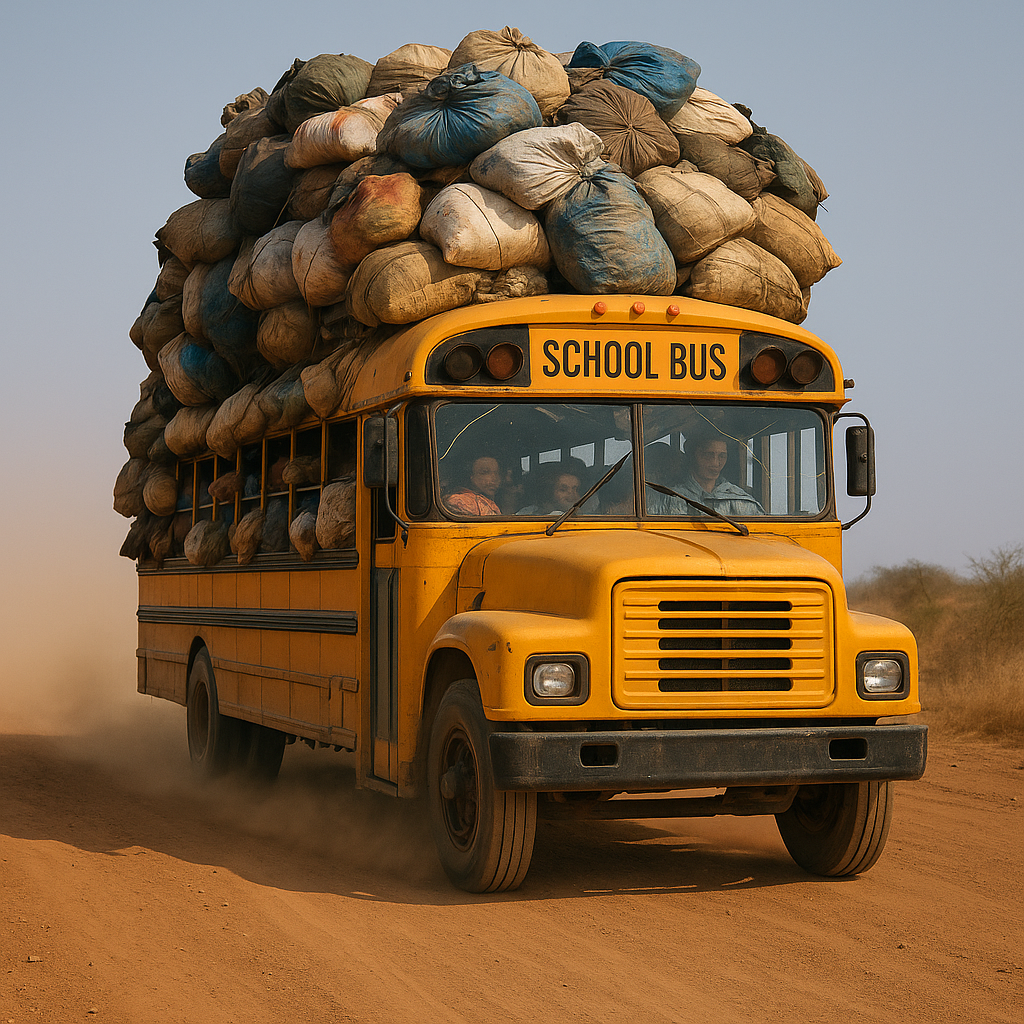
Unsafe scholar transport in South Africa: a crisis of overcrowding, unroadworthy vehicles, and illicit operations, now being tackled with integrated enforcement and tech solutions.
South Africa faces a dangerous 'scholar-transport fault-line' where kids are driven to school in unsafe, overloaded vehicles by unlicensed drivers. This happens because old rules for education and transport don't work together, creating chaos. After a terrible crash, people are trying new things like tech, parent watch groups, and even changing where schools are built. They want to make sure kids get to school safely, but it's a big, tough job.
What is the "scholar-transport fault-line" in South Africa?
The "scholar-transport fault-line" refers to the dangerous gap between education policy and transport law in South Africa, leading to unsafe school transport practices. This often involves overcrowded and unroadworthy vehicles, unlicensed drivers, and a lack of proper oversight, putting students at severe risk due to inadequate regulation and enforcement.
Get Cape Town news in your inbox
Stay updated with the latest stories from the Mother City.
Morning Mayhem on the Cape Flats
Outside a Cape Flats primary, the 07:30 bell is still twenty minutes away, yet the street already resembles a scraped-out parking lot. Quantum taxis sprawl across two lanes, triple-parked and winking their hazards like cheap disco lights. Mothers squint through steamed-up glass, ticking off heads while juggling handbags and juice boxes. A twelve-seater shuttle branded “Happy Angels” has inhaled twenty-three pupils; two boys share one metal tongue of a seat-belt, a girl perches on an upturned paint tin wedged between greasy toolboxes. The driver, cap tugged to his eyebrows, nurses a Red-Bull spiked with cane spirit; his licence died eight months ago and the left-front tyre has less tread than a hockey puck. No-one on the pavement realises the last valid roadworthy paper was stamped during the previous national administration. This scene, replayed with tiny variations outside thousands of South African schools, is the inglorious epicentre of what analysts now label “the scholar-transport fault-line.”
The tableau is more than colourful; it is lethal. Every overloaded row is a potential projectile, every bald tyre a promise of aquaplaning on winter asphalt. Yet parents wave goodbye because the alternative - no ride at all - feels worse. In the vacuum between education policy and transport law, the curb becomes a marketplace where safety is bartered for proximity and cash. The quantum idling in front of you might be licensed to carry bricks during the holidays; this morning it carries first-graders, and nobody has the jurisdictional map to stop it.
Meanwhile, the clock ticks. The driver drains the last of his sweetened cocktail, wipes his mouth with the back of his hand and slams the door. Twenty-three small voices quieten as the rolling sardine can lurches toward the intersection. In the rear-view mirror, the school’s roof disappears, and with it any illusion that the adult world has agreed on how to move its children safely through space.
The Crash That Refocused a Nation
On 10 January, near Vanderbijlpark, a privately hired minibus slipped off an embankment, flipped twice and caught fire. Four pupils died on the spot; nineteen others carry scars you cannot see. The headlines screamed “tragedy,” yet the event was not an outlier - it was a flare illuminating a battlefield that has smouldered since the mid-1990s. In Gauteng, the fatality rate for minibus commuter crashes already sits 34 % above the general road average; load those same shells with school uniforms and the number jumps to 51 %. The percentages, however, are only the headline. Beneath them lie torn ligaments, blazers shredded on tar, and the quiet erosion of household budgets when a single parent must suddenly find new wheels after an impound.
The Vanderbijlpark fireball yanked national attention back to a crisis that never left. Politicians who had filed scholar transport under “provincial competence” discovered that embankments do not respect portfolio boundaries. Radio talk-shocks filled mornings with outrage, but the numbers stayed put: every weekday, millions of kilometres are clocked by vehicles whose mechanical philosophies were designed for cargo, not kids. The crash did not invent the fault-line; it merely reminded the country that the ground had been shifting all along.
Western Cape planners realised early that the fracture sits between two silos - education budgets and transport enforcement - so accountability drops through the gap. Their 2023 “Safe Learner Mobility Framework” parked legal authority inside the Department of Mobility yet ring-fenced money for Education, Social Development and Home Affairs in a three-way Memorandum of Understanding. The first payoff arrived between 14 and 23 January, when Provincial Traffic, municipal officers, Metro Police, SAPS K-9 teams and neighbourhood-watch WhatsApp groups executed 45 synchronised raids. The press release counted 1 250 fines, 46 impoundments and 23 instant discontinuances, but each digit trails a paper pathology worth unpacking.
Fraud, Overload and the Shell Game
Start with licence-disc cloning. Officers found fourteen quantums wearing duplicate plates; their discs had been photocopied from legitimate sedans in Drakenstein. Syndicates harvest disc data at petrol stations, print fresh holograms for R350 a set, and sell “clean” identities to owners whose real papers expired with the previous president. One driver admitted he had shuttled nineteen learners daily from Khayelitsha to Wynberg - 38 km each way - for two undetected years, because cameras automatically whitelist any plate that returns a valid expiry date. The kombi’s brakes were older than the children inside, but the electronic ghost sedan was officially roadworthy.
Overloading, contrary to dinner-table opinion, is rarely simple greed. Interviews with 70 detained operators expose a pyramid of pressure. At the apex sit tender “brokers” who win lucrative Department of Transport contracts without owning a single tyre. They subcontract to mid-tier owners who must hit daily head-counts or lose the route. Drivers - paid a flat R450 a day - must choose between leaving three children on the pavement or squeezing them in. A Brooklands father told inspectors he voluntarily slips the driver R50 per child if the route can kiss his gate; the logbook later showed 117 % occupancy on that detour. Multiply the moral algebra across 2 300 Western Cape scholar routes and the blitz begins to look like a paper cut on a severed artery.
Intoxication readings tell their own parable. Among January’s three DUIs, the 0.68 mg breath sample - legal limit 0.05 mg - belonged to a 26-year-old “treating” stage fright with cheap brandy after rival taxi bosses threatened him. Post-arrest blood tests revealed an earlier suspended sentence for culpable homicide in 2021, a fact absent from the Education Department’s operator portal because court and traffic computers still speak different dialects. Until a disqualification in the justice cluster auto-populates the permit screen, drunk drivers simply migrate across provinces like whisky vapour.
Tech, Parents and the Long Road to Spatial Justice
Enforcement alone will not cauterise the wound; engineering has to stitch the skin. Over the December break the province quietly fast-tracked a R42-million geofencing pilot. Participating schools receive a dashboard that chirps when a contracted kombi strays more than 500 m from the approved path, nudges past 80 km/h, or brakes harder than 4 m/s². Alerts land simultaneously at the Transport Command Centre, the principal’s phone and the parent WhatsApp group. During early trials at Langa’s Thembani Primary, weekly speeding drops fell from 32 to 3 within a month; one overloading attempt was aborted when mothers intercepted the vehicle after receiving a real-time ping. Scaling the system hinges on operators accepting cheap telematics boxes - an idea the taxi sector labels “surveillance capitalism” unless it comes with a fuel-rebate lollipop.
Parents, long cast as helpless spectators, can become co-inspectors when given the right prop. During the January blitz, officers handed out 5 000 “Look-Again” palm cards: ten cartoon icons - one seat-belt per child, valid disc hologram, driver face matching ID, fire-extinguisher arrow, height mark against window. The reverse side carries a QR code that opens an anonymous Telegram channel; upload a geotagged photo and it lands in a cloud folder vetted by the City’s Traffic Integrity Unit. Within 48 hours, 67 uploads streamed in; three triggered impoundments after inspectors matched photos to cloned discs. Civil-rights groups warn of vigilantism, so a paralegal team screens every tip, but the message is clear: safety is no longer a spectator sport.
Yet no gadget can shorten the 38 km between Khayelitsha and Wynberg; the roots are spatial. Learners travel vast distances because historically white schools with better libraries still sit on the other side of the apartheid map. Provincial planners are testing “satellite hubs”: yellow-label primary schools within walking distance of dense settlements, fed by trunk routes akin to BRT for older pupils. The first hub, opened in Delft in July 2025, sliced daily learner-kilometres by 28 %, denting operator revenue and sparking strike threats. The arithmetic, however, is merciless - fewer kilometres mean fewer exposure hours, lower diesel burn and a smaller crash lottery.
Money remains the final gatekeeper. Road-safety NGOs lobby for a ring-fenced “School-Belt” fuel levy of 2 c per litre, enough to raise R580-million annually in the Western Cape alone. The cash would retrofit rollover hoops, three-point belts and telematics, plus bankroll defensive-driving refreshers twice a year. Treasury counters that every new levy demands a cut elsewhere, so the debate stalls. Into the vacuum slip insurance firms offering usage-based premiums that drop 35 % for operators who keep telematics scores above 85. One Bellville owner installed speed-governors and watched monthly claims plummet from R42 000 to R7 900 within six months; his “Low-Risk Operator” windscreen sticker is now a competitive edge when parents vote with their wallets.
South Africa benchmarks itself against Chile’s “Transantiago Escolar” and South Korea’s tilt-test regime. Chilean minibuses sport high-tensile steel hoops and seat-mounted fire suppressors; Korean vehicles must survive a 45° tilt without deformation, while drivers retire at 60 and undergo annual psychometric screening for aggression. Importing those standards would add roughly R180 000 per vehicle - unthinkable without subsidies, yet unavoidable if the country intends to meet the UN’s Second Decade of Road Safety target of halving fatalities by 2030.
Back on the Cape Flats, the Happy Angels Shuttle now sits in the pound, its owner charged with 211 counts of overloading and disc fraud; the Red-Bull can is Exhibit A in an inquest that Vanderbijlpark proved necessary. Mothers queue for the new GreenFleet minibuses - belted, geofenced, Look-Again approved - clutching laminated cards like passports out of danger. Whether the momentum survives the mid-year budget vote depends on political weather, but for the first time enforcement, engineering, education and economics are talking to one another on the same frequency. The next bell rings in five minutes; somewhere a driver thumbs ignition, the fault-line gives a tentative shudder, and the experiment begins again - this time with seat-belts clicked, cameras watching, and parents reading QR codes like rosaries against the rolling chaos.
[{"question": "
What is the 'scholar-transport fault-line' in South Africa?
", "answer": "The 'scholar-transport fault-line' in South Africa refers to a critical and dangerous disjunction between education policy and transport law. This gap results in an environment where children are often transported to school in unsafe, overloaded vehicles driven by unlicensed individuals, lacking proper oversight and regulation. This systemic failure puts students at severe risk due as evidenced by the high fatality rates in minibus commuter crashes involving schoolchildren."}, {"question": "Why is the current scholar transport system in South Africa so problematic?
", "answer": "The current scholar transport system is problematic due to a combination of factors including outdated regulations that don't align between education and transport departments, leading to a lack of accountability. This allows for practices such as overloading, the use of unroadworthy vehicles with cloned license discs, and drivers operating without valid licenses or under the influence. The financial pressures on operators, often subcontracted through a pyramid scheme, also contribute to cutting corners on safety. Furthermore, historical spatial planning (apartheid-era segregation) means many students must travel long distances to schools, increasing reliance on these often-unsafe transport options."}, {"question": "What was the impact of the Vanderbijlpark minibus crash?
", "answer": "The tragic minibus crash near Vanderbijlpark on January 10th, where four pupils died and nineteen were injured, served as a stark reminder of the long-standing crisis in scholar transport. While not an isolated incident, it "yanked national attention back to a crisis that never left," forcing politicians and the public to confront the dangers. The event highlighted the severe consequences of the 'fault-line' and spurred various stakeholders, including provincial planners and law enforcement, to implement new strategies and frameworks to address the issue more directly."}, {"question": "What new approaches are being implemented to improve scholar transport safety?
", "answer": "Several innovative approaches are being implemented, including technological solutions like geofencing pilots that alert authorities and parents if a vehicle deviates from its route, speeds excessively, or brakes harshly. Parents are also being empowered as 'co-inspectors' through 'Look-Again' palm cards and anonymous reporting channels via QR codes and Telegram. Furthermore, there are efforts towards 'spatial justice' by testing 'satellite hubs' – primary schools closer to dense settlements – to reduce travel distances. Financial incentives like usage-based insurance premiums are also encouraging safer driving practices among operators."}, {"question": "How are fraudulent activities like license disc cloning being addressed?
", "answer": "Law enforcement is actively combating fraudulent activities like license disc cloning through synchronized raids and inspections. Officers have found vehicles operating with duplicated plates, photocopied from legitimate sedans, which allow unroadworthy vehicles to evade detection by cameras. The 'Look-Again' campaign, empowering parents to report suspicious vehicles, is also helping to identify and impound illegally operating transport. However, a major challenge remains the disconnect between court and traffic computer systems, which allows drivers with past offenses, such as culpable homicide, to continue operating due to incomplete record sharing."}, {"question": "What are the long-term challenges and potential solutions for sustainable scholar transport safety?
", "answer": "Long-term challenges include securing sustainable funding, as evidenced by the stalled debate around a 'School-Belt' fuel levy. Integrating disparate databases (justice, traffic, education) to ensure comprehensive driver and operator vetting is also crucial. Culturally, overcoming the resistance of the taxi sector to 'surveillance capitalism' (telematics) without adequate incentives is a hurdle. Potential solutions include adopting international safety standards (e.g., Chile's high-tensile steel hoops, South Korea's tilt-test regime and psychometric driver screening), though these come with significant costs. Ultimately, a multi-faceted approach involving continued enforcement, engineering improvements, public education, and economic incentives, all working in concert, is essential for truly sustainable safety.", "tags": ["South Africa", "scholar transport", "safety", "fault-line", "transportation", "education", "minibus taxis", "road safety"]}]
Lerato Mokena is a Cape Town-based journalist who covers the city’s vibrant arts and culture scene with a focus on emerging voices from Khayelitsha to the Bo-Kaap. Born and raised at the foot of Table Mountain, she brings an insider’s eye to how creativity shapes—and is shaped by—South Africa’s complex social landscape. When she’s not chasing stories, Lerato can be found surfing Muizenberg’s gentle waves or debating politics over rooibos in her grandmother’s Gugulethu kitchen.
View all articles →