
Western Cape swimmers end 20-year wait with national victory
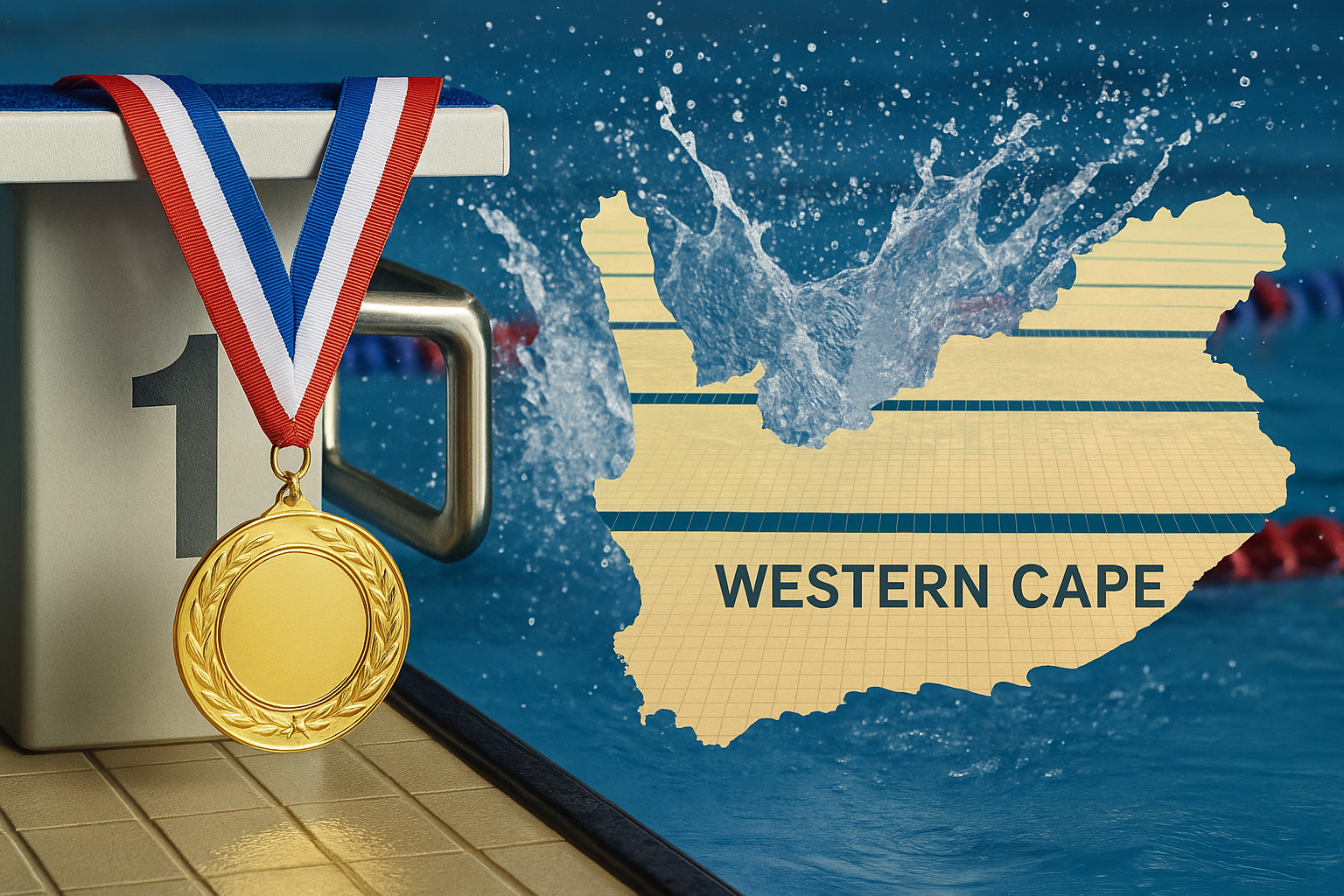
Western Cape school swimmers end a 20-year drought, winning the national championship by one gold medal. A testament to hard work and diverse talent.
The Western Cape swimming team just made history, winning the National School Swimming Championship after 20 long years! They beat Gauteng by just one gold medal, showing that hard work and smart planning really pay off. This win wasn't just about fast swimmers; it was about amazing coaches, fair team picks, and a tough spirit built in cold pools. Swimmers from all over the province, even small towns, came together to show everyone that teamwork and grit can conquer anything. This victory proves that the Western Cape's swimming program is now super strong, and they're ready to win again!
What led to the Western Cape's historic win at the National School Swimming Championship?
The Western Cape's victory, ending a 20-year drought, stemmed from a robust club development system, fair selection processes based on stopwatch times, and a resilient culture fostered by dedicated coaches and captains. Swimmers from diverse backgrounds and regions trained rigorously, often in challenging conditions, culminating in their triumph over Gauteng.
Get Cape Town news in your inbox
Stay updated with the latest stories from the Mother City.
The Four-Day Splash That Made History
April 24–27, 2026 will always read differently in South African school sport almanacs. When the last relay hand hit the wall at the University of the Western Cup’s aquatic complex, the scoreboard told a story that had eluded the province since 2006: Western Cape, 54 golds; Gauteng, 53. One medal - 0.5 mm of timing-chip difference - yet it snapped a 20-year stranglehold the northern provinces had kept on the national schools title.
The trophy count climbed to 128 podium visits for the Cape teenagers, a depth haul that eclipsed every previous edition. Coaches, parents and rivals knew this was no statistical blip; it was the visible crest of a development wave that had been quietly gathering momentum in club pools from Mossel Bay to Malmesbury. No visiting province had ever toppled the Gauteng machine on its own turf; Western Cape did it a kilometre from the dunes of the Athlone training track that many of its swimmers pass every morning.
Anwar Rinquest, the veteran mentor who had watched five previous squads finish second or third, surrendered to the moment. “They had me in tears - real, ugly tears,” he laughed minutes after the final ceremony. Eight seasons of 4.30 a.m. venue opens, parent e-mails about gala entries, and winter sessions in 12-degree water fused into a single release. The win was microscopic in margin, tectonic in meaning.
From Every Country Town: The Geography of the Roster
What startled rival coaches was not the speed but the postcodes. The Western Cape sheet listed swimmers from George, Knysna, Vredenburg, Caledon and even a 13-year-old breast-stroker whose parents drive 180 km from a Northern-Cape hamlet to Stellenbosch twice a week. The squad looked nothing like the concentrated “academy” teams stacked with private-school bursary holders that have dominated recent nationals.
Selection fairness explains the map of names. Rinquest opened two winter trials - one in December, one in January - run with electronic touch-pads and uploaded to the provincial rankings within hours. No coach nomination letters, no head-teacher endorsements: swimmers punched the qualifying times or stayed home. Club coaches from Paarl to Plettenberg Bay could finally tell their athletes, “The stop-watch decides.” The outcome was a tapestry of accents, school uniforms and family incomes that probably mirrors South Africa better than any previous high-performance group.
The club system itself became the hero. Few of the medal-winners train in endless-lane academies; most share a 25-metre municipal pool with learn-to-swim classes and aqua-aerobics. They arrive early, bag their own lane ropes, then finish homework under floodlights while parents braai in the car park. That resilience - honed in December holiday training camps when public pools close for parties - proved the perfect rehearsal for pressure finals against the depth-heavy Gauteng juggernaut.
Captains Who Carried Culture, Not Just Kickboards
Swimming may look individual, yet relays decide titles. Amy Combrink (16) and Luan de Blanche (17) captained a squad whose average age sat just below 15. Their job description: fuse sprinters distance kids, para-athletes and open-water specialists into one conversation. They organised dorm-room quizzes, enforced curfew with the authority of junior prefects, and - crucially - matched relay legs so every change-over stayed inside the risk-free 0.3-second window.
Rinquest insists the captains’ true value surfaced between sessions. Combrink noticed a 14-year-old freestyler crying after a heat swim, pulled her aside, and by night-final the kid anchored a medley relay to a three-second PB. De Blanche quietly slipped his personal physio band to a rival-school teammate who had forgotten his, then watched that swimmer split a blistering backstroke leg that clawed back gold number 52. Culture beats chlorine, the coaches still repeat.
The respect ran upward too. Managers instituted “feedback huddles” where swimmers could anonymously write grievances; no laptops or phones were allowed so notes stayed hand-written and raw. Athletes voted to train at 6 a.m. instead of 5.30 a.m. so boarders could finish homework; the concession cost nothing yet harvested buy-in that money cannot rent.
Stars Who Lit the Way for Everyone Else
Isabeau Coetsee entered the meet with a target on her cap: defend her 100 m butterfly title and post sub-classification times in the 200–400 m freestyle. She walked away with Victrix Ludorum, having won six of seven starts and broken two championship records older than she is. More impressive: she still attended every team cheer-session for field-events swimmers, clutching a vuvuzela that left her hoarse before finals.
Para swimmer Naseerah Du Toit smashed the S9 category 50 m free national mark by 1.14 seconds, then asked officials to keep the scoreboard time flashing so younger S10 athletes could photograph it. Her performance earned her the Para Top Performer sash; her grace earned a standing ovation from every province. Meanwhile Cassidy Burgess, 15, logged lifetime bests in all eight of her events, collecting 42 individual points that quietly padded Western Cape’s margin. Consistency, coaches reminded the press, is its own form of heroism.
Yet the constellation stretched deeper. A 13-year-old breast-stroker nobody had tagged in the seedings made the 100 m final and placed fourth, adding B-final points that mathematicians later proved decisive. A deaf swimmer who communicates through South-African sign language nailed the take-off in the 4 × 100 freestyle relay, turning a body-length deficit into a fingertip victory. Every medal, Rinquest repeats, has a back-story hidden in programme notes.
The Invisible Ledger: 5 a.m. Alarms and Cold-Water Kilometres
Elite teenage swimmers in the Cape face a climate reality their Gauteng rivals escape: six weeks of winter when outdoor pools drop below 16 °C and steam looks like fog. The 2026 squad trained through it, squeezing ten sessions into school weeks that still demand seven academic subjects. They kept food diaries, attended Saturday-morning strength circuits in community halls where the weights are rusty, and studied flip-turn physics on WhatsApp voice notes.
Cold water forces technical honesty: limbs go numb so streamline, dolphin-kick timing and core tension become survival tools. Rinquest’s statistics show the squad’s average stroke-count per 50 m dropped 3.7 % over winter - purely because inefficient movements got punished by the chill. Come nationals in the heated UWC pool, that efficiency felt like rocket fuel. “We train in the Atlantic; anything warmer feels easy,” joked backstroker Keagan Louw.
The sacrifice radiates outward. Parents split pre-dawn driving shifts, grandmothers become sandwich-factory managers, and club treasurers juggle fuel vouchers so 12-year-olds can reach regional qualifiers. Victory in 2026 finally reimbursed those invisible stakeholders. One swimmer’s mom collapsed in tears - not for the gold around her daughter’s neck but because she realised she would never again need to apologise to her boss for leaving early to drive to time-trials.
A Win That Belongs to the Whole Province
Western Cape Education MEC David Maynier released a statement within minutes of the final relay, praising “an extraordinary collective effort against the fiercest competition in South African school sport.” Political praise can sound boilerplate; here it reflected genuine policy alignment. The department’s after-school sport budget had quietly quadrupled since 2022, channelling funds into municipal pool maintenance and learn-to-swim schemes that feed clubs. The championship win validates those line-items in next year’s treasury spreadsheets.
Social-media metrics told the rest. Clips of Coetsee’s butterfly finish hit 1.2 million views on TikTok within 48 hours; Du Toit’s post-race interview - conducted in Afrikaans, English and SASL - was remixed into a Heritage-Day advert. Primary schools from Mitchells Plain to Montagu mailed handwritten posters to UWC: stick-figure swimmers holding medals bigger than their torsos. One teacher tweeted, “My Grade 3s now believe George is a country and it produces mermaids.”
Rinquest finally slept around 3 a.m. on the second night after the meet, but only after he had re-set the pool’s lane ropes for a development gala the next morning. “Twenty years is a long time to owe yourself belief,” he said, eyes still red. Western Cape swimming no longer owes that debt; the rest of the country now owes them the chase.
What led to the Western Cape's historic win at the National School Swimming Championship?
The Western Cape's victory, ending a 20-year drought, stemmed from a robust club development system, fair selection processes based on stopwatch times, and a resilient culture fostered by dedicated coaches and captains. Swimmers from diverse backgrounds and regions trained rigorously, often in challenging conditions, culminating in their triumph over Gauteng.
When did the Western Cape win the National School Swimming Championship?
The historic win took place from April 24–27, 2026, at the University of the Western Cape’s aquatic complex. This victory marked the first time the province had won the national schools title since 2006, snapping a 20-year dominance by northern provinces like Gauteng.
How did the Western Cape team ensure fair selection of swimmers?
Anwar Rinquest, the veteran mentor, implemented a fair selection process by holding two winter trials in December and January. These trials used electronic touch-pads, and results were uploaded to provincial rankings within hours. Selection was strictly based on qualifying times, ensuring that the stopwatch decided who made the team, rather than coach nominations or school endorsements.
Who were some of the standout swimmers and leaders for the Western Cape?
Isabeau Coetsee was a star, winning six of seven starts, breaking two championship records, and earning the Victrix Ludorum. Para-swimmer Naseerah Du Toit set a new national mark in the S9 category 50m free. Cassidy Burgess consistently performed, logging lifetime bests in all eight of her events. Amy Combrink (16) and Luan de Blanche (17) served as captains, playing a crucial role in fostering team culture and cohesion.
What unique challenges did Western Cape swimmers face during training?
Unlike their Gauteng counterparts, Western Cape swimmers often trained in outdoor pools during six weeks of winter where water temperatures dropped below 16 °C. This cold-water training environment, along with early morning sessions, rusty weights in community halls, and studying flip-turn physics via WhatsApp, fostered resilience and technical efficiency. Many shared municipal pools with learn-to-swim classes and aqua-aerobics, arriving early to set up their own lanes.
How did the Western Cape's victory impact the province and its swimming program?
The win validated the province's significant investment in its after-school sport budget, which had quadrupled since 2022, funding municipal pool maintenance and learn-to-swim schemes. The victory generated widespread excitement, with social media clips going viral and primary schools sending handwritten posters. It instilled belief across the province, demonstrating that hard work, strategic development, and a strong community spirit can lead to national success, setting a new standard for Western Cape swimming.

Chloe de Kock is a Cape Town-born journalist who chronicles the city’s evolving food culture, from township braai joints to Constantia vineyards, for the Mail & Guardian and Eat Out. When she’s not interviewing grandmothers about secret bobotie recipes or tracking the impact of drought on winemakers, you’ll find her surfing the mellow breaks at Muizenberg—wetsuit zipped, notebook tucked into her backpack in case the next story floats by.
View all articles →