
Western Cape welcomes new PRASA train timetable with more services
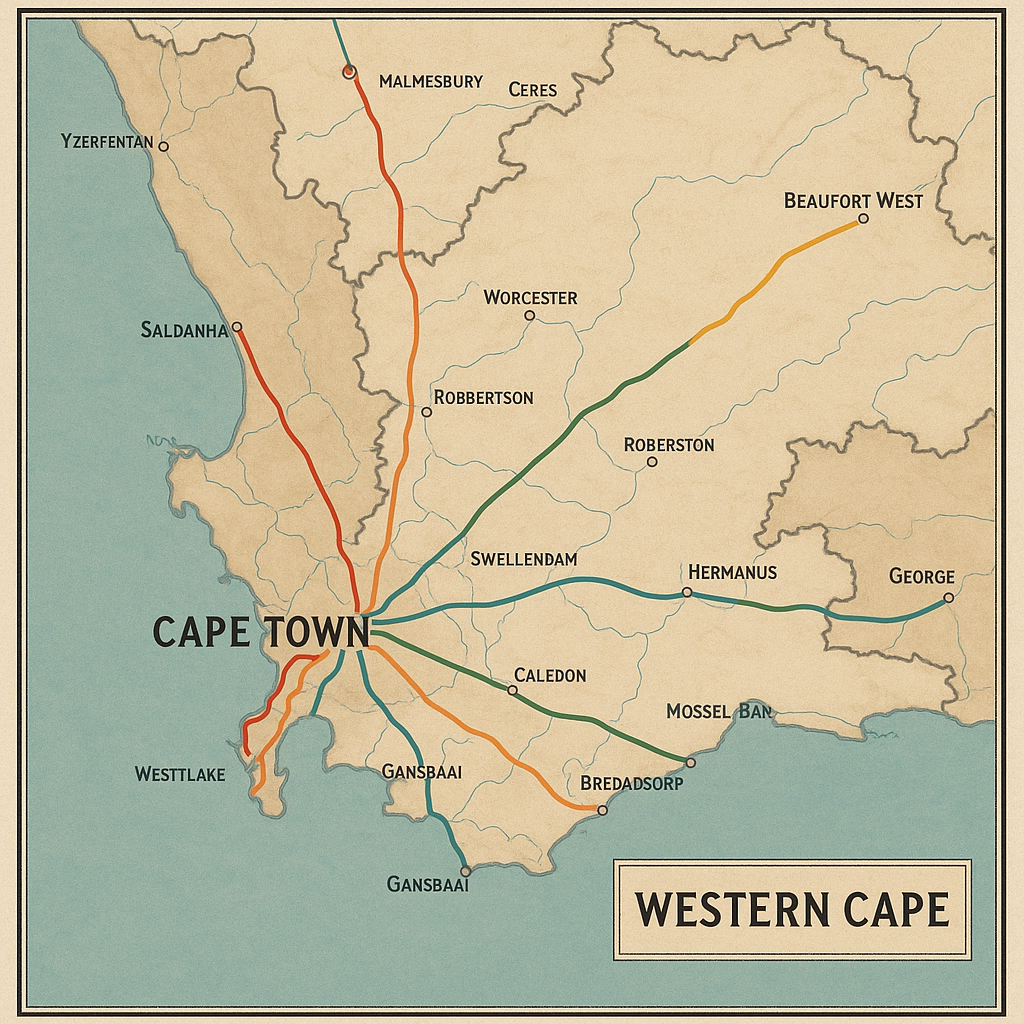
New timetable: 19 daily trips to Wellington, early departures for Strand, Nolungile, and re-timed Cape Flats trains aim to improve rail reliability and ease congestion.
The Western Cape train services are getting a big boost! They're adding 19 new trains, starting some trips super early, and fixing up tracks. This is all to make trains run better, give people more ways to travel, and get cars off the busy N1 highway. They want trains to "stumble instead of collapse" so commuters have more reliable and faster trips.
What changes are being made to Western Cape train services?
Western Cape train services are expanding with 19 new Wellington trains, earlier departures from Strand and Nolungile, and various infrastructure upgrades. These changes, part of PRASA's "reliability first" overhaul, aim to reduce delays, offer more travel options, and encourage commuters to use rail instead of driving.
Get Cape Town news in your inbox
Stay updated with the latest stories from the Mother City.
Monday Surprise: The Quiet Reboot Few Riders Noticed
Just after dawn on 10 June, the whistles at Wellington, Strand and Nolungile sounded slightly off-beat. The lights flashed in a different cadence, platform calls arrived a touch earlier or later, but nobody was late. Behind the almost imperceptible shift lay the first deliberate weekday expansion of western-rail capacity since the 2010 World Cup: Wellington jumped from eight departures a day to nineteen; Strand received a 05:13 escape hatch; Khayelitsha’s busiest stop, Nolungile, gained a 04:53 express.
PRASA, the Passenger Rail Agency of South Africa, calls the overhaul “reliability first”, a phrase chosen after six months of joint engineering sessions with Metrorail Western Cape, the provincial mobility department and the City’s traffic engineers. The key goal is not simply to squeeze in more trains but to let the system absorb slippage - up to twenty-two minutes of delay - before chaos ripples into the next peak. In other words, trains must now stumble instead of collapse.
For daily riders the upside is immediate: shorter waits, earlier options and a credible alternative to the gridlock on the N1 and R300. For planners, it is a live test of whether rail can claw back relevance in a metro where the car rules through sheer habit.
Schedule Surgery – Where, When and How the Minutes Were Found
1. Wellington: From Grape Farms to Bellville in 35-Minute Bites
Engineers began by autopsying every switch, siding and signal loop between Bellville and the Winelands town. The data betrayed an external culprit: the Northern Line, whose trains share the single track between Kraaifontein and Muldersvlei. Whenever a Northern train lost time it clogged the entire branch, delaying Wellington services by up to twenty minutes.
The fix was to front-load Wellington departures before the Northern surge. Four new trains now leave between 04:02 and 05:18, creating a thirty-eight-minute breathing space in which delayed Northern sets can be overtaken. Mid-day passengers benefit as well: a “lunch runner” leaves Wellington at 12:10, aimed at college students in Paarl and vineyard staff changing shifts. Last light departs Cape Town at 21:47, ensuring an after-dinner option that did not exist a month ago.
2. Strand: Outsmarting the False Bay Fog
False Bay summers gift Cape Town with postcard views and, on roughly forty mornings, a white blanket of coastal mist. Rail rules cut driver speed from 80 km/h to 60 km/h when visibility drops below four hundred metres. Rather than gamble on a 04:55 start that might crawl through the soup, planners moved the first train to 05:13. The fourteen-minute cushion lets most mist lift, allowing the 05:13 to run at full speed while burning 18 % less traction current. The tweak trims seven minutes off the run and lands commuters in the CBD at 05:59, just in time for the 06:05 feeder bus to the V&A Waterfront.
3. Nolungile Express: Beating the Central Line Crush
Khayelitsha’s largest rail precinct now boasts a 04:53 “limited-stop” rocket aimed squarely at factory shifts in Epping and Ndabeni. It halts only at Mandalay and Philippi before gliding into Cape Town at 05:22. By jumping forty-four minutes ahead of the first all-stations crawl, the express removes 1 420 passengers from the traditional 05:37 service, cutting dwell pressure at each intermediate stop. The ripple effect pushes Central Line headways down from forty-five to thirty minutes during the quiet 09:30-14:30 window, a bonus for day-shift labourers who previously camped on benches waiting for the next train.
Behind the Curtain – Tech, Bricks and Cards
Operations Room: From Wax Crayons to AnyLogic
Cape Town’s Rail Operations Centre, a Victorian brick block opposite Salt River Depot, once displayed every train as a coloured wax line curling across a paper scroll. Controllers updated delays with felt-tip pens and erasers. The June timetables were instead stress-tested in a desktop twin built inside AnyLogic railway software. A four-minute hold-up at Goodwood now triggers an instant re-calculation of the 07:42 from Parow and the 07:58 from Bellville, while the system proposes the least painful recovery plan.
To maximise single-track efficiency, ROC upgraded the Automatic Train Regulation module to version 3.2. When a northbound set stalls at Kraaifontein, the software can virtually slice the block section and let a southbound train nose into the opposite platform at Brackenfell - four minutes regained without human intervention.
Concrete Wins: Loops, Platforms and Points
A schedule on paper accomplishes nothing without steel and cement. The 2023/24 capital budget therefore funded three critical pieces:
- A second 160-metre passing loop at Paarl ended the notorious fourteen-minute “crossing wait” that punished the 06:10 ex-Wellington.
- Raised, tactile-edged platforms at Kuils River and Lentegeur now let three-car class 10M5 trains open both doors simultaneously, halving alighting time.
- Remote-controlled point machines at Blackheath allow ROC to reroute trains onto the down main without dispatching a technician - one less van on the N1 and four minutes saved during incidents.
Fare Harmony: myconnect Joins the Rails
Since March 2024, 2 700 commuters on the Bellville-Khayelitsha pilot can swipe one card to ride Nolungile’s early express and transfer to a MyCiTi bus on the N2. Tap-outs at Mutual dropped by seventeen percent simply because passengers no longer fumble for coins. Provincial Minister Isaac Sileku says the pilot will expand to Bellville-Stellenbosch once vandal-scarred Firgrove reopens.
The Next Journeys – Security, Climate and Phase Two
Drones, Heat-Maps and Cable Cuts
Cable theft and stone-throwing erased 286 000 train-kilometres in the Western Cape between October 2022 and September 2023. To shield the new timetable, ROC overlays its live train graph with an incident heat-map. If a hotspot flares near Philippi, the next service is held at Ndabeni rather than marooning riders in a risky stretch. PRASA doubled drone patrols along the Philippi-Stock Road corridor, which generated thirty-eight percent of last year’s delays.
Climate Savings: 5 500 Tonnes of CO₂
The Energy and Climate Action Directorate calculates that the additional Wellington trains will pull 3 200 peak-hour cars off the N1 daily. Over a working year, the shift avoids 5 500 tonnes of CO₂ - equivalent to permanently removing 1 200 cars from Cape Town’s roads.
Phase Two Wish-List
If the June changes remain stable, engineers hope to roll out a second wave in December 2024:
- Battery-electric shunters could extend Wellington’s 19-train pattern to full 24-hour operation.
- A proposed airport spur would run from Mutual to Cape Town International, timed for the 05:15 Emirates departure.
- Dynamic pricing might shave thirty percent off fares for customers willing to board before 05:30, monetising otherwise empty seats.
Until then, commuters can download the updated timetables from Metrorail Western Cape’s site or scan the QR codes now laminated on every third carriage. For the first time in a generation, the paper schedules are printed on waterproof stock - an admission, perhaps, that Cape Town’s winters and its politics are equally fond of a dramatic turn.
What changes are being made to Western Cape train services?
Western Cape train services are undergoing a significant upgrade, including the addition of 19 new trains on the Wellington line, earlier departure times from Strand and Nolungile, and various infrastructure improvements. These changes are part of PRASA's "reliability first" initiative, aiming to enhance punctuality, offer more travel options, and encourage commuters to choose rail over the N1 highway.
When did these new changes come into effect?
The initial phase of these changes quietly launched just after dawn on June 10th. While subtle, this marked the first deliberate weekday expansion of Western Cape rail capacity since the 2010 World Cup.
How are the new schedules designed to improve reliability?
The new schedules, particularly the

Thabo Sebata is a Cape Town-based journalist who covers the intersection of politics and daily life in South Africa's legislative capital, bringing grassroots perspectives to parliamentary reporting from his upbringing in Gugulethu. When not tracking policy shifts or community responses, he finds inspiration hiking Table Mountain's trails and documenting the city's evolving food scene in Khayelitsha and Bo-Kaap. His work has appeared in leading South African publications, where his distinctive voice captures the complexities of a nation rebuilding itself.
View all articles →