
Western Cape’s net-zero initiative aims to transform public buildings
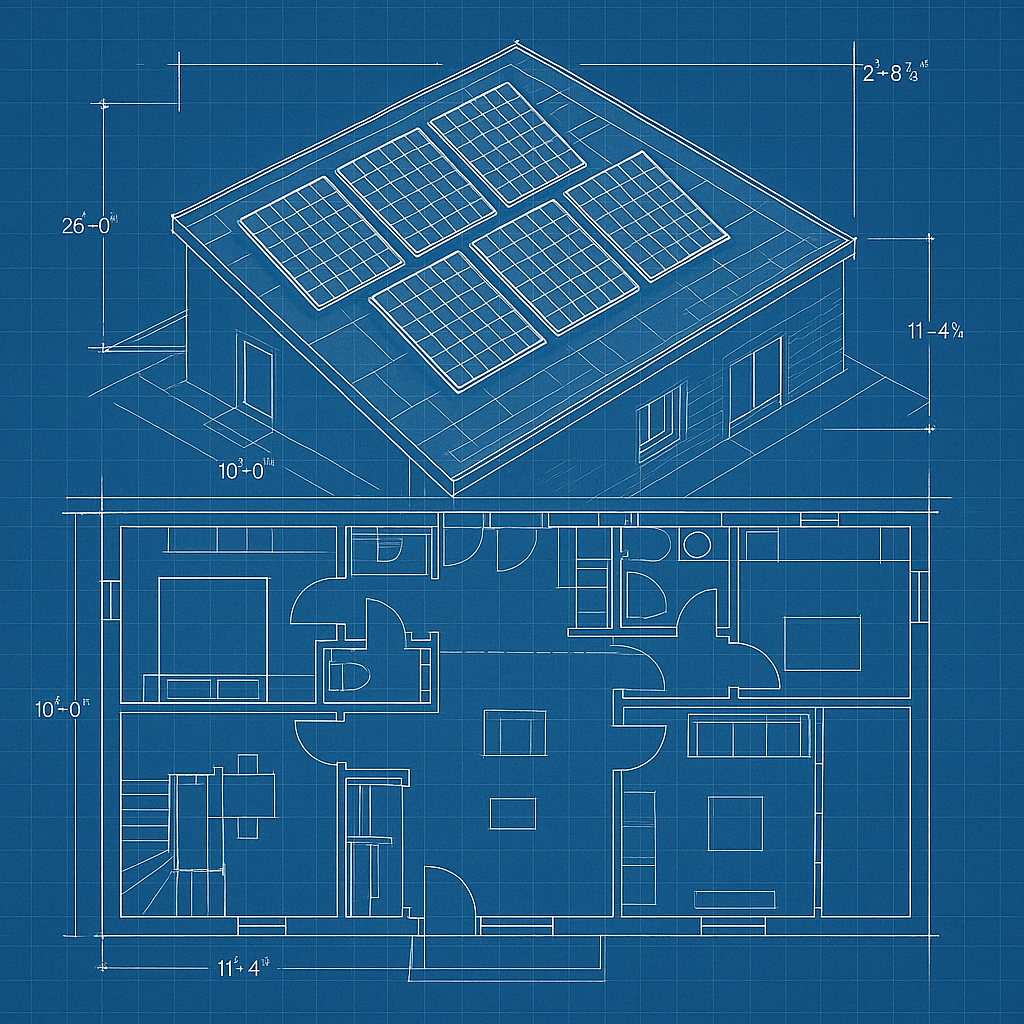
Western Cape Govt's "Net-Zero in Public Buildings" project rewires state-owned infrastructure for sustainability & energy efficiency.
The Western Cape is starting a big project called "Net-Zero Government" to make 1,400 public buildings, like hospitals, use much less energy. They are using a small grant of €84,672 to add solar power, batteries, and make buildings more efficient. This plan uses lots of data to pick which buildings to fix first, focusing on hospitals. The goal is to show how to make buildings carbon neutral, setting an example for all of Southern Africa.
How is the Western Cape transforming public buildings into net-zero facilities?
The Western Cape is rewiring 1,400 public buildings through a "Net-Zero Government" initiative, utilizing an €84,672 grant. This project employs a data-driven approach, prioritizing hospitals for retrofits, and integrating solar generation, battery storage, and efficiency upgrades. It aims to create a blueprint for carbon neutrality across Southern Africa.
Get Cape Town news in your inbox
Stay updated with the latest stories from the Mother City.
The Dawn of a Quiet Revolution
As dawn broke over Cape Town on a windswept Tuesday in May, the provincial cabinet's climate unit activated what locals now call "Net-Zero Government" - a seemingly modest initiative that will transform every state-owned building from Clanwilliam to Cape Agulhas into living laboratories for carbon neutrality. This Project 3.0 of the SA-EU Dialogue Facility arrives with a deceptively small €84,672 grant that carries the weight of regional transformation across the 15-nation Southern African Development Community.
The timing proves critical. South Africa's electricity crisis deepens while climate commitments tighten, creating an unprecedented opportunity to demonstrate how limited funds can trigger massive systemic change. Rather than pursuing grand infrastructure projects, officials chose surgical precision - targeting existing public buildings where energy waste runs rampant and retrofit potential runs highest. This catalytic approach positions the Western Cape as testing ground for net-zero building codes that neighboring countries can replicate without reinventing wheel.
What makes this initiative revolutionary isn't its budget size but its methodology. Every hospital, school, and administrative building becomes data-generating node in province-wide energy network. Sensors streaming real-time information create unprecedented transparency around government energy consumption while building digital twins that stress-test retrofit scenarios against future climate projections. The €84,672 seeds what could become continent's largest distributed energy experiment.
Why Hospitals Lead the Charge
Tygerberg Hospital's 900-bed facility exemplifies both problem and solution. Each patient consumes 28 kWh daily - double European equivalents and triple Brazilian benchmarks - while the facility's 1.8-hectare roof receives solar irradiance matching Valencia, Spain. This paradox repeats across 42 provincial hospitals representing simultaneously the largest carbon liability and fastest pathway to meaningful emissions reduction through strategic retrofitting.
The framework's "abatement velocity" ranking system prioritizes buildings by carbon saved per euro per square meter. Hospitals dominate this metric, followed by 24-hour psychiatric facilities, forensic laboratories, and aging administrative buildings like 4 Dorp Street - still illuminated by fluorescent tubes installed during P.W. Botha's administration. This data-driven approach ensures limited resources target maximum impact rather than political convenience or architectural prominence.
Energy intensity in healthcare facilities stems from unique operational demands. Sterilization equipment, HVAC systems maintaining precise temperature controls, and life-supporting IT infrastructure create loads equivalent to 1,200 middle-class homes. Yet these same demands make hospitals ideal candidates for comprehensive retrofits combining solar generation, battery storage, and efficiency upgrades that deliver immediate measurable results while improving patient care environments.
Engineering the Technical Playbook
Etienne du Plooy's engineering team constructed a three-tier technical sandbox revolutionizing how retrofits get designed and implemented. Tier 1's 48-hour "energy biopsy" clamps 92 sensors throughout building systems, streaming data to Stellenbosch University servers where machine-learning algorithms generate 200-page heat maps within five days. This rapid assessment replaces months of manual auditing with precise granular data revealing exactly where energy disappears.
Tier 3 operates as policy laboratory, running buildings through draft Net-Zero Public Buildings Bill scheduled for 2025 provincial gazette. This forward-testing reveals which regulatory clauses accelerate payback periods versus those creating unnecessary delays or costs. Groote Schuur, George Regional Hospital, and provincial archives serve as first cohort completing all three tiers by December, generating open-source specifications any municipality can download under Creative Commons licensing.
Financing Innovation and Global Partnerships
The €84,672 grant merely unlocks sophisticated financing architecture blending multiple funding sources into viable capital stack. Ten percent EU seed funding combines with 25 percent Western Cape green bonds leveraging the province's AA+ local-currency rating, 30 percent concessional loans from DBSA's Green Fund, 25 percent private equity through Infrastructure SA's blended-finance window, and 10 percent Eskom rebates paying 2 cents per kilowatt-hour saved over five years. This blended approach achieves 5.4 percent real cost of capital - below Eskom's 7.2 percent average tariff trajectory - creating positive business cases from year three without carbon credits.
Procurement innovation prevents corruption through Danish "climate auction" model. Rather than tendering specific technologies, government auctions rights to abate predetermined carbon quantities - 4,200 tCO2e over 15 years for typical hospital retrofits. Bidders compete on lowest cost per tonne abated, with payments triggered only after verified measurements upload to public blockchain operated by University of Cape Town's Open-Carbon nonprofit. Early pilots achieve R420 per tonne - 30 percent below Eskom's marginal emission factor costs.
International expertise arrives through GIZ partnership seconding two engineers who decarbonized 140 Bavarian army barracks. Their "low-exergy" approach runs heating and cooling loops at 18-22°C instead of conventional 40-60°C, enabling heat pumps and wastewater heat exchange to handle base loads. Khayelitsha's Thusong Centre pilot reduced winter gas consumption 64 percent using 28°C grey-water loops and radiant wall panels manufactured from recycled milk bottles - demonstrating appropriate technology transfer adapted to local conditions.
Building Tomorrow's Green Workforce Today
Every retrofit contract reserves 30 percent of labor hours for youth apprentices recruited from 109 provincial technical-vocational colleges, creating pipeline of skilled workers for expanding green economy. Local content requirements mandate 60 percent South African-manufactured equipment by 2027, rising to 80 percent by 2032. Durban's ArtSolar retooled production lines for 580-watt bifacial panels rated for 160 km/h South-Easter winds, with expansion contingent on exceeding 6 MW hospital orders by 2026.
Beyond kilowatts, specification sheets mandate 15 percent bio-based materials - hemp-crete, mycelium, or recycled-tyre pavers absorbing nitrogen oxide - for new walls and pavements. Groote Schuur's 4,000 square-meter outpatient wing will sequester 180 kilograms atmospheric CO2 annually - equivalent to planting 240 trees without requiring land. This circular economy approach transforms buildings into carbon sinks rather than emission sources.
The initiative's data dividend creates "Internet of Buildings" where every sensor becomes node streaming real-time load, temperature, and occupancy data - scrubbed of personal identifiers - into public WENG dashboard. Early findings reveal simply informing nurses when solar generation peaks reduces midday grid draw 7 percent - a behavioral wedge exceeding output of many small hydro plants. This transparency builds public trust while identifying optimization opportunities impossible to spot through traditional utility billing.
Night operations accommodate healthcare continuity with 70 percent intrusive work - drilling, duct modifications, switchgear replacement - occurring 22:00-05:00 using silent equipment and vacuum drills capturing dust before reaching ICU vents. Night shift premiums funded by carbon credits create virtuous cycle where climate finance directly improves working conditions rather than extracting value. On August 14 at 11:42, Thusong Centre's 450-watt panel will inject its first electron as engineers celebrate with rooibos tea, knowing this microscopic moment seeds continent-wide transformation as code enabling it spreads across Africa adding Cape Town-sized cities every 18 months.
[{"question": "What is the 'Net-Zero Government' initiative in the Western Cape?", "answer": "The 'Net-Zero Government' initiative is a project in the Western Cape aimed at transforming 1,400 public buildings, including hospitals, into energy-efficient facilities. It integrates solar power, battery storage, and efficiency upgrades to significantly reduce energy consumption and achieve carbon neutrality. This project is funded by an €84,672 grant and seeks to serve as a model for other regions in Southern Africa."}, {"question": "How is the Western Cape funding this ambitious project with such a small initial grant?", "answer": "The €84,672 grant serves as seed funding to unlock a sophisticated financing architecture. This blended approach combines 10% EU seed funding with 25% Western Cape green bonds, 30% concessional loans from DBSA's Green Fund, 25% private equity through Infrastructure SA, and 10% Eskom rebates. This strategy achieves a real cost of capital below Eskom's average tariff trajectory, making the business case positive within three years without relying on carbon credits."}, {"question": "Why are hospitals being prioritized in the net-zero retrofitting efforts?", "answer": "Hospitals are prioritized due to their high energy intensity stemming from critical operational demands like sterilization equipment, HVAC systems for precise temperature control, and life-supporting IT infrastructure. They represent both the largest carbon liability and the fastest pathway to meaningful emissions reduction. A data-driven 'abatement velocity' ranking system identifies hospitals as having the highest carbon saved per euro per square meter, ensuring limited resources create maximum impact while also improving patient care environments."}, {"question": "What is the 'three-tier technical sandbox' approach for retrofits?", "answer": "Etienne du Plooy's engineering team developed a three-tier technical sandbox. Tier 1 involves a 48-hour 'energy biopsy' using 92 sensors to stream real-time data, analyzed by machine-learning algorithms to generate detailed heat maps. Tier 2 focuses on advanced modeling and simulation (not detailed in the provided text but typically follows Tier 1). Tier 3 operates as a policy laboratory, testing buildings against a draft Net-Zero Public Buildings Bill to reveal regulatory clauses that accelerate payback periods versus those that create delays or costs. This approach creates open-source specifications for wider adoption."}, {"question": "How is the project ensuring local economic development and workforce training?", "answer": "Every retrofit contract mandates that 30% of labor hours are reserved for youth apprentices recruited from 109 provincial technical-vocational colleges, creating a pipeline for the green economy. Additionally, local content requirements stipulate that 60% of equipment must be South African-manufactured by 2027, increasing to 80% by 2032. This fosters local manufacturing, such as Durban's ArtSolar retooling production lines for specialized solar panels."}, {"question": "What innovative procurement and monitoring methods are being used to ensure efficiency and transparency?", "answer": "The project uses a Danish 'climate auction' model for procurement, where bidders compete on the lowest cost per tonne of carbon abated, with payments triggered only after verified measurements are uploaded to a public blockchain. This transparent system, operated by the University of Cape Town's Open-Carbon nonprofit, has achieved significant cost savings. Furthermore, an 'Internet of Buildings' is being created, where sensors stream real-time data on load, temperature, and occupancy (scrubbed of personal identifiers) to a public WENG dashboard, enabling continuous optimization and building public trust."}]

Thabo Sebata is a Cape Town-based journalist who covers the intersection of politics and daily life in South Africa's legislative capital, bringing grassroots perspectives to parliamentary reporting from his upbringing in Gugulethu. When not tracking policy shifts or community responses, he finds inspiration hiking Table Mountain's trails and documenting the city's evolving food scene in Khayelitsha and Bo-Kaap. His work has appeared in leading South African publications, where his distinctive voice captures the complexities of a nation rebuilding itself.
View all articles →