
WHAT HAPPENED AT CROOKS CORNER?
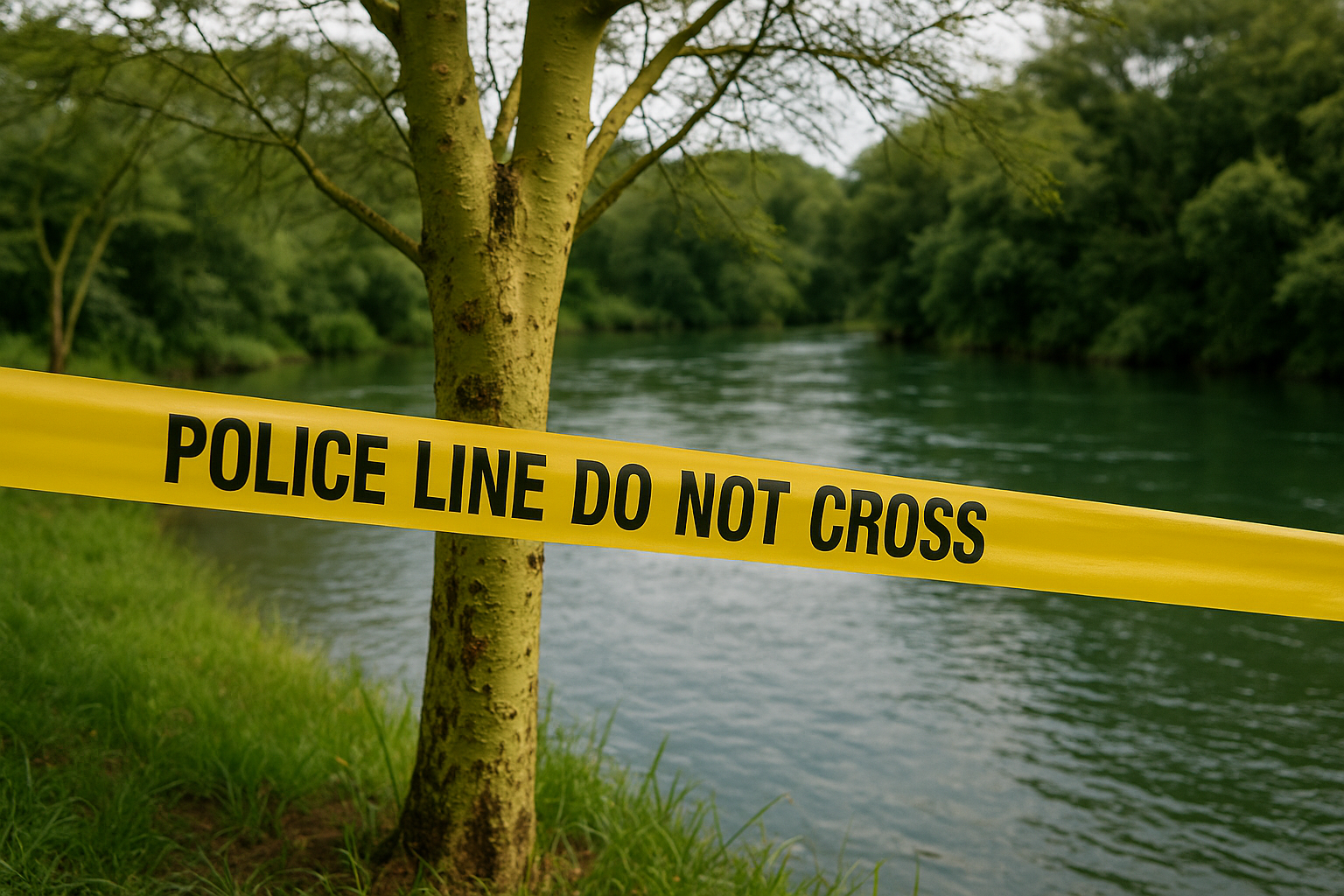
Shocking murder in Kruger's remote bushveld. Two tourists found dead, sparking a major investigation into the crime and its impact.
Christo and Elrika Myburgh were found cruelly murdered in Kruger National Park. Their bodies had deep knife wounds, and their car, cameras, and phones were stolen. It seems a peaceful day turned into a nightmare- a hijacking that became a double killing. The wilderness now holds a sad secret, and even nature itself seems to mourn the broken peace.
What happened to Christo and Elrika Myburgh in Kruger National Park?
Christo and Elrika Myburgh were found murdered at the Levubu–Limpopo confluence in Kruger National Park, two days after they were last seen. Their bodies bore deep blade wounds, and their vehicle, cameras, and phones were stolen. Authorities believe it was a daylight hijacking that escalated into a double murder.
Get Cape Town news in your inbox
Stay updated with the latest stories from the Mother City.
The Morning the Bush Lost Its Voice
At first light on 22 May 2026 the Levubu–Limpopo confluence sounded like any other dawn in the far-north Kruger: a fish eagle’s whistle, a diesel engine idling, the crack of an elephant branch. Then a harsher note sliced the air - rotor blades, two-way static, the bray of a rescue siren. Two motionless bodies floated face-down in a slow eddy, nudged by the rubbery roots of a fever tree. Within minutes the sandy two-track south of Crooks Corner became a taped-off corridor where hyena tracks met boot prints and yellow evidence markers sprouted among buffalo dung.
The dead were Christo Myburgh, 71, and Elrika Myburgh, 64, of Mbombela. They had booked four nights in Pafuri Border Camp’s stilted suites and were last seen alive two mornings earlier, sipping coffee with South African birders beside the northern picnic site. Witnesses recalled the couple speaking of “slow loops” and “golden light between yellow leaves,” the sort of phrase photographers whisper like prayer.
When checkout on Thursday came and went, staff chalked it up to an extension. When the room remained untouched on Friday, camp manager Rassie Jacobs sounded the alert. Skukuza launched a spotter plane at 09:30; Makuleke trackers found tyre impressions on an abandoned firebreak by 11:00. At 13:15 two Belgian photographers followed descending vultures and found the Myburghs fully clothed, torsos bearing deep blade wounds. The green Ford Ranger Wildtrak 3.0TDCi - plates JS65LP GP - was gone, along with two Canon mirrorless bodies, a 600 mm lens and both iPhones.
Anatomy of an Ambush
Lieutenant-General Thembi Hadebe landed by helicopter before sunset, flanked by the Provincial Organised Crime Unit, the Hawks’ serious-violent-crimes desk, SANParks environmental-crime sleuths and the Border Management Authority. Their working theory is daylight hijack turned double murder. Assailants likely blocked the dusty spur with a fallen branch or staged a fake breakdown - no cartridge cases were recovered, so blades did the talking. Pangas and bush knives are common among Mozambican fishermen crossing the low-water line, yet the neatness of the wounds suggests killers who rehearsed their exit.
Crooks Corner, that 19th-century loophole where outlaws stood with one boot in each colony, still shrugs off single jurisdictions. South African rules stop at the high-water mark; Zimbabwean law begins on the opposite bank; Mozambique governs the eastern littoral. Smugglers’ tracks braid the floodplain - some for cigarettes, some for ivory, some for diesel. At night the only illumination is starlight and the occasional bobbing headlamp of a motorbike gunning for Beitbridge.
The investigation now loops in Musina’s vehicle-theft detectives. A Ranger Wildtrak still wearing original VIN plates fetches up to USD 45 000 in Harare, three times its Gauteng book value. A veteran ranger confides that last year three similar hijackings flared along the South African bank but never reached the headlines; survivors lived, cars resurfaced stripped in Chivhu. The Myburgh tragedy, precisely because the wilderness itself seems bruised, has captured national fury.
Science, Security and Shattered Calm
SANParks CEO Hapiloe Sello flew in from Pretoria and spoke beside the Pafuri gate: “More than 1.2 million visitors entered Kruger last year. Statistically this remains one of the safest rural spaces, yet one homicide is one too many.” Immediate counter-measures followed: armed rangers will escort every tourist vehicle north of Shingwedzi after 17:00; a Safe-Lane radio channel at 148.450 MHz will pulse live GPS blips; cross-border game-drives into Zimbabwe are suspended pending review. She could not, however, hide harsher numbers - northern Kruger is 28 % below funded ranger strength, and the Border Management Authority’s 4x4 fleet is grounded for lack of spares.
Down on the riverbank a portable mortuary tent flaps in the heat. Pathologists search for microscopic leaf fragments inside the wounds to see if the couple entered the water alive. Entomologists harvest maggots to tighten the time-of-death bracket; hydrologists model flow speed to back-trace where the bodies slipped in. A Lidar drone maps every tyre rut and footprint inside 500 m; the data uploads into the national tool-mark database that already stores knife and panga signatures.
Beyond the tape the Pafuri community trembles. The Makuleke Contractual Park - land returned in 1999 after a 1969 forced removal - leans on tourism for 80 % of its income. Lodge cooks, fruit-pickers, bead-sellers trade WhatsApp rumours: the killers paid a fisherman USD 1 000 for a moonlit crossing; the Ford Ranger already wears Tete plates beginning with “T-”. None of it is verified, yet every retelling widens the shiver.
Reflections on an Uncertain Eden
International headlines erupted: Belgian TV splashed Bloed in het paradijs; the UK Telegraph offered an interactive map - “Kruger’s Wild North: where tourists once sought lions, now they find death.” Algorithms nudged the rand down half a cent as keyword bots screamed “Kruger security risk.” Operators from Cape Town to the Okavango field anxious calls; while 85 % of Kruger visitors stay in the south - where no tourist has been murdered since the 1990s - perception always outruns data.
Detectives begged for dash-cam footage shot on the R525 between Pafuri and Shingwedzi 19–22 May. A WhatsApp tip line - 076 749 2331 - has swallowed 314 messages; analysts hunt for the single fresh fact amid the static. The hottest lead so far is a Hungarian birder’s blurred snap at 09:41 on 20 May: a metallic-green double-cab behind Natal mahoganies, and a silver Toyota Fortuner with Gauteng plates turning onto the sand track. Investigators insist the Fortuner driver is sought only as a witness, not a suspect.
Back at Crooks Corner the rivers erase their own evidence. Crocodiles slide into the current; saddle-billed stilts spear tilapia without looking up. The bush excels at forgetting, at folding horror into leaf-litter and silence. Yet each ranger who passes the fever-tree snag now sees a new species of bloom - pale police tape fluttering like a flower that remembers. Eden is still Eden, but even Eden must sometimes take attendance for human violence.
[{"question": "What happened to Christo and Elrika Myburgh in Kruger National Park?", "answer": "Christo and Elrika Myburgh were found murdered at the Levubu\u2013Limpopo confluence in Kruger National Park, two days after they were last seen. Their bodies bore deep blade wounds, and their vehicle, cameras, and phones were stolen. Authorities believe it was a daylight hijacking that escalated into a double murder."}, {"question": "When and where were the Myburghs found?", "answer": "The Myburghs were found at first light on May 22, 2026, floating face-down in a slow eddy at the Levubu\u2013Limpopo confluence in the far-north Kruger National Park. They had been last seen alive two mornings prior."}, {"question": "What items were stolen from Christo and Elrika Myburgh?", "answer": "The stolen items included their green Ford Ranger Wildtrak 3.0TDCi (plates JS65LP GP), two Canon mirrorless camera bodies, a 600 mm lens, and both of their iPhones."}, {"question": "What is the working theory behind the Myburghs' murder?", "answer": "The working theory is that it was a daylight hijacking that escalated into a double murder. Investigators believe the assailants likely blocked a dusty spur with a fallen branch or staged a fake breakdown. The absence of cartridge cases suggests blades (like pangas or bush knives) were used."}, {"question": "What measures has SANParks taken following the incident?", "answer": "Following the incident, SANParks implemented several counter-measures: armed rangers will escort all tourist vehicles north of Shingwedzi after 17:00, a Safe-Lane radio channel (148.450 MHz) will pulse live GPS blips, and cross-border game-drives into Zimbabwe have been suspended pending review."}, {"question": "How has the incident impacted the perception and security of Kruger National Park?", "answer": "The Myburgh tragedy has garnered significant international attention, leading to headlines like \"Bloed in het paradijs\" and \"Kruger\u2019s Wild North: where tourists once sought lions, now they find death.\" This has negatively impacted the perception of Kruger's security, despite statistics indicating the south remains safe. The incident has also raised concerns about understaffed ranger forces and grounded Border Management Authority vehicles.", "additional_info": {"time_of_death_analysis": "Pathologists are searching for microscopic leaf fragments within the wounds to determine if the couple entered the water alive. Entomologists are harvesting maggots to refine the time-of-death estimate, and hydrologists are modeling flow speed to trace the bodies' origin.", "investigation_leads": "Detectives are appealing for dash-cam footage from the R525 between Pafuri and Shingwedzi (May 19-22). A blurred photo from a Hungarian birder on May 20 shows a metallic-green double-cab and a silver Toyota Fortuner, with the Fortuner driver sought as a witness.", "impact_on_community": "The local Pafuri community, whose economy heavily relies on tourism, is deeply affected, with rumors about the killers and the stolen vehicle circulating."}}]

Lerato Mokena is a Cape Town-based journalist who covers the city’s vibrant arts and culture scene with a focus on emerging voices from Khayelitsha to the Bo-Kaap. Born and raised at the foot of Table Mountain, she brings an insider’s eye to how creativity shapes—and is shaped by—South Africa’s complex social landscape. When she’s not chasing stories, Lerato can be found surfing Muizenberg’s gentle waves or debating politics over rooibos in her grandmother’s Gugulethu kitchen.
View all articles →