
WHEN AVIAN FLU CHANGES BEACH ETIQUETTE
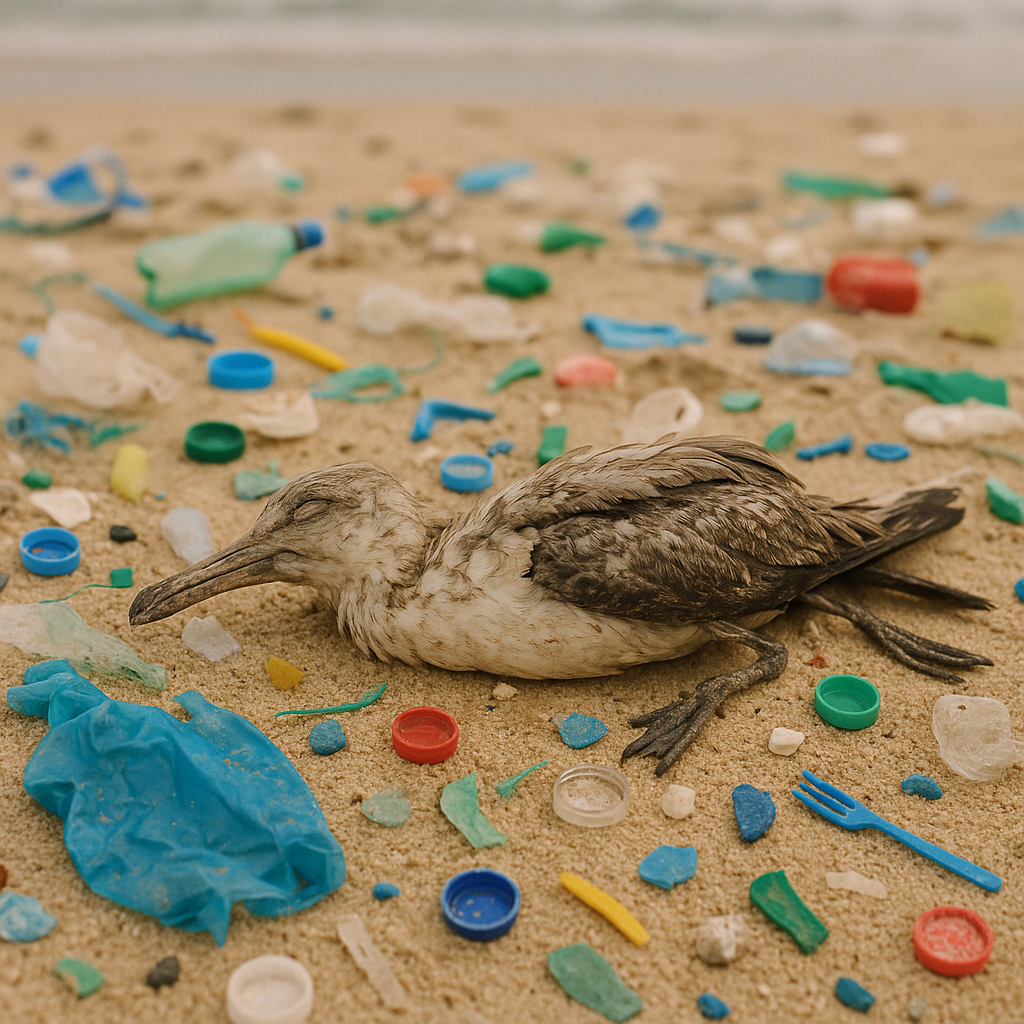
A virus rewrote South Africa's summer. H5N1 avian flu decimates seabirds, impacting tourism & marine ecosystems. The tide may never sound the same.
The H5N1 avian flu is hitting South Africa's seabirds hard, causing a silent crisis along its beautiful coast. This nasty virus, usually a farm bird problem, is now killing many wild seabirds, which are already struggling. This means fewer birds for tourists to see and impacts fishing, bringing a 'shadow tax' on the local economy. It's changing the sounds and smells of the ocean, leaving behind an eerie quiet where there used to be bustling bird colonies.
What is the main impact of the H5N1 avian flu outbreak in South Africa?
The H5N1 avian flu outbreak in South Africa is causing devastating population declines in various seabird species, leading to significant ecological and economic consequences. It threatens endemic seabirds, impacts marine food webs through reduced guano, and poses an "avian-flu shadow tax" on the coastal economy, affecting tourism and fishing industries.
Get Cape Town news in your inbox
Stay updated with the latest stories from the Mother City.
The Gathering Storm on Agulhas Waters
Every June, winter's cold embrace sweeps up the Agulhas Current, transforming the east coast into a shimmering spectacle. Gannets plunge from the heavens, dolphins carve through the waves, and holidaymakers cluster on headlands armed with binoculars and wors-rolls. Yet this year, a more somber sight mingled with the annual silver tide: small clusters of Cape cormorants drifting belly-up among the baitballs. Beach crews dismissed these casualties as routine aftermath - seals, sharks, fishing gear, propellers - the usual toll of nature's grand performance.
A municipal veterinarian noticed something amiss. Twisted necks. Beaks flecked with blood. These were not ordinary deaths. Laboratory confirmation arrived by early July: H5N1 clade 2.3.4.4b, a highly pathogenic strain that had already ravaged Europe's barnacle-goose colonies and North America's snow-goose wintering grounds. The Western Cape Government shifted rapidly from "vigilant" to "active outbreak." South Africa's summer tourism machine - typically roaring with sunburned enthusiasm - now faced an invisible, feathered intruder that threatened to reshape everything.
A Pathogen Transformed
Avian influenza has long troubled poultry farmers, but the 2021–2024 global surge represents something unprecedented. Previous variants devastated chicken populations while largely sparing wild birds. The current iteration flips this pattern entirely, cutting through terns, gulls, skuas, pelicans, eagles, and penguins with devastating efficiency. Researchers term this phenomenon "ecosystem spill-over" - a livestock pathogen that has streamlined itself for aerial dispersal, catching rides on the wings of long-distance migrants.
For South Africa, the timing could hardly be worse. Numerous endemic seabirds already carry IUCN designations of "Vulnerable" or "Endangered," casualties of oil spills, depleted fish stocks, plastic entanglement, and - for African penguins - a chronic scarcity of sardines and anchovy within reach of island breeding sites. One infected individual can propagate the virus across hundreds of kilometers within days, transforming isolated conservation sanctuaries into interconnected nodes of coastal catastrophe.
Counting the Cost in Feather and Number
CapeNature's monitoring network spans 68 coastal water-bird colonies stretching from Alexander Bay to Cape Infanta. During July's first two weeks, rangers documented alarming declines: a 28 percent collapse in active Cape cormorant nests at Dyer Island, a 19 percent drop in Hartlaub's gull chicks at Robben Island, and complete abandonment of the Bot River estuary tern colony - approximately 2,300 breeding pairs that simply departed, leaving eggs to bake in the sun.
Post-mortem analysis at Onderstepoort Veterinary Research revealed viral concentrations reaching 10^8 EID50/ml, enough to kill a healthy gull within 48 hours. Conservative extrapolations suggest 7,000–10,000 seabirds have already perished along the southwestern coastline, with population impacts still climbing. The last comparable mortality event struck in 1991, when cholera swept through lesser flamingos in the Rift Valley - but that disaster remained confined to salt pans. Today, the entire Benguela upwelling ecosystem hangs in the balance.
Viral Highways and Climate Pressures
This pathogen moves without documentation or delay. Kelp gulls scavenging behind trawlers traverse 400 kilometers in two days. Cape gannets commute 120 kilometers between nests and feeding grounds. Young terns disperse randomly for hundreds of kilometers before settling. Human activities compound these natural movements: fishing vessels gutting catch on deck, tourist craft releasing untreated galley water, beachfront establishments dumping organic waste into the surf.
Climate change adds another accelerant. Warmer surface waters drive sardine shoals south and east, compressing predators into tighter foraging zones where beak-to-beak contact becomes unavoidable. The result is a viral expressway disguised as ecological constriction - natural behavior weaponized by environmental transformation.
The Human Equation
Humans serve merely as incidental hosts; the virus shows little interest in our species. Yet our reactions determine whether this epidemic remains a wildlife tragedy or escalates into reputational disaster. SANCCOB's phone lines exploded following the initial announcement: "There's a sick gull on my roof." "My dog brought home a cormorant." "Can I catch this surfing?"
Scientifically, human risk remains negligible. Worldwide, documented hominin infections number only a handful, concentrated among poultry workers, with none attributed to this specific genotype. But reassurance travels slower than anxiety. A single photograph of a child beside a convulsing tern transforms perception. One viral social media post triggers booking cancellations, line-fish order withdrawals, precautionary beach closures, and rangers diverted from scientific sampling to crowd management.
The ethical imperative becomes behavioral intervention: observe without touching, resist anthropomorphizing, abandon "rescue" impulses. A beach without selfies remains a beach. A seabird dying alone may prevent ten additional infections, potentially preserving an entire colony.
Echoes Through the Economic Web
Seabirds transcend mere ornamentation; they function as mobile concentration systems for marine nutrients. Island guano fertilizes coastal algae, sustaining abalone and perlemoen - species already struggling against poaching and marine heatwaves. Mass mortality collapses nitrogen input, stalls algal growth, and triggers urchin overgrazing of weakened kelp foundations.
The cascade extends to the rock-lobster industry, generating R400 million seasonally, and recreational snorkelers contributing R1.2 billion annually to coastal communities. The virus thus attacks not merely birds but an economic infrastructure threading through guesthouses, dive operations, crayfish processors, and export logistics. University of Cape Town economists have begun modeling the "avian-flu shadow tax" - an invisible levy on every coastal transaction should the outbreak persist through December. Early projections indicate a 0.7 percent provincial GDP contraction - modest until considering the Western Cape's existing vulnerability to water-crisis recession.
The Silence of Empty Rookeries
Mid-July marks peak incubation for several endemic species. At Robben Island, where 1,600 African penguin pairs typically hatch by early August, monitors report 40 percent fewer active nests. Penguins pose particular danger - their curiosity drives them to investigate carcasses, amplifying transmission. CapeNature has installed electric fencing around two mainland colonies to exclude caracals and domestic dogs that might mechanically spread virus through scavenging, yet nothing prevents molting penguins from wandering into adjacent cormorant settlements.
Abandoned eggs become sustenance for mole snakes and pied crows, further distorting predator-prey dynamics. Rangers now execute "chick lifts" only when both parents are confirmed deceased and eggs show pipping - interventions last deployed during the 2000 MV Treasure oil spill. Even these limited rescues face capacity constraints: Table View's facility accommodates 400 fluffy chicks maximum, while current shortfalls approach 1,200. Conservation once again becomes triage.
Frontline Defense in Salt River
Within SANCCOB's Salt River facility, atmosphere blends brine, fish slurry, and Virkon-S disinfectant. Staff navigate color-coded footwear: blue for quarantine zones, green for clean areas, red for post-mortem examination. Every admission enters 48-hour observation with cloacal PCR testing. Positive cases face euthanasia and double-bagging; negatives transfer to crowded recovery pools with twice-daily chlorinated water changes.
Volunteer interest has surged, including European backpackers recently exposed to Netherlands outbreaks, though training enforces strict protocols: nitrile gloves mandatory, no zone-crossing, no internal photography to prevent social media panic. A Danish virologist on sabbatical experiments with a heterologous vaccine employing turkey herpesvirus vector technology, originally developed for Egyptian poultry. Trials involve merely 60 African penguins; even 70 percent efficacy cannot realistically scale to 20,000 island birds before the next molt cycle. Yet vaccine development within seabird facilities would have seemed fantastical a decade past.
Listening to Absence
At Stony Point, Betty's Bay, dawn typically erupts in 360-degree soundscape: penguin braying, cormorant growling, Egyptian geese emitting rubber-duck calls. By mid-July 2024, this acoustic environment had thinned considerably, as if someone reduced volume by 30 percent. Residents perceived this change before witnessing carcasses, many reporting premature waking - fooled by relative quiet into believing night persisted.
Ornithologists recognize "silent colony syndrome," previously documented once: Christmas Island 1985, when invasive ants displaced every nesting seabird and forests fell eerily still. The psychological impact on humans proves disproportionate; tourism data reveals 18 percent reduced boardwalk duration when ambient bird calls fall below 50 decibels. Beaches stripped of soundtrack begin resembling abandoned film sets, regardless of remaining blonde sand and turquoise waves.
Practical Steps for Coastal Stewards
Authorities emphasize: no touching, no photography, no midnight rescue missions with cardboard and towels. Yet distance need not equal apathy. Citizen science platforms - BirdLasser, MammalMAP, iNaturalist - now feature "mortality toggles." Photograph carcasses from three meters, mark GPS coordinates, record species, age, visible symptoms. Each observation feeds heat-maps guiding CapeNature's fencing priorities, sampling deployments, and 48-hour beach decontamination closures.
The protocol demands: observe closely without contact; bag only when instructed, using double-layered biodegradable bags with twist-ties; log and depart; sanitize footwear in 1 percent bleach before driving; maintain canine leashes, as viral fragments travel on muddy paws. Seaside accommodation providers might include "no-wildlife-contact" clauses in welcome materials - tourists appreciate clarity. Fishing charter operators should disinfect decks with quaternary ammonium between trips; single infected gulls landing on chum-slicked surfaces can contaminate entire slipways. These micro-interventions, multiplied across thousands of coastal users, purchase scientists critical time.
Gazing from the Lighthouse
Epidemics conclude, sometimes abruptly when viral mutation favors reduced lethality. Colonies recover - Dyer Island's cormorants rebounded from 1,600-bird losses within three breeding seasons, assisted by abundant anchovy. But recovery requires food, which requires fish, which requires cool, nutrient-rich waters. Southern Benguela climate projections indicate 25 percent forage-fish biomass decline by 2050 under high-emissions scenarios. Layer recurring avian influenza, oil spills, plastic ingestion, and potential maritime disasters, and stochastic models forecast 58 percent probability of functional African penguin extinction by 2035.
Current outbreak could accelerate this timeline by five years unless coming breeding seasons deliver simultaneous sardine abundance and viral attenuation. Managers invoke "extinction debt" - birds lost today represent missing 2030 breeders, their unlaid eggs an invisible subtraction from future cliff populations.
New Words for New Realities
South Africans already possess vocabulary for post-Christmas coastal departures: "trekking back to Gauteng." Park wardens propose another term this year - "flu-distance" (pronounced "fly-distance") - the minimum four-meter separation between holidaymakers and ailing birds. The expression balances humor and public-health messaging, potentially outlasting the epidemic itself. Should it persist, "flu-distance" will join "windgat" and "bunny chow" in regional lexicon, evidence that languages evolve most rapidly when stakes peak.
The Scent of Missing Thousands
One final sense alerts longtime observers: the air changes character when thousands of birds cease defecating into shared waters. Guano carries ammonia and dimethyl sulphide; its absence strips the ocean of sour, vinegary undertones. The difference remains subtle - many visitors cannot identify it - yet lingers like incomplete thought. A marine biologist at the Department of Environment compares this to "entering a kitchen where coffee finished brewing but the cup remains absent." We perceive void through the shape of what no longer exists.
Beyond the Outbreak's Shadow
July yields to August, when southern right whales commence northern migration and great whites patrol inshore kelp forests. August surrenders to September, aloes ignite orange along cliff paths, and swallow-tailed butterflies arrive on Mozambican winds. Whether seabirds continue falling on these future mornings remains inscribed in RNA, not stone. Until viral populations trade lethality for transmissibility, the directive holds steady: watch, document, retreat, permit the ocean its breath without reaching hands.
- The tide continues. The question is who will remain to hear it.*
What is the primary impact of the H5N1 avian flu outbreak in South Africa?
H5N1 avian flu is causing a

A Russian-Spanish journalist and Cape Town native, channels his lifelong passion for South Africa into captivating stories for his local blog. With a diverse background and 50 years of rich experiences, Serjio's unique voice resonates with readers seeking to explore Cape Town's vibrant culture. His love for the city shines through in every piece, making Serjio the go-to source for the latest in South African adventures.
View all articles →