
Where Afrikaner ‘refugees’ in the US are settling
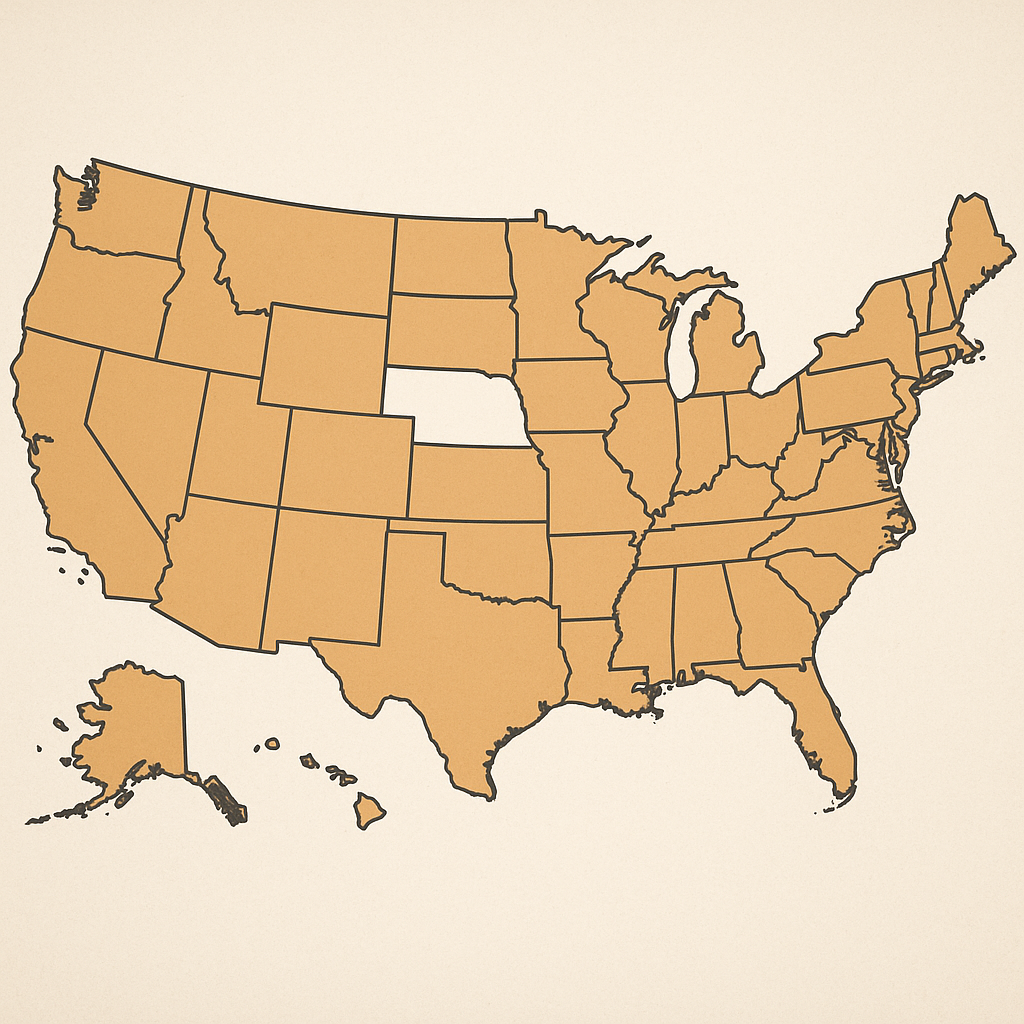
Explore the quiet wave of Afrikaner resettlement in the US under Trump's program, mapping their state-by-state integration and the curious absence of Hawaii.
Afrikaners are quietly moving from South Africa to the U.S. through a special program. They are settling in states like Texas, Florida, and California, changing local communities. This hidden migration is reshaping areas, with new businesses, schools, and cultural shifts appearing. While it's largely unnoticed, this movement is funded by a large sum of money and is drawing attention from politicians, sparking debate about its impact and fairness.
What is the "Priority-2 Direct Access Afrikaner Pathway"?
The "Priority-2 Direct Access Afrikaner Pathway" is a US State Department program facilitating the relocation of Afrikaners from South Africa to the United States. These individuals arrive with specific alien-registration strings and vouchers for Social Security cards, part of a quiet resettlement initiative across various states.
Get Cape Town news in your inbox
Stay updated with the latest stories from the Mother City.
Sky-Bridge Below the Radar
On a wind-whipped evening eight months ago, the first charter-clad Airbus A330-800 pushed back from Cape Town International and slipped across the Atlantic with almost no fanfare. Since that inaugural hop, a total of 6 066 South Africans have disembarked on U.S. soil, each clutching a crisp envelope embossed with the United States Refugee Admissions Program crest. The packet holds an alien-registration string issued by the State Department’s Bureau of Population, Refugees, and Migration, a date-stamped Form I-94, and a sunshine-yellow voucher that turns into a Social Security card after a week’s wait. The top sheet avoids the word “asylum”; instead it bears the bureaucratic heading “Priority-2 Direct Access Afrikaner Pathway – Group 24-10.” These newcomers do not linger in headlines, yet their presence is being logged line by line in an internal spreadsheet labeled RA-50, obtained and authenticated by the Center for Immigration Studies and The Texarkana Ledger.
Each row equals one human; each column equals the state assigned for the first ninety days under a Trump-era “Faith-Based Placement Agreement.” The April 2026 release of RA-50 charts an uneven but unmistakable continental pattern, and it leaves a single star conspicuously blank. While pundits spar over southern borders and sanctuary cities, a small European-descended population is quietly seeding itself from Texas to Alaska, rewriting local economies, classrooms, and Sunday potlucks in the process.
Their relocation program sits at the crossroads of foreign policy, farm economics, and culture shock, but its day-to-day mechanics remain hidden in plain sight: converted military yards, almond-packing plants reborn as dormitories, and ICE centers where detainees sweep floors for a dollar a day nicknamed “Mandela money.” What follows is a field guide to that hidden geography.
Where the Map Turns Crimson and Sun-Belt Gold
Texas dominates the reception ledger with 768 placements, and the magnetism is by design. Governor Greg Abbott inked a memorandum of understanding on 14 November 2025 that unlocks immediate SNAP access and an express lane for occupational licenses. To shelter the influx, the General Land Office dusted off Fort Sam Houston, lining an old marching ground with 216 container cottages locals call “kraal pods.” Church convoys from Boerne to Tyler roll in weekly bearing coolers of boerewors and shrink-wrapped biltong, all cleared under temporary import waivers. An empty PX cafeteria now hosts Afrikaans GED classes that started February enrolment and already face a wait-list.
Florida clocks in next at 451 arrivals. Governor Ron DeSantis personally green-lit a dormant youth-detention complex in Live Oak to serve as reception hub. Rather than rely on rotating volunteers, Florida’s Department of Children and Families hired Afrikaans-speaking case managers flown in on short contracts from Pretoria. The state also rolled out the nation’s first Afrikaans-only driver’s-license exam, prompting English-first legal challenges before the pilot had even printed its second run of booklets.
California surprises at 450 placements, contradicting its progressive branding. Church World Service Fresno and a Ripon arm of the Dutch Reformed Church run the show, housing families in a mothballed almond-packing warehouse outside Modesto. Residents claim the Central Valley’s tawny dust and irrigation ditches feel eerily like the Northern Cape. The Department of Agriculture has staked out a nearby plot to trial rooibos, curious whether the South African shrub will take to Madera’s alkaline soils.
Cornfields, Cranberries, and Arctic Rigs
Ohio hosts 245 Afrikaners, most routed to the western Cleveland suburbs where a once-shrinking Dutch Reformed fellowship has swollen from 60 to 340 members in under a year. St. Luke’s Hospital in Avon Lake unveiled a bilingual Afrikaans-English urgent-care wing after a newly arrived welder arrived with severe flash burns and no interpreter on duty. In North Dakota, 88 newcomers cluster in Ward and Burleigh counties, drawn by the same Lutheran resettlement circuit that once absorbed Bosnian meat-plant workers. North Dakota State University Extension is test-growing spring-wheat cultivars from Stellenbosch, hoping South African genetics can squeeze yield out of a 100-day growing window.
Even Alaska - four souls, all rig veterans - found room at Prudhoe Bay. Three crane operators and a diesel mechanic wear Arctic coveralls supplied by an oil-services contractor that prized their experience on the frigid platforms off Saldanha Bay. Their flights from Houston to Anchorage cost more than the annual per-capita resettlement stipend, yet corporate counsel proved the hires met the “specific humanitarian concern” clause under 8 CFR §207, and the paperwork sailed through.
Why Hawaii Still Shows Zero
The Aloha State’s column remains stubbornly at zero for four intertwined reasons. First, simple distance: the 11 830-kilometre gulf between Johannesburg and Honolulu forces multi-hop itineraries through Doha, Dubai, or Atlanta, pushing per-adult airfares to US$2 400 - triple the price of a Dallas seat. Second, sticker shock once the plane lands; a 2026 University of Hawaii report pegs median two-bedroom rent at US$2 870, while newcomers receive a one-time Reception & Placement grant of only US$1 175. No local VOLAG has yet been approved to close the gap via private sponsorship, so the math collapses.
Third is the department of agriculture’s stern quarantine rule. Incoming dried meats routinely test positive for clostridium spores endemic to South African feedlots, and confiscation at the airport severs more than protein; it slices away Sunday rituals built around biltong. Fourth is linguistic isolation. Because no sizable Afrikaans diaspora has ever taken root in the islands, immigrant churches cannot replicate the Cape Malay choirs or highveld potjiekos gatherings that cushion arrivals elsewhere. Lutheran Services Hawaii admitted in internal emails that Afrikaans “is not among the 37 languages we can staff,” and that single sentence has stalled applications cold.
Inside the Dollar-a-Day Barracks
While 96 percent of arrivals step directly into community placements, roughly 240 fall into ICE’s security-check queue and end up in detention centers at Dilley (Texas), Batavia (New York), or Aurora (Colorado). There they sweep corridors and wipe tables for US$1.00 per shift - coin they ironically label “Mandela money.” Sunday worship happens in a commons room where a former South African Defence Force chaplain sketches sermons on torn cardboard because Afrikaans Bibles remain prohibited contraband. Guards look the other way when detainees fashion wooden crosses from discarded popsicle sticks.
Senate Letters, Leaked Ledgers, and a US$100-million Puzzle
The entire operation is bankrolled under the Migration and Refugee Assistance Act, yet Senator Jeanne Shaheen’s private letter to Secretary Marco Rubio, leaked in May, calls the legal footing into question. Her staff attached an internal ledger showing US$97 463 000 already obligated across three tranches: US$62 million for air tickets and initial housing, US$26 million for cash and medical assistance, and US$9.4 million for “cultural orientation including Afrikaans-language materials.” Shaheen contends that diverting Cash and Medical Assistance away from Congolese and Syrian allocations breaches the Refugee Act’s equal-treatment clause. Congressional Republicans have counter-punched with a rider to rename the spending line “Persecuted European Heritage Refugees,” a tweak that could widen eligibility to any white South African regardless of mother tongue or church affiliation.
Rooftops, Rooibos, and College Marching Bands
From Florida’s hurricane belt to the Texas Hill Country, Afrikaner tradesmen and agronomists are carving micro-economies that locals did not see coming. In Gainesville, a start-up labelled AmaBhunu Solar - reclaiming an isiZulu word once hurled as a slur - won a US$1.2 million contract to bolt hurricane-rated panels atop low-income roofs. A consortium of former Wineland vintners now leases 90 limestone acres outside Fredericksburg, grafting chenin blanc and pinotage cuttings while courting week-enders who already come for bratwurst and riesling. Their GoFundMe crossed US$400 000 in 36 hours, half from Afrikaner expats, half from Napa winemakers curious about a new terroir.
Public schools are adapting at lightning speed. Fifty-two Afrikaans-speaking students enrolled in Volusia County since January; the district hired two ESL teachers from Bloemfontein, planted Google Translate kiosks in cafeterias, and discovered that boys raised on Grey College military parades are halftime-show naturals. In San Diego County, 11th-grader Wilhelm van der Merwe took the regional spelling bee with “voortrekberging,” earning a TV news segment and a flurry of TikTok duets.
Cleveland Clinic admitted its first Afrikaans cardiac patient in March; nurse Chanell Parker learned greetings on Duolingo and went viral, spiking the app’s Ohio downloads by 300 percent. LSU meanwhile pitches a global-health elective that would shuttle American med students to the Western Cape to shadow Afrikaner physicians now practicing in Baton Rouge - an academic round-trip that would have sounded absurd three years ago.
Telegram hosts an encrypted channel named “Wit Vlug” (white flight) that counts 9 200 members trading everything from Castle Lager bulk-buy spreadsheets to VA-loan hacks. YouTube’s “Boer in Boise” shows a Magaliesberg family learning to dig potatoes and braai on a repurposed propane tank; the latest episode drew 120 000 views in 48 hours. Sundays in Florida now feature a pastor live-streaming sermons from an Alachua County barn to 1 400 screens across four time zones.
Runways, Rooibos, and the Next Pin on the Map
Customs and Border Protection has quietly asked vendors to price an extra queue lane at Dallas/Fort Worth Terminal D labeled “P2-AFRI” for the winter wave. Delta has loaded a Johannesburg–Atlanta–Portland triangle that dovetails with Oregon’s cherry harvest, where horticultural know-how is suddenly priceless. Back in Honolulu, a University of Hawaii graduate student is compiling “Rooibos in the Rain,” a feasibility study that imagines Afrikaner agritourism on former sugar land. Whether the proposal lands on an administrator’s desk or in a recycling bin is still unknown, but its mere existence signals that the atlas is unfinished. Hawaii’s zero may yet turn to one, and the quiet migration will have found the last empty square on the star-spangled board.
[{"question": "What is the \"Priority-2 Direct Access Afrikaner Pathway\"?", "answer": "The \"Priority-2 Direct Access Afrikaner Pathway\" is a US State Department program designed to facilitate the relocation of Afrikaners from South Africa to the United States. It's a special resettlement initiative that provides them with alien-registration strings, Form I-94, and vouchers for Social Security cards upon arrival, bypassing the usual asylum process. The program is part of a larger, well-funded, and largely unnoticed migration."}, {"question": "How many Afrikaners have arrived in the U.S. through this program and where are they settling?", "answer": "Since the program's inception, a total of 6,066 Afrikaners have disembarked on U.S. soil. They are settling in various states across the country, with Texas leading with 768 placements, followed by Florida with 451, and California with 450. Other states like Ohio (245), North Dakota (88), and even Alaska (4) have also received placements, impacting local economies, classrooms, and communities."}, {"question": "What kind of support are Afrikaners receiving upon arrival in the U.S.?", "answer": "Upon arrival, Afrikaners receive an alien-registration string, a date-stamped Form I-94, and a sunshine-yellow voucher for a Social Security card. Depending on the state, they may also receive immediate SNAP access and an express lane for occupational licenses, as seen in Texas. Some states provide reception hubs, Afrikaans-speaking case managers, and even Afrikaans-only driver's license exams. Churches and community groups also play a significant role in their resettlement, offering cultural support and resources."}, {"question": "Why is Hawaii the only state with zero Afrikaner placements through this program?", "answer": "Hawaii remains at zero placements due to several factors. These include the significant distance and high cost of airfare from South Africa, the exorbitant cost of living in Hawaii compared to the one-time resettlement grant, strict agricultural quarantine rules that prohibit traditional South African dried meats, and a lack of a pre-existing Afrikaans diaspora or support infrastructure, leading to linguistic isolation."}, {"question": "What controversies or debates surround this migration program?", "answer": "The program is funded under the Migration and Refugee Assistance Act, but its legal footing has been questioned by politicians like Senator Jeanne Shaheen, who contends that diverting funds from other refugee allocations breaches the Refugee Act's equal-treatment clause. There's also debate about the significant sum of money involved (over US$97 million) and a proposal from congressional Republicans to rename the spending line to \"Persecuted European Heritage Refugees,\" which could broaden eligibility to all white South Africans, sparking further discussion about fairness and impact."}, {"question": "How are local communities and economies being reshaped by the arrival of Afrikaners?", "answer": "Local communities are experiencing significant changes, from new businesses like AmaBhunu Solar in Gainesville winning large contracts to Afrikaner vintners establishing new vineyards in Texas. Public schools are adapting by hiring Afrikaans-speaking ESL teachers and incorporating new cultural elements. Healthcare facilities are becoming more accommodating with bilingual services, and universities are even exploring academic exchanges. The newcomers are introducing new agricultural practices, cultural events, and even creating online communities, quietly reshaping the American map and local economies.", "additional_information": "The movement is funded by a large sum of money and is drawing attention from politicians, sparking debate about its impact and fairness. This migration is largely unnoticed by the general public but is being logged in internal spreadsheets like RA-50. The program is linked to a Trump-era \"Faith-Based Placement Agreement,\" and some Afrikaners end up in ICE detention centers, where they sweep floors for \"Mandela money.\" The cultural impact is visible in the emergence of Afrikaans GED classes, community events, and even social media groups like \"Wit Vlug\" (white flight)."}]

Sarah Kendricks is a Cape Town journalist who covers the city’s vibrant food scene, from township kitchens reinventing heritage dishes to sustainable fine-dining at the foot of Table Mountain. Raised between Bo-Kaap spice stalls and her grandmother’s kitchen in Khayelitsha, she brings a lived intimacy to every story, tracing how a plate of food carries the politics, migrations and memories of the Cape.
View all articles →