
WHERE COULD THE MILLIONS SPENT ON THE WORLD CUP HAVE GONE?
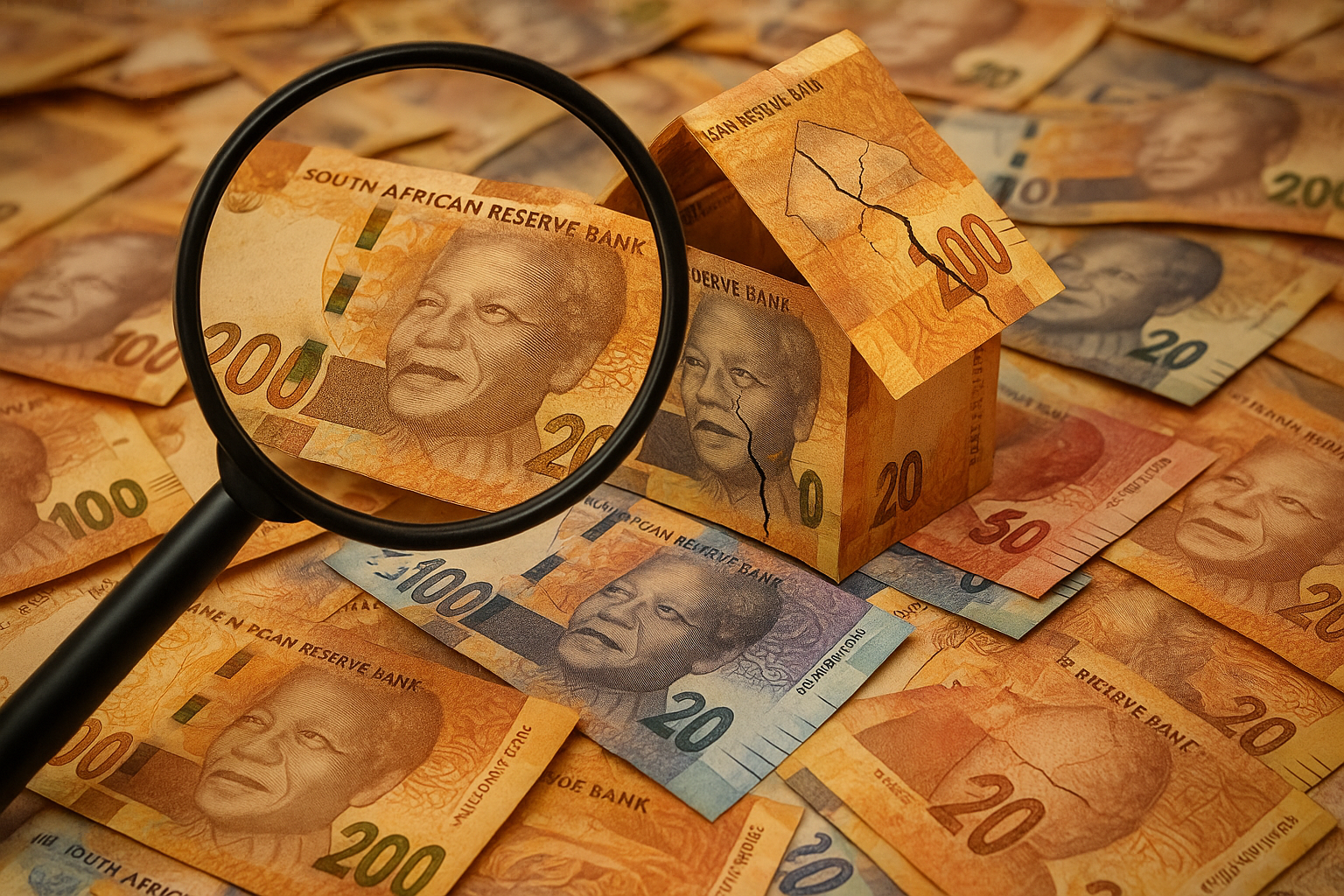
R31M World Cup spending sparks outrage in South Africa. Citizens debate if funds could better serve housing, healthcare, or education.
South Africa is buzzing with talk about R31 million set aside for the 2026 FIFA World Cup. Many people are asking if this big sum of money could be better spent at home. They think it could help build houses, fix hospitals, or get rid of pit toilets in schools. This has started a huge debate about what the country truly needs and values.
What is the controversy surrounding South Africa's R31 million World Cup budget?
The controversy over South Africa's R31 million budget for the 2026 FIFA World Cup stems from public suspicion regarding its allocation amid high unemployment and poverty. Critics argue the funds could better address critical needs like housing, healthcare, education (e.g., eliminating pit toilets in schools), and municipal infrastructure, questioning the value of international visibility over immediate citizen welfare.
Get Cape Town news in your inbox
Stay updated with the latest stories from the Mother City.
When Public Spending Becomes a National Obsession
South Africa has discovered a new pastime, and it requires nothing more than a calculator, a newspaper headline, and a healthy dose of civic frustration. The revelation that Sport, Arts and Culture Minister Gayton McKenzie allocated R31 million toward South Africa's presence at the 2026 FIFA World Cup has transformed ordinary citizens into amateur auditors, each constructing elaborate alternative budgets with the precision of Treasury officials. This phenomenon reveals something far more significant than simple disagreement over government priorities. It exposes the raw mathematics of expectation in a nation where fiscal choices carry extraordinary moral weight.
The spending breakdown itself tells a story of diplomatic ambition meeting sporting spectacle. International travel, accommodation, hospitality suites, match tickets, an exhibition match, and nation-branding activities each claimed portions of the budget. Notably, twenty fan packages received private sponsorship, while the department directly funded a cultural programme supporting twenty artists. This distinction between public and private funding has become crucial in subsequent debates, with opposition Members of Parliament demanding granular accountability and questioning whether taxpayers received commensurate value.
The controversy erupted not merely from the amount, but from the timing and context of its disclosure. Minister McKenzie's revelation came through parliamentary questioning rather than proactive transparency, amplifying public suspicion about whether this allocation would have surfaced without opposition pressure. The ministry's initial defence emphasized the cultural and economic benefits of international exposure, yet failed to anticipate the visceral public response that would follow.
The Alternative Arithmetic: What R31 Million Could Construct
The human imagination, when confronted with large numbers, seeks tangible translation. South Africans have obliged spectacularly, converting abstract millions into concrete possibilities that resonate across daily experience. Government housing subsidy calculations provide perhaps the most arresting comparison. At approximately R300,000 per fully subsidised RDP home, R31 million could theoretically contribute toward constructing more than one hundred dwellings. In a nation where informal settlements remain visible markers of incomplete transformation, each potential home represents not merely shelter but dignity, family stability, and generational possibility.
Healthcare infrastructure offers equally compelling alternatives. National Treasury refurbishment estimates suggest that R31 million could substantially upgrade community health facilities or purchase medical equipment serving thousands of patients. In provinces where patients queue from dawn for chronic medication, where oncology machines operate with maddening scarcity, and where ambulance response times stretch into hours, such calculations carry bitter weight. The Eastern Cape's ongoing struggles with hospital infrastructure, the Northern Cape's vast distances between medical facilities, and Gauteng's overcrowded emergency departments each provide contexts where equivalent spending might have produced visible, immediate relief.
Education presents perhaps the most agonizing comparison. Recent Basic Education Department data indicates that R31 million could eliminate pit toilets from numerous schools, construct dozens of classrooms, or provide thousands of learner desks and chairs. The continued existence of sanitation facilities that violate constitutional rights to dignity and basic education transforms fiscal choices into constitutional questions. When Minister McKenzie's department spent on World Cup visibility, approximately 3,898 schools nationwide still used pit toilets according to parliamentary monitoring, though figures fluctuate with ongoing construction programmes.
Municipal infrastructure completes this alternative universe. Road resurfacing, sports field repairs, water leak remediation, and electricity grid stabilization each represent areas where municipal budgets crater under demand. The R31 million could have resurfaced significant kilometres of deteriorating provincial roads, repaired community sports facilities that produce the very athletes World Cup programmes claim to celebrate, or addressed water losses that drain billions from municipal finances annually.
The Context That Transforms Numbers Into Controversy
Understanding why this particular expenditure ignited such sustained public engagement requires examining South Africa's economic landscape with unflinching clarity. The official unemployment rate exceeding thirty percent represents only the visible portion of economic distress. The expanded definition, incorporating discouraged work-seekers, approaches forty-five percent. Youth unemployment exceeds sixty percent in some calculations, creating a generation whose economic prospects remain systematically constrained.
Poverty statistics compound this picture. The World Bank's most recent international poverty line assessments place approximately half of South Africa's population beneath various poverty thresholds. Food insecurity affects millions, with recent studies suggesting that approximately ten million South Africans experience hunger regularly. Inequality, measured by Gini coefficients, positions South Africa among the world's most economically stratified societies.
This economic foundation makes every public expenditure subject to implicit comparison with immediate survival needs. When citizens calculate what R31 million might purchase, they are not merely engaging in speculative accounting. They are performing a kind of democratic arithmetic, weighing the state's choices against their own constrained possibilities. The braai-fire debates and office meeting discussions represent participatory budgeting in its most unstructured, most emotionally authentic form.
The Counter-Argument: Intangible Returns and Long-Term Vision
Minister McKenzie's defence merits examination beyond dismissive characterization. His argument that international promotion generates benefits resistant to immediate quantification aligns with established tourism economics. South Africa's tourism sector contributes approximately 8.6% to GDP directly and indirectly, supporting millions of employment positions. Major sporting events, including previous World Cup participation, have demonstrated capacity to elevate destination visibility and stimulate booking enquiries.
The cultural programme's value proposition operates similarly. South African artists gaining international exposure may secure subsequent opportunities, royalties, and collaborative partnerships that extend far beyond initial investment. The global creative economy, valued in trillions, rewards visibility disproportionately. For emerging artists from historically marginalized communities, platforms like the World Cup cultural programme may represent career-defining moments.
Investment promotion, the most diffuse claimed benefit, connects to South Africa's persistent struggle to attract foreign direct investment. Perceptions of instability, corruption, and infrastructure deterioration have constrained capital inflows. High-profile international presence, according to this argument, counters negative narratives with images of South African capability and cultural richness.
These arguments carry theoretical validity. The challenge lies in verification and proportion. Tourism returns from World Cup presence require years to materialize and attribution remains methodologically contested. Cultural programme beneficiaries, while individually significant, represent minuscule fractions of South Africa's vast artistic community. Investment decisions follow complex calculations where sporting hospitality constitutes merely one variable among hundreds.
The Mathematics of Democratic Accountability
Perhaps the most significant dimension of this controversy concerns process rather than specific amounts. The R31 million figure emerged through ministerial disclosure rather than proactive budgetary transparency. Opposition demands for detailed expenditure breakdowns highlight persistent weaknesses in South African public financial management, where aggregate figures substitute for itemized accountability.
The Public Finance Management Act establishes frameworks for responsible spending, yet implementation gaps remain substantial. The absence of pre-approval parliamentary scrutiny for this allocation, the limited public consultation on programme design, and the delayed disclosure of sponsorship arrangements each represent democratic deficits that amplify controversy.
South Africa's constitution enshrines progressive realization of socioeconomic rights "within available resources." This formulation creates productive tension between aspiration and constraint. Every expenditure on international promotion implicitly argues that such spending constitutes appropriate resource allocation, that the "available resources" framework encompasses long-term positioning alongside immediate provision. Critics respond that progressive realization demands prioritization of foundational needs, that international visibility rings hollow when citizens lack visible toilets.
Beyond the Immediate Controversy
The World Cup spending debate sits within broader patterns of South African public financial management that warrant attention. The 2010 FIFA World Cup, hosted rather than merely attended, consumed approximately R40 billion in public expenditure, with benefit realizations still contested. More recent controversies involving sports, arts, and culture ministry spending - including various festival allocations and heritage site management - suggest systematic challenges in demonstrating public value.
What distinguishes this controversy from routine opposition criticism is its generative capacity. The "what else could R31 million buy?" question has escaped ministerial control, becoming autonomous cultural phenomenon. Social media calculations, radio call-in contributions, and informal conversation have constructed alternative budgets more numerous and varied than any official documentation. This participatory fiscal imagination, however imperfectly informed, represents democratic engagement that transcends formal accountability mechanisms.
The absence of resolution - no definitive determination that McKenzie erred or succeeded - may itself constitute appropriate outcome. In open societies, controversial expenditures should remain contested, their justifications perpetually subject to examination against evolving circumstances and alternative possibilities. The R31 million has purchased, if nothing else, a sustained national conversation about what South Africa values and how it demonstrates those values through collective resource allocation.
What is the controversy surrounding South Africa's R31 million World Cup budget?
The controversy centers on the R31 million allocated by the South African government for its presence at the 2026 FIFA World Cup. Many citizens and opposition parties argue that this substantial sum could be better utilized to address pressing domestic issues such as building houses, improving healthcare facilities, eliminating pit toilets in schools, and upgrading municipal infrastructure. The debate highlights a deep concern among the public about government priorities and the perceived disconnect between spending on international events and urgent national needs, especially given high unemployment and poverty rates.
How was the R31 million budget allocated for the 2026 FIFA World Cup?
The R31 million budget was designated for various activities related to South Africa's participation and presence at the 2026 FIFA World Cup. This included international travel, accommodation, hospitality suites, match tickets, an exhibition match, and nation-branding activities. Additionally, twenty fan packages received private sponsorship, and the Department of Sport, Arts and Culture directly funded a cultural program supporting twenty artists. The allocation and its transparency, or lack thereof, have been a point of contention, with opposition Members of Parliament demanding detailed accountability.
What are some alternative uses for R31 million that South Africans have proposed?
South Africans have actively engaged in

Liam Fortuin is a Cape Town journalist whose reporting on the city’s evolving food culture—from township kitchens to wine-land farms—captures the flavours and stories of South Africa’s many kitchens. Raised in Bo-Kaap, he still starts Saturday mornings hunting koesisters at family stalls on Wale Street, a ritual that feeds both his palate and his notebook.
View all articles →