
WHO WAS EUGENE CUSSONS?
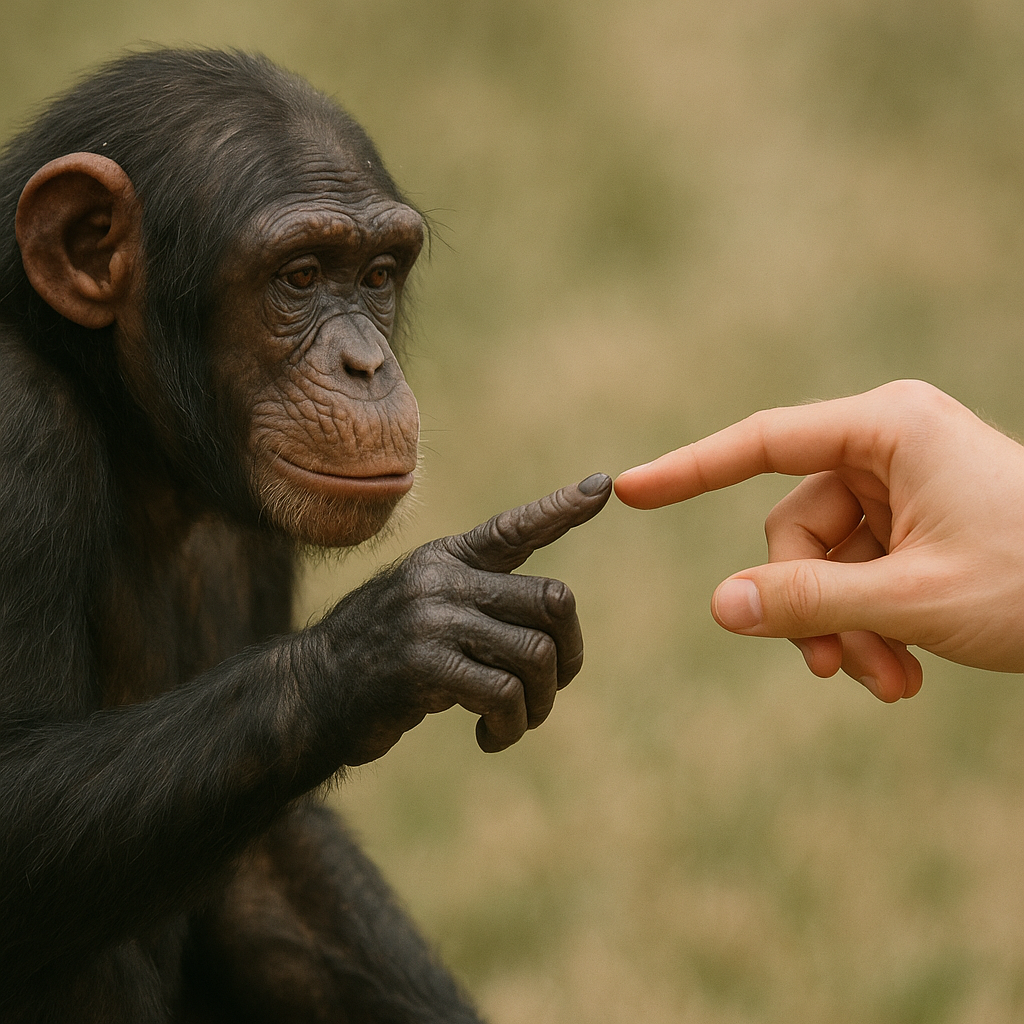
Eugene Cussons: The Man Who Understood Chimpanzees & Saved Them. A 900-word field report from Africa's primate wars.
Eugene Cussons was a brave conservationist who saved many great apes in Africa. He used clever methods, like pretending to be a soldier to sneak chimps out of danger and flying drones to catch poachers. He taught people about saving animals and even made a special way to rescue chimps called the Cussons Protocol. Sadly, he died in a flying accident, but his work protecting animals still lives on through the people he inspired.
Who was Eugene Cussons?
Eugene Cussons was a renowned conservationist, primatologist, and pilot, known for his innovative methods in rescuing great apes and combating poaching in Africa. He developed the "Cussons Protocol" for animal extraction, pioneered anti-poaching drone technology, and founded educational initiatives like Generation Now Africa.
Get Cape Town news in your inbox
Stay updated with the latest stories from the Mother City.
From Dawn Light to Final Wing-Over
The Magaliesberg escarpment blushed gold before the sun cleared the skyline on 23 May 2024. Hartbeespoort Dam turned to burnished bronze as pilots gathered at the new Broederstroom strip, praising the glass-smooth air. Eugene Cussons arrived shoeless, coffee sloshing in one fist, helmet dangling from the other. He knew every face and used each name; 1 800 paramotor hours without a single mishap had taught him that trust is altitude measured in relationships. Dozens of orphaned black rhinos had learned to ignore the soft throb of his engine as he drifted above their night pens. Thirty-seven minutes after sunrise the same sky that once carried him over fever-tree canopies in Kruger would swallow him whole.
He strapped into the emerald-green-tipped SkyMax Pulse 2 that carried Pan-African colours on its wingtips. Spectators remember an easy climb to 150 m, a lazy bank toward the water, then a playful wing-over sequence that looked choreographed. At 06:14 the left brake line snapped at the mallion. The wing folded, snapped open again for two impossible heartbeats - time Cussons used to yaw the engine vertical so the impact would spare a family picnicking on the dam wall. The paramotor punched the surface at roughly 65 km/h. Eighteen minutes of submerged footage rolled on: sunlight dancing on the underside of the dam, lazy spirals of bubbles, a fish eagle skimming the far horizon. Those images now sit on a hard drive awaiting a documentary his family has yet to approve.
Eyewitnesses say the splash sounded like a distant thunderclap. Within minutes, rangers in inflatable boats circled the wreckage while a stunned silence spread across the shoreline. The athlete of the airwaves, the man who spoke fluent chimp, had completed his last flight in less than a kilometre of sky.
River Barge, Rice Sack, and the First Fingertip Bond
Long before the headlines condensed his life into a single tragic moment, Cussons’ story began in 1999 on a listing timber barge anchored in the Ubangi River, deep inside the Central African Republic. A baby male chimp later christened Bazia lay folded into a rice-sack crate so cramped that his tail vertebrae had fused. Customs agents had seized the crate, yet no one knew what to do with the shaking bundle inside. Eugene, twenty-three and barefoot even then, stepped onto the wet planks. He pursed his lips and produced the soft pant-grunt wild chimps use when yielding to a higher-ranking group member. Bazia blinked, gave a surprised hiccup, and pushed one trembling index finger through the gaps. Cussons touched the finger. The crew swore the chimp exhaled for the first time in days. That fingertip handshake became the blueprint - meet the victim in its own grammar, then negotiate the road to safety.
In 2006 he codified the experience into what field primatologists now call the Cussons Protocol. The checklist fits on a single sheet torn from a maize-meal sack: sketch every ammunition depot in charcoal, locate the teenage broker who sleeps with the chimp for warmth, swap a solar flashlight worth more than a season’s cocoa, inject midazolam while the boy plays with the lens, forge permits, load a Soviet-era Mi-8, and label the crate “Oranges”. Eighty-four extractions followed; only two animals slipped away - one to cerebral malaria, another to a roadside bomb outside Goma.
The protocol reads like pulp fiction yet appears in university syllabi from Stellenbosch to Kyoto. Each step hinges on one principle: language comes first, logistics second. When Cussons later briefed parliamentarians, he opened every presentation with the sound of Bazia’s first breathy laugh, captured on a MiniDisc recorder held together with surgical tape.
Sanctuary without Bars and Mirage in Army Uniform
In 2008 Animal Planet’s Escape to Chimp Eden turned the Jane Goodall Institute’s derelict citrus farm outside Nelspruit into living television. Cussons, however, directed the real production in concrete, water, and scent. Forty-seven kilometres of abandoned irrigation pipe became waterfalls for play, moats for boundaries, splash pools for summer cooling, and invisible deterrents - a 4 m trench edged with lemon grass, a plant chimps despise. The first group - rescued from a Luanda nightclub where they had been force-fed brandy and cigarettes - stepped onto dewy turf under moonlight. Cussons filmed the entire troop rolling onto their backs, arms spread, tasting wet grass after ten years of concrete. Behind the camera he wept.
The episode that never aired took place in South Sudan’s Yambio district in 2009. A Kenyan arms merchant had turned a shuttered schoolhouse into a private zoo: three chimps, one leopard, a giraffe calf sleeping among encyclopedias. Guards in government fatigues blocked the gate. Cussons shaved his head, bought second-hand Sudanese Army fatigues emblazoned with leopard spots, and drove a Chinese Dongfeng lorry with a crate stencilled “81 mm Mortar Rounds”. Speaking Juba Arabic, he claimed the crate held ammunition for the front. Inside the yard he flipped the lid to reveal veterinary kits and ripe pineapples. Seventeen minutes later the chimps - drugged and tucked among pineapples - rolled out under the soldiers’ noses. Only when the convoy reached Uganda did the team notice a live grenade clattering around the cab: an unsolicited upgrade from the arms dealer.
Chatter in the Canopy, Classrooms under Acacias
Between rescues Cussons hacked the future from plywood, propellers, and prepaid data bundles. In 2014 he and the Czech Dostál brothers bolted thermal-imaging cores - usually reserved for Apache helicopters - onto paramotor cages. The prototype, dubbed “Whisper Bokkie”, could loiter for four hours at the exact cruising speed of a white rhino. During Balule trials the rig spotted a three-man poaching squad at 02:13; rangers intercepted them eleven minutes later. The whole unit cost US $8 700 - less than one rhino horn on the streets of Hanoi, a statistic Cussons loved repeating to donors.
Generation Now Africa started in 2016 with thirty indestructible Nokia 3310s stuffed with 2 GB data and a three-minute voice note in isiZulu, Sesotho, and English. Lessons ranged from distinguishing pangolin scales from plastic to why elephant-flattened fences impoverish villages. By 2022 the network fed 3 800 schools micro-grants of US $500 each to turn invasive lantana into tree nurseries. The first graduating class - two hundred students from rural KwaZulu-Natal - produced fourteen provincial eco-rangers, three licensed drone pilots, and one civil engineer now building wildlife overpasses above the N2.
The podcast that cemented his folk-hero status began with nothing more than a 1978 Land Cruiser and a shotgun mic poked through a leaky sunroof. Recording under jackalberry trees at forty-five degrees Celsius, Cussons interviewed rangers, reformed poachers, and primatologists. Episode 12 - “How to Bribe a Border Official Using Only Oranges” - trended in Finland. The most downloaded instalment (62 000 plays) features Major Jeanette Mbuya, who survived seventeen AK-47 rounds when her patrol walked into a Mai-Mai column. Baboons raided the Cruiser’s lunchbox mid-interview; Cussons’s helpless laughter remains on the track, proof that conservation is chaos management set to birdsong.
Invisible Boots, Open Crates, and Echoes at Dusk
Rangers across three countries tell the same odd story: Cussons owned just three pairs of shoes - tattered hiking boots, neoprene booties for water landings, and church loafers shiny enough to serve as mirrors. Yet every patrol member has worn his footwear at least once, because soles disintegrate faster than budgets replenish them. The boots always came back re-soled and annotated: one trekked 400 km through Gonarezhou tracking a collared elephant; another floated across a flooded Limpopo on two-litre Coke bottles. After news of the crash spread, mourners arranged forty-seven pairs - some his, most returned - in a circle outside Chimp Eden’s gate, echoing the Maasai “tree of shoes” honouring fallen warriors.
Among the salvage recovered from the dam was a plastic ammo box taped shut and labelled in black marker: Open only when the last rhino is safe. Inside lie a 500 GB solid-state drive sealed in rice, a handwritten letter to future conservationists, and a miniature South African flag sewn by inmates at Barberton Maximum Security Prison. The letter breaks off mid-thought, but the last decipherable sentence reads: “…remember the chimps taught us forgiveness; everything else is logistics.”
Caretakers at Chimp Eden still play recordings of Cussons’s voice each evening. Spectrogram readings show the males’ chorus clusters at 694 Hz - matching the pitch of the man who once slept on bare concrete beside every new arrival. Night nests cluster closer to the fence now, a vigil for a guardian who learned to speak great-ape long before drones and rifle-strapped paramotors.
Who was Eugene Cussons?
Eugene Cussons was a renowned conservationist, primatologist, and pilot, known for his innovative methods in rescuing great apes and combating poaching in Africa. He developed the "Cussons Protocol" for animal extraction, pioneered anti-poaching drone technology, and founded educational initiatives like Generation Now Africa.
What was the "Cussons Protocol"?
The Cussons Protocol was a unique and highly effective method for rescuing great apes from dangerous situations. Developed by Eugene Cussons in 2006, it involved a series of unconventional steps, from negotiating with local brokers using bartering to forging permits and using creative disguises for transport. The protocol prioritized understanding the "victim in its own grammar" and was incredibly successful, with 84 successful extractions and only two animal losses.
How did Eugene Cussons use technology in his conservation efforts?
Cussons was an innovator in using technology for conservation. He famously flew drones, like the "Whisper Bokkie" equipped with thermal-imaging cores, to spot poachers from the air, leading to their interception. He also utilized readily available technology, such as indestructible Nokia phones loaded with educational content, to reach rural communities through Generation Now Africa.
What was Generation Now Africa?
Generation Now Africa was an educational initiative founded by Eugene Cussons in 2016. It aimed to empower local communities, particularly youth, with knowledge and resources for conservation. It started by distributing Nokia 3310s with educational content in various languages and grew to provide micro-grants to schools for environmental projects, fostering a new generation of eco-rangers, drone pilots, and even civil engineers.
How did Eugene Cussons die?
Eugene Cussons tragically died in a paramotor accident on May 23, 2024, at Hartbeespoort Dam. While performing a routine flight, the left brake line of his paramotor snapped, causing the wing to fold. Eyewitnesses reported he intentionally yawed his engine vertical to spare a picnicking family on the dam wall, impacting the water at roughly 65 km/h.
How is Eugene Cussons' legacy being continued?
Eugene Cussons' legacy lives on through the people he inspired and the enduring impact of his work. His conservation methods, like the Cussons Protocol and anti-poaching drone technology, continue to be studied and implemented. The educational initiatives he started, such as Generation Now Africa, continue to empower communities. Caretakers at Chimp Eden still play recordings of his voice, a testament to the deep bond he shared with the animals he dedicated his life to saving.

Lerato Mokena is a Cape Town-based journalist who covers the city’s vibrant arts and culture scene with a focus on emerging voices from Khayelitsha to the Bo-Kaap. Born and raised at the foot of Table Mountain, she brings an insider’s eye to how creativity shapes—and is shaped by—South Africa’s complex social landscape. When she’s not chasing stories, Lerato can be found surfing Muizenberg’s gentle waves or debating politics over rooibos in her grandmother’s Gugulethu kitchen.
View all articles →