
WHY ARE POACHERS TARGETING PLANTS?
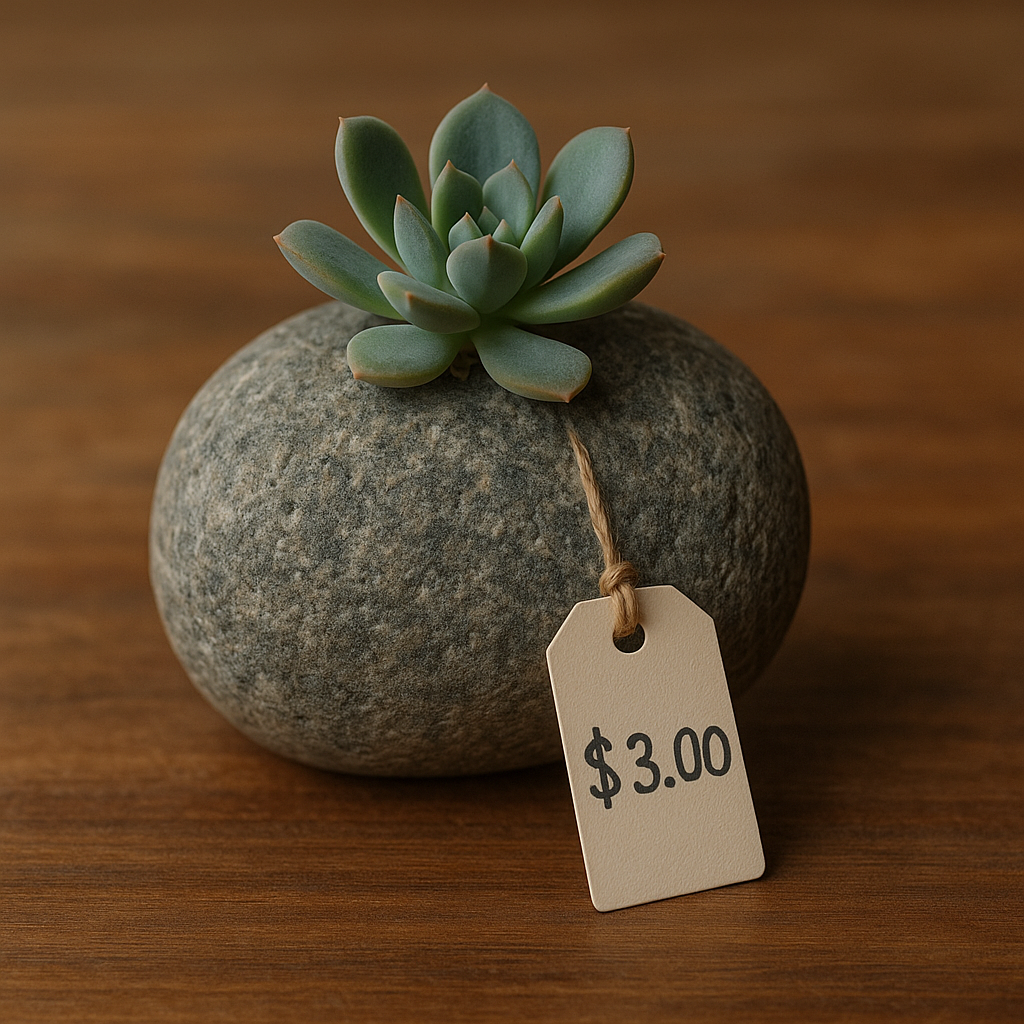
South Africa's rare succulents are vanishing due to illegal trade. Discover the fight against poachers, social media's role, and conservation efforts.
Tiny, precious desert plants in South Africa are being stolen at an alarming rate. People from other countries pay huge money for these rare succulents, making poachers rich. These plants are so small they can be hidden easily, and special tech helps thieves find them. Rangers are fighting back with their own tech and community help, but it's a tough race to save these unique plants from disappearing forever.
Why are South Africa's miniature desert plants being illegally harvested?
South Africa's unique miniature desert flora, like Conophytum and Haworthia, are being illegally harvested due to high demand in international black markets, particularly in Asia. These rare succulents fetch exorbitant prices, with some individual plants selling for tens of thousands of dollars, making poaching a lucrative, low-risk, high-reward criminal enterprise.
Get Cape Town news in your inbox
Stay updated with the latest stories from the Mother City.
3:47 a.m., Karoo Frost, GPS Ping
At three-quarters to four on a winter night, ranger Willem de Waal eased his bakkie off the R27, doused the headlights, and let the dashboard glow of his thermal viewer do the work. Four heat-blobs crawled between frost-glazed quartz blocks, backpacks swollen like camel humps. −3 °C kept cell walls crisp, perfect for the smuggler protocol: dig, roll in damp newspaper, board a plane before the cut scabs. De Waal thumbed the radio once, then listened to the brittle crunch of ice-crusted soil breaking under foreign hands.
That tableau repeats every two or three evenings along a 200-km-wide band that arcs from the Richtersveld to the sandveld south of Calvinia. From a distance the ground looks abandoned; in truth it shelters the planet’s densest dwarf-succulent population. Many species grow nowhere else but on a single ridge the size of a rugby field. In Seoul, Bangkok, Tokyo, and lately Shenzhen, a rosette smaller than R2 coin is now the trophy equivalent of a numbered-edition super-car. Each transaction is a death sentence for the plant.
The Five Treasures Most Wanted
Conophytum: Buttons of Stone
These coin-sized stone mimics blend so perfectly with gravel that only magnifying lenses betray the seam between leaf and rock. Enthusiasts shell out R4 500 for a “window” form from the Knersvlakte. A single harvester can pop 400 plants before dawn, deleting a whole colour morph before sunrise.
Haworthia: Glasshouses in a Leaf
Translucent “window” Haworthias are TikTok darlings, hashtagged #RareSucculents and flaunted under ring-light close-ups. A variegated Haworthia truncata can hit R20 000 on Korean auction boards because offsets appear grudgingly - entire colonies vanish to satisfy overnight demand.
Clivia mirabilis: The Underground Torch
Its blood-orange tubes open beneath soil level, scenting subterranean air for pollinator beetles. Fewer than 400 individuals remain after three decades of excavation. One flowering adult recently changed hands in Shanghai for US$25 000.
Boophone haemanthoides: Spirals of Toxic Beauty
These basketball-sized poisonous bulbs unfurl swirling, blue-green leaves after veld fires. Traditional healers dig them, but overseas buyers treasure the the leaf geometry more. Seed-grown bulbs need seven to ten patient years, so wild ones are simply yanked out.
Lithops lesliei v. hornii “Green Rock”
Recorded only from a single plateau in 1964, now declared extinct in the wild after Hong Kong customs seized 1 800 specimens labelled with exact co-ordinates that now read like tombstones.
Tech, Telescopes and Telegrams
Gadgets for the Grab
Ten years ago poachers carried headlamps and pillowcases. Today they slip on infrared goggles, pack refrigerated vacuum crates, and coordinate drops through ciphered Telegram threads. Orders arrive months in advance, colour codes pinned to metre-precise grids - “A15 pale ghost,” “E800 ruby river.” Couriers board flights from Johannesburg or Cape Town declaring “decorative pebbles”; inside are foil sachets of plants starved for two weeks so they weigh less and carry no tell-tale soil.
Eyes in the Airport
At OR Tambo, the Environmental Enforcement Unit now wields a spectral scanner that recognises the chlorophyll fingerprint of Conophytum. In eight pilot weeks it flagged seventeen suitcases and netted 14 000 illegally lifted plants. Smaller airports - Upington, Springbok - quickly became preferred back doors.
Dollars and Decimal Points
Interpol’s 2024 audit puts the global black-market value of succulents at US$2 billion - bigger than rhino horn, yet a fraction of the headlines. A thumbnail-size Conophytum purchased for R20 from a seasonal farmworker in the veld retails for R25 000 in Seoul. A single mule can move 2 000 plants in one carry-on - the profit rivals cocaine, and sentences remain lighter.
Judges are catching up. In July 2025 four middlemen caught with 303 Clivia mirabilis plants destined for Shanghai each received fifteen years. Judge Mbulelo Jolwana ruled that “erasing a species from earth is theft from time itself.”
Screens, Seeds and Second Chances
Likes, Shares and Lost Lots
Instagram’s #conophytumporn clocks 14 000 posts, many captioned “DM for provenance.” Facebook groups such as “Lithops Lovers Asia” vet newcomers with quiz questions, then trade GPS “pins” like collectables. TikTok’s algorithm rewards the shocking: a twelve-second clip of a Namaqualand Lithops being sliced from stone hit 1.3 million views before breakfast. Influencers in Shenzhen-greenhouses unwittingly broadcast exact colour morphs poachers race to mimic.
Digital Refuges
South Africa’s scientific sector now fights back in pixels. SANBI’s app, iVeld, identifies a photographed succulent in seconds, flags red-listed species, and uploads anonymous GPS alerts. Rangers receive WhatsApp pings; drones lift off within the hour. Meanwhile, University of Johannesburg scientists have DNA-barcoded 97 % of threatened Conophytum and Haworthia. Any confiscated leaf can now be traced to the very square metre it left, giving prosecutors genetic fingerprints as solid as rhino DNA.
From Pick to Patch
Across the Knersvlakte, shepherds earn a daily stipend to act as “plant custodians.” Equipped with offline field guides and basic smartphones, they log strange vehicles and fresh scrape marks. During the 2024 season their tip-offs triggered four stings and twenty-one arrests. The Council for Scientific and Industrial Research micro-satellites - no bigger than shoeboxes - scan the quartz fields daily, flagging new holes down to 25 cm.
Healing what’s left
In Worcester’s Karoo Desert National Botanical Garden, a shade-cloth “plant ER” revives 30 000 confiscated succulents every year. Misters mimic coastal fog; once plumped back to life, survivors are replanted on private land under perpetual conservation servitudes. Each saved rosette proves restoration is possible, but the ledger is grim - every rescued plant represents hundreds that slipped through.
A Blueprint in the Desert
The United States forged a path after the 1982 Operation Cacti sting saved the Organ Pipe Cactus. Arizona nurseries now flood the market with legally propagated plants, undercutting poachers, while wild stands thrive. South Africa’s flora evolved even slower and recovers slower, yet the recipe holds: relentless enforcement, community profit-sharing and prison terms that chill buyers. One certified seed-grown Conophytum purchased at Vetplant Nursery is a vote against the black market; one uploaded photo of a suspicious bakkie is a shield for a hillside; one stiff sentence is a message sent around the globe.
At dawn in the Knersvlakte, ranger de Waal watches the first sunbeam ignite a quartz plain older than modern humans. Somewhere within the stones a Lithops cleft opens, twin leaves indistinguishable from the gravel that cradles them. It could live another half-century if left untouched. By nightfall, somewhere on the planet, another smartphone glow will map the next raid.
[{"question": "
Why are South Africa's miniature desert plants being illegally harvested?
", "answer": "South Africa's unique miniature desert flora, like Conophytum and Haworthia, are being illegally harvested due to high demand in international black markets, particularly in Asia. These rare succulents fetch exorbitant prices, with some individual plants selling for tens of thousands of dollars, making poaching a lucrative, low-risk, high-reward criminal enterprise. The small size of these plants also makes them easy to conceal and transport."},{"question": "Which specific plant species are most targeted by poachers?
", "answer": "The 'Five Treasures Most Wanted' include Conophytum (Buttons of Stone), Haworthia (Glasshouses in a Leaf), Clivia mirabilis (The Underground Torch), Boophone haemanthoides (Spirals of Toxic Beauty), and Lithops lesliei v. hornii \"Green Rock\". These plants are highly sought after for their unique appearance and rarity, with some like the Lithops lesliei v. hornii \"Green Rock\" already declared extinct in the wild due to poaching."},{"question": "How do poachers locate and transport these rare plants?
", "answer": "Modern poachers use advanced technology such as infrared goggles and coordinate drops through ciphered Telegram threads. They receive orders months in advance with precise GPS coordinates. For transport, they often use refrigerated vacuum crates and declare the plants as \"decorative pebbles\" at airports, sometimes starving the plants for two weeks to reduce weight and avoid detection. Smaller airports like Upington and Springbok are increasingly used as back doors."},{"question": "What technologies are being used to combat this illegal trade?
", "answer": "Authorities are deploying various technologies to fight back. At airports like OR Tambo, spectral scanners recognize the chlorophyll fingerprint of plants like Conophytum. South Africa’s scientific sector uses the iVeld app to identify species and upload anonymous GPS alerts for rangers. University of Johannesburg scientists are DNA-barcoding plants to trace confiscated leaves to their exact origin. Additionally, micro-satellites detect new holes in the ground, and drones are used for rapid response."},{"question": "What are the consequences for those involved in the illegal succulent trade?
", "answer": "While historically sentences might have been lighter, judges are now imposing severe penalties. For example, four middlemen caught with 303 Clivia mirabilis plants received fifteen-year sentences, with Judge Mbulelo Jolwana stating that \"erasing a species from earth is theft from time itself.\" The global black-market value of succulents is estimated at US$2 billion, indicating the high stakes involved."},{"question": "How are conservation efforts attempting to restore affected plant populations?
", "answer": "Conservation efforts include a \"plant ER\" at Worcester’s Karoo Desert National Botanical Garden, which revives thousands of confiscated succulents annually. Once recovered, these plants are replanted on private land under perpetual conservation servitudes. Community involvement is also crucial, with local shepherds acting as \"plant custodians\" who log suspicious activities. The long-term goal is to flood the market with legally propagated plants, similar to the success seen with the Organ Pipe Cactus in the US, to undercut poachers and protect wild stands."}]
Sizwe Dlamini is a Cape Town-based journalist who chronicles the city’s evolving food scene, from boeka picnics in the Bo-Kaap to seafood braais in Khayelitsha. Raised on the slopes of Table Mountain, he still starts every morning with a walk to the kramat in Constantia before heading out to discover whose grandmother is dishing up the best smoorsnoek that day.
View all articles →