
WHY CAN YOU LOSE YOUR NUMBER?
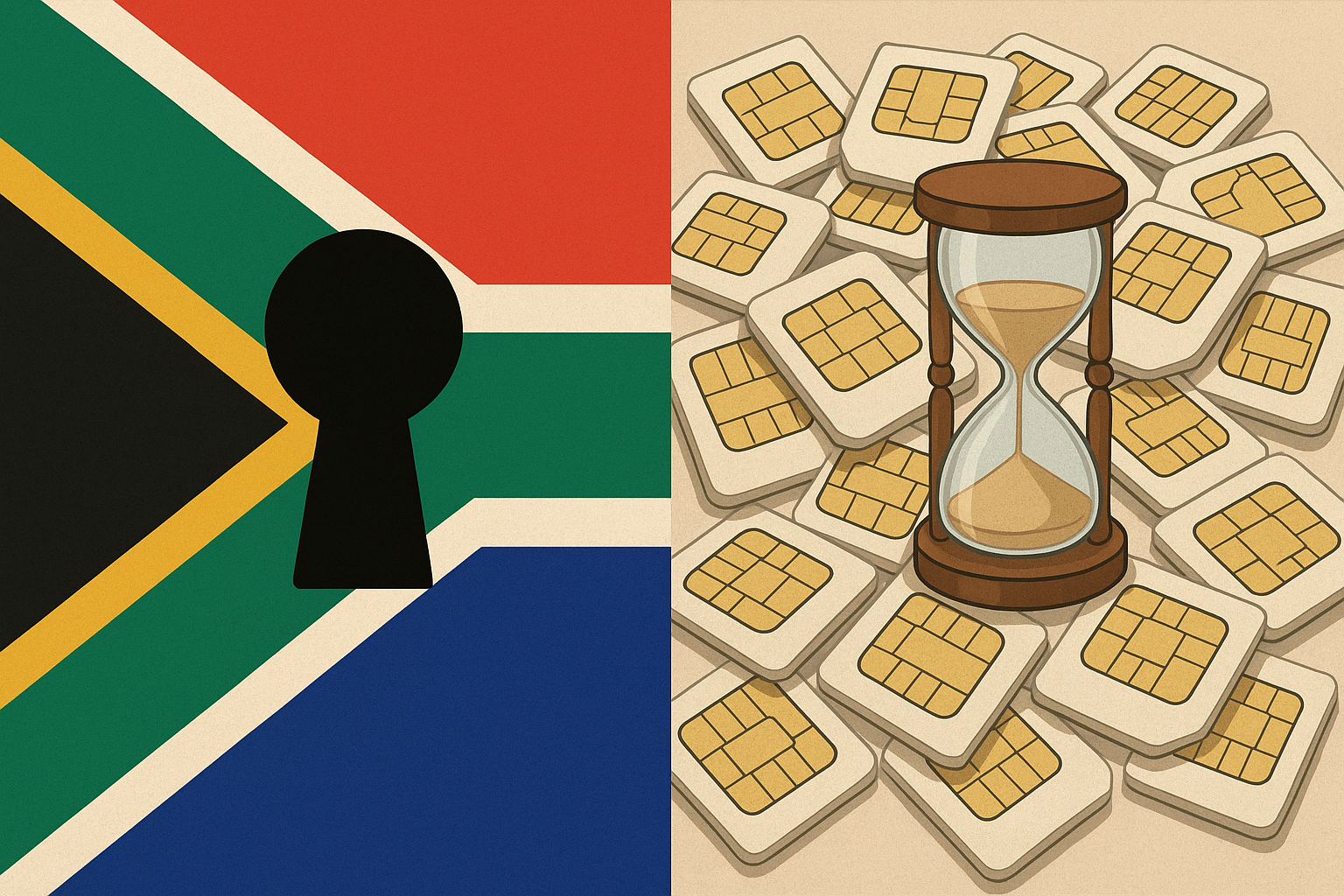
South Africa's new cell number recycling rules mean your number could be reassigned! Learn how to keep your SIM active.
In South Africa, your mobile number is super important, acting like your digital ID. To keep it alive, you must use it for something like making a call or sending a text at least every 90 days. If you don't, your number goes to sleep and can be given to someone else after 150 days. This new rule from ICASA means everyone needs to be extra careful, or their precious digits could vanish and connect to a stranger!
How can you keep your South African mobile number active?
To keep your South African mobile number active, you need to perform a revenue-generating activity at least once every 90 days. This includes making a voice call longer than one second, sending a text message, initiating a data session, or purchasing a bundle. Simply receiving calls or messages is not sufficient.
Get Cape Town news in your inbox
Stay updated with the latest stories from the Mother City.
The Number That Unlocks a Nation
Walk into any tavern in Soweto, a farm stall in the Karoo or a boardroom in Sandton and the greeting is identical: “What are your digits?”
Utter it in isiXhosa, Sepedi, Afrikaans or English and the reply is still the same ten-figure code that opens every digital door.
That sequence logs you into Capitec, receives your SARS one-time PIN, books a taxi via WhatsApp, fetches your Netcare file, routes your Takealot parcel and lets a spaza seller accept your QR payment.
In a country that vaulted over the PC era and landed straight in the palm-sized internet, the humble cellphone string has mutated into the master skeleton key for both the legitimate and the shadow economies.
The regulator keeps a hawk-eye on this fragile magic.
South Africa’s +27 country prefix carries a theoretical ceiling of 617 million mobile combinations, yet fewer than one in six is actually breathing.
The rest slumber in corporate drawers, migrant wardrobes or SIM wallets that have not registered a single billable heartbeat since Siya Kolisi hoisted the Webb Ellis Cup.
To stop the cupboard running bare, ICASA’s Fourth Amendment to the Numbering Plan has scripted a single, nationwide dance that every network - giant or virtual - must perform when it wants a digit back.
Recycling is not new; Vodacom has quietly reclaimed since 2007.
What changes is the beat.
The instant a SIM stops earning revenue a 90-day countdown ignites.
On day 91 the billing engine flags the lapse; day 105 triggers the first gratis SMS:
“React within 15 days or lose 082 xxx xxxx - no airtime needed.”
A second alert lands on day 115.
If the line stays mute, the SIM dies on day 120.
For the next month the digits sit in quarantine: callers hear the tri-tone graveyard dirge and WhatsApp ticks stay stubbornly grey.
Only after 150 days in total may the sequence re-enter circulation and light up in a stranger’s phone.
What Keeps You Alive and What Gets You Deleted
Staying “alive” is stricter than you think.
Watching an inbound salary SMS, listening to mom’s voicemail or receiving a flash-call from an authentication app leaves no revenue spoor.
Even diverting calls to another handset fails, because the carrier records termination on the forwarding leg, not the dormant card.
The certified pulses are delightfully analogue: make a voice call longer than a second, fire off a text, launch a data session that pings the gateway, or buy a bundle through *135# .
Any one of those resets the clock to zero and buys another quarter-year of digital existence.
For 4.3 million citizens living abroad the choreography adds a quarterly nuisance.
A nurse in Leeds who keeps her Vodacom SIM for banking codes must now fish out an old candy-bar every three months, dial her cousin in KwaMashu for half a minute and hang up.
Miss the ritual and she may land at OR Tambo in December, slot the SIM back in and discover that the digits once tied to her FNB app now belong to a first-year student in a Braamfontein res.
ICASA has bolted on an emergency hatch: the 30-day grace recycle.
If you stroll into any branded store within a month of deactivation clutching the dead SIM, a bar-coded ID and proof of residence dated within 90 days, staff must resurrect the line gratis.
No new card required - the old chip is simply re-provisioned on the spot.
Let 30 days slip and the right evaporates; the string is fed back into the lottery.
Businesses holding hundreds of machine SIMs get bespoke treatment.
A firm with 500 pooled telemetry lines may apply in writing to tag individual IMSIs as “reserved” for up to two years, provided at least 60 % of the pool shows measurable traffic.
This concession keeps the SIM in a Gauteng vending machine or a KZN tracking dongle alive even if it only coughs 50 kB a month.
Operators may levy a service fee - currently capped at R12 ex VAT per card each month - turning dormancy into a fresh revenue trickle.
The Tech Ripples and the Loophole Bazaar
The regulation drags the entire stack into a tech refresh.
Carriers must now expose a “Number Lifecycle” endpoint to the Banking Association so that banks can ping the real-time status of every MSISDN used for login.
When a recycled digit is reissued, the bank receives an “unlinked” flag and must nag the customer to refresh contact details before the next sign-in.
The same pipe feeds South Africa’s budding central credit bureau, letting microlenders spot when a defaulter has tried to vanish behind a reclaimed line.
Where bureaucracy blooms, hustlers follow.
A grey cottage industry of “SIM-sitters” now advertises on Facebook Marketplace: retirees with ten-slot bricks offer to babysit your digits for R5 a month, dialling themselves for thirty seconds to keep the card warm.
ICASA admits the practice breaks every network’s Ts & Cs but concedes it has no realistic way to hunt them down.
Across the region, regulators are watching like hawks.
South Africa’s 150-day cycle is tighter than Kenya’s 180 but gentler than Nigeria’s 60, creating a possible corridor for “number refugees.”
To blunt the threat, ICACA allows carriers to slash the 90-day window to 45 for SIMs that have roamed exclusively outside the republic for more than 270 days, provided the owner gets 30 days’ notice.
Expect fireworks at the next Southern African Telecommunication Regulators’ gathering in Livingstone.
How to Stay Master of Your Digits
For the everyday owner, survival is almost laughably simple.
Create a quarterly Google Calendar alert titled “Keep My Number.”
When the ping sounds, load the cheapest R2 voucher, WhatsApp “I’m alive” to the family group and you are indemnified for another 90 days.
Power users can go full automation: an ancient Android on a solar panel in the garage can run Tasker, pull 100 kB of data every 80 days and SMS the owner “SIM still breathing.”
Yet even the best-laid script can be foiled by the variable ICASA cannot code around: forgetfulness.
Picture the 63-year-old widow in Bloemfontein whose prepaid string stayed constant for 22 years - etched, heartbreakingly, on her late husband’s headstone.
Six months in Toronto with her daughter, one missed ritual, and the number slipped into the void.
Today the gravestone connects to a Johannesburg Uber driver who answers each cemetery call with a cheerful “Wrong number, ma’am.”
The rules are locked in; networks have until 1 December 2024 to finish their back-office overhauls.
After that, every silent SIM will march in step: three months of digital stillness, two warning pings, a month of limbo, then resurrection in a handset you have never seen.
The only passport out of that conveyor belt is the simplest act known to mobile civilisation: press dial, press send, or top up a bundle.
In Mzansi today, ten digits are no longer just a way to reach you - they are you.
[{"question": "### What is the new rule regarding South African mobile numbers?", "answer": "ICASA's new rule mandates that South African mobile numbers must be used for a revenue-generating activity at least once every 90 days to remain active. If not, the number enters a recycling process and can be reassigned to someone else after 150 days."}, {"question": "### What activities count towards keeping my mobile number active?", "answer": "To keep your number active, you must perform a revenue-generating activity. This includes making a voice call longer than one second, sending a text message, initiating a data session that pings the gateway, or purchasing a bundle (e.g., through *135#). Simply receiving calls or messages, or diverting calls, does not count."}, {"question": "### What happens if I don't use my number within 90 days?", "answer": "If your SIM card stops generating revenue for 90 days, a countdown begins. On day 105, you'll receive a warning SMS, followed by another on day 115. If the line remains inactive, the SIM dies on day 120. The number then enters a 30-day quarantine period before it can be reissued to a new user after a total of 150 days."}, {"question": "### Can I reclaim my number if it has been deactivated?", "answer": "Yes, there is a 30-day grace period. If you visit any branded store within one month of deactivation with your dead SIM, a bar-coded ID, and proof of residence dated within 90 days, staff must reactivate your line for free. However, if you miss this 30-day window, your right to reclaim the number expires."}, {"question": "### How does this affect South Africans living abroad?", "answer": "South Africans living abroad, who often keep their local SIM for banking codes or other services, need to actively use their number every 90 days. This means making a call, sending a text, or using data to avoid losing their number, which could lead to issues with services linked to that number, like banking apps."}, {"question": "### What are some easy ways to ensure my number stays active?", "answer": "To avoid deactivation, you can set a quarterly reminder (e.g., on Google Calendar) to perform an activity. Loading a small airtime voucher, sending a WhatsApp message, or making a brief call are simple ways to reset the 90-day clock. For advanced users, an old Android phone can be set up to automatically use a small amount of data every 80 days."}]

Liam Fortuin is a Cape Town journalist whose reporting on the city’s evolving food culture—from township kitchens to wine-land farms—captures the flavours and stories of South Africa’s many kitchens. Raised in Bo-Kaap, he still starts Saturday mornings hunting koesisters at family stalls on Wale Street, a ritual that feeds both his palate and his notebook.
View all articles →