
Why conscious travellers are choosing Gonana Collection in Paternoster
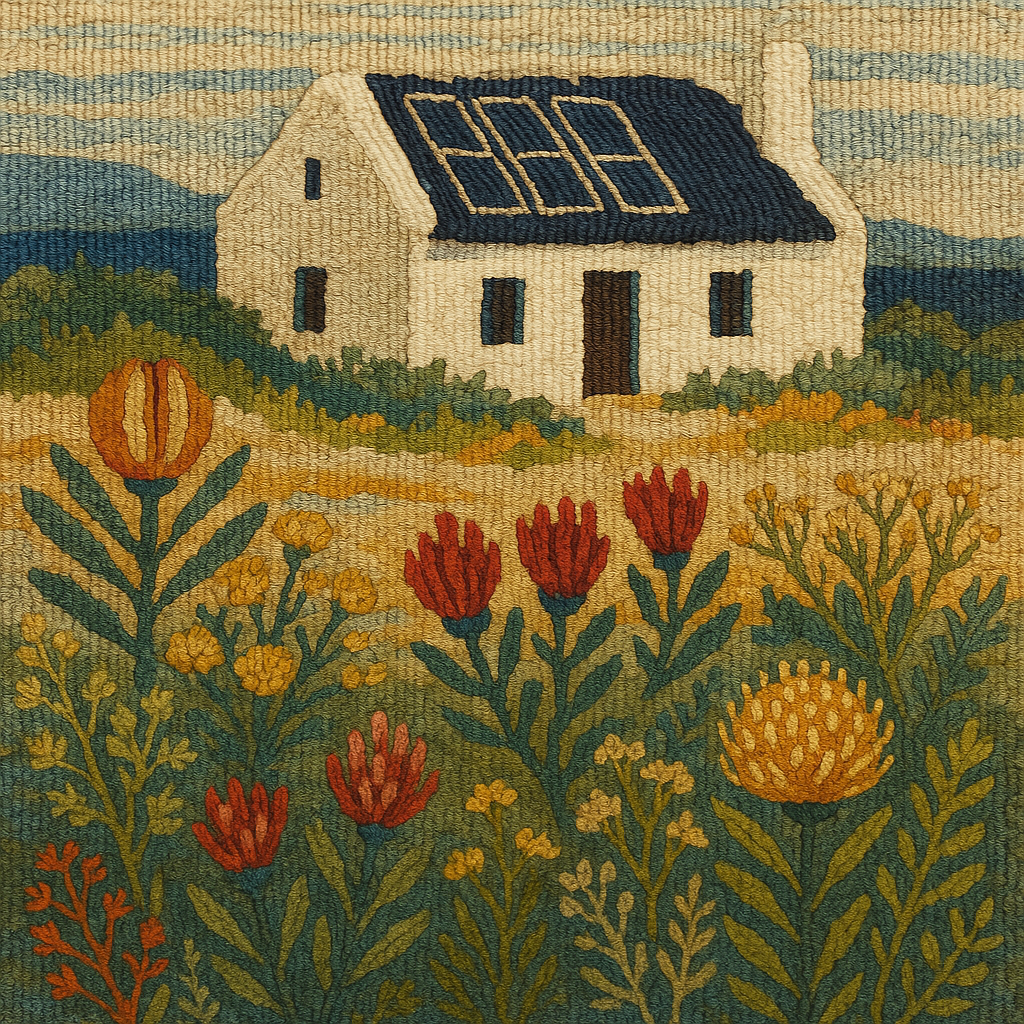
Gonana Collection redefines luxury on South Africa's West Coast, blending authentic experiences, sustainability, and local community.
The Gonana Collection in Paternoster, South Africa, redefines luxury travel. Founded by Jonas Sandström, these eco-friendly retreats swap fancy bling for real, local experiences. They use solar power and recycle water, showing how to be green and still be super comfy. Guests get to live like locals, enjoying true South African charm and helping the community thrive. It's about finding meaning, not just thread count, in your holiday.
What is the Gonana Collection?
The Gonana Collection is a group of sustainable, design-forward retreats in Paternoster, South Africa, founded by Jonas Sandström. It emphasizes authenticity, local craftsmanship, and eco-friendly practices like solar power and water recycling, offering guests a luxurious yet immersive experience that benefits the local community.
Get Cape Town news in your inbox
Stay updated with the latest stories from the Mother City.
How Paternoster’s New-Age Retreats Replace Bling with Belonging
From Ostentation to Immersion
Why Contemporary Jet-Setters Want More Than Thread Count
Today’s seasoned globetrotters no longer equate opulence with acres of polished stone, gold taps, or lobby chandeliers that parody Versailles. Instead, they chase the rarer currency of authenticity : the scent of kelp drying on a windy quay, the clatter of fishing boats returning at dawn, the rustle of endemic fynbos they can later identify on a dusk walk.
Paternoster - South Africa’s oldest surviving fishing hamlet - delivers this elusive quality in spades. Bleached cottages dating to the 1800s still face an Atlantic that barrels into granite ramparts unchanged since Portuguese caravels first passed. Bokkom racks (curing stations for harders) dot the shoreline; Afrikaans hymns spill from whitewashed church doors; and the dark, mineral-rich Benguela current still yields lobster and snoek for hardy locals.
Into this scene steps Jonas Sandström, a Swedish stylist who landed on African soil twenty-plus years ago and never left. Rather than overlay European grandeur on the village, he set up the Gonana Collection - a constellation of small, design-forward properties that prove luxury is measured not in marble but in meaning .
Afro-Scandi DNA
Design That Speaks Local Rather Than Import
Sandström’s aesthetic has been nicknamed Afro-Scandi, yet the phrase barely captures the surgical precision with which he blends Nordic restraint and South African soul. Headboards are hewn from solid pine by carpenters who learned their craft in Paternoster’s boat-building sheds. Towels - heavy, thirsty, and pre-washed until they feel like lived-in linen - are loomed by the Barrydale Hand Weavers, an initiative reviving historic Karoo techniques while paying rural women fair wages.
Kitchen cabinetry flaunts indigenous yellowwood and sneezewood, left raw enough to reveal grain patterns that guests photograph like abstract art. Accent pieces come straight from Cape Town studios - Weylandts’ hand-forged lighting, Nap Living’s tactile ceramics - so every room reads like a love letter to South African makers. The spaces breathe; they patina; they invite bare feet and long conversations instead of hushed reverence.
Nothing arrives shrink-wrapped on a cargo pallet from Europe. If a material can’t be foraged, quarried, woven, or carved within a half-day’s drive, it simply isn’t used. The net effect is a tactile narrative: guests brush against stories instead of sterile perfection.
Off-Grid, On-Point
Sustainability That Survives a West Coast Drought
Water anxiety isn’t a buzzword here - it’s a lived reality. Gonana’s engineering team installed arrays that harvest winter rainfall and recycle every shower drop for garden irrigation. Indigenous succulents and fynbos thrive on zero supplemental water, offering color pops of orange gazania, indigo felicia, and silver-leafed cotyledon that double as pollinator cafés for sunbirds and bees.
Solar panels tilt like silent sentinels on every roofline. Battery banks hum behind reed-clad screens, powering espresso machines, Wi-Fi routers, and under-floor warming coils without drawing a watt from the municipal grid. Even grey-water is routed through reed-bed filters so effective that the final outflow irrigates herb planters supplying the kitchen.
In a region where dam levels can plummet below thirty percent overnight, these systems aren’t green theatre - they’re survival gear. Guests leave with spreadsheets in their heads: “If a four-bedroom villa can operate on sunshine and captured rain, why can’t my city apartment?”
Sleep, Eat, Belong
Four Properties, One Unbreakable Social Contract
1. Gonana Guesthouse
Eight ocean-facing rooms sit above Bekbaai’s boulder-strewn curve, a front-row seat to Cape Columbine lighthouse sweeping its beam across the bay. A strict adults-only policy turns the sound track into hushed gulls and low-tide whispers. Breakfast plates sling together Swedish cardamom buns, local wheat sourdough, and soft cheeses trucked in from Veldrif dairy co-ops that morning. *Terbodore * coffee - roasted in the KwaZulu-Natal midlands - fills the air with notes of honeycomb and red apple. Staff greet repeat guests by name and remember exactly how they like their eggs.
2. Gonana Houses
Fifty footsteps from the sand sit Acacia* * and Aloe* * Houses - self-catering sanctuaries where golden retrievers nap under raw-oak dining tables and children chase ghost crabs across the lawn. Daily housekeeping removes sand from floorboards and replenishes the honesty bar, but otherwise families cook, laugh, and live like locals who simply borrowed a better view.
3. Gonana Studios
Compact yet airy, these efficiency units target laptop-toting nomads or overnighters en route to Namaqualand’s spring flowers. Fiber-grade Wi-Fi, blackout blinds, and rainfall showers compress every necessity into thirty stylish square metres. A communal braai courtyard encourages swapping drone-shot sunset clips over cold craft beer from Darling Brew.
4. Coral Villa
- Bekbaai’s oldest fisherman’s cottage* - hand-built in the late 1800s from sun-baked brick and whale-bone lintels - received the lightest of surgical interventions. Original hearthstones remain; new lime-wash merely brightens walls once dimmed by centuries of hearth smoke. Wi-Fi routers hide in antique kists; solar geysers perch discreetly on the back roof. Guests fall asleep beneath beams that once sheltered net-menders, waking to the same Atlantic horizon.
People First, Profit Second
A Payroll That Sustains Generations, Not Just Seasons
Sandström’s hiring rule is non-negotiable: every employee must live within a 15-kilometre radius. Housekeepers, gardeners, sous-chefs, and night guards are Paternoster-born locals whose grandparents taught them to read the weather in the color of the sea. Turnover is almost non-existent; some staff have logged a decade-plus with the group, accruing shares in a profit-share scheme that funds school fees and home extensions.
In turn, guests gain storytellers. Need directions to a hidden tidal pool? Ask Elroy, who caught his first galjoen off those rocks at age six. Curious about the best season for crayfish? Lindiwe will drive you to the cooperative’s shed where you can buy tails straight off the boat. These exchanges replace concierge scripts with genuine cultural cross-pollination.
What Your Holiday Buys
A Village That Grows Instead of Groans Under Tourism
Each booking funnels cash into micro-economies instead of multinational supply chains. Dinner might still be a rustic plate at Noisy Oyster, where the chef’s mom shells peas at the next table, or a beach braai built around fish bought from yesterday’s auction at the co-op. The money circulates, multiplying four to five times before it leaves the village.
When you depart, the net result isn’t just carbon-neutral footprints in pristine sand; it’s a retirement fund for a lighthouse guide, a school blazer for a cleaner’s daughter, and another fynbos patch where a guest once scattered seeds. Gonana has cracked the code: luxury can still feel exclusive while being *inclusive * by design.
Return flights home drone on autopilot, yet something lingers - the taste of salt on lips after a sunrise swim, the hum of solar inverters at dusk, the sense that somewhere on the West Coast your holiday is still paying forward.
[{"question": "What is the Gonana Collection and what makes it unique?", "answer": "The Gonana Collection, founded by Swedish stylist Jonas Sandström, is a series of eco-friendly, design-forward retreats located in Paternoster, South Africa. Its uniqueness lies in redefining luxury by prioritizing authentic, local experiences, sustainability, and community engagement over traditional opulence. The collection emphasizes 'Afro-Scandi' design, blending Nordic minimalism with South African craftsmanship, and operates largely off-grid using solar power and advanced water recycling.\n"}, {"question": "Where is the Gonana Collection located?", "answer": "The Gonana Collection is situated in Paternoster, South Africa's oldest surviving fishing hamlet. This location offers guests an immersive experience in a village rich with local culture, history, and natural beauty, including its iconic bleached cottages and the Atlantic coastline.\n"}, {"question": "What are the sustainability practices implemented by the Gonana Collection?", "answer": "The Gonana Collection is committed to robust sustainability. They utilize solar panels for electricity, harvest winter rainfall, and recycle all shower water for garden irrigation. Indigenous succulents and fynbos are used in landscaping, requiring no supplemental water. Greywater is filtered through reed-beds to irrigate herb planters, making the properties largely self-sufficient in water and energy, especially crucial in a drought-prone region.\n"}, {"question": "What types of accommodations are available within the Gonana Collection?", "answer": "The Gonana Collection offers a variety of accommodations: Gonana Guesthouse (adults-only, ocean-facing rooms), Gonana Houses (self-catering villas like Acacia and Aloe, ideal for families), Gonana Studios (compact units for nomads or overnighters), and Coral Villa (a renovated historical fisherman's cottage blending heritage with modern amenities). Each property is designed to provide an authentic, comfortable, and locally-inspired stay.\n"}, {"question": "How does the Gonana Collection support the local community?", "answer": "The Gonana Collection has a 'people first' approach, ensuring all employees live within a 15-kilometre radius of Paternoster. This policy supports local families and fosters genuine connections between guests and the community. Staff benefit from profit-share schemes, and the collection prioritizes sourcing materials and products locally, such as towels from Barrydale Hand Weavers and food from local co-ops, ensuring that tourist spending directly benefits the micro-economies of Paternoster and surrounding areas.\n"}, {"question": "What kind of guest experience can one expect at Gonana Collection properties?", "answer": "Guests at the Gonana Collection can expect an immersive and authentic experience focused on local culture and nature. Instead of generic luxury, the emphasis is on 'meaning' – enjoying the sounds of the sea, interacting with local storytellers (staff), and appreciating handcrafted South African design. The experience aims to make guests feel like temporary locals, fostering a sense of belonging and contributing positively to the community and environment."} ]

Sizwe Dlamini is a Cape Town-based journalist who chronicles the city’s evolving food scene, from boeka picnics in the Bo-Kaap to seafood braais in Khayelitsha. Raised on the slopes of Table Mountain, he still starts every morning with a walk to the kramat in Constantia before heading out to discover whose grandmother is dishing up the best smoorsnoek that day.
View all articles →