
WHY COULD THE DIESEL PRICE RISE IN AUGUST?
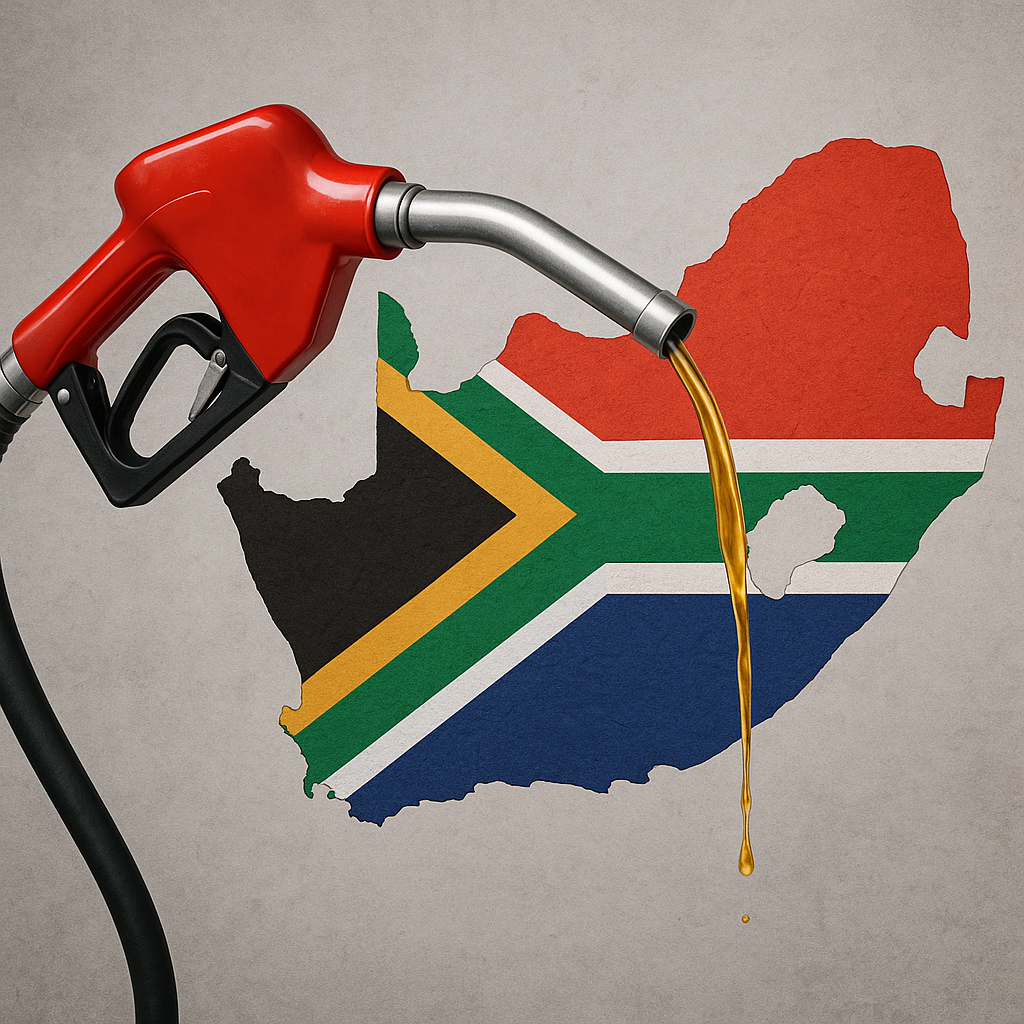
Unpack the critical role of diesel in South Africa's economy. Discover how global events and pricing mechanisms impact fuel security & inflation.
South Africa's diesel prices are set by a special formula that includes global rates and shipping costs. The Central Energy Fund changes these prices monthly, meaning local costs go up after global prices rise. Right now, there's a big risk of diesel prices shooting up because of fights in the Middle East and problems with Russian diesel. This could make everything more expensive, from food to transport, and even affect interest rates. The government is looking at ways to store more diesel and change how prices are set to help protect the country from these global shocks.
How are fuel prices determined in South Africa?
South Africa's fuel prices are determined by the Basic Fuel Price (BFP) formula, which includes international benchmark rates, shipping, insurance, and storage costs. The Central Energy Fund adjusts these prices monthly, leading to a delay in consumers experiencing global market shifts. Current diesel over-recoveries are shrinking, potentially leading to significant price hikes.
Get Cape Town news in your inbox
Stay updated with the latest stories from the Mother City.
South Africa's economy runs on diesel in ways most citizens never consider. This fuel powers the trucks hauling goods across vast distances, the tractors planting and harvesting crops, and the generators keeping mines operational when the grid fails. As August approaches, the nation faces a perfect storm where Middle Eastern tensions threaten to send domestic diesel costs soaring, with consequences rippling through supermarket prices, farm incomes, and interest rate decisions.
How Fuel Prices Take Shape in South Africa
The country's fuel pricing system operates through mechanisms that remain opaque to many consumers. The Department of Mineral and Petroleum Resources oversees the Basic Fuel Price formula, which estimates what importing petroleum products would cost. This calculation weaves together international benchmark rates, shipping expenses, insurance premiums, losses during ocean transport, and coastal storage fees. Once established, the Central Energy Fund applies an adjustment mechanism tracking whether domestic prices exceed or fall short of these import parity levels.
When global markets trade below the calculated benchmark, over-recoveries accumulate. These create theoretical cushions against future spikes. When international prices climb above the benchmark, under-recoveries signal that domestic rates trail import costs and must eventually close the gap. This built-in delay means South African consumers feel price shifts weeks after they occur on world markets.
Current Central Energy Fund figures showing diesel over-recoveries between 22 and 47 cents per litre might suggest impending relief. Yet this apparent safety net has been shrinking throughout July. Investment analysts now warn that these remaining buffers could vanish entirely, replaced by under-recoveries approaching R3.71 per litre. Such a reversal would rank among the most severe swings in recent memory.
Global Flashpoints and Energy Market Volatility
The immediate trigger for this deterioration originates thousands of kilometres from South African shores. Renewed military confrontation between Washington and Tehran has transformed risk assessments across energy markets worldwide. The Strait of Hormuz carries exceptional significance because roughly twenty percent of global petroleum consumption traverses this narrow waterway, making it the planet's most critical energy transit chokepoint.
Heightened tensions instantly infect crude oil futures with uncertainty premiums. Brent crude, the grade most relevant for South African imports, has surged from approximately US$70 during diplomatic lulls to around US$85 currently. This jump exceeds twenty percent in mere weeks. Most market observers expect prices to hold above US$80 while regional instability persists, with genuine prospects of breaching US$90 should armed conflict intensify.
These supply-side pressures compound constraints already developing from developments involving Moscow. Following the broader geopolitical rupture of 2022, Russian diesel exports encountered severe disruption. European Union sanctions and voluntary boycotts redirected trade flows dramatically. Russian diesel, once a cornerstone of European supply, now voyages farther to find buyers, constricting availability and inflating shipping costs across the entire market.
Diesel markets behave somewhat differently from crude oil due to their irreplaceable role in applications resisting electrification. While petrol faces growing competition from battery-powered passenger vehicles, diesel maintains its dominance in heavy road freight, ocean shipping, farm machinery, and mining equipment. This inflexible demand means price hikes rarely trigger meaningful consumption cutbacks, magnifying volatility whenever supplies tighten.
Economic Shock Waves Across Key Sectors
Grasping diesel's economic weight demands examining South Africa's distinctive industrial fabric. The national freight network depends overwhelmingly on road transport rather than rail, reflecting historical infrastructure choices and the scattered geography of economic activity. Though Transnet's rail and port operations matter, they handle minority shares of domestic goods movement. Diesel-powered trucks therefore command the corridors linking production zones, harbours, and consumer markets.
Farming operations constitute another sector critically exposed to diesel costs. South African commercial agriculture, spanning the Western Cape's wheat lands to the Free State's maize heartland, relies on diesel for tilling, sowing, irrigation, harvesting, and processing. The timing of prospective price hikes carries enormous weight here. An August adjustment would strike during winter crop gathering and summer planting preparation across many regions, squeezing farmer margins precisely when equipment utilisation peaks.
Manufacturing and mining, the twin pillars of industrial South Africa, face parallel vulnerabilities. Both deploy diesel for on-site power generation, mobile machinery, and transporting raw and finished materials. Mining's remote locations often rule out grid electricity for certain functions, making diesel generators indispensable for primary energy and backup supply. Eskom's chronic reliability problems have actually deepened diesel dependence economy-wide, as firms invest in private generation capacity.
The pathway from diesel costs to consumer prices branches through several channels. Direct transport cost inflation affects nearly all merchandise, given the distances inherent in South Africa's spatial economic structure. Secondary effects emerge as manufacturers adjust prices to recoup higher input expenses, potentially triggering wage-price spirals if workers seek compensation for diminished purchasing power. The Reserve Bank's inflation-targeting mandate, aiming to keep consumer price growth between three and six percent, grows harder to satisfy when fuel-driven cost pressures surface simultaneously across sectors.
Monetary policy decisions inject additional complexity. The South African Reserve Bank's Monetary Policy Committee weighs numerous indicators when setting borrowing costs, yet inflation expectations derived from visible price pressures carry heavy influence. Should diesel-propelled inflation endure, the central bank confronts painful trade-offs between stimulating growth through lower rates and anchoring expectations through tighter policy. The repo rate, already attracting criticism from various voices, could face upward pressure exactly when economic momentum needs support.
Building Resilience Against Supply Vulnerabilities
Awareness of these weaknesses has sparked substantial policy movement. The Department of Mineral and Petroleum Resources has put forward proposals that, if enacted, would fundamentally restructure national fuel security arrangements. Expanding strategic petroleum reserves to cover roughly sixty days of national consumption would mark a dramatic escalation from current holdings, which have occasionally dipped below ten days of coverage.
Reaching this target demands securing approximately thirty-six million barrels of storage capacity, with an identified deficit of about ten million barrels requiring fresh infrastructure investment. The financial commitments are considerable, encompassing capital for storage construction and working capital for petroleum acquisitions. Nevertheless, recent supply disruptions, including the 2022 global diesel shortage and various regional interruptions, have illustrated the economic damage from insufficient buffering. Emergency reserves function not merely as physical stockpiles but as confidence-building instruments that forestall panic purchasing and hoarding behaviours capable of worsening shortfalls.
The contemplated move from monthly to fortnightly fuel price adjustments represents a separate reform category, targeting pricing responsiveness rather than physical security. Present monthly revisions create predictable rhythms where consumers anticipate hikes and retailers adapt conduct accordingly. More frequent adjustments would theoretically tether domestic rates more tightly to international movements, shrinking individual adjustment magnitudes while raising their frequency. Global experience provides inconsistent guidance on this approach. Several advanced economies employ daily or continuous pricing, while others preserve longer intervals to offer consumers predictability. South Africa's specific circumstances, combining price-conscious households with an externally exposed economy, present unique considerations.
The draft Strategic Petroleum Stock Policy presently under public consultation addresses governance aspects of reserve administration. Previous controversies surrounding the deployment and accounting of strategic holdings have underscored the need for transparent frameworks specifying release conditions, replenishment procedures, and emergency drawdown triggers. Clear institutional arrangements reduce dangers that reserves become instruments of short-term political calculation rather than genuine security instruments.
Navigating the Energy Transformation
These immediate challenges play out against the backdrop of South Africa's longer-term energy system evolution. The Just Energy Transition Partnership, backed by international financing, seeks to accelerate coal-fired electricity phase-out while cushioning affected communities. Yet diesel's place in this transition remains uncertain. Over the short and medium term, diesel generation has actually grown as enterprises and municipalities pursue alternatives to unreliable grid power. The very infrastructure under discussion for petroleum security may face stranded asset risk as electrification and alternative fuels progress.
Hydrogen-based fuels, biofuels, and battery-electric heavy transport offer potential long-term diesel substitutes, though none currently provide cost-competitive, immediately scalable options for South Africa's particular needs. Agricultural and mining equipment sectors, especially, face extended transition horizons due to machinery replacement cycles and the energy density requirements of remote operations. This suggests diesel price management and security will remain pertinent policy matters for decades rather than years.
International marine fuel regulatory developments, notably the International Maritime Organization's sulphur restrictions, have already reshaped diesel market dynamics by generating fresh demand patterns for low-sulphur grades. South African refining infrastructure, centred on Sapref in Durban and Natref in Sasolburg, requires continued investment to satisfy evolving product standards. The nation's position as a net importer of refined products rather than crude oil means that global refining margins and overseas capacity utilisation directly determine domestic availability and pricing.
Looking Ahead
As South African households, enterprises, and policymakers await August's fuel price announcement, the interwoven nature of global energy markets and domestic economic conditions has become unmistakably clear. The diesel price, superficially a technical matter of cents and litres, reveals itself as a conduit for international conflict, a factor in agricultural survival, and a limiting condition on monetary policy discretion. The policy responses under active consideration, expanded strategic reserves, modified pricing mechanisms, and strengthened governance frameworks acknowledge this centrality while recognising that total protection from global volatility stays beyond reach. What emerges depicts an economy threading between immediate price pressures and longer-term structural adjustment, with diesel serving as an improbable yet pivotal variable in national economic outcomes.
How are fuel prices determined in South Africa?
South Africa's fuel prices are determined by the Basic Fuel Price (BFP) formula, which includes international benchmark rates, shipping, insurance, and storage costs. The Central Energy Fund adjusts these prices monthly, leading to a delay in consumers experiencing global market shifts. Current diesel over-recoveries are shrinking, potentially leading to significant price hikes.
Why are South African diesel prices expected to rise significantly?
Diesel prices are expected to rise due to a 'perfect storm' of factors. Renewed military confrontation in the Middle East, particularly involving the Strait of Hormuz, is causing Brent crude oil prices to surge. Additionally, disruptions to Russian diesel exports following geopolitical events in 2022 have tightened global diesel supply and increased shipping costs. These global issues, combined with shrinking domestic over-recoveries, are pushing prices upwards.
How will increased diesel prices impact the South African economy?
Increased diesel prices will have widespread economic impacts. They will make everything more expensive, from food (due to higher transport and farming costs) to general consumer goods. Road freight, agriculture, mining, and manufacturing sectors, which are heavily reliant on diesel, will face higher operational costs. This could also put upward pressure on interest rates as the South African Reserve Bank tries to manage inflation.
What is the Basic Fuel Price (BFP) formula and how does it work?
The Basic Fuel Price (BFP) formula is a mechanism used by the Department of Mineral and Petroleum Resources to calculate the cost of importing petroleum products. It factors in international benchmark rates (like Brent crude), shipping expenses, insurance premiums, losses during ocean transport, and coastal storage fees. The Central Energy Fund then uses this to adjust local fuel prices monthly, aiming to align domestic rates with international import parity levels.
What measures is the South African government considering to mitigate future fuel price shocks?
The government is exploring several measures to build resilience against global fuel price shocks. These include expanding strategic petroleum reserves to cover approximately sixty days of national consumption, which would require significant infrastructure investment. They are also considering changing from monthly to fortnightly fuel price adjustments to make domestic prices more responsive to international movements and improve the transparency and governance of strategic reserve administration.
Why is diesel so crucial to the South African economy?
Diesel is critically important to the South African economy because it powers key sectors. It is essential for the vast road freight network that transports goods across the country, agricultural machinery for planting and harvesting, and generators that keep mines and other industries operational, especially given Eskom's unreliable grid. Unlike petrol, diesel's role in heavy transport and industrial applications faces less competition from electrification, making its demand inflexible and its price highly influential on economic stability.

Oliver Daniels is a Cape Town journalist who chronicles the intersection of food, migration and identity in South Africa's kitchens—from wood-fired Gugulethu braai spots to Constantia vineyards. Born and raised on the slopes of Devil’s Peak, he still starts each week with a dawn walk across Table Mountain to catch the first Atlantic light before filing copy.
View all articles →