
WHY DOES ELON NEED HOTAZEL?
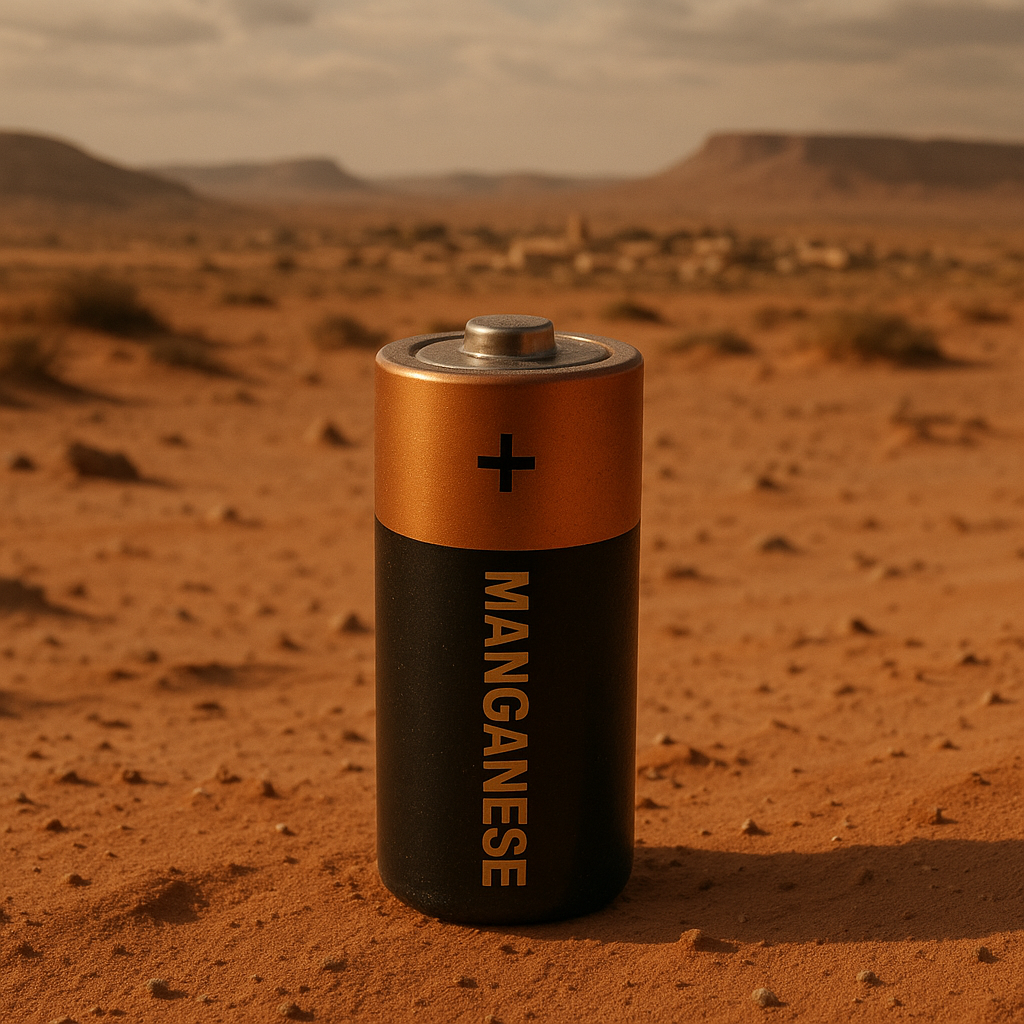
Discover how Hotazel, a small South African town, holds 70-80% of global manganese reserves, powering the electric vehicle revolution.
Manganese is super important for electric car batteries. It helps make them last longer and costs less than other materials. This means we can have cheaper electric cars for everyone. A small town called Hotazel in South Africa has lots of this special metal. The manganese from there travels far to become part of the batteries in electric cars all over the world. It's a key ingredient that helps make electric vehicles a reality.
What role does manganese play in electric vehicle batteries?
Manganese stabilizes the cathode in lithium-ion batteries, preventing degradation over hundreds of charge cycles. It allows for more affordable electric vehicles by reducing reliance on expensive cobalt and enabling high-manganese cathodes, crucial for achieving sub-$30,000 EVs with acceptable performance and lifespan.
Get Cape Town news in your inbox
Stay updated with the latest stories from the Mother City.
1. A Red-Dirt Outpost Writing the Rules for Tomorrow’s Cars
Stand on the edge of Hotazel at midday and the air itself seems to glow - iron-rich dust rides thermals that rise off the Kalahari’s rust-red floor. The settlement’s name is pronounced “hot-as-hell” by locals, a wink of honesty in a land where summer thermometers flirt with 45 °C. Fewer than four-thousand people call the place home, yet the ground beneath their feet holds an outsized slice of planet-level geology: roughly three-quarters of every terrestrial manganese atom anyone can still dig up.
Maps inside boardrooms in Detroit, Tokyo and Palo Alto rarely mark this dot, yet every new-generation battery cathode begins life here in statistical terms. If an electric sedan leaves a showroom in Berlin next year, odds are high that flakes of Kalahari ore travelled twelve-thousand kilometres to become part of its power pack. Scale collapses geography: a grid of dusty streets, a single grocery, a handful of taverns, and - beneath them - enough metal to influence whether automakers hit or miss 2030 electrification targets.
The town embodies the paradox of modern supply chains: invisible when running, impossible to ignore once pinched. Manganese is neither glamorous nor headline-grabbing, yet chemists rank it among the four cathode metals that decide if electric vehicles become mass-market or remain luxury toys. Hotazel’s minehead towers quietly, but each tonne of concentrated ore that rolls south to Port Elizabeth, then east toward Shanghai, tilts the global cost curve for batteries a fraction of a cent - cents that compound into thousands of rands per vehicle.
2. How a Humble Transition Metal Quietly Became Indispensable
Inside a lithium-ion cell, manganese is the quiet negotiator. It does not store the most charge per gram - that honour belongs to nickel - but it stabilises the crystal lattice so the cathode does not tear itself apart after hundreds of cycles. Remove manganese and engineers must either swell the pack with extra cobalt (expensive, ethically messy) or accept batteries that fade before a car loan is paid off.
Tesla’s shift toward lithium-manganese-iron-phosphate (LMFP) blends for standard-range vehicles is not a demotion for nickel; it is a promotion for manganese. LMFP slashes bill-of-materials cost by up to twenty percent while delivering energy density good enough for daily commutes. Musk’s public references to “high-manganese cathodes” land in earnings calls because metallurgy leaves no alternative - if the industry wants a sub-$30 000 electric car with acceptable cycle life, manganese must carry more electron traffic.
The numbers sketch the coming scramble. Batteries swallowed barely three percent of global manganese output last year; consultants at Benchmark Mineral Intelligence expect that slice to breach ten percent before 2030. Steelmakers will still dominate demand - the metal is baked into almost every ton of construction rebar - but the fastest-growing slice will be the one that ships from Hotazel’s crushers through Durban and onward to Tianjin refineries.
3. From Kalahari Blast Holes to Shanghai Assembly in Sixty Days
Blast-hole rigs bore twelve-metre pockets into the earth five nights a week; the broken rock rides 65-ton trucks to crushers that reduce boulders to pebbles, then to sand, then to dust fine enough to qualify as battery feed. Freight trains haul sealed hoppers 1 100 km south to the coast, where bulk carriers queue in gale-season swells. Roughly sixty days after detonation, the concentrate lands at Chinese ports, slips by rail to Jiangsu plants, dissolves in acid, precipitates as high-purity manganese sulphate, and finally co-crystallises with nickel and cobalt salts that cathode factories in Fujian bake onto aluminium foil.
Tesla’s Shanghai Gigafactory now assembles more cars annually than the entire South African auto sector. Half of those vehicles roll south-west to Europe, the rest across Asia-Pacific, each carrying a signature of Kalahari chemistry sealed inside dark grey pouches. The route’s 12 000-km span illustrates why “near-shoring” remains a boardroom fantasy for critical metals: no combination of Australian, Gabonese or Brazilian ore matches South Africa’s tonnage, rail capacity and port depth at current cost.
Disruptions travel the same rails. Cable theft, locomotive shortages and port-handling backlogs routinely stretch delivery to ninety days; a single derailment can erase half-a-percent of global battery-grade supply in a week. Because manganese is still priced as a bulk commodity rather than a technology metal, miners lack incentive to hold safety stocks. The buffer is thin, the market elastic: a five-percent shortfall can spike cathode-grade sulphate prices thirty percent within a month, costs that flow directly into sticker prices in Los Angeles showrooms.
4. When Global Climate Ambitions Meet Local Dust, Water and Wages
Municipal ledgers show 2 312 residents earn taxable income - comfortable in a province where rural unemployment tops forty percent. Yet the same data reveal a narrow prosperity: artisans, metallurgists and haul-truck drivers earn multiples of what shopkeepers or municipal clerks can hope for, reinforcing a two-tier economy where a handful of unionised miners anchor the local retail market.
Electricity blackouts ripple from Cape Town to Hotazel; dragline excavators stand idle while Eskom juggles load-shedding stages. Rail capacity shrank twenty percent since 2019, pushing more ore onto trucks that chew the N14 highway and inflate carbon footprints. Miners talk of building a 60 MW private solar park, but water, not power, may cap growth: the Kalahari aquifer falls half-a-metre per dry season, forcing plants to recycle ever-greater fractions of process water.
Social compacts remain works in progress. Royalty payments flow to the Joe Morolong Local Municipality, yet potholes, clinic drug shortages and classroom overcrowding feed community protests every election cycle. National mining law mandates 26 percent Black Economic Empowerment ownership; after two decades of deals, shareholdings have swapped, sold and reshuffled so often locals struggle to name current beneficiaries. The promise of “beneficiation” lingers - politicians love to pronounce the word - but no commercial-scale manganese refinery has broken ground in South Africa, leaving value-add jobs offshore.
5. The Crystal Ball: Chemistry Wildcards and Geopolitical Chessboards
Laboratory whispers hint at sodium-ion packs that swap lithium for sodium and cut manganese content by half. CATL plans to mass-produce these for two-wheelers and stationary storage; if they scale, manganese demand could undershoot bullish forecasts. Conversely, grid-battery megafactories may favour manganese-rich cathodes precisely because weight matters less in container-sized modules, boosting long-term appetite.
Solid-state prototypes from Toyota and QuantumScape remain stubbornly nickel-heavy, but researchers in Tokyo have shown that manganese can replace cobalt in thin-film garnets, potentially opening a new high-margin niche. The lesson: chemistries evolve faster than mines can secure financing, creating a cat-and-mouse game where producers must expand while knowing tomorrow’s recipe may differ.
Policy adds another layer of uncertainty. The European Union’s Carbon Border Adjustment Mechanism will start taxing embodied carbon of imported manganese alloys in 2026. South African smelters powered by coal-heavy grids may face tariffs of €50–€80 per tonne, enough to shift market share toward hydro-powered Australian or Brazilian rivals. Downstream, however, EU battery makers want low-carbon manganese sulphate, creating an odd incentive for miners to ship ore rather than alloy. Navigating the maze will require scenario planning few boardrooms have financed - yet the ore keeps rolling out of Hotazel regardless.
6. Life Under the Perimeter Fence: Stories Statistics Never Capture
Ask a drill operator what electrification means and he points to the silver Land Cruiser plug-in hybrid parked by the staff village - a vehicle whose cells almost certainly carry atoms he blasted last month. The loop feels poetic, but his wage buys groceries, school shoes and data bundles, not philosophical closure. Mine automation threatens 300 driver jobs within five years; retraining programmes promise coding classes, though local 4G towers still drop signal during dust storms.
Down the road, elderly residents remember prospectors arriving by ox-wagon in the 1950s, the apartheid compound system, the 1987 strike when soldiers ringed the pit. Layers of memory stack like tailings: each decade believes its crisis unique, yet the pit widens, the township expands, the cycle repeats. The town’s only secondary school displays a hand-painted sign: “Manganese Builds the World.” Learners pass beneath it daily, WhatsApping videos that ride undersea cables to classmates who emigrated to Perth, illustrating how globalisation funnels ambition outward while geology keeps people anchored.
Anthropologists call this “extractive intimacy”: a place simultaneously indispensable and forgotten, celebrated in corporate sustainability brochures yet erased from consumer imaginations. The Kalahari’s red dust travels anonymously; by the time it becomes a sleek battery sticker reading “Zero Emissions,” its origin story is chemically untraceable. Out of sight keeps conscience clean, but for residents the dust is inescapable - on laundry lines, in lungs, in municipal budgets that rise and fall with Chinese spot prices.
What role does manganese play in electric vehicle batteries?
Manganese stabilizes the cathode in lithium-ion batteries, preventing degradation over hundreds of charge cycles. It allows for more affordable electric vehicles by reducing reliance on expensive cobalt and enabling high-manganese cathodes, crucial for achieving sub-$30,000 EVs with acceptable performance and lifespan.
Where does a significant portion of the world's battery-grade manganese originate?
A significant portion of the world's battery-grade manganese originates from Hotazel, a small town in South Africa. This region holds approximately three-quarters of the planet's terrestrial manganese deposits, making it a critical hub for the global electric vehicle supply chain.
How does manganese contribute to making electric vehicles more affordable?
Manganese helps make electric vehicles more affordable by stabilizing the battery cathode, reducing the need for more expensive materials like cobalt. This allows for the development of high-manganese cathodes, which are essential for producing electric cars that are both cost-effective (e.g., under $30,000) and offer good performance and lifespan.
What are the main challenges in the manganese supply chain from Hotazel to battery manufacturers?
The manganese supply chain from Hotazel faces several challenges, including long distances (approximately 12,000 km to Asian factories), logistical bottlenecks like cable theft, locomotive shortages, and port handling backlogs. These issues can extend delivery times significantly and lead to price volatility due to a thin buffer of safety stocks.
How might future battery technologies impact the demand for manganese?
Future battery technologies present a mixed outlook for manganese demand. Sodium-ion batteries, which contain less manganese, could reduce demand if they scale up for applications like two-wheelers. Conversely, solid-state batteries or large grid-scale battery factories might favor manganese-rich cathodes, potentially increasing demand. The evolving chemistry creates a dynamic and uncertain future for manganese producers.
What are some socio-economic and environmental considerations in manganese mining in Hotazel?
Manganese mining in Hotazel brings both economic benefits and significant challenges. While it provides taxable income and specialized jobs in a region with high unemployment, it also creates a two-tier economy. Environmentally, the region faces issues like electricity blackouts, shrinking rail capacity pushing more ore onto carbon-intensive trucks, and declining water tables in the Kalahari aquifer. Socially, despite royalty payments, the community still struggles with inadequate public services and the promise of local beneficiation (value-adding processing) remains largely unfulfilled.

Liam Fortuin is a Cape Town journalist whose reporting on the city’s evolving food culture—from township kitchens to wine-land farms—captures the flavours and stories of South Africa’s many kitchens. Raised in Bo-Kaap, he still starts Saturday mornings hunting koesisters at family stalls on Wale Street, a ritual that feeds both his palate and his notebook.
View all articles →