
WHY DOES ESTATE LIVING REQUIRE VISITOR INFORMATION?
Navigating data protection in South African gated communities. Balances estate security with visitor privacy under POPIA, addressing data collection & risks.
Gated estates collect lots of personal info like names and car details from visitors, often by scanning driving licenses. This data helps with security but also creates big privacy worries. A new law, POPIA, says they collect too much and store it for too long, which is risky and can lead to big fines. Smarter ways to check visitors are available, like QR codes, to keep things safe without keeping all your private data.
How do gated estates collect and use personal data from visitors?
Gated estates collect personal data, such as names, ID numbers, vehicle registrations, and biometric templates, often by scanning driving license barcodes. This data is used to maintain visitor registers, track movements, and enhance security. However, these practices raise significant privacy concerns under data protection laws like POPIA, as much of the collected information may be excessive and stored insecurely.
Get Cape Town news in your inbox
Stay updated with the latest stories from the Mother City.
The Great Wall Boom
Gated villages, security estates and sectional-title complexes now house one in every five South African families. The statistic is more than a lifestyle preference; it is a national reaction to rolling black-outs, violent-crime statistics and crumbling municipal services. Residents - from entry-level townhouse buyers to ultra-prime mansion owners - trade public-street uncertainty for boom-gate predictability. Perimeter cameras, biometric turnstiles and 24-hour guards promise faster emergency reaction times and a psychological “safe zone” that traditional suburbs can no longer guarantee.
Developers have responded with kilometres of electrified fencing, licence-plate cameras and off-site control rooms. Each arriving car, courier, contractor or guest is channelled through a single checkpoint where technology quietly harvests personal information. What began as a quick scribble in a visitor’s book has morphed into a silent data-gathering industry that few residents - or visitors - fully understand.
The result is an invisible archive of names, ID numbers, vehicle registrations and biometric templates sitting on hard drives in small security offices. These archives are attractive to criminals, expensive to protect and, increasingly, illegal to keep without clear justification.
Scan First, Ask Later
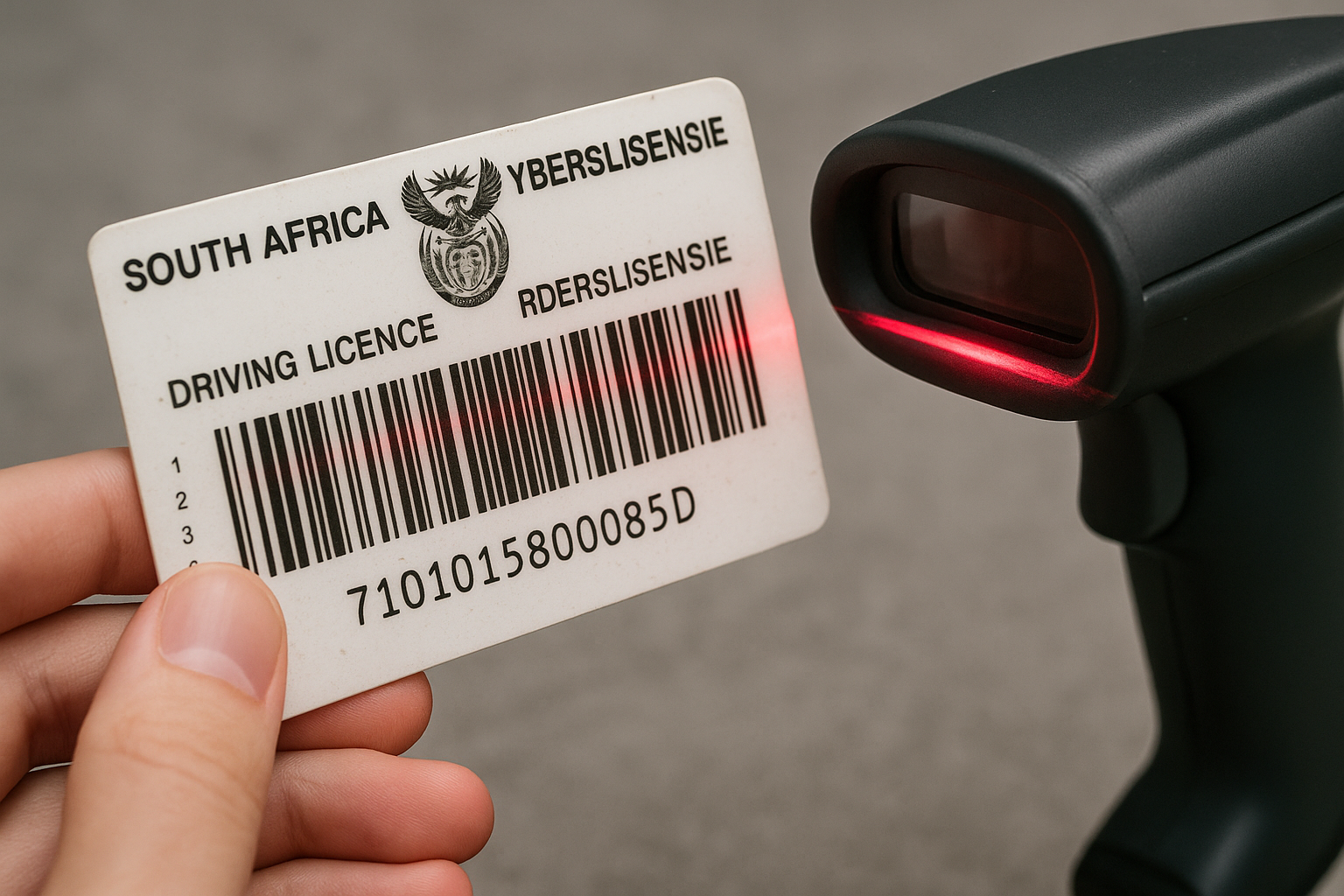
Modern access control is built on speed. Guards no longer flip through paper logs; they aim a handheld scanner at a driving-licence barcode and wave the driver through in under four seconds. The PDF417 pattern on the back of every South African licence card compresses full date of birth, gender, licence number, issue date, expiry date and vehicle-code restrictions into a few square centimetres of black ink. Once the barcode key leaked online, any off-the-shelf scanner could extract the entire data set without the card holder’s knowledge.
Estate security companies embraced the technology for its convenience. A single swipe creates a permanent digital visitor register that can be searched by name, plotted against time stamps or cross-referenced with CCTV clips. The intention is legitimate: know who is on the property and when they leave. The side-effect is a shadow database of thousands of licence records - many belonging to people who will never set foot inside the estate again.
Because the data is machine-readable, it can also be copied onto external drives, uploaded to cloud folders or synced to head-office servers. One lost laptop or breached Wi-Fi password can spill thousands of identity packets onto the dark web faster than a guard can raise the boom.
The Law Catches Up
The Protection of Personal Information Act came into full force in July 2021. POPIA’s eight “conditions” for lawful processing apply to every public or private body, including homeowners’ associations, security providers and managing agents. The Act demands that personal information be collected for a specific, explicitly defined purpose, be relevant to that purpose, and be destroyed when no longer needed.
In 2022 the Information Regulator released a draft Code of Conduct tailored to gated communities. The document insists on “data minimisation”: capture only what you need to decide whether to open the gate. Acceptable fields are the visitor’s name, cell number for emergency contact, vehicle registration and time of arrival. Scanning the entire driving-licence barcode exceeds that threshold, the draft warns, and holding the file for longer than thirty days is presumed excessive.
The proposed code stops short of banning licence-barcode readers outright, but makes clear that continued bulk scanning will invite enforcement actions: administrative fines of up to R10 million or, in serious cases, criminal charges against the estate’s “responsible party.” Public comments on the draft closed in March 2023; the final version is expected before the end of 2024.
Risk Ripples
A visitor database that stores full licence data is a one-stop shop for identity thieves. Birth date and gender are primary ingredients for synthetic ID fraud; licence numbers open doors to vehicle-finance scams or phishing calls that reference “the car you parked at X estate yesterday.” Cyber-criminals already target smaller security firms on the assumption that their IT budgets are modest and their firewalls outdated.
Beyond external threats, estates face internal exposure. Disgruntled guards, curious residents or dishonest managing agents can export the entire register to a flash drive in minutes. POPIA requires breach notification to both the Regulator and every affected data subject within a reasonable period; failure to do so compounds reputational damage with regulatory penalties.
Courts and insurers increasingly treat lax data practices as negligence. If a resident or visitor suffers measurable harm after an estate fails to secure personal records, the community association may find itself defending a civil claim or watching its insurance premiums spike. The safest defence is not to hold the data in the first place.
Smarter, Slimmer Solutions
Several estates have re-engineered their entry flow to meet security objectives without mass data harvesting. One model combines resident-generated QR codes with a quick visual ID check: the resident sends a temporary QR pass to the visitor’s phone; security compares the visitor’s face to the photo on the physical licence, scans the QR to open the gate, and retains no licence data at all. The QR automatically expires at midnight.
Where licence verification is unavoidable, some managers store only a one-way hash of the barcode - enough to confirm the card is valid, but useless if leaked. Others keep an offline “deny list” of known problem individuals rather than a full database of every legitimate visitor. Cloud backups are encrypted with keys held by the board chair and IT committee, not the security contractor.
Training is the cheapest control. Guards who understand the difference between identity authentication (confirming you are who you claim to be) and identity collection (keeping a permanent file about you) make better on-the-spot decisions. Quarterly refreshers and random audits keep the policy alive, turning privacy compliance from a paper exercise into gate-side habit.
A National Mirror
Estate-gate data practices mirror South Africa’s wider struggle to balance safety, inequality and constitutional rights. Gated communities are spatial legacy - products of apartheid geography that morphed into privatised service delivery. When access control morphs into surveillance of domestic workers, delivery drivers and casual labourers, it risks reinforcing old lines of exclusion under a new technological veneer.
POPIA and the draft code signal that privacy is not a luxury for the wealthy but a right that applies to every person crossing a boom gate. Internationally, Brazil’s Lei Geral de Proteção de Dados and California’s Consumer Privacy Act echo similar principles: collect less, store less, delete sooner. South Africa’s version adds an urgent social dimension - ensuring that democratic participation is not eroded by the architecture of fear.
Looking ahead, rapid advances in facial recognition, drone patrols and predictive analytics will test the limits of proportionality. Regular privacy-impact assessments, transparent visitor notices and meaningful opt-out paths will become as routine as electric fences. The estates that thrive will be those that treat privacy not as a compliance burden but as a design specification - proving that security and dignity can coexist behind the same wall.
[{"question": "What personal data do gated estates collect from visitors and why?", "answer": "Gated estates typically collect personal data such as names, ID numbers, vehicle registrations, and sometimes even biometric templates, often by scanning driving licenses. This data is primarily collected for security purposes, to maintain visitor registers, track movements, and enhance the overall safety of the estate. However, this practice raises significant privacy concerns due to the volume and sensitivity of the data collected."}, {"question": "What are the privacy concerns associated with current data collection practices in gated estates?", "answer": "The primary privacy concerns stem from the excessive amount of personal information collected, its storage duration, and potential vulnerabilities. Scanning full driving license barcodes extracts a large amount of personal data that may not be strictly necessary for access control. This data is often stored on hard drives, which can be vulnerable to theft, unauthorized access, or cyber-attacks. The prolonged storage of this data, even for visitors who may never return, further exacerbates the privacy risk."}, {"question": "How does the Protection of Personal Information Act (POPIA) affect gated estates?", "answer": "POPIA, which came into full force in July 2021, requires all organizations, including gated estates, to adhere to strict conditions for processing personal information. This includes collecting data for a specific and defined purpose, ensuring it's relevant to that purpose, and destroying it when no longer needed. A draft Code of Conduct for gated communities specifically emphasizes 'data minimisation,' suggesting that current practices of scanning entire driving license barcodes and retaining data for extended periods likely exceed POPIA's thresholds and could lead to significant fines or criminal charges."}, {"question": "What are the risks of storing large databases of visitor information?", "answer": "Storing large databases of visitor information, especially those containing full driving license data, creates a significant risk of identity theft. Information like birth dates, gender, and license numbers are valuable to cybercriminals for synthetic ID fraud, vehicle-finance scams, or phishing. Furthermore, these databases are attractive targets for internal threats from disgruntled staff or curious residents. A data breach could lead to severe reputational damage, regulatory penalties, and even civil claims if individuals suffer harm due to lax data practices."}, {"question": "What are some smarter, more privacy-friendly solutions for visitor access control?", "answer": "Several innovative solutions exist that prioritize both security and privacy. One effective method involves residents generating temporary QR codes for visitors. Security personnel can then visually verify the visitor's identity against a physical ID and scan the QR code for entry, without retaining any personal data from the ID. Other solutions include storing only a one-way hash of a barcode (to verify validity without storing the data), maintaining an offline 'deny list' rather than a comprehensive visitor database, and encrypting cloud backups with robust security measures. Training guards on the distinction between identity authentication and identity collection is also crucial."}, {"question": "Why is privacy in gated estates considered a social issue in South Africa?", "answer": "In South Africa, privacy in gated estates reflects a broader societal struggle to balance safety, inequality, and constitutional rights. Gated communities, often a legacy of apartheid geography, have become a response to concerns about crime and service delivery. When access control practices lead to surveillance of domestic workers, delivery drivers, and casual laborers, it can inadvertently reinforce existing social inequalities and exclusion under a technological guise. POPIA and similar international laws aim to ensure that privacy is a fundamental right for everyone, regardless of their socio-economic status or where they live, thus preventing the architecture of fear from eroding democratic participation."}]

Zola Naidoo is a Cape Town journalist who chronicles the city’s shifting politics and the lived realities behind the headlines. A weekend trail-runner on Table Mountain’s lower contour paths, she still swops stories in her grandmother’s District Six kitchen every Sunday, grounding her reporting in the cadences of the Cape.
View all articles →