
Why has South Africa House closed?
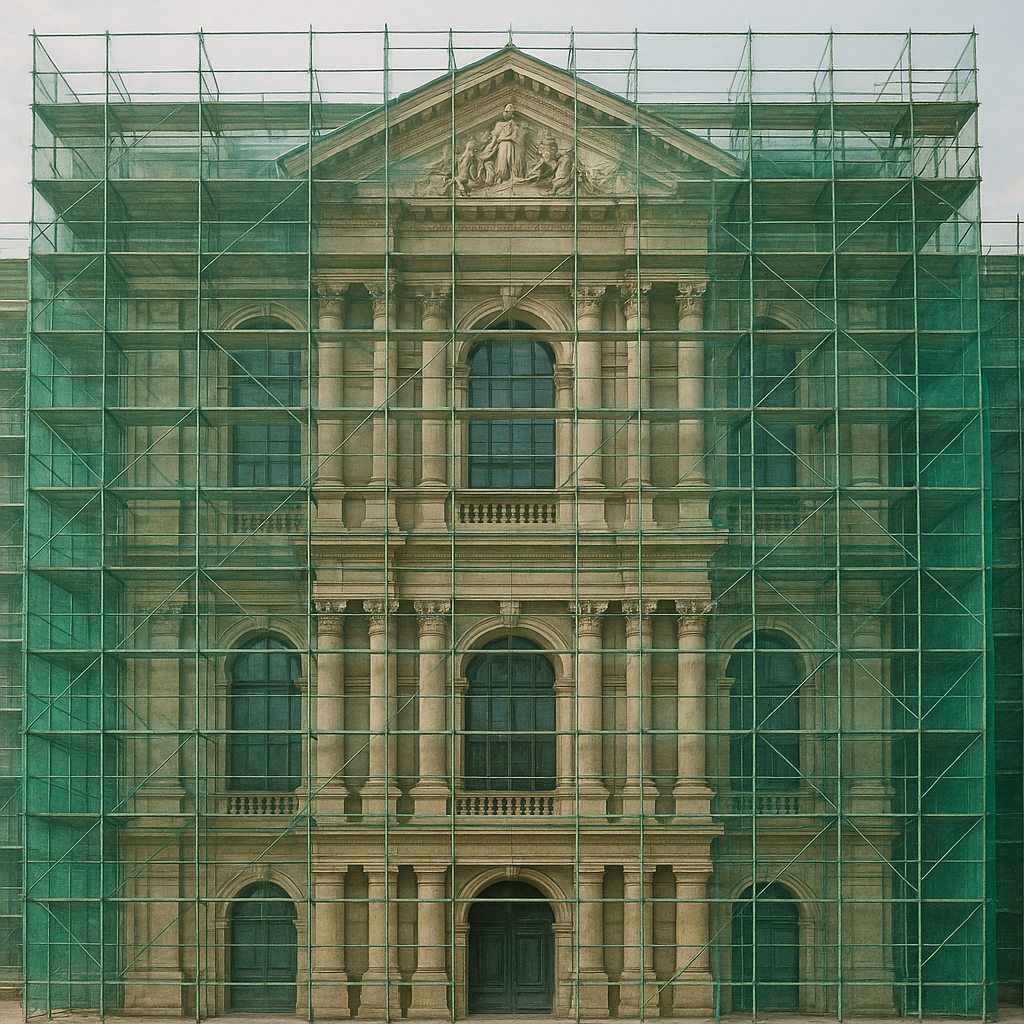
South Africa House faces a crisis of decay, asbestos, and political battles. Can this historic London landmark be saved?
South Africa House in London is in big trouble! This historic building, a symbol of South Africa's journey to freedom, is falling apart. It's full of asbestos, has crumbling stones, and its old heating system is a mess. Everyone had to leave because it was too dangerous. Now, a huge and expensive project is underway to fix it all up, hoping to turn it into a cool embassy-museum by 2027.
What is happening with South Africa House in London?
South Africa House in London is undergoing extensive restoration due to severe decay, asbestos contamination, and structural damage. Consular operations have been temporarily relocated, and the multi-million-pound project aims to repair the historic building, modernize its facilities, and potentially transform it into a hybrid embassy-museum, with staff expected to return by March 2027.
Get Cape Town news in your inbox
Stay updated with the latest stories from the Mother City.
The Silent Facade: How a London Landmark Fell Quiet
Trafalgar Square pulses with life on any given morning. Tourists jostle for position beneath Nelson's Column, street performers ready their acts, and office workers rush past clutching steaming cups of coffee. Yet since February, something fundamental has changed at this famous crossroads. The grand entrance to South Africa House remains locked tight, its Portland stone portals gathering grime rather than footfall. The bronze lions that flank the steps stand sentinel over emptiness. A single notice taped to the arched window offers only sparse explanation: consular operations have shifted to 15 Whitehall, a modest office building four hundred metres away.
This sudden departure marks merely the visible tip of a crisis that has been building for years within one of London's most symbolically loaded diplomatic addresses. The building carries the weight of history in every stone. Completed in 1933 from designs by Herbert Baker, the South African architect who shaped much of imperial Pretoria, the high commission rises nine storeys in confident neo-classical style. Springbok and wildebeest still parade across the first-floor frieze, frozen in bronze relief. The entire façade enjoys Grade II* protection, placing it among England's most treasured eight percent of historic structures.
The ghosts of momentous events haunt these rooms. During the 1960s, demonstrators gathered daily beneath its walls to denounce apartheid. In 1985, a young Zimbabwean exile made international headlines when he rappelled from Nelson's Column to unfurl a banner proclaiming "ANC Lives" across the balcony. Special Branch officers dragged him away while television cameras rolled. Eleven years later, Nelson Mandela himself stood on that same balcony, addressing crowds who had gathered to celebrate democracy's arrival. His opening words carried the weight of decades: "I never thought I would stand here legally." That stone, that balcony, that memory - all now stand threatened by forces far less dramatic but equally destructive.
The Crisis Unfolds: Toxic Discoveries and Emergency Flight
The catastrophe revealed itself in late November, when facilities auditors commissioned by South Africa's Department of International Relations and Cooperation completed their examination of the building's hidden spaces. Their findings were devastating. Chrysotile asbestos dust concentrations in the basement boiler room exceeded British regulatory limits by a factor of four. The antiquated heating equipment, installed during Harold Wilson's premiership in the 1960s, was leaking carbon monoxide alongside its carcinogenic fibres. Structural engineers surveying the exterior identified "spalling Portland stone with loss of up to 30 mm depth" - damage that allows winter freeze-thaw cycles to prise blocks from the elevation like dentists extracting teeth.
Faced with this lethal combination - airborne cancer agents, poisonous gas, and falling masonry - DIRCO's health and safety officers made the only lawful choice available. Staff received forty-eight hours to evacuate. Computers, official seals, and a 1939 portrait of General Jan Smuts were packed into vehicles and transported to the temporary Whitehall premises, a 1970s steel-framed office that once served Britain's Cabinet Office as overflow space.
The financial dimensions of rescue now become starkly apparent. Tender documents submitted to Westminster City Council reveal that initial works will consume £2.03 million, covering only façade cleaning and asbestos removal. A subsequent phase, estimated internally at £3.7 million, must replace the entire boiler plant, reconfigure electrical systems, and install building management technology capable of meeting London's 2025 net-zero-carbon requirements for public structures. The combined restoration total translates to approximately R125 million - fully forty percent higher than opposition parliamentarian Ryan Smith's public estimate of R70 million. Smith appears to have relied upon 2019 pricing, failing to account for post-Brexit construction inflation averaging nine percent annually amid acute labour shortages.
DIRCO's overseas property budget for 2024 through 2027 stands at R1.4 billion spread across thirty-three diplomatic missions. London's flagship will demand nearly nine percent of this entire envelope, squeezing resources available for maintenance elsewhere in the network.
Custodians and Critics: Negotiating Survival Amid Political Fire
The Crown Estate complicates every calculation. This £16 billion property portfolio, which channels surplus revenues to Britain's Treasury, holds the freehold to South Africa House through a lease expiring in 2058. Any substantial alteration requires Estate consent. Commissioners have indicated willingness to extend the term to 2120, but only if Pretoria commits to comprehensive repairs. Theoretical consequences of non-compliance include forfeiture proceedings - an outcome that would send shockwaves through Commonwealth diplomatic circles. Sources confirm that while South Africa continues paying annual ground rent of £240,000, it has fallen two cycles behind on service charges for Trafalgar Square's public realm improvements, accumulating £78,000 in debt. Negotiations hang in delicate balance.
DIRCO spokesperson Chrispin Phiri defends his department against such accusations. South Africa's austerity-era budgets, he notes, slashed the department's allocation by thirty-four percent in real terms between 2012 and 2022. He points instead to a 2023 cabinet-approved "Planned Preventative Maintenance" framework that rates every overseas property on a 1-5 risk scale. South Africa House scored 4B - critical yet stable - precisely triggering the current intervention. "Far from neglect," Phiri insists, "this demonstrates the system functioning as designed."
Those who endured the building's final months tell different stories. Relocated diplomats describe conditions approaching the Victorian: radiators blasting tropical heat through summer while failing entirely in winter, a restroom ceiling collapsing mid-meeting, pigeons colonising the space above the visa vault. One political counsellor recalls boiling kettles to melt ice from interior windowpanes on January mornings. "We used to joke about operating a consulate inside a heritage ruin," she remembers. Yet credit goes to High Commissioner Kingsley Mamabolo, who protected junior staff from Pretoria's repeated cuts, personally subsidising printers when official funds ran dry.
Restoration and Reputation: The Stakes of Renewal
Embassies constitute sovereignty made physical, architecture as diplomacy. America's billion-pound migration from Grosvenor Square to Nine Elms projected transparency and resilience through its crystalline "sugar-cube" tower. Germany's wrapping of its 1930s embassy in white PVC printed with Baroque outlines signalled playful modernity. South Africa's distinctive soft power derives from memory itself - the narrative journey from pariah state to rainbow nation, crystallised in Mandela's balcony wave. Permitting that stone to crumble broadcasts incapacity, undermining the very iconography upon which the nation's tourism economy trades. Brand Finance, a London consultancy, calculates that every ten percent deterioration in the Trafalgar Square façade's visual condition correlates with 0.7 percent decline in British traveller sentiment toward South Africa - translating to roughly R350 million in lost annual expenditure.
Other nations have navigated similar straits. Belgium confronted asbestos contamination at its 1950s Grosvenor Place embassy in 2018, negotiating a design-build leaseback arrangement: developers refurbished the structure, added luxury penthouse levels, and charge the government nominal rent in exchange for air rights. South Africa explored comparable concessions but encountered Treasury prohibitions against private ownership of any chancery portion on security grounds. Proposed co-location with Kenya or Ghana foundered on incompatible security protocols.
Time presses urgently. Every July 18th, Trafalgar Square hosts "Mandela Day," a free concert attracting fifteen thousand attendees and BBC television coverage. Westminster has already issued special event permits for 2026 designating South Africa House's balcony as the central photographic opportunity. DIRCO has privately assured the Mayor's office that scaffolding will disappear by June next year - deadline contractors call "aggressive yet technically achievable" provided stone repairs commence by October. Missing this milestone risks global humiliation.
The technical challenge impresses specialists. Conservation architect Guy Pollard, whose portfolio includes St Paul's Cathedral and the Elizabeth Tower, describes the façade as "a geological patchwork": Clipsham stone eastward, Portland westward, 1950s Ketton repairs covering wartime bomb damage. Cleaning employs superheated steam at 150 degrees Celsius through telescopic lances - hot enough to strip soot while preserving lime-mortar joints. Deteriorated blocks will be removed, stainless steel dowels inserted, and replacement stone colour-matched through spectrophotometry. Scaffolding alone will weigh 280 tonnes, anchored through ninety-two drilled sockets cleared by ground-penetrating radar to avoid Baker's original reinforcement. Each section requires two weeks to erect; cleaning proceeds clockwise like some monumental car wash.
DIRCO's timeline projects staff returning by March 2027. Ambitions extend beyond mere repair: a ground-floor visitor centre, a green roof reducing annual carbon emissions by eighteen percent, and a publicly accessible archive of anti-apartheid materials - the letters, banners, and even the rope from that 1985 protest descent. Delivered, this would create Europe's first hybrid embassy-museum. Until then, the doors remain locked, pigeons circle overhead, and Trafalgar Square's most celebrated symbol of liberation waits wrapped and patient for its second coming.
What is the current situation with South Africa House in London?
South Africa House, a historic and symbolically important building in London, is currently undergoing extensive restoration. The building was found to be in a state of severe decay, contaminated with asbestos, and suffering from structural damage, leading to the emergency evacuation of all staff in February.
Why was South Africa House evacuated?
The building was evacuated due to critical health and safety concerns. Facilities auditors discovered chrysotile asbestos dust concentrations four times above British regulatory limits in the basement boiler room, alongside leaking carbon monoxide from an antiquated heating system. Additionally, structural engineers identified significant spalling of the Portland stone facade, posing a risk of falling masonry.
What is the scope of the restoration project?
The restoration project is vast and expensive. Initial works involve façade cleaning and asbestos removal. Subsequent phases will replace the entire boiler plant, reconfigure electrical systems, and install modern building management technology to meet London's net-zero-carbon requirements. The project aims to restore the historic structure, modernize its facilities, and potentially transform it into a hybrid embassy-museum with a ground-floor visitor center, a green roof, and a publicly accessible archive of anti-apartheid materials.
How much is the restoration estimated to cost and what are the financial implications?
The initial works are estimated at £2.03 million, with a subsequent phase costing an additional £3.7 million, bringing the total restoration to approximately R125 million (South African Rand). This significant expenditure represents nearly nine percent of DIRCO's (Department of International Relations and Cooperation) entire overseas property budget for 2024-2027, potentially squeezing resources for other diplomatic missions.
What are the challenges and complexities of the restoration?
The project faces several challenges, including navigating the requirements of The Crown Estate, which holds the freehold to the property and requires comprehensive repairs for lease extension. There are also financial constraints and political scrutiny regarding the funding. Technically, the conservation involves meticulous work on a 'geological patchwork' façade with different stone types, requiring specialized cleaning methods and precise replacement of deteriorated blocks. The building's Grade II* listed status also imposes strict conservation guidelines.
When is South Africa House expected to reopen and what are its future ambitions?
DIRCO projects that staff will return to South Africa House by March 2027. Beyond mere repair, there are ambitions to transform the building into Europe's first hybrid embassy-museum, featuring a ground-floor visitor center, a green roof to reduce carbon emissions, and a publicly accessible archive of anti-apartheid materials. There is a critical deadline of June 2026 for scaffolding to be removed to accommodate the annual Mandela Day celebrations, which feature the building's balcony as a central photographic opportunity.

Thabo Sebata is a Cape Town-based journalist who covers the intersection of politics and daily life in South Africa's legislative capital, bringing grassroots perspectives to parliamentary reporting from his upbringing in Gugulethu. When not tracking policy shifts or community responses, he finds inspiration hiking Table Mountain's trails and documenting the city's evolving food scene in Khayelitsha and Bo-Kaap. His work has appeared in leading South African publications, where his distinctive voice captures the complexities of a nation rebuilding itself.
View all articles →