
WHY LEON KLUGE’S LATEST WIN MATTERS
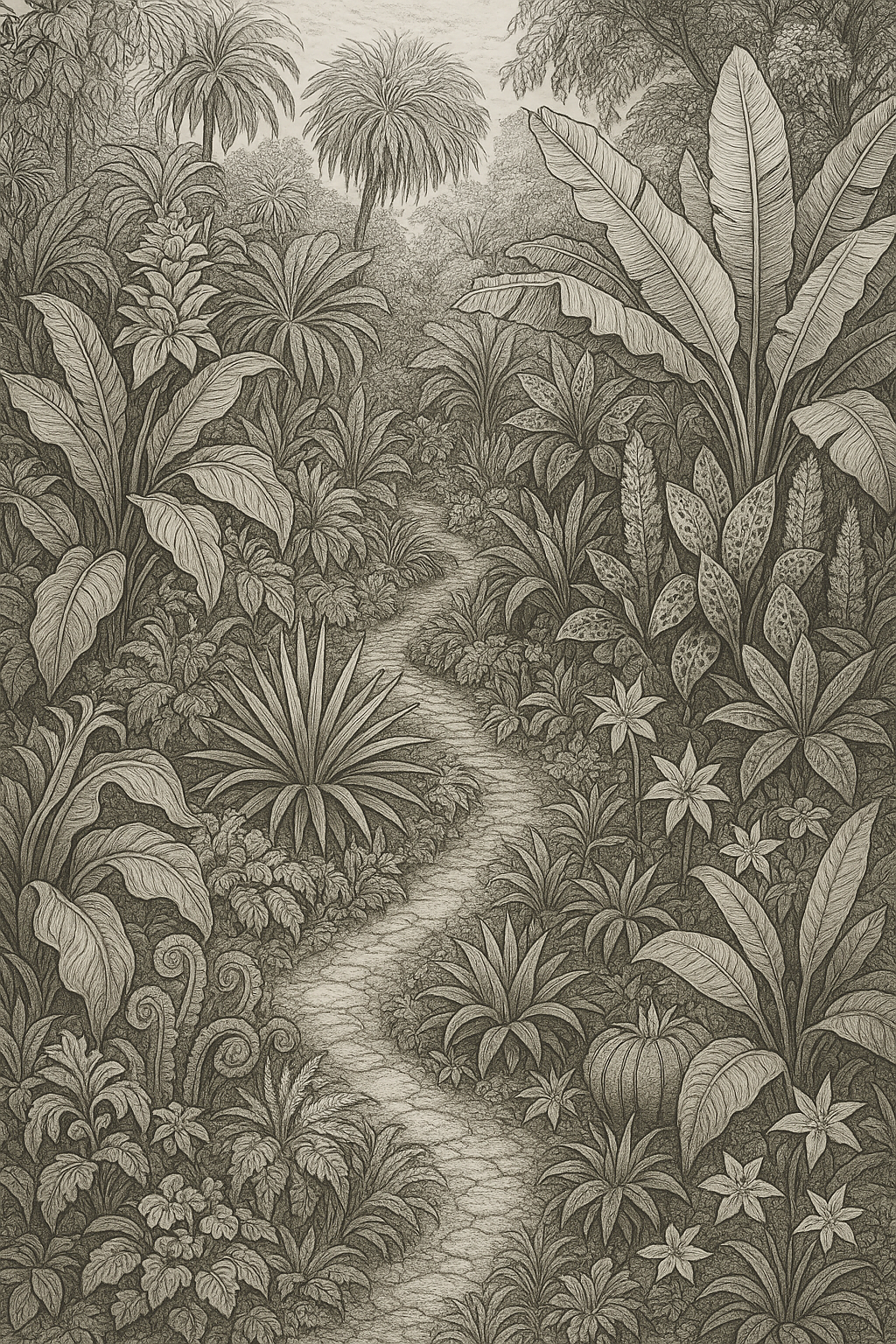
Leon Kluge wins big at Singapore Garden Festival with "Habitat For The Soul," showcasing South African design in a global triumph.
Leon Kluge, a garden wizard from South Africa, just blew everyone away at the Singapore Garden Festival! He won big with his amazing garden, "Habitat For The Soul," grabbing two top awards. Kluge mixes plants from South Africa and Asia, making magic even in super hot weather. His secret? He plans everything perfectly, using science and smart ideas to create gardens that feel like a calm hug. His success shows how South African design is now a global superstar, inspiring everyone with fresh, nature-loving ideas that are changing the world of gardening.
What makes Leon Kluge's garden designs so successful?
Leon Kluge's success stems from his innovative blend of South African and Asian plants, meticulous pre-exhibition plant forcing, and treating shows as R&D labs. He combines horticultural science, engineering nerve, and aesthetic restraint, creating gardens that offer both visual spectacle and emotional restoration, even under challenging conditions.
Get Cape Town news in your inbox
Stay updated with the latest stories from the Mother City.
A Decade of Unbroken Wins - and the Trophy That Proves It
The tenth Singapore Garden Festival closed with a single name on every visitor’s lips: Leon Kluge.
The South African mastermind walked away with the festival’s two most sought-after prizes - both the Diamond Award and the Best Planting Award - for his ephemeral plot Habitat For The Soul.
The double win is more than hardware on a shelf; it confirms Kluge’s uninterrupted winning streak that began roughly fifteen years ago and now spans Europe, Asia, and the Americas.
Held inside the colossal Gardens by the Bay, the festival only invites designers who have already proved themselves at other elite shows.
Every entrant therefore arrives with medal cabinets of their own, so the Singapore contest functions like a “grand-final” where yesterday’s champions become today’s competitors.
Kluge’s ability to triumph in that company - under tropical heat, torrential humidity, and the scrutiny of world-class judges - underlines why his style is studied by students from Pretoria to Tokyo.
Inside Singapore’s Pressure-Cooker Competition
Unlike open-call garden festivals, Singapore’s version mails invitations solely to designers who have previously secured gold or “best-in-show” at recognised exhibitions.
This curatorial gate-keeping guarantees that every plot visitors see already sits at the apex of professional practice; there are no learning-curve gardens, no rookie allowances.
For the designers, the format means every square centimetre must out-think, out-grow, and out-last the work of other proven champions.
The event site itself is a 101-hectare engineering marvel built on reclaimed Marina Bay land.
Giant “Supertrees” act as vertical forests, solar stations, and rainwater funnels, while the adjacent Flower Dome and Cloud Forest conservatories hold the planet’s largest glass greenhouse and one of its tallest indoor waterfalls.
Installing a temporary garden under the shadow of such botanical theatre is daunting: designers know their creation will be measured against permanent wonders that took years and billions of dollars to perfect.
Singapore’s equatorial climate adds further complexity.
Year-round temperatures hover near thirty degrees Celsius, relative humidity can top ninety percent, and sudden monsoon bursts test drainage, plant anchorage, and material stability.
Succeeding here therefore demands equal measures of horticultural science, engineering nerve, and aesthetic restraint; a single miscalculation wilts within hours.
Habitat For The Soul - Decoding the Garden That Stole the Show
Kluge teamed up with Singapore-based construction firm Earthscape Concepts to translate his concept into reality in under two weeks.
Together they sculpted a walk-through narrative that begins in dappled shade, opens to a reflective water plane, and resolves in a raised “prospect” deck - three moves environmental-psychology studies link to measurable drops in heart rate and cortisol.
The layout sounds simple, yet the emotional arc persuaded judges that the garden offered more than visual spectacle; it delivered restoration.
The planting palette fused South African biodiversity with Asian natives able to handle perpetual summer.
Restios from the Western Cape sway beside Caladium bred in Thailand; Crassula and Aloe endure mid-day glare while understory Begonia and Selaginella luxuriate in humidity.
Such bi-continental mixing is risky - plants from different evolutionary spheres seldom share the same soil, light, or microbial partners - but Kluge’s substrate recipes and irrigation pulses created a “mini-climate” both sets interpreted as home.
Winning the Best Planting Award is, in the judges’ words, “a nod to flawless establishment.”
Every specimen had to arrive on site in bud or bloom, hold that peak for nine public days, and still look untouched under photographic close-ups.
Kluge’s secret lies in pre-exhibition “forcing” routines honed during previous Chelsea and Hampton Court builds: timed nitrogen restriction, potassium boosts, and day-length manipulation using LED rigs inside refrigerated trucks that ship the plants.
Why South African Design Keeps Climbing World Podiums
Kluge’s Singapore double crowns a career that already lists Royal Horticultural Society gold medals, Best on Show at the Philadelphia Flower Show, and the People’s Choice Award at the Melbourne International Flower & Garden Show.
The consistency matters: in a field where single-breakthrough gardens are common, repeat victories signal methodological depth rather than one-season luck.
Students now dissect his drawings in university studios from Stellenbosch to Edinburgh, searching for transferable DNA they can splice into their own projects.
South Africa’s design schools have long produced technically skilled graduates, yet only a handful convert that talent into sustained international presence.
Kluge’s edge appears entrepreneurial: he treats every show as an R-and-D lab where new plants, new recycled materials, and new construction hacks can be stress-tested in public before they appear in permanent commissions.
The festival circuit therefore doubles as marketing platform; developers who tour the shows frequently invite medal-winners to retrofit rooftops, hotel atriums, and corporate campuses.
Beyond personal glory, the wins stimulate trade.
Nurseries in Gauteng and the Western Cape report spikes in export orders whenever Kluge features their plants on overseas stages.
Senecio serpens, Aloidendron barberae, and Chondropetalum tectorum - once obscure succulents and restios - are now requested by contractors from Singapore to Saudi Arabia for projects promising low water use and high visual drama.
The economic ripple reaches wild-plant custodians, creating incentive to keep natural habitats intact because they seed future cultivars.
The Competitive Landscape - and What It Teaches the Rest of Us
Judges in 2024 also celebrated designers from Malaysia, Singapore, the U.S., Japan, Italy, and the U.K., confirming the festival’s reputation as a genuine crossroads of ideas.
Japanese exhibits distilled moss-covered volcanic stone into haiku-like emptiness; Italian entries layered historical references with carbon-negative concrete; American designers showcased prairie matrices that survive 45-degree heat without irrigation.
Each solution becomes open-source knowledge: construction teams photograph details, horticulturists swap seed lists, and journalists broadcast methods before the dismantling crews arrive.
Because show gardens exist for mere days, designers can take risks they would never dare attempt in permanent landscapes.
A cantilever that might demand a decade of structural monitoring can be trialled with temporary steel for a week; a plant never before seen in Asia can be flown in, admired, and quietly shipped back to quarantine.
The compressed timeline accelerates innovation cycles that normally unfold over entire careers, pushing tropical planting design forward in seasonal leaps rather than generational steps.
For the public, the exhibitions function as living catalogues.
Visitors walk away knowing that Haemanthus can replace energy-hungry annuals for shaded drama, or that recycled plastic lumber can read as luxury material when grain-matched and LED-uplit.
That awareness filters into private commissions, municipal planting contracts, and even home balcony gardens, multiplying the ecological impact of a single temporary plot.
Looking Ahead: The Next Frontier for Kluge - and for the Discipline
Kluge has already confirmed he will attempt a garden at the 2025 Chelsea Flower Show, this time exploring fog harvesting using South African succulent meadows.
If precedent is any guide, the concept will travel: a scaled-up version could soon land on a Singapore office tower, a Dubai mall rooftop, or a drought-stricken California suburb.
Each translation tests the universality of his aesthetic language and the robustness of plants that evolved on the Cape’s windy outcrops.
Educators see the victories as proof that future curricula must marry botany, entrepreneurship, and climate science.
Knowing how Fynbos germinates is no longer enough; graduates must also crow-fund freight containers, negotiate quarantine loopholes, and calculate embodied carbon of imported stone.
Universities in Cape Town and Pretoria are already rewriting syllabi to include pop-up construction studios and carbon-accounting modules - courses unimagined two decades ago.
For South Africa’s nursery and conservation sectors, sustained visibility offers a pathway to fund habitat protection.
Every export order of cultivated indigenous plants reduces pressure to harvest from the wild; every designer who specifies native species because they saw them on a medal-winning stage is an unwitting ambassador for biodiversity.
Kluge’s streak therefore does more than decorate his studio wall - it quietly bankrolls the preservation of the very landscapes that inspired his career.
[{"question": "What awards did Leon Kluge win at the Singapore Garden Festival?", "answer": "Leon Kluge won two of the most prestigious awards at the Singapore Garden Festival: the Diamond Award and the Best Planting Award for his garden 'Habitat For The Soul.' This continues his impressive, uninterrupted winning streak spanning approximately fifteen years across various international shows."}, {"question": "What makes Leon Kluge's garden designs so successful?", "answer": "Leon Kluge's success stems from his innovative blend of South African and Asian plants, meticulous pre-exhibition plant forcing, and treating shows as R&D labs. He combines horticultural science, engineering nerve, and aesthetic restraint, creating gardens that offer both visual spectacle and emotional restoration, even under challenging conditions like Singapore's tropical climate."}, {"question": "How did 'Habitat For The Soul' deliver emotional restoration to its visitors?", "answer": "Kluge's 'Habitat For The Soul' was sculpted as a walk-through narrative, starting in dappled shade, opening to a reflective water plane, and resolving in a raised 'prospect' deck. This layout, according to environmental-psychology studies, is linked to measurable drops in heart rate and cortisol, providing judges and visitors with more than just a visual spectacle but also emotional restoration."}, {"question": "What challenges do designers face at the Singapore Garden Festival?", "answer": "Designers at the Singapore Garden Festival face several unique challenges: the competition only invites proven champions, meaning every square centimeter must be exceptional; the event site is located at the monumental Gardens by the Bay, demanding creations that stand up to permanent wonders; and the equatorial climate presents extreme heat, humidity, and sudden monsoon bursts, requiring robust horticultural science and engineering."}, {"question": "How does Leon Kluge manage to make plants from different continents thrive together?", "answer": "Kluge achieves this by carefully fusing South African biodiversity with Asian natives and creating a custom 'mini-climate.' He uses specific substrate recipes and irrigation pulses designed to make plants from different evolutionary spheres feel at home, despite their varied natural requirements for soil, light, and microbial partners."}, {"question": "Beyond personal accolades, how do Kluge's international wins impact South African design and horticulture?", "answer": "Kluge's wins elevate South African design to a 'global superstar' status, inspiring fresh, nature-loving ideas. They stimulate trade, leading to spikes in export orders for South African nurseries and promoting previously obscure indigenous plants internationally. This economic ripple effect incentivizes the preservation of natural habitats in South Africa, as they are the source of these sought-after plants and future cultivars. His success also influences educational curricula, emphasizing a blend of botany, entrepreneurship, and climate science."}]

Amanda Wilson is a Cape Town-born journalist who covers the city’s evolving food scene for national and international outlets, tracing stories from Bo-Kaap spice shops to Khayelitsha micro-breweries. Raised on her grandmother’s Karoo lamb potjie and weekend hikes up Lion’s Head, she brings equal parts palate and pride to every assignment. Colleagues know her for the quiet warmth that turns interviews into friendships and fact-checks into shared laughter.
View all articles →