
Why National Treasury is withholding funds
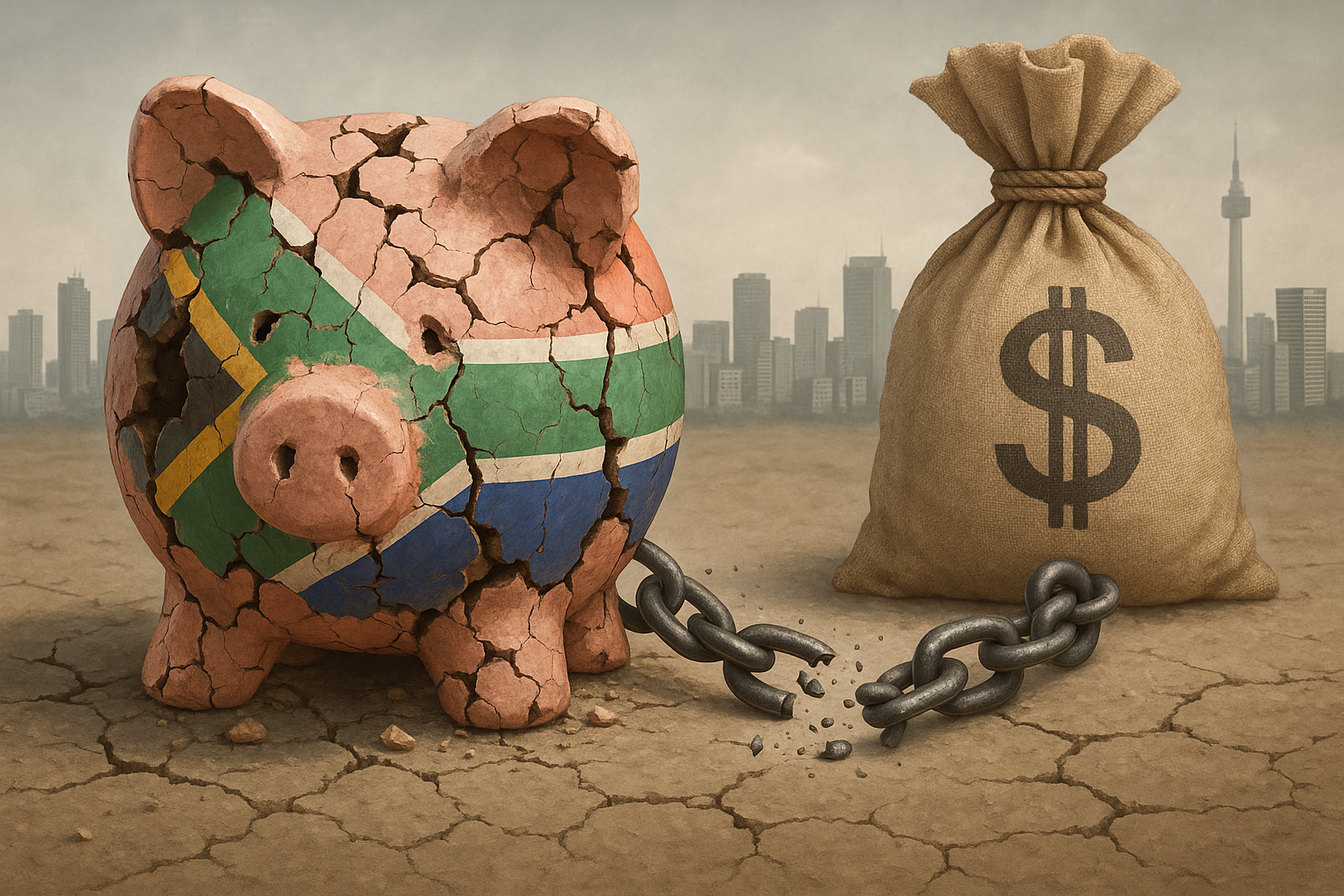
SA municipalities face financial crisis as Treasury freezes funds. 69 councils have 60 days to act or lose cash indefinitely.
Many South African cities are in big financial trouble, with 69 of them about to lose government money. This is because they have been really bad at managing their money, spending it wrongly, and not collecting enough of their own. Now, the government is stepping in to make them fix things or they will lose their funding for good, which could make things even worse for these cities and their people.
Why are 69 South African municipalities facing a financial crisis?
69 South African municipalities are facing a financial crisis because the National Treasury is halting equitable-share transfers from July 2026. This is due to prolonged financial mismanagement, including irregular spending, flawed funding structures, unaddressed architectural weaknesses, and a failure to develop internal revenue sources, leading to a reliance on these transfers.
Get Cape Town news in your inbox
Stay updated with the latest stories from the Mother City.
National Treasury's move to halt equitable-share transfers for 69 municipalities from July 2026 has sent tremors through South Africa's local government landscape. This drastic measure represents merely the latest convulsion in a prolonged financial earthquake that has rattled council chambers across the nation for well over ten years. Buffalo City, Johannesburg, Nelson Mandela Bay and Mangaung - the four biggest metros caught in this dragnet - now face a narrow two-month window to complete fifteen mandatory corrective steps or risk permanent loss of these vital funds. The crisis extends far beyond the R145.21 billion in irregular spending documented since 2022. Its origins trace back to fundamental architectural weaknesses that have transformed numerous councils into alternate realities where tender regulations serve merely as suggestions, budget forecasts read like fantasy novels, and elected leaders view municipal overdrafts as personal spending accounts.
The Flawed Foundation of Municipal Finance
South Africa's local government funding architecture rests upon a critical assumption: that every municipality would progressively expand its internal revenue sources - primarily through property rates and utility charges - until achieving complete fiscal independence. The equitable share mechanism was conceived as a balancing instrument, not perpetual life support. Urban population shifts, industrial relocation and consumer payment boycotts have eroded revenue streams more rapidly than Treasury's annual recalculation formulas can accommodate. This mismatch has spawned an inherent structural shortfall: metropolitan areas currently depend on equitable share allocations for between eighteen and thirty-four percent of their operating cash, yet the distribution formula continues treating them as though they remained the municipalities of 2006. When these transfers cease, the typical metro hemorrhages twenty-eight percent of its liquidity within six weeks - the exact juncture where analysts predict Buffalo City and Mangaung will exhaust funds for bulk water procurement.
The wage settlement that destabilised Johannesburg exemplifies how political decisions override fiscal reality. National Treasury specifically highlighted the metro's R10.3 billion three-year remuneration agreement, concluded in April 2026 without conducting the legally mandated affordability review. Confidential internal documents obtained by investigative journalists reveal that actuaries within the city's Human Capital and Shared Services division had calculated this arrangement as viable solely on the assumption that property valuations would increase fourteen percent annually in real terms - a threshold never achieved once since 2012. By the time councillors approved this pact, the actuarial warning had vanished from official documentation. Treasury has subsequently commanded the metro to implement a hiring freeze within thirty days and deliver a revised salary-to-revenue ratio beneath twenty-eight percent - a benchmark requiring elimination of at least 4,700 positions in a jurisdiction where union membership reaches eighty-two percent.
When Creditors Seize Control
While media attention gravitates toward Eskom's R5.2 billion electricity debt, lesser creditors have mastered judicial mechanisms with devastating effectiveness. Throughout the past eighteen months, Johannesburg's sheriff has seized forty-two municipal vehicles, two fire engines, and - most emblematically - the title deed to Thuso House, headquarters of the city's customer services division, following a R63 million default on information technology contracting dating to 2019. This property now occupies legal purgatory: the municipality cannot transfer ownership due to a thirty-year heritage protection clause, while the successful claimant demands R890,000 monthly in "storage fees" for servers continuing to host the metro's electronic services portal. Treasury's Annexure A stipulates that municipalities must resolve every attachment order exceeding R10 million within ninety days or confront Section 139 provincial intervention.
Nelson Mandela Bay has emerged as the definitive illustration of "ghost city" syndrome: thirty-eight percent of rated residential properties appear in records belonging to dissolved estate agencies, deceased individuals, or companies struck from the CIPC register. The valuer-general's most recent comprehensive valuation (2022) still lacks 92,000 parcels because Deeds Office data transfers contained corrupted GeoJSON files. With rates collection at sixty-seven percent and water meter replacement backlogs reaching R13.8 billion, the metro has resorted to vending post-dated promissory notes to its own service providers at seventy-five cents per rand face value. Treasury has now prohibited this practice and mandated a property verification task force comprising Deeds Office, SARS and Hawks personnel - an approach adapted from Mumbai's 2019 "ghost-property" amnesty that recovered US$1.3 billion in outstanding taxation.
Even Model Councils Succumb to Corruption
Cape Town's deterioration from clean audit status to unqualified opinion containing findings serves as cautionary evidence that no municipality enjoys immunity. The Auditor-General tracked R2.4 billion in tender irregularities to a single contractual provision: officials fragmented orders just below the R500,000 threshold triggering mandatory open tender advertising. One housing maintenance contract was dismembered into 1,100 individual bids averaging R495,000 each, awarded to seventeen shell entities sharing identical Gmail addresses. The city manager currently faces precautionary suspension, while Treasury has proposed a national "split-bid" analytical platform - an artificial intelligence system identifying fragmentation patterns across all 257 municipalities instantaneously. Developed by CSIR and Treasury's Smart Procurement Unit, this pilot cross-matches vendor banking information against CIPC director records and Mastercard/Visa BIN databases; preliminary trials demonstrate ninety-four percent accuracy in detecting front companies.
The R66.8 billion municipal debt to Eskom recorded at 30 June 2026 represents merely the visible portion of a vastly larger obligations iceberg. Eskom's interim disclosures reveal it finances forty-two percent of this exposure through an internal "municipality book" carrying effective interest of prime plus eight percent. The utility has consequently become South Africa's largest shadow lender to insolvent local government. Johannesburg's R5.2 billion arrears accumulate R3.1 million daily in penalty interest, sufficient to obliterate the metro's entire cash reserves within 1,250 days absent principal reduction. Treasury's directive now obliges metros to execute pre-paid electricity conversion agreements transferring revenue collection to Eskom, replicating Uganda's approach that reduced arrears sixty-three percent within three years.
Innovative Financing and Technological Solutions
Few councillors comprehend that the combined property, plant and equipment value of the four affected metros surpasses R410 billion at depreciated historical cost. Treasury has discreetly modified Regulation 14 of the MFMA to permit councils to issue asset-backed securities secured by designated revenue streams - toll tariffs, bus rapid transit fares, stadium naming rights - without requiring comprehensive council guarantees. Nelson Mandela Bay pioneered this mechanism, securitising twenty-five years of Port Elizabeth port concession income for R4.8 billion at 10.5 percent in May 2026 - two basis points beneath Eskom's previous bond issuance. Buffalo City readies a R3.2 billion instrument backed by East London marina mooring fees, while Johannesburg investigates a "green bond" with coupon rates tied to landfill methane capture volumes. The constraint: every rand raised must reside in a sinking fund administered by the Municipal Finance Corporation, a new Treasury special purpose vehicle empowered to intercept equitable share receipts upon covenant violation.
South Africa's 2021 local government elections yielded sixty-six hung councils; forty-three now appear on Treasury's withholding roster. Wits University political scientists demonstrate coalition instability correlates with audit regression at 0.76 coefficient. The dynamic is straightforward: each coalition reshuffle rotates the finance portfolio; acting chief financial officers postpone implementing predecessor resolutions; audit queries expire. Treasury's directive now mandates eighteen-month fixed terms for finance heads, protected by statute, modelled on the 1996 Reserve Bank Amendment shielding the SARB governor from political turbulence.
Beneath Pretoria's historic Mutual Building, Treasury has constructed a municipal "war room" centred upon a twelve-metre LED wall streaming 2.4 million data points hourly - from smart meter readings to fleet tracking signals. Machine learning algorithms forecast which councils will encounter liquidity stress thirty days ahead; a traffic light protocol activates intervention. The July 2026 freeze list emerged from an algorithm weighting five variables: cash coverage ratio, contingent liability growth, equitable share compliance score, Eskom arrears velocity, and a novel "governance red-flag index" harvesting procurement awards, litigation notices, even Facebook posts by striking employees. Municipalities may challenge designation, but solely by submitting machine-readable evidence overturning model assumptions within five percent confidence intervals.
Banking Relationships and Citizen-Led Alternatives
ABSA, Nedbank, Standard Bank and FNB maintain R92 billion in municipal exposure, forty-two percent unsecured. Since March 2026, bankers have demanded tripartite agreements providing direct access to equitable share receipts - precisely the cash flow Treasury now suspending. This impasse has generated unforeseen consequences: banks refuse to renew maturing overdrafts, compelling councils toward costly short-term notes supported by auction-rate interest swaps. Treasury's remedy permits new asset-backed bonds to carry government-guaranteed second-loss tranches of twenty percent, effectively attracting private capital at sovereign risk weighting. Rating agencies have responded by placing South African metros on "credit watch positive" for the first time since 2014.
In Ekurhuleni - technically exempt from freezing though suffering thirty percent equitable share reduction - residents have circumvented council entirely. Blockchain enterprise LedgerVille distributes tokenised "rates-credits" purchased via e-wallets and exchanged among citizens; credits settle property tax obligations monthly. Tokens maintain one-to-one rand parity, supported by Investec standby letters of credit. Treasury officials monitor this experiment, recognising that widespread adoption could establish parallel municipal revenue systems operating beyond MFMA jurisdiction.
The sixty-nine affected councils now have until 31 August 2026 to satisfy Annexure A requirements. Non-compliance will activate two additional mechanisms: compulsory bank account assumption by provincial revenue funds, and transfer of all supply chain authority to National Treasury's Chief Procurement Office. Historical precedent suggests merely twelve municipalities will achieve compliance; remainder will enter legal limbo terminating either in Section 139 administration or debt restructuring resembling New York City's 1975 "Big MAC" rescue.
Why are 69 South African municipalities facing a financial crisis?
69 South African municipalities are facing a financial crisis because the National Treasury is halting equitable-share transfers from July 2026. This is due to prolonged financial mismanagement, including irregular spending, flawed funding structures, unaddressed architectural weaknesses, and a failure to develop internal revenue sources, leading to a reliance on these transfers.
What are 'equitable-share transfers' and why are they being halted?
Equitable-share transfers are funds provided by the National Treasury to municipalities to ensure basic services can be provided and to address historical imbalances. They are being halted for 69 municipalities from July 2026 due to extensive financial mismanagement, including irregular spending, a failure to develop their own revenue sources (like property rates and utility charges), and a reliance on these transfers as perpetual life support rather than a balancing instrument.
How has flawed financial management contributed to this crisis?
Flawed financial management has contributed significantly through various issues. This includes irregular spending (R145.21 billion documented since 2022), entering into unaffordable wage settlements without proper reviews (e.g., Johannesburg's R10.3 billion agreement), and allowing creditors to seize municipal assets due to unpaid debts. Additionally, corruption, such as fragmenting contracts to avoid open tender processes, has also played a role.
What are the immediate consequences for municipalities that lose their funding?
If municipalities lose their funding, they face severe liquidity crises. For example, metros could hemorrhage 28% of their liquidity within six weeks, potentially exhausting funds for essential services like bulk water procurement. They also face a mandate to implement corrective steps, including hiring freezes, resolving attachment orders from creditors, and addressing issues like 'ghost properties' that hinder revenue collection.
What measures is the National Treasury implementing to address this crisis?
The National Treasury is implementing several drastic measures. These include halting equitable-share transfers, mandating corrective steps within strict timelines, and intervening in municipalities that fail to comply. They are also introducing innovative financing solutions like asset-backed securities and green bonds, developing a national 'split-bid' analytical platform using AI to detect tender irregularities, and setting up a municipal 'war room' with machine learning algorithms to predict and intervene in financial distress.
What are some of the long-term impacts and potential solutions for these municipalities?
Long-term impacts could include significant service delivery failures, legal limbo, and potential provincial intervention under Section 139 or debt restructuring. Potential solutions and ongoing initiatives include the National Treasury's push for municipalities to develop internal revenue sources, the introduction of asset-backed securities to raise capital, mandated fixed terms for finance heads to ensure stability, and even citizen-led alternatives like blockchain-based tokenized rates-credits being explored in Ekurhuleni.

Chloe de Kock is a Cape Town-born journalist who chronicles the city’s evolving food culture, from township braai joints to Constantia vineyards, for the Mail & Guardian and Eat Out. When she’s not interviewing grandmothers about secret bobotie recipes or tracking the impact of drought on winemakers, you’ll find her surfing the mellow breaks at Muizenberg—wetsuit zipped, notebook tucked into her backpack in case the next story floats by.
View all articles →