
WHY RHINO POACHING STILL THRIVES
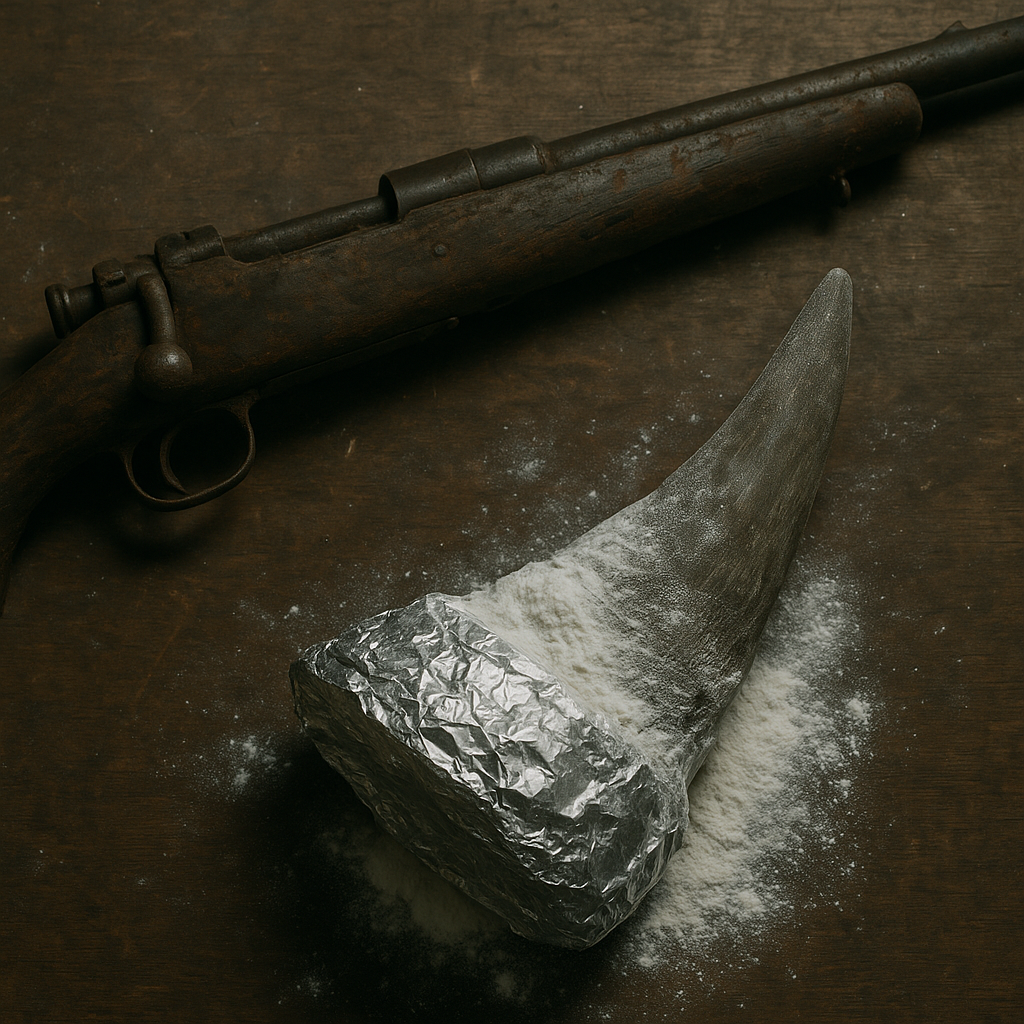
The assassination of rhino kingpin Joseph "Big Joe" Nyalungu exposes the complex, brutal world of rhino horn trafficking and its deep roots.
The rhino horn trade is a brutal and complex business, turning a living horn in Kruger into a fancy bead in faraway Hanoi. It's run by a network of poachers, crooked officials, and smart criminals who smuggle horns across oceans. "Big Joe" Nyalungu, a top horn trafficker, was recently killed, but his death won't stop the trade. Instead, new leaders will rise because poverty and huge profits keep this cruel business alive.
What is the rhino horn trade?
The rhino horn trade is a sophisticated illicit network that transforms rhino horn from a bleeding stump in Kruger into a polished bead in a Hanoi back-room. The trade involves poachers, corrupt officials, and logistics experts who use various methods to smuggle horns across continents, making it a lucrative and resilient criminal enterprise.
Get Cape Town news in your inbox
Stay updated with the latest stories from the Mother City.
Section I – A Single Shot That Shook Two Continents
A rifle cracked outside a tin-walled shop in Mkhuhlu at dawn on 16 May 2026. Joseph “Big Joe” Nyalungu dropped beside a stack of canned beans and the echo rolled from the Sabi Sand to Shenzhen’s skyscrapers. Within sixty seconds grainy clips of a white Hilux fishtailing through ochre dust ricocheted across WhatsApp; within six hours candles guttered on the patch of tar where he fell - some mourners, more celebrants. Detectives fought to keep curious feet off cartridge cases while the pavement turned into an improvised altar for two clashing national beliefs: that a bullet can deliver justice when courts fail, and that the illicit machine which built Big Joe will barely stall before it fires up again.
Nyalungu’s death certificate was still warm when the rumour economy went into overdrive: he had skimmed a cabinet minister, short-weighted a Thai syndicate, laundered cash for a taxi warlord. The only undisputed fact was that a man once worth an estimated R1.3 billion lay lifeless next to crates of supermarket groceries, proving that routine is deadlier than any manhunt. He had survived an ambush in March by ducking below the dashboard; this time four gunmen arrived before first light, two dressed as bakery labourers in reflective bibs. Seventeen 7.62 casings later, the country’s most elusive wildlife broker was reduced to a cautionary photograph on a classroom wall.
The provincial commissioner called for calm, promising “decisive breakthroughs,” but the real verdict was delivered by teenagers who livestreamed themselves dancing on the blood-stained concrete. Their caption: “Lions also die.” It was a reminder that in bush economies the boundary between conservation and retribution dissolves fast when unemployment hovers above forty percent and a single horn can bankroll a village for a year.
Section II – From Kruger Dust to Hong Kong Display Cabinet: The Conveyor Belt
Rhino horn begins as a bleeding stump in Kruger and ends as a polished bead in a Hanoi back-room, but the transformation is anything but artisanal. A recruiter - usually a twenty-something who herded cattle inside the park as a boy - earns R35 000 for every classmate he talks into crossing the fence. The volunteer receives a rifle whose serial has long rusted away, or an R1 battle carbine smuggled out of a Pretoria armoury for the price of a used fridge. Four nights of walking past lion prides and fever-tree shadows follow, guided by a R600 Garmin pre-loaded with waypoints from a crooked field ranger. Once the animal is down, horns come off with a panga, foil-wrapped, dusted with baby powder to confuse tracker dogs, and shuttled to a safe house in Acornhoek or Hazyview.
Seventy-two hours later the cargo rolls into OR Tambo International hidden inside a consignment marked “decorative handicrafts” and accompanied by a legitimate export permit bought from a clerk who earns less in a year than the courier will make on this single run. From Johannesburg the horns fly to Maputo, Dar es Salaam or Nairobi, switch passports, and continue to Hong Kong, Macau or Ho Chi Minh City. Every stop is a paycheck: the driver who welds a false diesel tank, the broker who fumigates the paperwork, the customs official who looks the other way. Big Joe’s brilliance lay in treating each node as a franchise he could invoice, not a partner he had to trust.
When detectives finally froze his bank accounts in 2018 he simply minted Bitcoin vouchers and paid village runners through QR codes redeemable at spaza shops he secretly owned. Ambulances replaced panel vans because no road-block ever body-searches a patient, and when sniffer dogs arrived he flooded the route with fake resin horns that smelled identical to the real thing. The deception bought time, and time was all a rhino kingpin needed to stay three borders ahead of the law.
Section III – Ledger of a Ghost: Rise of a Logistics Genius
Nyalungu’s paper trail begins in the docket room of Hazyview police station where, as a shy constable, he catalogued stolen goats and filed DNA kits. Colleagues recall him volunteering for night guard duty at the evidence cage; months later 38 confiscated horns vanished and he resigned, citing “job stress.” The bottle-store he bought next was a clever curtain: customers paid cash, suppliers asked no questions, and stock took up shelf space while the real merchandise moved through the cold-room at 2 a.m. A butchery followed, then a fleet of 4×4 rentals whose chassis cavities were plasma-cut and re-welded into hidden bins that held up to eight kilograms of horn each.
By 2015 he could quote container freight to Hong Kong faster than a shipping agent, and his spreadsheets - later recovered from an encrypted Telegram chat - showed profit margins fatter than cocaine with a quarter of the risk. Interpol files credit him with pioneering the “pseudo-ambulance” route, but his signature move was subtler: he turned rural unemployment into a just-in-time workforce. When a reserve installed magnetometer gates he activated a scholarship for local women to study veterinary science; two graduates landed clerical jobs inside the park and fed him patrol timetables. The community saw opportunity, not betrayal, because Big Joe paid on time and financed funerals when poachers never came home.
The 2021 University of Cape Town network analysis gave him a “betweenness centrality” score of 0.91 - the highest ever recorded in African wildlife crime - meaning he sat on almost every shortcut between otherwise isolated cells. Investigators likened removing him to snapping the keystone of an arch; they privately hope for an eleven-month disruption, the average measured in the study. Yet even as the body cooled, encrypted phones lit up with new routing tables, proof that an industry valued at $1.2 billion does not mourn - it restructures.
Section IV – After the Kingpin: Balloons, Bullets and the Next Big Joe
Organised-crime scholars argue endlessly about “decapitation.” Mafia research shows jailed bosses lower violence short-term, but Colombian records reveal fragmentation wars that kill faster than cartel hierarchies ever did. Rhino pipelines are flatter; squeeze one node and the commodity gushes elsewhere. Ten years ago four out of five rhinos died inside Kruger; today the figure is below forty-five percent as private reserves in the Eastern Cape, Northern Cape and semi-desert Karoo pick up the slaughter. Ranchers who swapped cattle for wildlife now spend more on security than on tourism revenue - R500 000 a month for ex-military teams, K9 units that die from pesticide-laced bait, de-horning programmes that must repeat every eighteen months and leave tourists photographing stumps instead of icons.
Tech pitches arrive faster than solutions. Quantum-dot sniffers on drones detect keratin from a kilometre up, yet courts throw out evidence because the sensors lack South African Bureau of Standards accreditation. Scientists inject synthetic DNA into living horns, only to watch traffickers switch from powder to whole-tusk sales. Bioreactors grow perfect artificial horn, yet prices for the wild product jump because consumers crave authenticity. Even Starlink dishes on ranger huts live-stream collar data until copper thieves rip out grounding cables for scrap.
Legalisation advocates insist Pretoria’s 42-ton state stockpile could fund rural development if CITES ever allows auction; opponents predict laundering free-for-alls mirroring the 2008 “one-off” ivory firesale that triggered an elephant-poaching spike. Vietnam has criminalised possession of 200 g with ten-year sentences, yet 78 percent of Hanoi retailers still sell under emoji codes - a rhino plus a teacup - when messaged on Signal.
Meanwhile the succession race is visible to anyone who knows where to look. The morning after Nyalungu’s body was scraped off the tarmac, two unmarked Ford Rangers cruised the strip, windows down, occupants cataloguing foot traffic. Locals swear the passenger was “Mambo,” an ex-Mozambican ranger with alleged ties to Islamic State cells in Cabo Delgado. Whether myth or scouting mission, the story fits a documented pattern from Amazon logging to Sahel gold: extraction markets evolve, they do not evaporate. Next time the shooters may wear SAPS uniforms, the getaway bakkie may sport park logos, the horn may leave inside pallets of frozen avocado bound for Dubai.
And in Mkhuhlu primary school grade-six boys now recite the street price of keratin the way their fathers once rattled off soccer fixtures. Their teacher says the real lesson is not arithmetic but history: every kingpin is replaceable because the ground that breeds him - jobless youth, porous borders, astronomical profit - stays fertile. Out under a winter moon that silver-tips acacia thorns, a rhino cow still nudges her calf away from the hum of distant engines, unaware that the next spreadsheet, the next ledger, the next Big Joe is already open on a laptop glowing in a darkened shack.
What is the rhino horn trade and how does it operate?
The rhino horn trade is a highly organized and illicit global business. It involves a complex network of poachers who kill rhinos, often in places like Kruger National Park. The horns are then processed and smuggled across continents by corrupt officials, logistics experts, and various intermediaries. The trade transforms a raw horn into finished products, such as polished beads, which are then sold in markets, particularly in Asia.
Who was "Big Joe" Nyalungu and what was his role in the rhino horn trade?
Joseph “Big Joe” Nyalungu was identified as a top horn trafficker and a highly elusive wildlife broker in South Africa. He was a logistics genius, pioneering sophisticated methods for smuggling rhino horns. His network was vast, encompassing recruiters, poachers, corrupt officials, and innovative ways to move horns, such as using ambulances or disguised shipments. His "betweenness centrality" score of 0.91 indicated his critical position almost every shortcut between isolated cells within the wildlife crime network.
What were some of Big Joe's innovative methods for smuggling rhino horns?
Big Joe employed several ingenious methods to evade detection. He used false diesel tanks in vehicles, fumigated paperwork, and bribed customs officials. He also adopted ambulances for transport, knowing they are rarely searched. When sniffer dogs became an issue, he flooded routes with fake resin horns that smelled identical to real ones. Furthermore, he leveraged local communities by offering scholarships and financing funerals, and utilized spaza shops he secretly owned for Bitcoin voucher payments to his network, turning rural unemployment into a just-in-time workforce.
Why won't Big Joe's death stop the rhino horn trade?
Big Joe's death, while significant, is unlikely to halt the trade due to several underlying factors. The trade is driven by immense profits and widespread poverty, which creates a fertile ground for new kingpins to emerge. The system is too resilient and adaptive; as one node is squeezed, the commodity finds another route. The industry, valued at $1.2 billion,

A Russian-Spanish journalist and Cape Town native, channels his lifelong passion for South Africa into captivating stories for his local blog. With a diverse background and 50 years of rich experiences, Serjio's unique voice resonates with readers seeking to explore Cape Town's vibrant culture. His love for the city shines through in every piece, making Serjio the go-to source for the latest in South African adventures.
View all articles →